Skip to content
Layers of the South
Search

Lesson B1 · Unit B: How do we find out?

Deeper is older?

Is the deepest thing always the oldest?

Project this lessonClass vote

Ages
Ages 9 to 11
Minutes
30 / 40 / 45
Ladder step
2 Sort, 3 Grade

Curriculum

No curriculum line is published for this lesson.

Draft written with AI assistance; not yet tried in a classroom

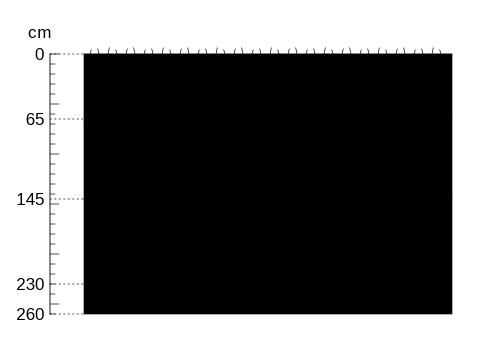
A face-on section through the invented practice trench with four contexts from 0 to 260 cm on an ochre depth rod: a disturbed surface (101) from 0 to 65 cm, an earlier clay floor (102) from 65 to 145 cm, a later pit fill (103) cut from 65 to 230 cm, and a lower intact deposit (104) from 145 to 260 cm. Pottery lies in the floor, deep in the pit fill, and in the lower deposit beside charcoal flecks.
Made up for practice. Not a real dig.

001At a glance

Pupils dig a practice trench on paper, sort what was found from what was worked out at Pattanam's waterfront, and grade three statements.

Objectives

  • I can sort what diggers found from what they worked out.
  • I can explain why a deeper layer is not always older.
  • I can say how sure we can be about a statement and give a reason.

Pupils should already know

  • Pupils know that things put down later usually end up on top, as in a pile of books.
  • Pupils have met the four certainty cards in unit A. If they have not, add five minutes at the start to introduce the cards.

Materials

Print
  • One sheet per pupil: support, core or stretch
  • The cut-out page for each pair: three source cards and the four certainty cards
Screen
  • The classroom screen for this lesson
Devices
  • Optional: the practice trench on the explorers page, one device per group

Key words

trench
A long, deep hole dug with care to see the layers.
layer
One band of soil lying on top of another.
pit
A hole dug down into the ground, later filled in.
fill
The soil that later filled a pit.
waterfront
The edge of the land beside the water.
waterlogged
Soaked right through with water.
millennium
A thousand years.
BCE
Years before year one, counted backwards.
anjili ആഞ്ഞിലി / അയിനി
A Western Ghats tree whose wood lasts well in water.
wharf
A built edge by the water where boats can stop.

002Sequence

Step by step

Lesson length
  1. 455hook

    Teacher Show the practice trench. Ask pupils to point to the layer they think is oldest and say why. Accept every answer for now and record the votes on the board.

    Pupils Point to the layer you think is oldest. Say why.

    Screen 1 of 8: Look first

  2. 578model

    Teacher Trace the edge of the pit with your finger. Say: "The floor had to be there before anyone could dig through it. So the pit is newer than the floor, even though its fill goes deeper." Then point out that an older object can still end up in the newer fill, so the layer a find sits in does not, on its own, tell us how old the find is.

    Pupils Trace the pit line on your card. Say which came first, the floor or the pit.

    Screen 2 of 8: A practice trench

  3. 689guided

    Teacher Read the Pattanam card together. Ask: what did the diggers find, and what did they work out? Use the third card to name the kinds. The canoe, the posts and the brick edge were found. That the deeper layer was laid down to build on was worked out by the excavators.

    Pupils Read the Pattanam card with your partner. Underline what was found. Circle what was worked out.

    Screen 3 of 8: A real waterfront at Pattanam

  4. 689independent

    Teacher Pupils sort the sentences from the Pattanam card into three boxes: found, worked out, nobody knows yet. The test on the canoe's wood is a result, so it goes in the found box. The sentence that says nobody knows yet when the boat was made or used goes in the third box. Walk round and ask each pair to give a reason for one sentence.

    Pupils Sort the sentences from the Pattanam card into three boxes: found, worked out, nobody knows yet.

    Screen 4 of 8: Found, worked out or not known?

  5. 689claim

    Teacher Read each statement in the claim task. Pupils shade a box for each one and write a reason. Then reveal the study's level and its reason. If a pupil chose a different level with a good reason, say so out loud: a reason that names real evidence or a real gap earns the credit.

    Pupils Shade a box for each statement. Write one reason.

    Screen 5 of 8: How sure can we be?

  6. 345exit

    Teacher Ask the enquiry question again: is the deepest thing always the oldest? Each pupil writes one answer with one reason from the trench or from Pattanam.

    Pupils Is the deepest thing always the oldest? Write your answer and one reason.

    Screen 8 of 8: Before you go

003Source cards

The three source cards

19 bound lines · 3 graded · 6 claims · 10 other records

Graded lines carry their How-sure glyph and 6-char hash; claims carry no fill glyph.

B1-SC1 · From a laboratory

A practice trench

065145230260101102104103

Invented teaching section. Made up for practice. Not a real dig. Depths in centimetres. The dashed line is the edge of the later pit.

What it cannot tell us The numbers and depths are for practice. They do not come from a real dig. Stands on: lab lab-stratigraphy-trench modelScope
Look
Find the floor and the pit. Which one goes deeper?
Talk
Which came first, the floor or the pit? How can you tell?
Ask
How could an old object get into a newer pit?

B1-SC2 · From the ground

A real waterfront at Pattanam

Conceptual section: a dugout canoe and teak post preserved in waterlogged mud beside a brick lining at Pattanam; radiocarbon dates the wood, not the boat.
What it cannot tell us A test on the canoe's wood shows when its tree grew. Nobody knows yet when the boat was made or used. Stands on: timeline entry 'tl-pattanam-canoe-bollards'
Look
What lay under the canoe?
Talk
Which sentences on this card were worked out, not found?
Ask
What would you like to know about the canoe?

B1-SC3 · From a text

Found, worked out or not known?

Three-tier stepped foundation diagram with recorded material and texts at the base, specialist inference in the middle, and open scholarly debate at the top.
What it cannot tell us "Worked out" does not mean wrong. It means people used thinking as well as finding. Stands on: R001-C024 · a claim the study makes (not graded)
Look
Which kind is "a canoe was found"?
Talk
Is "worked out" the same as "wrong"? Why or why not?
Ask
What would you put in the "nobody knows yet" box about Pattanam?

    004Differentiation

    One task at three levels

    The three sheets use the same sources and the same task. Only the help changes.

    Support

    1. Circle which was made first: the floor or the pit.
    2. Tick one: the pit fill goes deeper than the floor, or not as deep.
    3. Draw a line from each Pattanam sentence to its box: found, worked out, nobody knows yet.
    4. Shade a box for each statement: strong evidence, probably, maybe or nobody knows yet.
    5. Is the deepest thing always the oldest? Circle yes or no. Then finish: because ...

    Help on the sheet

    • The trench drawing with the pit edge already dashed
    • The Pattanam sentences printed next to the three boxes
    • The four how-sure boxes with their words. Strong evidence: shade it in. Probably: slanting lines. Maybe: dots. Nobody knows yet: leave it empty

    Core

    1. The ... was made first, because ...
    2. The pit fill goes ... than the floor.
    3. Sort each Pattanam sentence into a box: found, worked out, nobody knows yet.
    4. Shade a box for each statement. I chose it because ...
    5. Is the deepest thing always the oldest? My answer is ... because ...

    Stretch

    1. Explain which was made first, the floor or the pit, and how you know.
    2. Explain how an object deep in a pit could be older than the pit.
    3. Sort each Pattanam sentence and explain one of your choices.
    4. Grade each statement and explain your level.
    5. Is the deepest thing always the oldest? Use the trench and Pattanam in your answer.

    Extension

    Write a new sentence about the Pattanam waterfront for each box: found, worked out, nobody knows yet.

    005Assessment

    How you will know

    The grading task

    Shade a box to show how sure we can be about each statement. Write one reason for each.

    1. Diggers at Pattanam found a waterlogged waterfront with a canoe, posts and a brick-lined edge.
    2. People lived at Pattanam in the first half of the first millennium BCE.
    3. When was the wharf built, used, repaired or abandoned?

    Exit task

    Is the deepest thing always the oldest? Write your answer and one reason.

    Open the answer key

    The key gives what this website's summary says for each task, two examples written by us, and how to credit a reasoned disagreement.

    006Misunderstandings

    Misunderstandings to listen for (not yet observed in a classroom)

    • The deepest layer is always the oldest.

      A cut is later than the layer it cuts, so a pit dug later can reach deeper than an earlier floor. Trace the cut before deciding.

    • A date on the canoe's wood tells us when the wharf was built.

      The wood dates show when the trees grew, not when anything was built or used. When the wharf was built is not known.

    • If something was worked out, it is only a guess.

      Working out uses evidence. That people lived at Pattanam early on is worked out from charcoal dates, layers and pottery, and the study rates it Likely.

    007With or without a screen

    With or without a screen

    Paper only

    Print the cut-out page for each pair and a sheet for each pupil. Draw the practice trench large on the board, with the pit edge as a dashed line. Pupils sort and grade on paper and shade their certainty boxes in pencil.

    One screen and a projector

    Show the practice trench, then the Pattanam card, then the claim statements, one per screen. Go back to the trench while pupils write their exit answer.

    Classroom screen

    008Teacher notes

    Teacher notes

    • The practice trench is invented. Its numbers and depths are practice values, not measurements from a real excavation. Say so when you show it.
    • The Pattanam waterfront was recorded in 2007. Its posts are teak and its canoe is anjili wood.
    • Never ask pupils how old a find is from the layer it sits in. An older object can be redeposited in a later fill.
    • If pupils ask about dates: the canoe wood was dated to a range of 1300 to 100 BCE. That is when the tree grew, not when the canoe was used.
    • The claim task uses a statement with BCE in it. If pupils have not met BCE, use the vocabulary strip and stop there; the dates are not the point of this lesson.

    On this website

    009Sources used

    Sources used

    Every fact in this lesson comes from these studies. The codes name the statements the lesson cites.

    010Downloads

    Everything to print

    Each document prints on A4 or US Letter. The Malayalam sheets are drafts that no Malayalam editor has yet reviewed.

    The unit pack

    Lesson B1 · Ages 9 to 11 · Lesson plan

    Deeper is older?

    Is the deepest thing always the oldest?

    Unit B: How do we find out? · Ladder step Sort, Grade · Draft written with AI assistance; not yet tried in a classroom

    Objectives

    • I can sort what diggers found from what they worked out.
    • I can explain why a deeper layer is not always older.
    • I can say how sure we can be about a statement and give a reason.

    Pupils should already know

    • Pupils know that things put down later usually end up on top, as in a pile of books.
    • Pupils have met the four certainty cards in unit A. If they have not, add five minutes at the start to introduce the cards.

    Key words: trench (A long, deep hole dug with care to see the layers.); layer (One band of soil lying on top of another.); pit (A hole dug down into the ground, later filled in.); fill (The soil that later filled a pit.); waterfront (The edge of the land beside the water.); waterlogged (Soaked right through with water.); millennium (A thousand years.); BCE (Years before year one, counted backwards.); anjili (A Western Ghats tree whose wood lasts well in water.); wharf (A built edge by the water where boats can stop.).

    Materials

    • Print One sheet per pupil: support, core or stretch; The cut-out page for each pair: three source cards and the four certainty cards
    • Screen The classroom screen for this lesson
    • Devices Optional: the practice trench on the explorers page, one device per group
    • Paper only Print the cut-out page for each pair and a sheet for each pupil. Draw the practice trench large on the board, with the pit edge as a dashed line. Pupils sort and grade on paper and shade their certainty boxes in pencil.

    Teacher notes

    • The practice trench is invented. Its numbers and depths are practice values, not measurements from a real excavation. Say so when you show it.
    Layers of the South/educators/lessons/deeper-is-older/a97585a61f00Draft written with AI assistance; not yet tried in a classroomMalayalam draft, not yet reviewed by a Malayalam editorText CC BY-SA 4.0; photos as creditedPage 1/2

    Lesson B1 · Ages 9 to 11 · Lesson plan

    Deeper is older?

    • The Pattanam waterfront was recorded in 2007. Its posts are teak and its canoe is anjili wood.
    • Never ask pupils how old a find is from the layer it sits in. An older object can be redeposited in a later fill.
    • If pupils ask about dates: the canoe wood was dated to a range of 1300 to 100 BCE. That is when the tree grew, not when the canoe was used.
    • The claim task uses a statement with BCE in it. If pupils have not met BCE, use the vocabulary strip and stop there; the dates are not the point of this lesson.

    Misunderstandings to listen for (not yet observed in a classroom)

    • The deepest layer is always the oldest. A cut is later than the layer it cuts, so a pit dug later can reach deeper than an earlier floor. Trace the cut before deciding.
    • A date on the canoe's wood tells us when the wharf was built. The wood dates show when the trees grew, not when anything was built or used. When the wharf was built is not known.
    • If something was worked out, it is only a guess. Working out uses evidence. That people lived at Pattanam early on is worked out from charcoal dates, layers and pottery, and the study rates it Likely.

    Sources used

    • Pattanam's radiocarbon dates give no single date for its wharf R013-HS1, R013-C036, R013-HS3, R013-HS4, R013-C044
    • Evidence has layers: observed, stated, inferred and unknown R001-C024, R001-CSEM014, R001-C003
    Layers of the South/educators/lessons/deeper-is-older/a97585a61f00Draft written with AI assistance; not yet tried in a classroomMalayalam draft, not yet reviewed by a Malayalam editorText CC BY-SA 4.0; photos as creditedPage 2/2