01 · CHERAMANANGAD AND KERALA · EARLY BURIALS
Burial monuments preserve evidence of ancient communities in Kerala
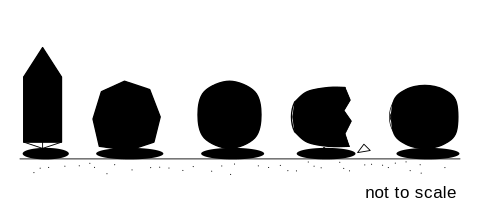
Kerala’s burial monuments include laterite caves, urns, stone cists, umbrella stones and hood stones. Jenee Peter’s 2015 survey reports more than a thousand megalithic sites, with fewer than twenty-five systematically excavated. At Cheramanangad, near Thrissur, an Archaeological Survey of India (Madras Circle) team directed by B. Narasimhaiah opened five different monument forms in 1990–91. Three covered urn burials; no burial was found under two.
Why it matters. These monuments preserve evidence of people whose lives cannot be reconstructed from accounts of overseas trade alone.
How sure: Well supported
Over a thousand sites are recorded, and excavation reports describe their forms and contents.

69 monuments recorded in the 2024 conservation inventory
- Kudakkal (umbrella stones) 9
- Topikkal (hood stones) 21
- Multiple hood-stones 33
- Not assigned by type in the published count 6
A modern count of what survives, not the original number of burials.
Full study Kerala's Iron Age graves are many; only a handful are dated
How we know
What lay under the five opened monuments
In 1990–91 an Archaeological Survey of India (Madras Circle) team directed by B. Narasimhaiah opened one example of each of five monument forms here. Select a result to see what lay underneath.
- Urn burials (3 monuments): Three of the five opened monuments covered urn burials in pits. One of them, a stone circle, held three separate urn pits.
- Iron objects: Iron arrowheads, knives, sickles and lamps came from the urn pits inside the stone circle. One other burial had a single iron object, and the excavators reported none from another.
- No burial found (2 monuments): No burial was found under two monuments. The excavators reached natural soil at about 0.70 m under the umbrella stone, and dug to 1.95 m under a multiple hood-stone.
The umbrella-stone monument, Megalith III, held no burial before natural soil at about 0.70 m. A multiple hood-stone, Megalith II, held none down to 1.95 m. The other three held urn burials; their pottery, bone and iron differed from monument to monument. The excavators called the empty ones “probably symbolic burials”. One opened monument cannot speak for every umbrella stone.
Dates: few, and each belongs to its sample
Kuttikol: one burial site, dates more than 1,900 years apart
- Burial 2, charcoal: 8th–6th c. BCE
- Burial 1, three samples: 15th–17th c. CE
At Kuttikol, a charcoal sample from Burial 2 dates to the 8th–6th century BCE. Three charcoal samples from Burial 1 date to the 15th–17th century CE. A date belongs to its sample: old wood, reuse or later filling can separate it from the moment a tomb was cut.
Peter’s 2015 survey calls for a closer study of umbrella-stone chronology. Indian Archaeology 1990–91, §32 (the ASI Madras Circle excavation directed by B. Narasimhaiah); a 2024 conservation inventory by S. Rahul and B. Vinuraj; Jenee Peter’s 2015 survey of umbrella stones.
Modern coastline, main rivers and the Western Ghats ridge; ancient river mouths and shorelines differed