Each period has the same width, so spacing is not to scale.
- Across the water
- Berenike
- Khor Rori / Sumhuram & Quseir al-Qadim
Hoq cave names western Indian sailors; Sumhuram has a Tamil name
Inscriptions in Hoq Cave on Socotra name sailors from western Indian ports, while the clearest Tamil trace in Arabia is a name at Sumhuram.
- This page
- 6,294 words · revision 6
Draft study · Awaiting specialist review · Updated
001Dates and places
Places on the atlas that name this study.
- Berenike
Connected overseas port · Shown in Western Indian Ocean Inset
outside this map
- Khor Rori / Sumhuram & Quseir al-Qadim
Connected overseas port · Shown in Western Indian Ocean Inset
outside this map
1000–500 BCE
Different beginnings
500–200 BCE
Marks & materials
200 BCE–300 CE
Connected worlds
300–600 CE
Change & continuity
- Early Khor Rori Indian ceramic traffic antecedent
- Sumhuram Tamil-Brahmi nantai kiran context
- Hoq Indian Brahmi corpus palaeographic range
- Qana phase with limited Indian and southeast-Iranian imports
- Hoq inscription 10:2 conditional Saka-era date
- Palmyrene De Geest tablet textual date
- Date from writing, coins or texts
- Period assigned by excavators or scholars
Each date belongs to what was dated (a sample, an object, a layer or a text), which is not always the event the study asks about.
Each period has the same width, so spacing is not to scale.
The full table of dates, with their ranges, is under How we know.
- 1 Well supported
- 2 Likely
- 1 Not known
002How sure
In brief
Hoq Cave, on the Yemeni island of Socotra, holds 193 Indian inscriptions that Ingo Strauch attributes to 117 visitors. His 2012 catalogue dates their letter shapes mainly to the second to early fifth centuries CE. The home ports the visitors name are in western India, such as Bharukaccha, modern Bharuch, and Hastakavapra. Some give shipboard titles, nāvika and niryāmaka, which Strauch renders as captain. No Hoq text has been edited as Tamil-Brahmi. The firmest Tamil trace in Arabia is a first-century CE name, nantai kiran, written on a reused jar fragment at Sumhuram in Oman. At Qana' in Yemen, Indian-looking pottery shows contact, but laboratory work matched one supposedly Indian lamp to a Nubian source. Not known is the route of any single named sailor, and no pot at these ports has been securely traced to Kerala clay.
Key researchers cited in this study: Authors, editors, and translators cited in the Source Register below · Published primary editions, catalogues, and domain scholarship logged for this study · Full bibliography
How sure
- Well supported
Named Hoq visitors came from western Indian ports such as Bharukaccha.
The inscriptions state these origins directly.
- Likely
A Tamil-speaking person or connection reached Sumhuram in the first century CE.
A Tamil-Brahmi name plus Indian finds; a portable sherd could still travel without its writer.
- Likely
Some Hoq visitors were Buddhist.
Stūpa drawings, a wheel, burnt incense and names point that way, alongside Vishnu, Shiva and Skanda names.
- Not known
Named Hoq sailors also called at Qana or Sumhuram.
No inscription or cargo yet links any named Hoq visitor to another port.
Why it matters
It shows that crews on these routes came from different regions, so Arabian finds cannot simply be credited to Tamil or Kerala sailors.
003Key findings
What the study concludes
- The published Hoq corpus contains 192 Indian Brahmi inscriptions and one Kharoshthi graffito, with additional South Arabian, Aksumite, Greek, Bactrian-Brahmi and Palmyrene texts; Strauch attributes the 193 Indian epigraphs to approximately 117 visitors or hands.
- Explicit Hoq provenance statements establish direct links to western Indian ports, especially Bharukaccha/Barygaza and Hastakavapra/Hathab on the Gulf of Khambhat.
- Hoq directly attests shipboard occupational terminology including navika and niryamaka; a Hoq occurrence of sarthavaha was not verified in the read 2012 corpus.
- Western Kshatrapa titles and palaeographic traits reinforce the explicit Gujarat-port evidence for part of the Hoq Indian contingent.
In the study’s own words. How sure each point is, is shown above.
The summary above is the short read. The full study is the complete text it was drawn from, with its tables and source notes.
What the full study covers
004The study
Answer in Brief
A name scratched on a cave wall can bring one traveller into the history of the sea, but it cannot supply a whole life. This study looks at three places on the sea routes between India and the Red Sea. Hoq Cave is on the island of Socotra (Yemen); Qana' lies at Bir Ali on the coast of Yemen; Sumhuram, also called Khor Rori, is in southern Oman. At Hoq, Indian visitors wrote their names, home ports and jobs on the cave walls. Indian goods reached Qana' and Sumhuram, and a Tamil name written on a pot was found at Sumhuram. Rouletted Ware, a fine pottery found at Sumhuram, also occurs at Pattanam on the Malabar Coast of Kerala. A stated name, origin or job is meaningful even when the rest of the journey cannot be recovered.
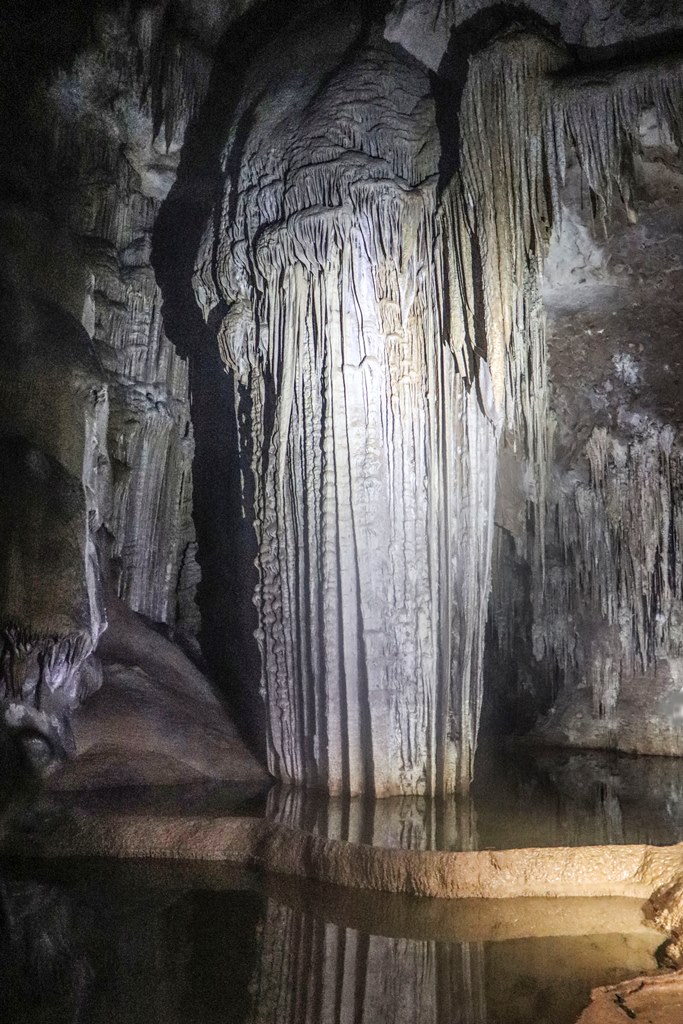
Documentary view of limestone formations inside Hoq Cave, Socotra
Hoq Cave
Photographed 2015-03-14
No ancient inscription can be read in this image.
The combined epigraphic and archaeological evidence establishes a differentiated Indian Ocean network rather than a single, homogeneous “Indian” mercantile diaspora. Hoq Cave gives the unusually direct human evidence: Strauch’s Indian corpus comprises 193 epigraphs attributed to 117 Indian visitors – 192 in Brāhmī and one in Kharoṣṭhī – whose scripts are dated palaeographically (by comparing letter shapes) mainly from the second through early fifth centuries CE. The catalogue separately records 11 South Arabian, eight Aksumite, two South Arabian-or-Aksumite, three Greek, one Bactrian-Brāhmī, and one Palmyrene text/item. Hoq was therefore used by people moving through several overlapping maritime spheres, although Indian writers are numerically dominant in the preserved epigraphic record.
The strongest directly stated Indian origins at Hoq point not to Tamilakam or Kerala but to western India, especially the Gulf of Khambhat. Inscription 2:23 names Saṃghadāsa, son of Jayasena, as a resident of Hastakavapra, identified by Strauch with modern Hathab near Bhavnagar; 11:11 calls Viṣṇuṣena a man from Bharukaccha/Barygaza, modern Bharuch (Strauch 2012, catalogue no. 11:11); 11:12 names Viṣṇudhara from Bharukaccha (Strauch 2012, catalogue no. 11:12). Several other inscriptions repeat Bharukaccha affiliations. Western Kṣatrapa palaeographic traits and the title kṣatrapa, a title of rank, reinforce this western-Indian component.
The occupational evidence is equally important. Hoq directly attests nāvika, cautiously translated by Strauch as a leading member of a ship's crew and conventionally rendered “captain,” and the rarer niryāmaka, used once of Viṣṇudhara of Bharukaccha. A ship drawing with two rudders materially reinforces the maritime setting. By contrast, no Hoq occurrence of sārthavāha has been verified in the searchable 2012 corpus: a search of the published text returns none, while nāvika and niryāmaka are explicit. The often-repeated formulation “nāvika and sārthavāha at Hoq” should therefore not be presented as a direct corpus fact without a separate citation.
The southern-Indian evidence becomes much firmer at Khor Rori/Sumhuram. A reused amphora fragment from a first-century CE context carries a Tamil-Brāhmī inscription, nantai kiran, interpreted as a personal name. Cobb identifies it as the only Tamil-Brāhmī inscription then known from Arabia and appropriately cautions that an inscribed portable object alone cannot prove that the named person physically stood at the site; nevertheless, in combination with Sumhuram's Indian ceramics, beads and other finds, a South Indian mercantile presence becomes a strong interpretation. ↗4
The ceramic evidence is more complicated than older “Rouletted Ware = Tamil trade” formulations imply. At Khor Rori, both true Rouletted Ware and coarser imitation Rouletted Ware occur. Reddy's fabric study stresses that true Fine Grey/Rouletted Ware should not simply be assigned to southern-Indian manufacture; the Khor Rori imitation sample did not furnish a fabric match with comparison samples from Alagankulam, although southern India or Sri Lanka remain plausible sources for classes of imitation ware. Black-and-red firing technique is therefore not, by itself, a Tamilakam provenance marker. The presence of Rouletted Ware at Pattanam on the Malabar Coast demonstrates circulation to Kerala, not manufacture there. ↗5
At Qana', probable Indian imports and Indian-style ceramics document contact, but sourcing work makes ethnic labels particularly hazardous. Reddy notes likely Indian sources for some rice-tempered wares at Qana while showing that one apparently comparable oil lamp is petrographically Nubian, and another proposed Indian specimen lacks the petrographic demonstration needed for certainty. Seland's synthesis places Qana's foundation in the first century CE and describes Indian connections as present but limited in the late-second- to early-fifth-century import assemblage relative to Gulf traffic. Thus Qana is securely an Indian Ocean entrepot; its ceramics alone do not demonstrate a specifically Tamil or Kerala resident group. ↗6
On religion, Hoq preserves plural and portable forms of devotion rather than evidence for a single sailors' cult. Two stūpa drawings, a probable dharmacakra, possible śramaṇa designations, Buddhist onomastics, and incense burners containing burnt material provide the strongest evidence for Buddhist visitors and ritual behavior. At the same time, names containing Viṣṇu-, Śiva-, and Skanda-, several triśūla figures, and broadly shared auspicious signs such as nandyāvarta, pūrṇaghaṭa and svastika reveal a wider Indic symbolic repertoire; names and generic auspicious signs cannot by themselves prove sectarian ritual. Strauch's later reassessment judged at least eight visitors or family members probably Buddhist, but that is an onomastic-historical interpretation, not eight explicit professions of Buddhist faith.
Bottom line: Hoq directly documents a strong western-Indian, especially Gujarati/Kṣatrapa-connected seafaring constituency; Sumhuram gives the clearest Arabian evidence for a specifically Tamil-speaking/Tamil-Brāhmī individual or social connection; and Qana supplies the archaeological signature of an entrepot participating in the same long-distance system. Taken together, they show that Indian Ocean crews and traders were regionally mixed, occupationally differentiated, and religiously plural. They do not justify collapsing Bharukaccha sailors, Tamil-speaking merchants, Indian ceramic cargoes, and local Arabian imitations into one ethnic or geographic category.
Scope & Chronological Control
A first-to-fifth-century CE frame suits the main comparison, but the chronologies of the different kinds of evidence do not coincide exactly. Hoq's Indian Brāhmī corpus is principally second to early fifth century CE, while the cave also contains a South Arabian inscription that Robin considers potentially earlier than the Common Era and Aksumite material that cannot always be dated narrowly. Sumhuram's Indian exchange begins before the Common Era, whereas the Tamil-Brāhmī sherd belongs to the first century CE. Qana's settlement history is centered within that window. ↗9
| Evidence | Best published chronological control | Epistemic status |
|---|---|---|
| Hoq Indian Brāhmī/Kharoṣṭhī | Mainly second–early fifth centuries CE by palaeography | Scholarly interpretation, supported by comparative scripts |
| Hoq 10:2 numeral “154” | Strauch proposes Śaka 154, hence 232 CE, if the era identification is correct | Conditional interpretation, not an independently dated inscription |
| Hoq Palmyrene “De Geest” tablet | Textual date corresponds to July 258 CE | Textual observation plus calendar conversion |
| Hoq South Arabian/Aksumite material | Uneven; at least one Hadramawtic text is argued to be early, while several Aksumite texts are later | Palaeographic interpretation |
| Sumhuram Tamil-Brāhmī nantai kiran | First century CE archaeological/ceramic context | Excavated textual observation |
| Khor Rori Rouletted Ware | Earliest occupation includes Indian ceramic traffic beginning before the Common Era | Archaeological observation plus ceramic chronology |
| Qana | Settlement established in first century CE; Indian/SE-Iranian imports discernible especially late second–early fifth century | Archaeological synthesis |
Hoq 10:2 is useful precisely because its uncertainty is explicit. The inscription contains Brāhmī numerals read as “154”; Strauch argues that Western Kṣatrapa palaeography makes the Śaka era probable and therefore proposes 232 CE. That is an internally coherent epigraphic inference, but “232 CE” should not be treated as though it were a laboratory date.
The Palmyrene wooden tablet is firmer. Its Seleucid-era year and month convert to July 258 CE. Gorea also reports radiocarbon work on the wood and discusses an old-wood offset. The full calibrated laboratory interval and sample details were not extracted for this study, so no radiocarbon measurement is given here.
The earliest written description of Socotra used here predates the cave inscriptions. The Periplus of the Erythraean Sea, usually placed around the middle of the first century CE, calls the island Dioscorida in sections 30–31. It describes a mixed population and exchanges of provisions and clothing. This is an outsider's commercial account, not a census of residents, and it cannot be used to date the Hoq inscriptions. (Anonymous; translated by Wilfred H. Schoff (1912 translation). The Periplus of the Erythraean Sea, sections 30–31)
The Khor Rori material preceding 1 CE remains relevant as a network antecedent, not as evidence to be silently moved into the first-to-fifth-century window. Lischi describes Sumhuram as occupied from roughly the third century BCE to fifth century CE, while Reddy places Rouletted Ware in its oldest archaeological horizons and cites work arguing that the ware reached Khor Rori before the first century BCE. These finds show that the routes later used by the Tamil-Brāhmī writer were already operating; they do not date that writer to the earlier phase. ↗12
Likewise, the 1000 BCE–600 CE period covered by Layers of the South is broader than the finding. Nothing in this study requires moving Hoq's Indian corpus before its palaeographic range or beyond the early fifth century, and late-sixth-century evidence is used only where it clarifies the continuation of Socotra–Hadramawt connections. Robin, for example, notes later South Arabian references connecting the Socotran toponym and Qanīʾ political sphere, but those sixth-century records cannot retroactively prove first-to-third-century administrative control of every voyage.
Primary Archaeological & Textual Evidence
Physical / textual observation – corpus composition. Strauch's catalogue distribution records 192 Brāhmī Indian inscriptions and one Kharoṣṭhī graffito (Strauch 2012, catalogue distribution table). The non-Indian epigraphic side is catalogued as 11 South Arabian, eight Aksumite, two indeterminate South Arabian/Aksumite, three Greek, one Bactrian-Brāhmī, and one Palmyrene item. The same catalogue records Indic drawings including five triśūlas, three ships, two nandyāvartas, two stūpas, a pūrṇaghaṭa, a svastika and a wheel, alongside additional uncertain symbols. Strauch later summarizes the Indian material as 193 inscriptions from 117 visitors/hands.
This distribution has an important methodological implication. “Indian,” “South Arabian,” “Aksumite,” “Greek,” and “Palmyrene” are epigraphic classifications, not necessarily mutually exclusive biological or political identities. A person could travel with a multilingual crew, use a script learned away from home, or carry a portable object. The single Kharoṣṭhī text therefore demonstrates a northwestern writing tradition in the cave but is insufficient on its own to reconstruct a large Gandharan contingent. The same caution applies to the catalogue's single “Bactrian-Brāhmī” classification.
Cooking pots, stone lid and mortar from Sumhuram excavations, photographed in their museum display
Khor Rori / Sumhuram
Photographed 2023-04-06
An earlier, smaller figure is not a rival count. Robin and Gorea's 2002 preliminary note followed the Belgian cave team's discovery at the turn of 2000–2001 and a first documentation visit in January 2002. It mentions roughly fifty texts and drawings, together with terracotta objects, remains associated with lighting and a Palmyrene wooden tablet. That figure and the later catalogue's 193 Indian inscriptions count different bodies of material at different stages, so the gap is not evidence of lost or added inscriptions. Only the note's opening page was read for this point. (Christian Julien Robin and Maria Gorea (2002). Les vestiges antiques de la grotte de Hôq (Suqutra, Yémen) (note d’information), p. 409)
Physical / textual observation – explicit places and professions. The strongest prosopographic records are unusually concrete:
| Hoq item | Directly preserved information | What it securely establishes |
|---|---|---|
| 2:23 | Saṃghadāsa, son of Jayasena, resident of Hastakavapra | A visitor explicitly connected to Hathab/Gulf of Khambhat |
| 10:4 and parallels | Viṣṇuṣena, nāvika | A visitor bearing a maritime occupational title |
| 11:11 | Viṣṇuṣena “from Bharukaccha” and “arrived” | Direct Barygaza/Bharuch provenance |
| 11:12 | Viṣṇudhara from Bharukaccha, niryāmaka | Direct western-Indian origin plus shipboard profession |
| 14:15 | nāvika-humiyaka-putra | Maritime title present, but syntax leaves it uncertain whether Humiyaka or his son held it |
| 12:2 / 15:5 | kṣatrapa title | Western Kṣatrapa-connected status terminology among cave visitors |
| 10:2 | Brāhmī numerals 154 | Possible Śaka-era date, conditionally 232 CE |
Strauch identifies Hastakavapra with modern Hathab on the western Gulf of Khambhat and notes archaeological evidence for the ancient port-town there. Bharukaccha is explicitly glossed as modern Broach/Bharuch. The combination is stronger than generic “Indian trade”: named people from two ports in the same western-Indian maritime zone reached Socotra.
The semantic precision of nāvika should not be exaggerated. Strauch explicitly says its exact sense is difficult to determine and regards a leading ship's-crew member as most probable, hence his working translation “captain.” Niryāmaka, attested only once in the Hoq corpus, is likewise rendered as a captain/navigation role. These terms establish seafaring occupations more directly than the frequent modern description of all Hoq writers as “merchants.”
No verified sārthavāha occurrence emerged from the searchable edition. That negative result matters because sārthavāha – a caravan/merchant-leader term in other Indian contexts – would imply a different occupational register from the shipboard designations actually found here. Until a specific Hoq catalogue number can be supplied, sārthavāha should remain outside the list of directly attested Hoq titles.
Scholarly interpretation – western Indian concentration. Several independent features converge on a substantial western-Indian component: explicit Bharukaccha and Hastakavapra provenances; kṣatrapa titles; numerals and letter forms compared with Western Kṣatrapa inscriptions and coins; and scripts Strauch describes as having eclectic western traits. One kṣatrapa visitor bears an apparently Śaiva name, while another inscription's letter forms are expressly used to infer western-Indian provenance between the second and fourth centuries CE.
This is not equivalent to saying that all 117 visitors came from Gujarat. Strauch's palaeographic comparative framework also considers late Sātavāhana, western and central Deccan, post-Sātavāhana, eastern Malwa, Gupta-Vākāṭaka and southern comparanda. The corpus displays individual and regional variation. What can be said securely is that the named ports and clearest political-palaeographic signals are western Indian.
Physical / textual observation – no Hoq Tamil-Brāhmī corpus. The 2012 Hoq catalogue does not edit an inscription as Tamil-Brāhmī or as an Old Tamil text. “Tamil” appears in Strauch's bibliography through comparative scholarship, not as the classification of a Hoq inscription. Consequently, the mere fact that Hoq texts use Brāhmī cannot be converted into “Tamil-Brāhmī.” Brāhmī was a family of regional scripts; script attribution requires diagnostic palaeography and, where possible, language.
Physical / textual observation – Sumhuram's genuinely Tamil evidence. At Khor Rori/Sumhuram the situation is different. Lischi describes an amphora fragment, probably reused as a lid, carrying the Tamil-Brāhmī words nantai kiran, interpreted as a personal name, in a first-century CE setting. Cobb independently treats it as a Tamil-Brāhmī inscription on a first-century reused amphora sherd and emphasizes its significance for South Indian merchant mobility. ↗4
The archaeological association is stronger than the inscription alone. Sumhuram produced true and imitation Rouletted Ware, Indian-type utilitarian pottery, beads and other imported material; Lischi argues that the quantity and character make an Indian community plausible rather than merely occasional cargo. That remains an interpretation of an assemblage, however, not a census of inhabitants. ↗20
The first-century Periplus description quoted and discussed by Lischi is especially illuminating: Moscha Limen/Sumhuram received vessels associated with both Limyrike and Barygaza, some of which overwintered because seasonal sailing conditions prevented immediate return. This literary evidence supplies precisely the mixed geography visible archaeologically – southern-Indian and western-Indian traffic sharing the same Arabian port rather than belonging to mutually exclusive trade systems. ↗20
The excavators' own overview adds a caution about the harbour. Avanzini and Pavan (2009) describe how excavation replaced an earlier short chronology for Sumhuram with a long life, from the third century BCE into the fifth century CE. They describe residential, productive and monumental spaces, including a deep well, but these features do not all belong to one early phase. On the waterfront, ancient loading installations had not been identified; wooden or other perishable facilities, or smaller boats ferrying loads, were suggested only as possibilities. Any picture of a quay or landing at Sumhuram is therefore a reconstruction and should be labelled as one. (Alessandra Avanzini and Alexia Pavan (2009). Oman, il porto di Sumhuram. Athenet 28)
A port served visiting ships, but the people who lived there also had to eat. Bellini and colleagues (2020) report cereal evidence from pollen and starch, and date-palm evidence from both pollen and stones; pollen from one pit supported its use for storing food. They leave open whether these foods were grown locally, gathered or imported. The remains span a long-lived site, from the second century BCE to the fifth century CE, so they do not date a single meal or phase. Only the abstract and selected excerpts of this paper were read. (Cristina Bellini, Alexia Pavan, Lia Pignotti, Tiziana Gonnelli and Marta Mariotti Lippi (2020). Food plants in pollen records from ancient Southern Arabia: The evidences from Sumhuram (Southern Oman))
Physical observation and sourcing analysis – Khor Rori ceramics. Reddy's reassessment sharply limits what pottery can prove. Khor Rori yielded true Rouletted Ware as well as an imitation variety made in coarser fabric using a black-and-red firing technique. Microscopic comparison of a Khor Rori imitation sample against Black-and-Red Ware and true Rouletted Ware from Alagankulam did not identify a fabric parallel. Reddy nevertheless considers southern India or Sri Lanka plausible source areas for classes of imitation Rouletted Ware. ↗5
This produces a crucial distinction:
Observed: southern-style ceramic technology and imported Indian/Sri Lankan wares occur at Khor Rori. Interpreted: some of those vessels may have travelled from southern India. Not established: that every Rouletted Ware sherd was made in Tamil Nadu, or that the Khor Rori imitation sample was made at Alagankulam. ↗21
A newer laboratory study points the same way. Zampierin and colleagues (2024) analysed 35 selected sherds, 18 from the site HAS1 and 17 from Sumhuram, using several complementary methods. They distinguished eight fabric groups and proposed several Arabian and Indian-subcontinent connections, while leaving the source of some material unresolved. The groups are analytical results from that sample, not eight communities living at the sites. A pot's clay source and the people who last used it must be investigated separately: a vessel could arrive as a purchased container, a reused package or someone's possession. (Daniele Zampierin, Patrícia Moita, Silvia Lischi, Marike van Aerde, Pedro Barrulas and José Mirão (2024). A multi-analytical approach applied to pottery from Oman as a key to understanding ancient Indian Ocean maritime trade)
Nor does the ceramic literature read establish a securely fabric-matched Kerala-specific “Coarse Red Ware” corpus at Qana or Khor Rori. Reddy notes that certain working techniques have modern parallels among potters in Kerala and northern India and that Rouletted Ware occurs at Pattanam near the Periyar, but technological analogy and find distribution are not clay-source provenancing. ↗22
Physical observation and sourcing analysis – Qana. Qana presents the same warning in a different form. Reddy's study includes Qana in its comparative sample of Indian and Indian-style Arabian ceramics and identifies probable Indian rice-tempered wares, yet a lamp from Qana thought typologically relevant proved petrographically compatible with a Nubian source. Another possible Indian-production specimen lacked the comparative petrographic data needed to establish that attribution. ↗23
Seland's broader archaeological synthesis dates the establishment of Qana to the first century CE. Its earliest imported assemblage is dominated by Roman amphorae and Gulf wares; during the late second through early fifth centuries, Gulf connections intensify and Indian/SE-Iranian goods are represented on a more limited scale. This supports Qana's role as an intermediary port without implying that Indian wares dominated every phase. ↗24
The Periplus already gives the Arabian ports different jobs. In sections 21–28, Muza is a place of merchants and shipping, Ocelis is mainly an anchorage with water, and Qana is linked to receiving incense on the coast and carrying it inland. A ship's call at a port therefore need not mean a sale there. (Anonymous; translated by Wilfred H. Schoff (1912 translation). The Periplus of the Erythraean Sea, sections 21–28)
A 2006 study of Qana's ancient shoreline and town plan by Mouton, Sanlaville and Suire associates Qana's foundation with the first century BCE and with Hadramawt, earlier than Seland's date. It discusses the identification of the site at Bir Ali using inscriptional evidence. Only its opening page (p. 777) was read, so its full reconstruction of the ancient shoreline is not used here and remains the next reading. (Michel Mouton, Paul Sanlaville and Joël Suire (2006). Le port sudarabique de Qâni’: paléogéographie et organisation urbaine)
Physical / textual observation – religion inside Hoq. The most diagnostic Buddhist imagery consists of two clearly recognized stūpa drawings. Strauch compares their architectural forms with western-Indian and Upper Indus representations and tentatively places their types in the second-to-fourth centuries CE. Importantly, he notes that the footprints beside the stūpas do not show evidence of circumambulation, so the images should not be turned into an undocumented full ritual sequence.
At site 15 a large wheel is interpreted, with qualification, as a Buddhist dharmacakra. Two incense burners containing ashes were found beside this complex; Dridi's archaeological discussion confirms that charcoal/incense residues show that such vessels burned fragrances rather than serving simply as lamps. Together, wheel plus incense provide better evidence for performed devotion than a deity-bearing personal name alone.
The written evidence includes possible śramaṇa references, but Strauch explicitly allows that śramaṇa might sometimes be a personal name. The compound śaka-śramaṇa admits several interpretations: a Śaka monk, a Prakritic form related to Śākya/Buddhist usage, or another reading. This is an exemplary unresolved case and should remain so.
Strauch's later Buddhist reassessment identifies names such as Buddhanandin, Saṃghadāsa, Saṃghanandin, Buddhāsāka and Dharma, plus Buddhist-looking patronyms, and concludes that at least eight visitors or families were probably Buddhist. That conclusion is stronger when combined with stūpa and wheel imagery, but the names remain onomastic evidence rather than explicit creedal declarations. ↗28 “Tamil writing found on pots at Egypt's Red Sea ports” reports a Buddha statue found at Berenike, dated in a preliminary 2024 University of Warsaw account to the late first or early second century CE. (University of Warsaw, reporting its Berenike project (2024), “One of the most interesting discoveries,” institutional account dated 3 January 2024)
Indic religious diversity is equally visible. Viṣṇuṣena and Viṣṇudhara carry Viṣṇu-based names; Rudranandin is son of Śivaghoṣa; Skanda occurs repeatedly; and triśūla drawings are common. Yet the catalogue itself treats several signs as general auspicious symbols. The nandyāvarta in particular has multiple regional and religious associations and cannot safely be used to declare a specifically Jain community at Hoq.
The wider cave corpus also shows that Hoq was not exclusively an Indic devotional environment. The Palmyrene wooden tablet is an Aramaic prayer/depositional text dated to July 258 CE (Gorea, in Strauch 2012). Robin regards three Aksumite inscriptions as Christian and as the earliest epigraphic indicators of Christianity on Socotra, while acknowledging that they cannot be dated precisely. These strands document religious plurality among the island's visitors, not syncretism unless some more direct evidence is produced.
Analytical Comparison & Competing Interpretations
The three archaeological contexts answer different questions because their evidence was produced by different human actions. Hoq records people writing about themselves; Qana principally records goods moving through a port; Sumhuram provides both an inscribed South Indian personal name and a substantial Indian material assemblage. Treating these evidentiary genres as interchangeable produces most of the misconceptions surrounding the network. ↗31
| Diagnostic question | Hoq Cave | Qana' | Khor Rori / Sumhuram | Best-supported conclusion |
|---|---|---|---|---|
| Direct Indian person/origin? | Yes: Bharukaccha, Hastakavapra, named sailors | Not from the ceramic evidence reviewed | Yes: Tamil-Brāhmī nantai kiran | Human mobility is direct at Hoq and Sumhuram, more inferential at Qana |
| Tamil-Brāhmī? | None edited as such in 2012 corpus | None verified in sources read | Yes, first century CE | Southern-Indian epigraphic signal is strongest at Sumhuram |
| Western India? | Direct and strong | Ceramic/network evidence compatible | Literary Barygaza traffic plus mixed ceramics | Gujarat was a major western node across the route |
| Maritime occupations? | nāvika, niryāmaka; ships | Port context, not personal titles | Literary sailors/vessels; archaeological community interpretation | Hoq uniquely identifies shipboard roles |
| Ceramics prove exact homeland? | Not applicable to main corpus | No: mixed and sometimes mis-sourced | Only partly; true/imitation RW have different histories | Typology must be separated from fabric provenance |
| Religion? | Direct symbols, names, incense and stūpas | Indian ceramic imports do not establish religion | Portable Indian objects suggest contacts but less explicit ritual evidence | Hoq is the strongest source for mariner religious practice |
Interpretation: a western-Indian sailor network at Hoq. The clustering of named Gulf-of-Khambhat origins and Western Kṣatrapa markers makes Gujarat/western India more than an incidental component. Repeated graffiti by the same hands at different cave stations also imply groups spending enough time inside Hoq to traverse deep sections and mark several places. The safest social description is therefore a network of seafaring visitors containing captains or senior crew, people of elevated political status, relatives and companions, rather than a narrowly defined merchant guild.
Interpretation: a genuinely southern-Indian strand at Sumhuram. The Tamil-Brāhmī nantai kiran graffito is qualitatively different from a pot whose shape merely resembles an Indian type: it encodes a South Indian writing practice and personal name. Combined with the Periplus reference to traffic from Limyrike and the southern/Sri Lankan ceramic component, this makes South Indian human participation at Sumhuram the most economical explanation. Cobb's warning remains essential: an inscribed portable sherd can theoretically travel without its writer, so the archaeology should support rather than replace that textual inference. ↗33
Competing interpretation: “Rouletted Ware proves Tamil merchants.” This is too strong. Reddy emphasizes that “true” Rouletted Ware and its imitations must be separated; analytical work does not support a simple model in which true Fine Grey/Rouletted Ware was manufactured in southern India. The Khor Rori imitation sample lacked an Alagankulam fabric match. Southern India and Sri Lanka remain important circulation and possible production zones for imitative classes, but the direction of circulation cannot be inferred from decorative style alone. ↗5
This point has particular importance for Kerala-centered history. Finding Rouletted Ware at Pattanam means the ware entered Malabar exchange; it does not make every Rouletted Ware sherd in Arabia a Kerala product. Similarly, Reddy's observation that ceramic finishing techniques have parallels in modern Kerala demonstrates a technological comparison, not a laboratory source match. A Kerala-specific claim requires mineralogical, petrographic or geochemical correspondence to securely characterized Kerala clays or workshops. That level of demonstration is absent from the consulted Qana/Khor Rori publications. ↗22
Interpretation: Qana as connector rather than ethnic marker. Qana's importance lies precisely in its mixed assemblage. Roman amphorae, Gulf ceramics, limited Indian material and contacts farther east show that it mediated flows among regions. A Nubian lamp that could be mistaken typologically for an Indian form demonstrates why the site's cosmopolitan character should not be simplified into an “Indian quarter” without settlement-level evidence. ↗34
Competing interpretation: direct Hoq–Qana sailor identity. Geography and Hadramawt's maritime economy make interaction between Socotra and Qana highly plausible, and later South Arabian texts explicitly place Qanīʾ and Socotran-related territories in the same larger eastern South Arabian political discourse. But the present evidence does not provide a prosopographic match saying that Viṣṇuṣena, Saṃghadāsa or another named Hoq visitor stopped at Qana. The connection is network-level, not an identified itinerary of a particular sailor.
Interpretation: portable religion among mariners. Hoq's deepest contribution is that sailors did more than transport commodities. They wrote names and origins, represented ships, drew stūpas and auspicious signs, burned fragrances, and left religiously charged personal names. Buddhist evidence is especially visible, but the simultaneous Viṣṇu-, Śiva- and Skanda-related onomastics argue against identifying the cave as exclusively Buddhist. The better model is a shared stopping place in which different travelers enacted individual or small-group devotional behavior using portable, low-infrastructure practices.
That formulation is still an interpretation. Archaeology does not establish whether Hoq itself was conceptualized as a formal sanctuary, whether sailors believed a resident Socotran deity protected voyages, or whether incense burning and symbols belonged to one continuous ritual tradition. The material establishes repeated ritualized activity; its theology remains incompletely recoverable.
Strauch's caution about names supports a simple rule: five claims each need their own evidence. A person used a name; a person made a mark; the mark had a religious meaning; the visitor belonged to an organised community; an institution existed on the island. Evidence for an earlier step does not automatically support a later one, and a cave visit, even a devotional one, is not by itself the plan of a monastery. (Ingo Strauch (2019). Buddhism in the West? Buddhist Indian Sailors on Socotra (Yemen) and the Role of Trade Contacts in the Spread of Buddhism, pp. 23–24 and 33–34)
Evidential Limits & Common Misconceptions
“The Hoq inscriptions are Tamil-Brāhmī.” – Not supported. The published 2012 Indian corpus consists of regional Brāhmī hands plus one Kharoṣṭhī graffito, and its strongest explicit provenances are Bharukaccha and Hastakavapra. No Hoq entry examined is edited as an Old Tamil/Tamil-Brāhmī inscription. Southern palaeographic comparisons within Strauch's analytical framework are not equivalent to a Tamil-Brāhmī attribution.
“Qana has a Tamil-Brāhmī inscription comparable to Sumhuram.” – Not established by the consulted publications. The secure Arabian example in the reviewed scholarship is nantai kiran from Sumhuram. Cobb specifically describes it as the only such Arabian find known in his 2023 discussion. No Qana inscription of equivalent type surfaced in the Qana ceramic and trade literature examined for this study. ↗39
“Rouletted Ware equals Tamilakam manufacture.” – Incorrect as an evidential rule. Distribution, production and cultural use are three different questions. Reddy's review expressly separates true Rouletted Ware from southern/Sri Lankan imitations and reports that the examined Khor Rori imitation did not match Alagankulam fabrics. ↗5
“Black-and-Red Ware technique proves a Tamil or Kerala potter.” – Too strong. Black-and-red firing is a technological attribute with a broad South Asian distribution. At Khor Rori it helps characterize imitation Rouletted Ware, but Reddy's analysis does not turn that firing technique into a unique Tamilakam or Kerala geochemical signature. ↗40
“Kerala Coarse Red Ware is securely fabric-matched at Qana or Khor Rori.” – Not demonstrated in the sources read. Kerala enters the discussion through comparative potting technique and the west-coast occurrence of Rouletted Ware at Pattanam. Neither is a secure clay-source match. This study therefore records a Malabar connection as network context, not as an archaeometric finding. ↗22
Raw incense ingredients, including frankincense (modern comparative photograph)
18 November 2006 (original upload date)
Modern comparative materials; the photograph does not identify an ancient resin residue or establish an ancient trade route.
“Every Indian-looking Qana ceramic is imported from India.” – Demonstrably unsafe. Petrographic analysis assigned at least one Qana lamp to a Nubian geological source, while another candidate lacked sufficient comparative analysis. Reddy's central methodological point is that Arabian excavations contain both actual imports and local or regional imitations. ↗41
“All Hoq Indians were merchants.” – Unproven. The corpus directly gives maritime titles and several official/status designations, but occupational labels are sparse. “Merchant” is often a reasonable historical inference from Socotra's location within exchange routes; it is not a transcription of the majority of the graffiti. Nāvika and niryāmaka should be preferred when describing directly documented shipboard roles.
“Sārthavāha is one of Hoq's attested sailor titles.” – Not verified. No occurrence was located in the searchable 2012 edition, whereas nāvika and niryāmaka are explicitly catalogued. This should remain an open bibliographic check rather than being silently promoted into the primary evidence.
“The Buddhist symbols make Hoq a Buddhist temple.” – Too categorical. Two stūpas, a probable dharmacakra, Buddhist-looking names and incense use make Buddhist activity likely. But Viṣṇu-, Śiva- and Skanda-related names and broadly shared auspicious imagery coexist in the cave, and the stūpa area lacks evidence of circumambulation. “Multireligious maritime devotional space” is better supported than “Buddhist temple.”
“The Hoq–Qana–Sumhuram evidence defines a single route or community.” – Unresolved. The sites are compatible with a monsoon-driven network linking Gujarat, southern India/Sri Lanka, southern Arabia, Socotra, the Gulf and the Red Sea. What is missing is a documented chain of the same named people at multiple sites, or cargo assemblages conclusively linking one Hoq crew to one Qana or Khor Rori context. The network is established at aggregate scale; individual itineraries largely remain unknown. ↗42
Other marks on Socotra are a separate matter. A 2018 survey by Jansen van Rensburg and Yemeni colleagues documented 187 motifs at a different rock-art site on the north coast. These are not additional Hoq inscriptions, and the development threat reported in 2018 is not verified here as the site's current condition. Only the survey's abstract was read. (Julian Jansen van Rensburg, Ahmed Saeed Ahmed Al-Orqbi and Esmail Mohammed Ahmed Salem (2018). Documenting a threatened rock art site on Soqotra, Yemen)
These sites are not a store of material free for anyone to reinterpret. A responsible account names the research teams, the original documentation and the local institutions that look after the sites. It links to the published work instead of reproducing photographs without permission, and it gives cross-shaped or other geometric marks no confident religious caption from their appearance alone.
The strongest defensible formulation is therefore:
Hoq documents who some mariners were; Sumhuram supplies the clearest specifically Tamil-speaking trace; Qana shows the entrepot system through which heterogeneous cargoes circulated.
Western Indian and southern Indian participation are both real, but they are demonstrated by different evidence in different places. Conflating them would erase precisely the regional diversity that the corpus makes recoverable.
Bibliography & Source Register
The following register distinguishes what was actually read from works encountered only through bibliographic citation. The 2012 Hoq volume (Foreign Sailors on Socotra, Bremen: Hempen Verlag) is cited by individual chapter below, distinguishing Strauch's catalogue and Indian historical chapters from the contributions of Dridi, Robin, and Gorea.
| Source | Role in this study | Access / qualification |
|---|---|---|
| Strauch, Ingo, ed. 2012. Foreign Sailors on Socotra: The Inscriptions and Drawings from the Cave Hoq (Bremen: Hempen Verlag, 2012). | Primary epigraphic corpus, catalogue, palaeography, Indian drawings, origins and titles | Catalogue and analytical chapters read in an online copy; page numbers not checked against the print volume. |
| Strauch, Ingo. “Buddhism in the West? Buddhist Indian Sailors on Socotra (Yemen) and the Role of Trade Contacts in the Spread of Buddhism.” | Later reassessment of Buddhist onomastics and 193-inscription/117-visitor summary | selected passages; searchable article text read; publication venue metadata was not fully reconstructed here. ↗28 |
| Dridi, Hédi. “The archaeological remains in the cave Hoq,” in Strauch (ed.) 2012, p. 219 ff. | Incense burners, writing media, ship image, cave archaeological context | Archaeological chapter consulted. |
| Robin, Christian Julien. “Sudarabiques et Aksūmites à Suquṭra d'après les inscriptions de la grotte de Ḥōq,” pp. 438–442; “Suquṭra dans les inscriptions de l'Arabie du Sud,” pp. 443–446; and “Les Palmyréniens en Arabie du Sud,” pp. 488–492, in Strauch (ed.) 2012. | South Arabian/Aksumite corpus, names, Christian interpretation, Socotra–Hadramawt context | Relevant chapter conclusions and sections consulted. |
| Gorea, Maria. “The Palmyrene tablet found at Soqotra” / “The Sea and Inland Trade of Palmyra,” in Strauch (ed.) 2012, pp. 447 ff. | Palmyrene language, prayer tablet and July 258 CE date | Dating and historical discussion consulted. |
| Reddy, Anjana. 2015. “Sourcing Indian Ceramics in Arabia: Actual Imports and Local Imitations.” Proceedings of the Seminar for Arabian Studies 45: 253–272. | Qana/Khor Rori fabric distinctions, Rouletted Ware, local imitation, Kerala/Pattanam qualifications | full text searchable article plus publisher metadata read. ↗46 |
| Lischi, Silvia. 2015. “Traces of an Indian Community in the City of Sumhuram, Oman: Investigation of Materials Found during Excavations,” pp. 227–240. | Tamil-Brāhmī nantai kiran, Indian material assemblage, interpretation of an Indian community | full text searchable conference-volume chapter read. ↗47 |
| Cobb, Matthew Adam. 2023. “Indian Merchants Abroad: Integrating the Indian Ocean World during the Early First Millennium CE.” Journal of Global History. | Independent synthesis of Tamil-Brāhmī inscription and caution about identifying mobile individuals | full text journal HTML read. ↗39 |
| Seland, Eivind Heldaas. 2014. “Archaeology of Trade in the Western Indian Ocean, 300 BC–AD 700.” Journal of Archaeological Research. | Qana chronology and relative scale of Indian imports | selected passages; relevant Qana section read. ↗24 |
| Sedov, A. V. 1996. “Qana (Yemen) and the Indian Ocean: The Archaeological Evidence,” in H. P. Ray and J.-F. Salles, eds., Tradition and Archaeology: Early Maritime Contacts in the Indian Ocean, pp. 11–35. New Delhi: Manohar. | Foundational Qana excavation publication cited by later ceramic studies | bibliographic_only in this study; title and pagination verified through Reddy's bibliography, so no unsupported excavation detail is attributed directly to it here. ↗23 |
Two further works are important to the ceramic argument but were used through Reddy's direct discussion rather than independently re-extracted: Pavan and Schenk's work on Sumhuram/Tissamaharama and Lippi, Gonnelli and Pallecchi's 2011 study of rice-chaff ceramics from Sumhuram. Reddy cites both in the analytical chain leading to the distinction between true Rouletted Ware, southern/Sri Lankan imitations, rice-tempered fabrics and local Arabian copies. ↗5
Further reading, not used as evidence here: Rebecca Darley's comparison of Socotra and Sri Lanka in the commerce of about 200–700 CE. Only its abstract was read, so no claim about trade restrictions, their length or trade volumes is drawn from it. (Rebecca Darley (2019). The Island Frontier: Socotra, Sri Lanka and the Shape of Commerce in the Late Antique Western Indian Ocean)
The evidentiary hierarchy used here is consequently: inscribed text and excavated context first; palaeographic or petrographic specialist attribution second; network reconstruction third. On that hierarchy, Bharukaccha/Hastakavapra origins and nāvika/niryāmaka at Hoq, nantai kiran at Sumhuram, and the mixed-source character of Qana/Khor Rori ceramics are high-confidence findings. A uniquely Kerala ceramic source at the Arabian sites, a Hoq Tamil-Brāhmī corpus, a Hoq sārthavāha, and direct prosopographic linkage of named Hoq sailors to Qana remain unestablished.
005Photographs
Photographs of the places and objects this study discusses. Each item carries its creator’s credit, licence and documented source. See all 412 photographs and source images ↗

Khor Rori / Sumhuram · Photographed 2023-04-06
Cooking pots, stone lid and mortar from Sumhuram excavations, photographed in their museum display

Hoq Cave · Photographed 2015-03-14 07:03:43
Documentary view of limestone formations inside Hoq Cave, Socotra
No ancient inscription can be read in this image.
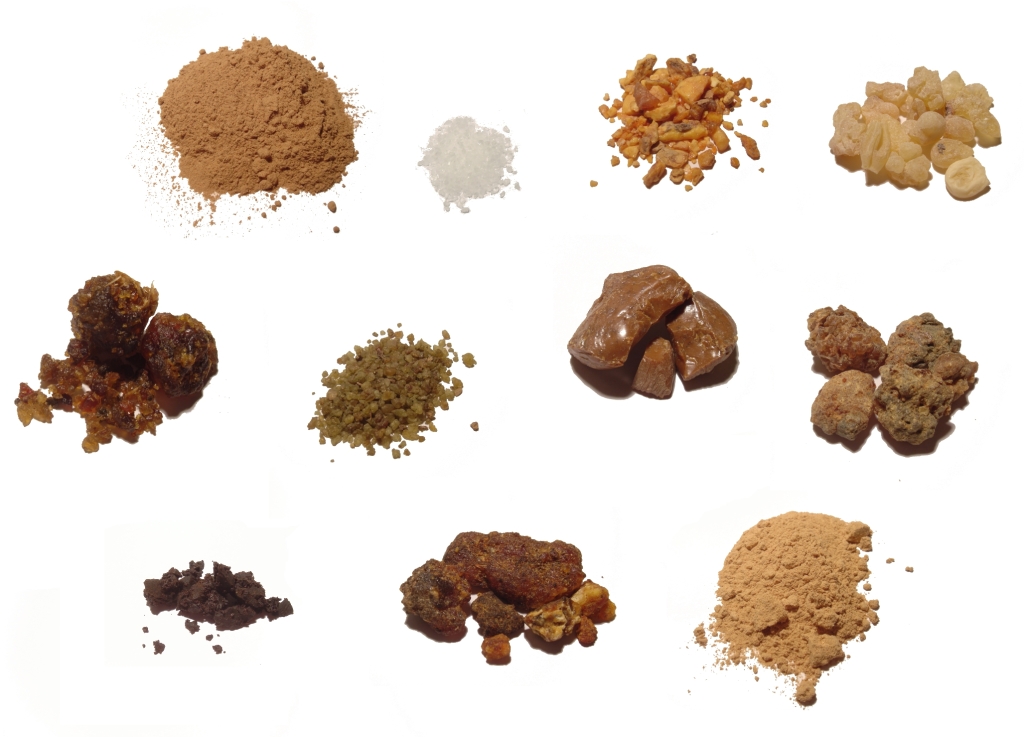
18 November 2006 (original upload date)
Raw incense ingredients, including frankincense (modern comparative photograph)
A modern comparison of raw incense ingredients, including frankincense; no tree is shown.
Modern comparative materials; the photograph does not identify an ancient resin residue or establish an ancient trade route.

Photographed 2013-12-14 08:37:58
Papery bark of Boswellia Sacra – Modern frankincense tree or resin, as botanical/process context
Papery bark of Boswellia Sacra. Modern frankincense tree or resin, as botanical/process context.

Khor Rori / Sumhuram · Photographed 2023-11-16 07:54:51
South Arabian incense burner from Khor Rori/Sumhuram in the Museum of the Frankincense Land
South Arabian incense burner from Khor Rori/Sumhuram in the Museum of the Frankincense Land; source gives a broad 3rd-century BCE to 5th-century CE range.
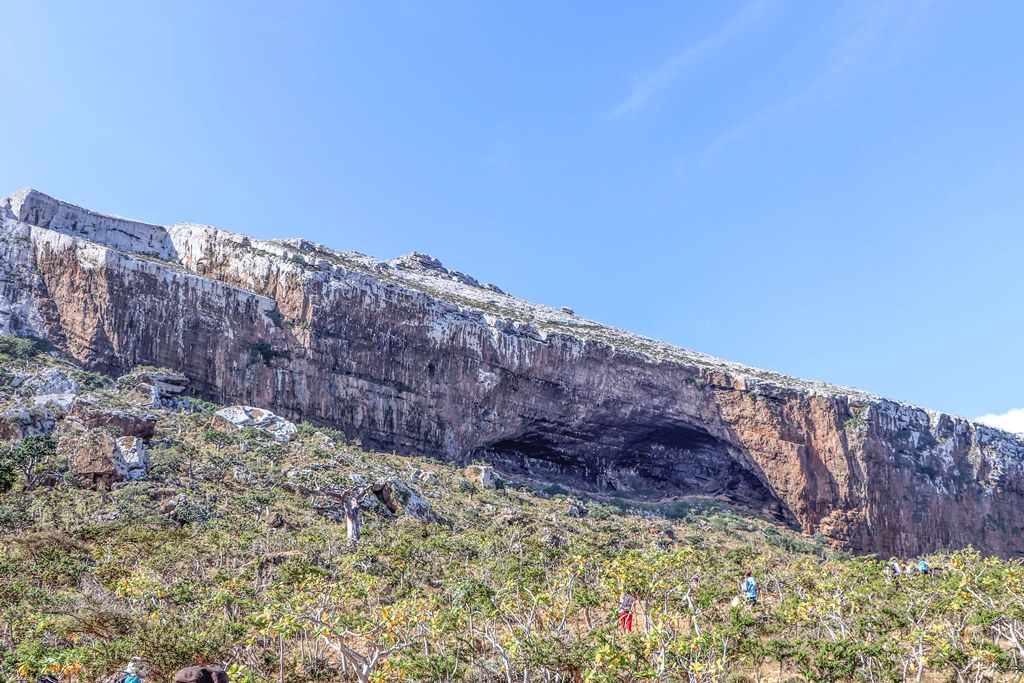
Hoq Cave · Photographed 2023-02-01
Entrance and surrounding limestone slope at Hoq Cave, Socotra
No ancient inscription can be read in this image.

Khor Rori / Sumhuram · Photographed 2016-11-18 08:40:42
Conserved masonry remains at Khor Rori/Sumhuram, Oman, photographed in 2016

Hoq Cave · Photographed 2018-03-29
Documentary view of limestone formations inside Hoq Cave, Socotra
No ancient inscription can be read in this image.
Show 7 more photographs and source images ↓

Khor Rori / Sumhuram · Photographed 2023-04-06
Whetstones, iron knives, needles, a bone awl and small weights from Sumhuram excavations, displayed together
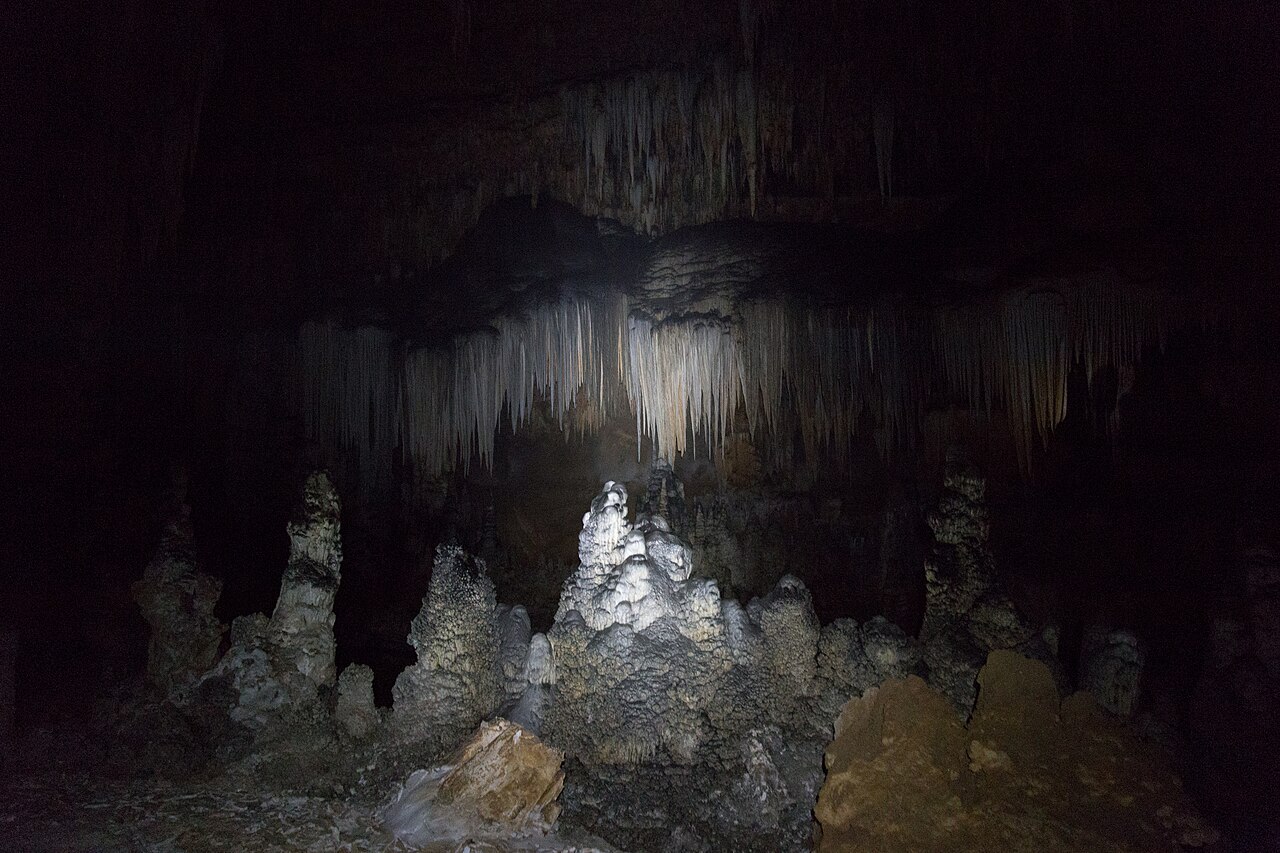
Hoq Cave · Photographed 2015-03-14 07:56:16
Documentary view of limestone formations inside Hoq Cave, Socotra
No ancient inscription can be read in this image.
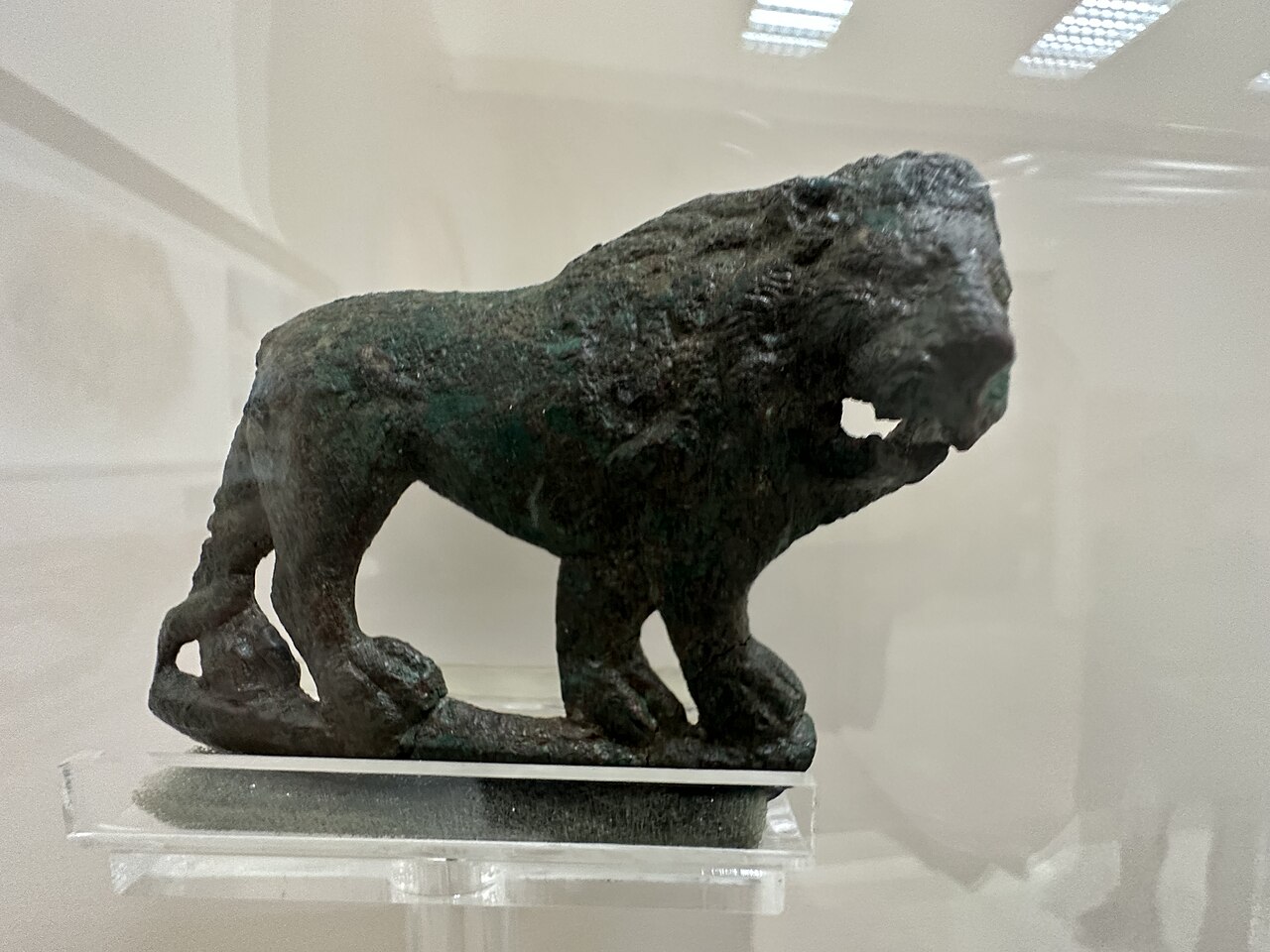
Khor Rori / Sumhuram · Photographed 2023-04-06
Bronze lion applique from a shrine at Sumhuram, displayed in a museum case
Bronze lion applique from a shrine at Sumhuram, displayed in a museum case; repository dates it to the 1st century BCE.
Hoq Cave · Photographed 2023-02-01
Documentary view of limestone formations inside Hoq Cave, Socotra
No ancient inscription can be read in this image.

Khor Rori / Sumhuram · Photographed 2014-03-21 10:26:57
View across the Khor Rori estuary from Sumhuram Park, Oman, in 2014

Hoq Cave · Photographed 2013-08-23 13:55
View from inside Hoq Cave toward the entrance and sky, Socotra
No ancient inscription can be read in this image.

Khor Rori / Sumhuram · Photographed 2023-04-06
Estuary and excavated landscape at Khor Rori/Sumhuram, Oman, photographed in 2023
006Two views
Both views are shown at equal weight; this site does not choose between them.
Whether Rouletted Ware found in Arabia shows the presence of Tamil traders
- One view
- A common view takes Rouletted Ware in Arabia as evidence of Tamil merchants from southern India.
- Another view
- Reddy's 2015 fabric study separates true Rouletted Ware from imitations; a Khor Rori imitation did not match Alagankulam clays.
- What would settle it
- Mineral or chemical matches between Arabian sherds and well-characterised clays or workshops in southern India or Sri Lanka.
007Where next
All related studies, connected material, books and sources13 · 9
Elsewhere on this site
Read this study with a guided path: Follow a voyage
Excavation Atlas Sites: Berenike (Red Sea Port, Egypt) · Khor Rori / Sumhuram & Quseir al-Qadim
Junior Detective Quests: Pepper Jar: Two Objects, Two Stories · The Canoe at the Waterfront: Observation vs. Function · Catch the Wind: Planning a Monsoon Voyage
Classroom Lesson Plans: Module 2 · The Monsoon Engine: How Winds, Rivers & Boats Connected the Indian Ocean
Multi-Script Glossary Terms: kalam (கலம் / കലം) · nāvāy (நாவாய் / നാവായ്) · tōṇi / ampi (தோணி / அம்பி / തോണി / അമ്പി) · āññili / ayini (Artocarpus hirsutus) (அயினி / ஆஞ்சிலி / ആഞ്ഞിലി / അയിനി) · Hoq Cave (Socotra) & Qana’ (Bir Ali) (சொக்கோத்ரா குகை & கானா துறைமுகம் / സൊക്കോത്ര ഹോഖ് ഗുഹയും ഖാന തുറമുഖവും) · Prakrit Brāhmī & Kharōṣṭhī Mercantile Graffiti (பிராகிருத பிராமி & கரோஷ்டி பொறிப்புகள் / പ്രാകൃത ബ്രാഹ്മിയും ഖരോഷ്ഠി പോറൽ ലിഖിതങ്ങളും)
Connected material
Photographs, drawings, books, videos and other studies linked to this study. A link helps you explore; it does not prove a historical claim.
- Bronze lion applique from a shrine at Sumhuram, displayed in a museum casephotographShows the subject
- Documentary view of limestone formations inside Hoq Cave, SocotraphotographBackground
- Documentary view of limestone formations inside Hoq Cave, SocotraphotographBackground
- South Arabian incense burner from Khor Rori/Sumhuram in the Museum of the Frankincense LandphotographShows the subject
- View from inside Hoq Cave toward the entrance and sky, SocotraphotographBackground
- Entrance and surrounding limestone slope at Hoq Cave, SocotraphotographBackground
- Documentary view of limestone formations inside Hoq Cave, SocotraphotographBackground
- Documentary view of limestone formations inside Hoq Cave, SocotraphotographBackground
- Cooking pots, stone lid and mortar from Sumhuram excavations, photographed in their museum displayphotographShows the subject
- Whetstones, iron knives, needles, a bone awl and small weights from Sumhuram excavations, displayed togetherphotographShows the subject
- Estuary and excavated landscape at Khor Rori/Sumhuram, Oman, photographed in 2023photographBackground
- View across the Khor Rori estuary from Sumhuram Park, Oman, in 2014photographBackground
- Conserved masonry remains at Khor Rori/Sumhuram, Oman, photographed in 2016photographShows the subject
- Papery bark of Boswellia Sacra – Modern frankincense tree or resin, as botanical/process contextphotographBackground
- Raw incense ingredients, including frankincense (modern comparative photograph)photographBackground
Books, videos and websites
Outside reading on this topic. These are not part of the study and we have not checked every claim in them. See all books and videos
- 'Soqotra's Forgotten and Endangered Heritage' by Dr Julian Jansen van Rensburg Video · Julian Jansen van Rensburg · Soqotra Cultural Heritage Project / IASA (event affiliation) · 26:11 · An accessible introduction to Soqotra’s recorded sites, cultural practices and threats to its heritage. Highlights how local knowledge and collaborative documentation contribute to archaeological knowledge. Recorded in 2020. Threats and conservation circumstances may have changed; use the dated account for research history and direct readers to current project information. This is a contextual alternative to the 2023 ARWA lecture.
- Archaeological explorations on Soqotra, Yemen: 2000 years of solitude? Julian Jansen van Rensburg Video · Julian Jansen van Rensburg, Ahmed Saeed Ahmed Al-Orqbi & Esmail Mohammed Ahmed Salem · ARWA Association · 55:15 · A research lecture considers the archaeological record of Soqotra’s participation in western Indian Ocean networks. Makes space for the island’s own heritage practitioners and Yemeni collaborators, and resists treating Socotra as only an exotic stop on a Roman route. Names and roles follow the organizer’s description. The exact division of spoken contributions is unreviewed. Do not present this general archaeology talk as Ingo Strauch’s edition of the Hoq inscriptions or as Qana coverage.
008Sources
The study lists the sources it consulted; we have not rechecked them. A working link does not show that a source was read, and a valid identifier does not show that it supports a claim. We do not link to unofficial uploads or copies of publications. Where a study cited one, we show the published citation, or a publisher, DOI or Internet Archive link when we have one. Tracking codes are removed from links, and the sources themselves are not republished here.
Strauch, Ingo, ed. 2012. Foreign Sailors on Socotra: The Inscriptions and Drawings from the Cave Hoq. Bremen.
Print or offline sourceSource recordDridi, Hédi. 2012. The archaeological remains in the cave Hoq. In Ingo Strauch, ed., Foreign Sailors on Socotra.
Print or offline sourceSource recordRobin, Christian Julien. 2012. Sudarabiques et Aksumites a Suqutra d'apres les inscriptions de la grotte de Hoq. In Ingo Strauch, ed., Foreign Sailors on Socotra, pp. 438–442.
Print or offline sourceSource recordGorea, Maria. 2012. The Palmyrene tablet 'De Geest'. In Ingo Strauch, ed., Foreign Sailors on Socotra.
Print or offline sourceSource recordReddy, Anjana. 2015. Sourcing Indian ceramics in Arabia: actual imports and local imitations. Proceedings of the Seminar for Arabian Studies 45: 253–272.
Lischi, Silvia. 2015. Traces of an Indian Community in the City of Sumhuram, Oman: Investigation of Materials Found during Excavations, pp. 227–240.
Online copy not linked · use the published editionSource recordCobb, Matthew Adam. 2023. Indian merchants abroad: Integrating the Indian Ocean world during the early first millennium CE. Journal of Global History. DOI: 10.1017/S1740022823000153.
Strauch, Ingo. Buddhism in the West? Buddhist Indian Sailors on Socotra (Yemen) and the Role of Trade Contacts in the Spread of Buddhism.
Online copy not linked · use the published editionSource recordSeland, Eivind Heldaas. 2014. Archaeology of Trade in the Western Indian Ocean, 300 BC–AD 700. Journal of Archaeological Research.
Print or offline sourceSource record
Researchers and institutions whose work this study uses: Authors, editors, and translators cited in the Source Register below, Published primary editions, catalogues, and domain scholarship logged for this study
How we know The evidence, claims and dates behind this study
What this study draws on
- Strauch's 2012 catalogue of the Hoq inscriptions and drawings, read through a searchable copy.
- Lischi's and Cobb's accounts of the Tamil-Brahmi name on a reused jar fragment at Sumhuram.
- Reddy's 2015 fabric (petrographic) study of Indian and Indian-style pottery at Qana and Khor Rori.
- Excavation reports on Sumhuram, and the Periplus, a first-century commercial account of these coasts.
Dates in this study
| What is dated | Date | How it was dated |
|---|---|---|
| Early Khor Rori Indian ceramic traffic antecedent | 300–2 BCE | Period assigned by excavators or scholars |
| Sumhuram Tamil-Brahmi nantai kiran context | 1–100 CE | Period assigned by excavators or scholars |
| Hoq Indian Brahmi corpus palaeographic range | 100–425 CE | Date from writing, coins or texts |
| Qana phase with limited Indian and southeast-Iranian imports | 175–425 CE | Period assigned by excavators or scholars |
| Hoq inscription 10:2 conditional Saka-era date | 232 CE | Date from writing, coins or texts |
| Palmyrene De Geest tablet textual date | 258 CE | Date from writing, coins or texts |
See these dates on the timeline
The study’s claims
4 claims · 14 source passages · 78 paragraphs
Browse the study paragraph by paragraphThe published Hoq corpus contains 192 Indian Brahmi inscriptions and one Kharoshthi graffito, with additional South Arabian, Aksumite, Greek, Bactrian-Brahmi and Palmyrene texts; Strauch attributes the 193 Indian epigraphs to approximately 117 visitors or hands.
Supported in this study
Epigraphic categories classify scripts/languages and do not by themselves establish immutable ethnic identities. The two South Arabian-or-Aksumite items are explicitly ambiguous.
Hoq directly attests shipboard occupational terminology including navika and niryamaka; a Hoq occurrence of sarthavaha was not verified in the read 2012 corpus.
Supported in this study
Strauch cautions that the exact scope of navika is uncertain and translates it approximately as captain or leading crew member. The non-occurrence of sarthavaha is a source-search finding and should be revisited if a specific catalogue citation is later produced.
Hoq preserves evidence for religiously plural mariner activity, with particularly strong Buddhist indicators consisting of stupa drawings, a probable dharmacakra, Buddhist-associated names and incense use, alongside Shaiva, Vaishnava, Skanda-related and broadly auspicious Indic signs.
Supported in this study
Onomastic theophoric names do not by themselves prove ritual practice. Nandyavarta, svastika and trisula forms are not uniquely sectarian in this context. The stupa area did not preserve evidence of circumambulation. Calling Hoq a formal Buddhist temple would exceed the evidence.
No Hoq inscription in the read 2012 edition is edited as Tamil-Brahmi, and no equivalent Tamil-Brahmi inscription from Qana was verified; the secure Arabian Tamil-Brahmi example considered here is from Sumhuram.
Supported with qualifications
This is bounded by the publications read for this study and should be updated if a later primary publication supplies a new Qana or Hoq attribution. Brahmi script in general must not be equated with Tamil-Brahmi. Supplied assessment: supported_with_negative_search_qualification
Trace one claim through the study’s records
Explore the evidenceOther source lists
Numbered citation links from the study
The numbered links in the study text point here.
Ingo Strauch (ed.), Foreign Sailors on Socotra (Bremen: Hempen Verlag, 2012), Catalogue of inscriptions and drawings, pp. 25–218
Print or offline sourceIngo Strauch, 'Catalogue of inscriptions and drawings' (pp. 25–218) and 'The Indian participants of trade' (pp. 343–359), in Strauch (ed.) 2012
Print or offline sourceIngo Strauch, 'The Indian participants of trade: the historical perspective', in Strauch (ed.) 2012, pp. 343–359
Print or offline sourceTraces of an Indian community in the city of Sumhuram (Oman)
Online copy not linked · use the published editionSourcing Indian Ceramics in Arabia: Actual Imports and Local Imitations
Online copy not linked · use the published editionSourcing Indian Ceramics in Arabia: Actual Imports and Local Imitations
Online copy not linked · use the published editionIngo Strauch, 'Catalogue of inscriptions and drawings' (pp. 25–218) and 'The Indian participants of trade' (pp. 343–359), in Strauch (ed.) 2012
Print or offline sourceIngo Strauch (ed.), Foreign Sailors on Socotra (Bremen: Hempen Verlag, 2012), pp. 25–218, 286–359
Print or offline sourceBuddhism in the West? Buddhist Indian Sailors on Socotra ...
Online copy not linked · use the published editionIngo Strauch, 'The Brāhmī scripts of Hoq: the palaeographical perspective', in Strauch (ed.) 2012, pp. 286–342
Print or offline sourceMaria Gorea, 'The Palmyrene tablet found at Soqotra' / 'The Sea and Inland Trade of Palmyra', in Strauch (ed.) 2012, pp. 447 ff.
Print or offline sourceTraces of an Indian community in the city of Sumhuram ...
Christian Julien Robin, 'Sudarabiques et Aksūmites à Suquṭra' (pp. 438–442) and 'Suquṭra dans les inscriptions de l'Arabie du Sud' (pp. 443–446), in Strauch (ed.) 2012
Print or offline sourceIngo Strauch, 'Catalogue of inscriptions and drawings' (pp. 25–218) and 'The Indian participants of trade' (pp. 343–359), in Strauch (ed.) 2012
Print or offline sourceIngo Strauch, 'The Indian participants of trade: the historical perspective', in Strauch (ed.) 2012, pp. 343–359
Print or offline sourceIngo Strauch, 'Catalogue of inscriptions and drawings' (pp. 25–218) and 'The Indian participants of trade' (pp. 343–359), in Strauch (ed.) 2012
Print or offline sourceIngo Strauch, 'The Brāhmī scripts of Hoq: the palaeographical perspective', in Strauch (ed.) 2012, pp. 286–342
Print or offline sourceIngo Strauch, 'The Brāhmī scripts of Hoq: the palaeographical perspective', in Strauch (ed.) 2012, pp. 286–342
Print or offline sourceIngo Strauch, 'Catalogue of inscriptions and drawings' (pp. 25–218) and 'The Brāhmī scripts of Hoq' (pp. 286–342), in Strauch (ed.) 2012
Print or offline sourceTraces of an Indian community in the city of Sumhuram ...
Sourcing Indian Ceramics in Arabia: Actual Imports and Local Imitations
Online copy not linked · use the published editionSourcing Indian Ceramics in Arabia: Actual Imports and Local Imitations
Online copy not linked · use the published editionSourcing Indian Ceramics in Arabia: Actual Imports and Local Imitations
Online copy not linked · use the published editionArchaeology of Trade in the Western Indian Ocean, 300 BC–AD 700 | Journal of Archaeological Research
Ingo Strauch, 'Catalogue of inscriptions and drawings', in Strauch (ed.) 2012, pp. 25–218
Print or offline sourceHédi Dridi, 'The archaeological remains in the cave Hoq', in Strauch (ed.) 2012, p. 219 ff.
Print or offline sourceIngo Strauch, 'Catalogue of inscriptions and drawings' (pp. 25–218) and 'The Indian participants of trade' (pp. 343–359), in Strauch (ed.) 2012
Print or offline sourceBuddhism in the West? Buddhist Indian Sailors on Socotra ...
Online copy not linked · use the published editionIngo Strauch, 'Catalogue of inscriptions and drawings', in Strauch (ed.) 2012, pp. 25–218
Print or offline sourceMaria Gorea (pp. 447 ff.) and Christian Julien Robin (pp. 438–442), in Strauch (ed.) 2012
Print or offline sourceIntegrating the Indian ocean world during the early first ...
Ingo Strauch, 'The Indian participants of trade: the historical perspective', in Strauch (ed.) 2012, pp. 343–359
Print or offline sourceIntegrating the Indian ocean world during the early first ...
Archaeology of Trade in the Western Indian Ocean, 300 BC–AD 700 | Journal of Archaeological Research
Christian Julien Robin, 'Suquṭra dans les inscriptions de l'Arabie du Sud', in Strauch (ed.) 2012, pp. 443–446
Print or offline sourceIngo Strauch, 'Catalogue of inscriptions and drawings' (pp. 25–218) and 'The Indian participants of trade' (pp. 343–359), in Strauch (ed.) 2012
Print or offline sourceHédi Dridi (p. 219 ff.) and Ingo Strauch (pp. 343–359), in Strauch (ed.) 2012
Print or offline sourceIngo Strauch, 'Catalogue of inscriptions and drawings' (pp. 25–218) and 'The Brāhmī scripts of Hoq' (pp. 286–342), in Strauch (ed.) 2012
Print or offline sourceIntegrating the Indian ocean world during the early first ...
Sourcing Indian Ceramics in Arabia: Actual Imports and Local Imitations
Online copy not linked · use the published editionSourcing Indian Ceramics in Arabia: Actual Imports and Local Imitations
Online copy not linked · use the published editionTraces of an Indian community in the city of Sumhuram ...
Ingo Strauch (ed.), Foreign Sailors on Socotra: The Inscriptions and Drawings from the Cave Hoq (Bremen: Hempen Verlag, 2012)
Print or offline sourceIngo Strauch, 'Catalogue of inscriptions and drawings' (pp. 25–218), 'The Brāhmī scripts of Hoq' (pp. 286–342), and 'The Indian participants of trade' (pp. 343–359), in Strauch (ed.) 2012
Print or offline sourceHédi Dridi, 'The archaeological remains in the cave Hoq', in Strauch (ed.) 2012, p. 219 ff.
Print or offline sourceSourcing Indian ceramics in Arabia: actual imports and local ...
Traces of an Indian community in the city of Sumhuram (Oman)
Online copy not linked · use the published editionIngo Strauch (ed.), Foreign Sailors on Socotra (Bremen: Hempen Verlag, 2012), pp. 25–218, 286–359
Print or offline source
About this study Status, corrections and how it was made
Status
Draft study, revision 6. No historian, archaeologist, or Tamil or Malayalam specialist has reviewed it yet.
The study itself says more research is needed before its question can be settled.
How it was made
Compiled as an editorial synthesis from published scholarship around questions we framed. About this project & workflow
The summary, How sure lines and Two views notes on this page were prepared from this study and cross-checked against its passages. That is an editorial check, not a specialist review.
Technical details
Study code R240. The text fingerprint changes whenever the study text changes.
- The study text is shown as written. Links from its paragraphs to citations help you move around the study; they are not new claims or checked source passages.
See how this study’s records were extracted
Text fingerprint (SHA-256): R240 · a9d66eda3e997beef5bf2886… · v6
Evidence tables and technical details are on the web page: https://layersofthesouth.org/read/960ca212c9