Each period has the same width, so spacing is not to scale.
- Across the water
- 200 BCE–300 CE
- Berenike
- Khor Rori / Sumhuram & Quseir al-Qadim
Tamil writing found on pots at Egypt's Red Sea ports
Pots inscribed in Tamil-Brahmi at Berenike and Quseir show Tamil was written in the Red Sea trade; who wrote them, and where, is less clear.
- This page
- 5,688 words · revision 6
Draft study · Awaiting specialist review · Updated
001Dates and places
Places on the atlas that name this study.
- Berenike
Connected overseas port · Shown in Western Indian Ocean Inset
outside this map
- Khor Rori / Sumhuram & Quseir al-Qadim
Connected overseas port · Shown in Western Indian Ocean Inset
outside this map
1000–500 BCE
Different beginnings
500–200 BCE
Marks & materials
200 BCE–300 CE
Connected worlds
300–600 CE
Change & continuity
- First-century CE Roman-period context for the Indian-made storage jar containing >7.5 kg of black peppercorns at Berenike
- 60–70 CE stratigraphic context for the 1995 Berenike Tamil-Brahmi amphora fragment
- Period assigned by excavators or scholars
Each date belongs to what was dated (a sample, an object, a layer or a text), which is not always the event the study asks about.
Each period has the same width, so spacing is not to scale.
The full table of dates, with their ranges, is under How we know.
- 2 Well supported
- 1 Likely
- 1 Possible
002How sure
In brief
Berenike and Quseir al-Qadim were Roman-period ports on Egypt's Red Sea coast. Several pots found there carry short texts in Tamil, written in Tamil-Brahmi. Iravatham Mahadevan's 2003 corpus describes two Quseir sherds as Tamil in Tamil-Brahmi – usually cited as kaṇaṉ and cātaṉ, the names Kannan and Cattan – dating them palaeographically to about the first century CE. He read a Berenike amphora sherd, from a layer dated 60–70 CE, as korra-puman, though damage affects its opening signs. A jar from later excavations at Quseir has two published readings, a phrase about a pot or a man's name. Berenike also held an Indian-made jar with over 7.5 kg of pepper, and reused teak timbers. These finds show goods and Tamil writing moving through the ports. They do not show who carried the goods, where each text was written, or whether Tamil merchants lived there. A marble Buddha statue from Berenike, published in 2025, adds evidence for Indian religious practice at the port.
Key researchers cited in this study: Steven E. Sidebotham (Berenike Red Sea Excavations) · Iravatham Mahadevan (Tamil-Brāhmī Epigraphy) · Full bibliography
How sure
- Well supported
Tamil was written on pottery that reached Egypt's Red Sea ports
Published Tamil-Brahmi inscriptions come from both Quseir al-Qadim and Berenike.
- Well supported
Indian goods, including pottery, pepper and teak, moved through these ports
Indian-made jars, a large pepper deposit and teak are reported in excavation publications.
- Likely
Tamil-speaking people were present at the ports themselves
Highly plausible, but a mark may have been scratched before the pot reached Egypt.
- Possible
Tamil or Malabar merchant communities lived at the ports
Tomber infers merchant communities from the wider finds; single sherds cannot show residence or ethnicity.
Why it matters
They are the strongest direct evidence of the Tamil language in the Roman Red Sea trade, so their limits matter.
The summary above is the short read. The full study is the complete text it was drawn from, with its tables and source notes.
What the full study covers
003The study
Framing and public explanation
Question and scope
What do the published inscriptions and associated finds at Berenike and Quseir al-Qadim establish about South Indian connections?
Region investigated: Berenike and Quseir al-Qadim on Egypt’s Red Sea coast, with evidence-relevant links to southern India, particularly Tamil-speaking regions and the southwest Indian pepper zone.
Period classification: core, within the 1000 BCE–600 CE period. The principal inscriptional evidence discussed here lies in the late first century BCE through the second century CE in the consulted publications; some teak reuse is Late Roman. Modern excavation and publication dates are kept separate from ancient dates.
Quseir al-Qadim is treated here as the archaeological site generally identified with ancient Myos Hormos. That identification was historically debated: Donald Whitcomb’s 1996 reassessment reviewed rival placements, while Lucy Blue’s later excavation overview states that archaeological and epigraphic data from the Southampton project confirmed the identification of Quseir al-Qadim with Myos Hormos. This study therefore keeps “Quseir al-Qadim” for the modern archaeological site and “Myos Hormos” for the ancient place-name rather than silently treating them as interchangeable labels. [] ↗1 ↗2
This study does not assume that a Tamil-language graffito proves its writer’s ethnicity, birthplace, occupation or length of residence; that an Indian-made pot proves who transported it; that pepper associated with southwest India proves a “Malabar merchant” carried it; or that teak in ship-like components proves a vessel was built, owned or crewed in India. Those are different evidentiary propositions, and the sources themselves provide several reasons to keep them separate. ↗3 ↗4 ↗5
Orientation
A small group of pottery fragments from Egypt’s Red Sea ports carries unusually direct evidence: short texts in Tamil written in Tamil-Brahmi, the early adaptation of Brahmi used for Old Tamil. They matter because they bring language into an archaeological record otherwise dominated by cargo containers, food remains, timber, buildings and documents in other languages. Yet the important question is not simply whether “Tamils were in Egypt.” A pot may travel farther than the person who marked it; a name need not disclose ethnicity; a commodity’s geographical origin does not identify its carrier; and a reused ship timber cannot identify the shipyard that first built the vessel. The evidence is therefore best read in layers: material movement, language use, possible individual presence, possible residence or community, and ethnic identity. Those layers do not have equal evidentiary support. ↗6 ↗4 ↗5
Accessible explanation
Berenike and Quseir al-Qadim were working ports on Egypt’s Red Sea coast. Their excavations preserve practical evidence of long-distance exchange: storage and cooking vessels, inscriptions and graffiti, commodities, wood, ship-related material, and structures where objects were stored, used, repaired, discarded or reused. Blue summarizes Roman occupation at Quseir al-Qadim/Myos Hormos as extending from the late first century BCE to the mid-third century CE. [] ↗1
The clearest specifically South Indian signal is linguistic. Iravatham Mahadevan's 2003 corpus (p. 49) describes two Quseir sherds as Tamil in Tamil-Brāhmī; the readings are usually cited in scholarship as kaṇaṉ and cātaṉ (the personal names Kaṇṇaṉ and Cāttaṉ; the exact printed transliteration on p. 49 was not re-checked here). He assigns them approximately to the first century CE by palaeography – comparison of letter forms – and notes the occurrence of the same names on roughly contemporary pottery from Arikamedu in southeast India. [] ↗6 The Arikamedu comparison is important comparative evidence, but it does not establish that the people named on the Egyptian sherds came from Arikamedu, or even that the named persons themselves transported the pots.
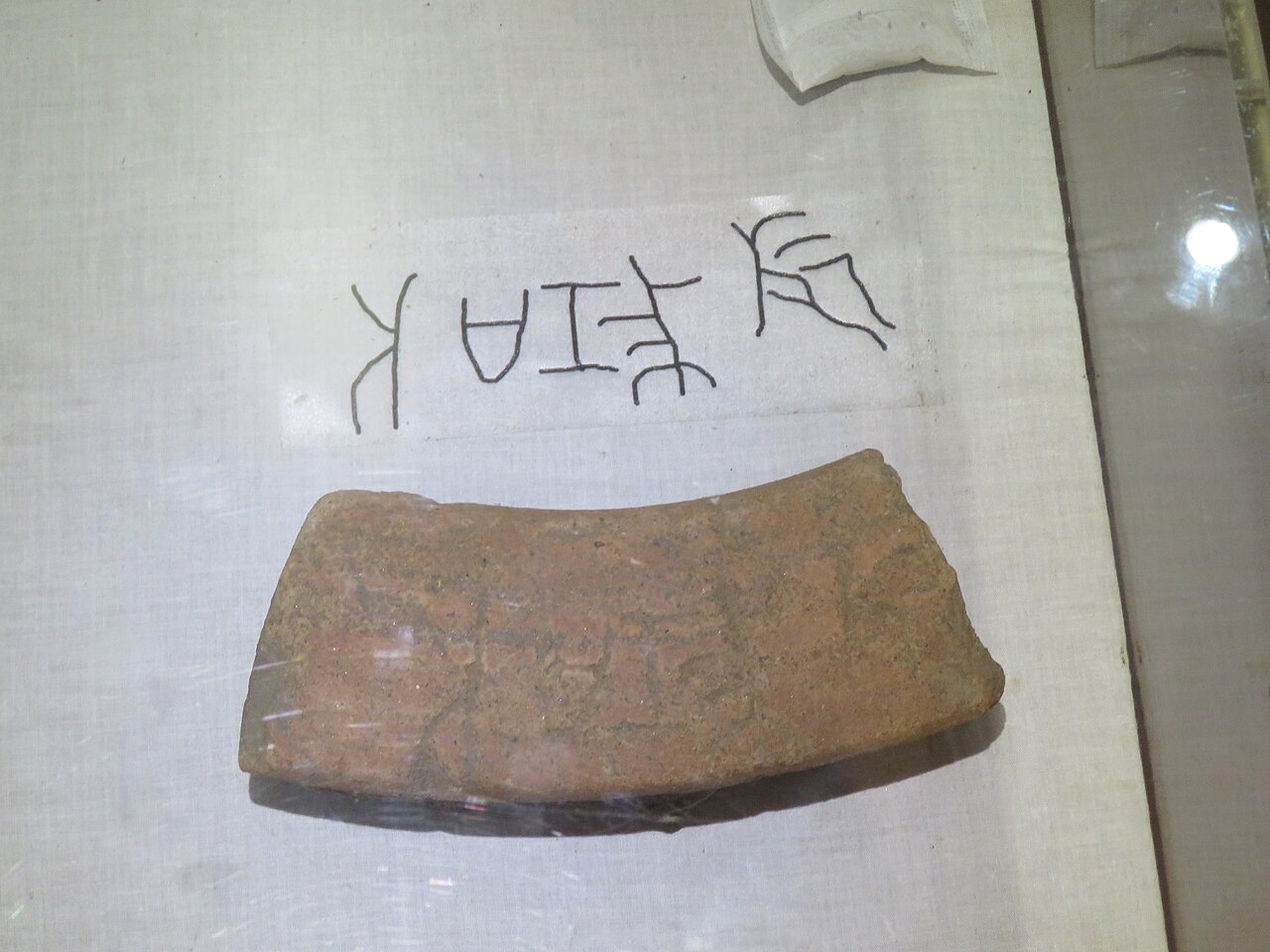
At Berenike, Mahadevan reports that the 1995 excavation recovered an inscribed amphora fragment from a stratigraphic context dated to 60–70 CE. He reads the Tamil-Brahmi text as korra-puman and interprets it as “Korra(n), the chieftain.” [] ↗6 This corrects the shorthand “Korra”: the published reading is longer, and the social meaning assigned to its second element is Mahadevan’s epigraphic interpretation, not an independently documented biography of a person in Egypt. A stratigraphic date for the sherd’s deposit is also not automatically the date at which somebody scratched the inscription.
The Southampton excavations added a third published Quseir Tamil-Brahmi case. An Indian narrow-necked storage jar, catalogue no. 7 / O.780 from Trench 6H (4162), carried a post-firing graffito written twice on opposite sides of its rim and upside down relative to the vessel. Mahadevan proposed a reading paanai oRi, interpreted as a phrase concerning a pot suspended in a rope net; Kasinathan and Selvakumar instead proposed Panai ORi as a male personal name. [] ↗4 The same catalogue dates the excavated context to the “second half of the 2nd century AD or later,” while reporting Mahadevan’s palaeographic proposal that the writing belongs to the first century BCE. These are different types of dates and cannot presently be merged into one neat chronology. ↗4
Material evidence strengthens the picture of Indian Ocean connectivity but must be interpreted separately from the inscriptions. Roberta Tomber’s ceramic study discusses Indian and Indian-style wares at Berenike and Myos Hormos and suggests that some fine and coarse vessels could have travelled as personal possessions of merchants or sailors rather than commercial cargo. She treats “Indian merchant communities” as an assemblage-level interpretation and says the epigraphy of Arikamedu, Berenike and Myos Hormos suggests that at least some people involved were Tamil speakers. [] ↗3
The famous pepper find also requires careful wording. Martin Hense’s study of the Great Temple area at Berenike reports Indian-made storage jars excavated in 1999 and says one still contained more than 7.5 kg of black peppercorns. Crucially, Hense then makes the temple connection conditional: his interpretation proceeds on the assumption that this area formed part of the temple complex. [, C013, C020] ↗7 The evidence therefore does not justify the unqualified formulation “Roman storage jars inside the Serapis temple.” Tomber’s ceramic synthesis associates Berenike’s black pepper with southwest India/the Malabar coast, but that is a geographical source attribution for the commodity, not an ethnic identification of its owner, packer or carrier. [] ↗3
Berenike also preserves teak (Tectona grandis) objects and timbers. Specialist wood work illustrates teak with maritime characteristics, including a board with an iron nail, a cross-lath feature and pitch or tar, while Sidebotham’s excavation overview describes teak beams with dowel holes reused in Late Roman buildings and interprets them as material recycled from dismantled ships. [] ↗8 ↗9 Yet Sidebotham explicitly warns that teak parts cannot establish where a vessel was originally constructed: a vessel made elsewhere could have been repaired with teak while calling at Indian ports. [] ↗5 The timber therefore supports the movement of an India-associated material and maritime repair or reuse, not an “Indian ship” in an ethnic, political or shipyard sense.
Modern wooden fishing boat at the Quseir harbour, Egypt, photographed in October 2026
Quseir modern harbour (regional context)
Photographed 10 October 2026, 12:07 (according to Exif data)
The online file categories mention Myos Hormos, but the photograph shows the modern Quseir harbour and fishing boats, not the excavated ancient port.
Bottom line: the published evidence securely supports Tamil-language writing on pottery recovered at both ports and a substantial movement of South Indian-associated materials and commodities through the Egyptian Red Sea system. It makes participation by Tamil-literate or Tamil-speaking people in these port networks highly plausible; some scholars infer recurrent or resident Indian merchant communities from the wider assemblage. What the consulted evidence does not establish is that a named person on one of the sherds was a “Tamil merchant,” that a durable “Malabar colony” existed at either port, or that ethnicity can be inferred from pepper, ceramic fabric or teak. ↗6 ↗7 ↗3 ↗5
Investigation and evidence
Main investigation
The two early Quseir sherds. Mahadevan’s 2003 corpus is the most accessible read epigraphic synthesis for two finds from the Chicago excavations. On printed p. 49 it describes two sherds as Tamil in Tamil-Brāhmī; the readings are usually cited as kaṇaṉ and cātaṉ for the personal names Kaṇṇaṉ and Cāttaṉ (the exact printed forms on p. 49 were not re-checked here). He argues that the Tamil nominal ending -an helps establish the language identification, assigns the inscriptions an approximate first-century CE palaeographic date, and notes the same personal names on pottery from Arikamedu. [] ↗6
The original excavation publication was independently verified: Quseir al-Qadim 1980: Preliminary Report, edited by Donald S. Whitcomb and Janet H. Johnson, was published in 1982, and the official University of Chicago record lists Janet H. Johnson’s chapter “Inscriptional Material.” The full PDF was not consulted for this study, so it has not checked the original sherd photographs, exact findspots, pottery descriptions or plates in that volume. [; R119-G001] ↗10
This limitation affects what can be claimed about presence. A Tamil name scratched on a vessel is strong evidence for Tamil language use somewhere in the vessel’s use-history. It is weaker evidence for individual presence specifically at Quseir, because unless the moment and setting of inscription can be constrained, a mark might have been made before the vessel arrived in Egypt. It is weaker still for residence: a short-term traveller, sailor, porter, broker or recurrent visitor could leave writing without settling. And it is not a standalone test of ethnicity. The sherds’ value is not diminished by observing those distinctions; rather, they become more useful because the evidence is being asked to support only what it can actually bear. ↗6 ↗4
The Berenike sherd. Mahadevan reports that Berenike’s 1995 excavation yielded an inscribed amphora fragment in a stratigraphic context dated to 60–70 CE; he identifies the writing as Tamil-Brahmi, reads korra-puman, and interprets it as “Korra(n), the chieftain.” [] ↗6 The shorthand “the name Korra” therefore loses part of the published text. Equally, “chieftain” should not be presented as though an Egyptian administrative or biographical document independently identified the individual’s rank: it is the interpretation Mahadevan gives to the second element of the inscription.
Mahadevan’s bibliography identifies an earlier dedicated publication, “Tamil-Brahmi Graffito,” in the excavation volume for Berenike 1995, but that original 1996 chapter and its plate have not been read. ↗6 The 60–70 CE dating is consequently well attested in a later specialist epigraphic corpus but still deserves plate- and excavation-level verification.
The reading itself is not uncontested. R. Nagaswamy, in an undated online chapter, disputes Mahadevan’s reading of this Berenike sherd and its linguistic interpretation, and argues for another reading and affiliation. Nagaswamy reports Mahadevan’s reading as “Kora Puman”, which appears to be a different spelling of the reading given here as korra-puman. Nagaswamy’s own alternative reading is not recorded in this study, and his objections have not yet been compared with Mahadevan’s original 1996 chapter or the sherd’s plate. It is therefore a reported disagreement not yet checked against the primary publication, and, like the O.780 dispute below, it should be carried forward rather than settled by choosing one reading. (R. Nagaswamy, online chapter 32) Secondary notes on the 2025 Berenike report also note damage affecting the initial signs on the sherd. ↗17
The date itself must also be kept in its proper role. “60–70 CE” is a stratigraphic context date for where the fragment was found as reported by Mahadevan. It need not equal the amphora’s manufacture date, the moment when the graffito was incised, the start or end of an individual’s presence, or the chronological span of a trading connection. [] ↗6
The later Southampton Quseir jar and a genuine disagreement. The 2011 finds publication gives a richer object biography for O.780. Its Tamil-Brahmi graffito was added after firing, repeated on opposite sides of the rim, and placed upside down in relation to the jar’s normal orientation. The excavators reasoned that this positioning implies the vessel was empty or stoppered when marked. [] ↗4
The same publication does not hide disagreement over what the inscription says. It records Mahadevan’s paanai oRi, understood as a phrase involving a pot and a rope net, but also Kasinathan’s and Selvakumar’s proposal that Panai ORi was a man’s name. [] ↗4 If the first interpretation is right, the graffito gives evidence for practical Tamil vocabulary associated with a vessel or its handling; if the second is right, it resembles the personal-name marking seen in the earlier sherds. The linguistic connection survives either way, but the function of the inscription changes.
The chronological tension should also be preserved rather than smoothed away. Tomber and colleagues report Mahadevan’s proposed first-century BCE palaeographic date for the script, while catalogue no. 7 / O.780 is assigned to a context dating from the second half of the second century CE or later. [] ↗4 An older sherd can of course survive into a later deposit, but residuality is only one possible archaeological explanation and was not established by the consulted passage. The safe description is: a Tamil-Brahmi graffito on an Indian storage jar, with disputed reading and discrepant palaeographic and depositional dates.
The Southampton catalogue supplies an especially instructive comparator: an Indian cooking pot at Quseir carried a South Arabian monogram added after firing. [; ] ↗4 This directly demonstrates why ceramic origin cannot simply be converted into user ethnicity or language. An Indian vessel could move into a different linguistic setting and acquire a mark there – or at another stage in its circulation. The same caution has to be applied in reverse to Tamil writing.
Ceramic assemblages and people. Tomber’s 2000 synthesis notes Indian-made and Indian-style ceramics at Berenike and discusses how fine wares and coarse vessels might have reached Egypt as personal possessions of merchants or sailors. On this broader assemblage she argues that the evidence can support Indian merchant communities, while the epigraphic evidence indicates that at least some of the people involved were Tamil speakers. [] ↗3 This is valuable but must be quoted at the right scale: it is a community interpretation from multiple classes of evidence, not a direct identification of the occupation or residence status of Kanan (Kannan), Catan (Cattan), or the bearer of korra-puman.
Richard Salomon’s 1991 “Epigraphic Remains of Indian Traders in Egypt” is an important part of this study history because it addresses the wider Indian-language epigraphic record in Egypt and questions of temporary and longer-term presence. Only bibliographic and abstract-level material was accessible for this study, however, not the article’s full argument. [; R119-G014] ↗11 It therefore serves as a follow-up source rather than a passage-level basis for assigning residence to the people behind the particular Berenike or Quseir graffiti.
Pepper: cargo origin is not carrier identity. The phrase “7.5 kg of Malabar black pepper stored in Roman storage jars in Berenike’s temple of Serapis” compresses at least four separate propositions: the quantity, plant identification and geographic association, the manufacture of the container, the archaeological context, and the identity of people handling it. The consulted literature supports some of those propositions more securely than others.
Hense reports Indian-made storage jars excavated at Berenike in 1999 and says one still contained more than 7.5 kg of black peppercorns. He immediately qualifies the architectural interpretation by writing conditionally about the possibility that the area belonged to the temple complex. [] ↗7 Thus:
- “Roman storage jars” should be replaced by Roman-period Indian-made storage jar(s).
- “Inside the temple” should be replaced by from an area whose membership in the temple complex is an interpretation, pending plan-level verification.
- “Malabar pepper” can describe a published geographical source association for the commodity, but it does not identify the trader or carrier as Malabari.
Tomber’s ceramic synthesis explicitly sets Berenike’s black-pepper evidence from southwest India/Malabar alongside ceramic evidence that more often points toward India’s east coast, arguing that both sides of South India may have mattered to the trade. [, C018] ↗3 This matters for South Indian history: the Egyptian assemblages need not map onto one departure coast, one community or one commercial chain.
René Cappers’s Roman Foodprints at Berenike is the specialist archaeobotanical monograph most relevant to specimen-level verification. Its official University of California eScholarship record was read, but its full PDF was not consulted for this study. [; R119-G004] ↗12 The exact specimen catalogue, botanical identification procedure and context description for the pepper should therefore be checked there before a final archaeological caption claims more than the already read sources support.
Teak: strong evidence for movement, weak evidence for ship identity. Bouchaud, Newton, Van der Veen and Vermeeren identify Tectona grandis among Berenike’s worked wood and illustrate maritime-associated pieces, including a teak board with an iron nail, a cross-lath feature and pitch/tar. They interpret some curved teak planks with nails, cross-laths and pitch/tar as reused boat-hull material because an architectural explanation is difficult. [, P020] ↗8 Their synthesis also cautions that older published Berenike wood datasets do not always separate earlier, Roman and later contexts with the precision desirable for a new synthesis. [, P018] ↗8
Modern Quseir harbour and waterfront vegetation, Egypt, photographed in October 2026
Quseir modern harbour (regional context)
Photographed 2026-10-10
The online file categories mention Myos Hormos, but the photograph shows the modern Quseir waterfront, not the excavated ancient port.
Sidebotham’s fieldwork overview independently records Late Roman teak beams with dowel holes reused in religious and secular structures at Berenike, including examples with pitch or tar, and interprets them as probably recycled from dismantled ships. [] ↗9 A later excavation report is particularly important because Sidebotham explicitly rejects the inference that teak establishes where the original ship was built: ships from outside South Asia could have received teak repairs while at Indian ports. [] ↗5 This makes “Indian teak ship timbers” acceptable only when Indian refers carefully to the wood’s source association – not the nationality, ethnicity, ownership, crew or original shipyard of a vessel.
A Buddha statue at Berenike. A participating institution’s preliminary release dated 3 January 2024 reported a Buddha statue at Berenike, proposed a late-first- or early-second-century CE context, and preliminarily attributed the marble to Anatolia (University of Warsaw (2024), “One of the most interesting discoveries”). Subsequent peer-reviewed publication by Steven E. Sidebotham, Rodney Ast, Marianne Bergmann, Shailendra Bhandare, Joanna K. Rądkowska, Ingo Strauch, Szymon Popławski and Mariana Castro (“Indians in Roman Berenike,” Jahrbuch des Deutschen Archäologischen Instituts 140, 2025: 233–293, §54; DOI 10.34780/n31wrw90) joins the statue’s head and torso and reports petrographic/isotopic assessment favouring white Paros (Paros 2) marble rather than Anatolian stone, while leaving open whether the sculpture was carved in Alexandria, at Berenike, or in India from imported Mediterranean stone. ↗17 Production, movement, dedication and final deposition therefore remain distinct analytical layers. “Hoq cave names western Indian sailors; Sumhuram has a Tamil name” describes other Buddhist traces left along these sea routes, at Hoq Cave on Socotra.
What, then, is established? The most defensible synthesis is layered:
Material movement is strongly established. Indian-manufactured ceramics reached the Egyptian Red Sea ports; a large quantity of black pepper was found in an Indian-made jar at Berenike; and imported teak entered maritime and later reuse cycles there. ↗8 ↗7 ↗3
Tamil language use is directly established in the object record. Published Tamil-Brahmi inscriptions occur on pottery from both Quseir al-Qadim and Berenike. ↗6 ↗4
Individual presence at the Egyptian ports is highly plausible but not equally demonstrated by every sherd. A graffito may have been written at one point in a vessel’s earlier circulation; the original archaeological reports and object surfaces are needed to constrain that possibility more tightly.
Residence and merchant-community formation are interpretations from the broader assemblage. Tomber explicitly advances such an interpretation, but one short name on one pot cannot measure length of stay or occupation. ↗3
Ethnic identity is not established by these finds alone. Language, name, ceramic origin, pepper source and teak species are evidence of different things. Collapsing them into “Tamil/Malabar merchants” would produce a stronger claim than the currently read evidence warrants.
No radiocarbon, thermoluminescence, dendrochronological, isotope, aDNA or other laboratory dating sample with a laboratory code, raw age, calibration curve, software, probability or calibrated interval was recovered from the passages read for these claims. Accordingly, no laboratory dating sample is recorded in this study. This means not documented or not recovered in the consulted evidence, not “archaeologically absent.” The pepper identification is archaeobotanical and the teak identification is botanical/material identification; neither was represented in the consulted passages as a scientific dating sample. ↗8 ↗12
Interpretation and sources
Interpretations, disagreements and limits
The strongest inscriptional proposition is modest but important: Tamil was written on pottery that ended up in Roman-period Egyptian Red Sea ports. Mahadevan’s readings of the early Quseir and Berenike examples are specialist epigraphic interpretations and remain the working readings here, although Nagaswamy disputes the Berenike reading. For O.780, the publication itself records a genuine semantic disagreement – descriptive phrase versus personal name – so a responsible account must carry that disagreement forward rather than silently selecting the more dramatic reading. ↗6 ↗4
Material movement is more securely demonstrated than individual biography. Indian ceramics occur at the ports; a Berenike Indian-made storage jar contained the large pepper deposit; and teak occurs in maritime-associated pieces and reused ship-like timbers. These observations document mobility of objects and commodities. They do not disclose who carried each object or what those people called themselves. The Indian pot bearing a South Arabian monogram is particularly useful because it materially demonstrates the mismatch that can exist between a vessel’s manufacturing classification and a later user’s writing system. ↗8 ↗7 ↗3 ↗4
Individual presence is highly plausible but cannot always be located with the precision implied by a phrase such as “a Tamil merchant at Myos Hormos.” A post-firing graffito could have been added anywhere during a vessel’s use-life. A stronger local-presence case would require, for example, a Tamil text demonstrably written on locally produced material, a text naming an Egyptian location or event, or detailed object-surface/context evidence tying inscription to a local reuse episode.
Residence is still more demanding. Tomber’s “merchant communities” argument draws on a broader archaeological pattern, not one inscribed fragment. Salomon’s wider Egyptian epigraphic study is a relevant research-history source, but its full text was not read here. ↗3 ↗11 Repeated documents naming the same individuals across dated contexts, household records, contracts or letters giving local addresses, or convergent residential assemblages would provide much stronger evidence for residence than an isolated pot mark.
Ethnic identity is the least securely recoverable layer. “Tamil-speaking” is a linguistic proposition; “South Indian” is a regional inference; “merchant” is an occupation; “resident” describes duration and social embedding; and “Malabar” in the pepper discussion concerns a proposed source zone for a commodity. Treating those terms as interchangeable would make the archaeology appear more precise than it is. A fair museum label would read along these lines:** Tamil-Brahmi users and South Indian materials participated in the Red Sea port networks; the broader assemblage is consistent with recurrent South Asian travellers and communities, but individual ethnicity and residence cannot be read directly from the sherds.** ↗3 ↗5
The highest-value resolving observations are clear: direct high-resolution inspection of the early Quseir and Berenike plates or objects; museum inventory numbers; petrographic or chemical sourcing of each inscribed vessel; direct inspection of Cappers’s pepper catalogue; plans locating the pepper deposit relative to the Great Temple; original wood catalogues separating the teak pieces by context; and specialist Tamil epigraphic review of O.780. These are unresolved research needs, not work claimed as completed.
Source register
Inspection levels below refer strictly to what was examined for this study.
| Full reference and durable URL/DOI | Language / type | Actual inspection level | Dependence and use |
|---|---|---|---|
Iravatham Mahadevan, Early Tamil Epigraphy: From the Earliest Times to the Sixth Century A.D., Harvard Oriental Series 62 (Chennai: Cre-A; Cambridge, MA: Department of Sanskrit and Indian Studies, Harvard University, 2003). https://search.worldcat.org/title/52720601 |
English / book, epigraphic corpus | Partial text: p. 49 and relevant references | Later specialist corpus; depends on original Quseir/Berenike publications for plate-level observations. C001–C005, C009. ↗6 |
Donald S. Whitcomb and Janet H. Johnson (eds.), Quseir al-Qadim 1980: Preliminary Report (Malibu: Undena Publications, 1982). DOI 10.83354/9yy6-w288. https://isac.uchicago.edu/research/publications/misc/quseir-al-qadim-1980-preliminary-report |
English / excavation report | Metadata only; full PDF was not consulted | Original excavation source for early Quseir finds; blocking source for plate/context verification. ↗10 |
Richard Salomon, “Epigraphic Remains of Indian Traders in Egypt,” Journal of the American Oriental Society 111.4 (1991): 731–736. https://www.jstor.org/stable/603404 |
English / research article | Abstract/citation level | Wider epigraphic context only; full argument uninspected. ↗11 |
Roberta Tomber, “Indo-Roman Trade: The Ceramic Evidence from Egypt,” Antiquity 74 (2000): 624–631. https://os.pennds.org/archaeobib_filestore/pdf_articles/Antiquity/2000_74_285_Tomber.pdf |
English / research article | Partial text + relevant PDF page images | Ceramic synthesis. C010, C012, C018 and contextual support for C019. ↗3 |
| Roberta Tomber, with David Graf, John F. Healey, Christiane Römer-Strehl and Grzegorz Majcherek, “Pots with Writing,” in D. Peacock and L. Blue (eds.), Myos Hormos – Quseir al-Qadim. Roman and Islamic Ports on the Red Sea, Volume 2: Finds from the Excavations 1999–2003, BAR International Series 2286 (Oxford: Archaeopress, 2011), pp. 5–10. | English / excavation finds chapter | Partial text, relevant pp. 7–9 in web rendering | Catalogue-level reporting for Southampton finds. C006–C008 and context for C011. ↗4 |
Lucy Blue, “Port of Myos Hormos and its Relations to Indo-Roman Trade,” in The Eastern Desert of Egypt during the Greco-Roman Period: Archaeological Reports (Collège de France, 2018). https://books.openedition.org/cdf/5235?lang=en |
English / scholarly chapter | Relevant HTML text read | Excavator overview. C016–C017. ↗1 |
Martin Hense, “The Great Temple of Berenike,” in the same OpenEdition volume (2018). https://books.openedition.org/cdf/5244?lang=en |
English / archaeological report chapter | Relevant HTML text read | Temple-context and pepper synthesis. C011, C013, C020. ↗7 |
Steven E. Sidebotham, “Overview of Fieldwork at Berenike 1994–2015,” in the same volume (2018). https://books.openedition.org/cdf/5250?lang=en |
English / archaeological synthesis | Relevant HTML text read | Excavator synthesis for teak reuse. C014. ↗9 |
Charlène Bouchaud, Claire Newton, Marijke Van der Veen and Caroline Vermeeren, “Fuelwood and Wood Supplies in the Eastern Desert of Egypt during Roman Times,” in the same volume (2018). https://books.openedition.org/cdf/5237?lang=en |
English / specialist wood study | Relevant HTML text/figures read | Wood identification, maritime interpretation and chronological caveat. C014. ↗8 |
René T. J. Cappers, Roman Foodprints at Berenike: Archaeobotanical Evidence of Subsistence and Trade in the Eastern Desert of Egypt, Berenike Report 6 / Cotsen Institute Monograph 55 (Los Angeles, 2006). https://escholarship.org/uc/item/75b5x6sw |
English / specialist monograph | Metadata only; PDF too large for successful inspection | Priority archaeobotanical follow-up; not used for an uninspected passage claim. ↗12 |
| Steven E. Sidebotham, “Berenike 2019: Report on the Excavations” (2020; exact journal/container metadata unresolved here). Read | English / excavation report | Partial text + facsimile page read | Explicit teak/ship-provenance caution. C015. ↗5 |
Donald S. Whitcomb, “Quseir al-Qadim and the Location of Myos Hormos,” Topoi 6.2 (1996): 747–772. DOI 10.3406/topoi.1996.1693. |
English / research article | Partial text + facsimile pages read | Research history of site identification. C016 context. ↗2 |
Steven E. Sidebotham, Berenike and the Ancient Maritime Spice Route (Berkeley: University of California Press, 2011). https://www.ucpress.edu/books/berenike-and-the-ancient-maritime-spice-route/paper |
English / book | Metadata only | Bibliographic reference verified, but no load-bearing claim relies on uninspected pages. ↗13 ↗14 |
| Iravatham Mahadevan, “Ekiptu nattil Tamilil elitiya taali,” Avanam, Journal of the Tamil Nadu Archaeological Society 9 (1998): 17–19. | Tamil / article | Citation only | Original-language follow-up; original article was not consulted for this study and transliteration/title should receive competent Tamil review. ↗15 |
Steven E. Sidebotham, Rodney Ast, Marianne Bergmann, Shailendra Bhandare, Joanna K. Rądkowska, Ingo Strauch, Szymon Popławski and Mariana Castro, “Indians in Roman Berenike,” Jahrbuch des Deutschen Archäologischen Instituts 140 (2025): 233–293. DOI 10.34780/n31wrw90. https://doi.org/10.34780/n31wrw90 |
English / research article | Published peer-reviewed article | Berenike Buddha marble identification (Paros 2) and note on damage to opening signs of the Berenike Tamil-Brāhmī sherd (§54, §114 n. 214). ↗17 |
A Tamil-language Avanam article was therefore bibliographically recovered, but its original text was not accessible. A Malayalam-language 2026 popular-media item appeared in searches, but because it was not specialist excavation or epigraphic scholarship it was not used as evidence for the ancient-history claims. No Malayalam specialist treatment of these specific objects was established in the accessible results. “Not located” here must not be converted into “does not exist.” ↗15 ↗16
No precise archaeological coordinates are given, because none were independently checked; a present-day map pin should not be mistaken for a measured ancient boundary.
Further reading is also kept separate from the evidence. Sidebotham 2011 [S013] is a useful synthetic background work; Cappers 2006 [S010] is the priority archaeobotanical follow-up; and the original Quseir and Berenike inscription publications should be acquired for plate-level verification rather than allowing later summaries to substitute indefinitely for them. ↗12 ↗14
Takeaways and learning
| Term | Plain-language meaning | Usage note |
|---|---|---|
| Tamil-Brahmi | Scholarly label for the adaptation of Brahmi used to write early Tamil. | Preserve as a technical term; do not imply a standardized modern-script form. |
| Graffito | A short mark or inscription scratched or written on an object. “Post-firing” means added after a ceramic vessel was fired. | Avoid reducing it to the modern sense of street graffiti. |
| Palaeography | Dating or interpreting writing by comparing letter forms and scribal habits. | It yields an argued range, not a laboratory measurement. |
| Stratigraphy | The archaeological sequence of deposits and contexts. | A context may date deposition without directly dating manufacture or inscription. |
| Amphora | A Mediterranean transport/storage-vessel form. | Do not translate every storage jar as “amphora”; O.780 is published as an Indian storage jar. |
| Ostracon | A potsherd used as a writing surface/document. | Distinguish it from a vessel fragment that merely carries a graffito. |
| paanai oRi | Mahadevan’s reported Roman-letter reading of O.780, interpreted as a phrase involving a pot and rope net. | Requires competent Tamil/epigraphic review and must appear with the alternative personal-name reading. ↗4 |
| kaṇaṉ (Kanan/Kannan), cātaṉ (Catan/Cattan), korra-puman | Transliterations and normalized forms of the Quseir and Berenike Tamil-Brāhmī sherds; Nagaswamy spells the Berenike reading “Kora Puman”. | Exact diacritics and any native-script rendering should be checked against the facsimiles; do not casually back-convert them into modern Tamil orthography. ↗6 |
Grounded takeaways:
- Tamil-Brahmi writing is published from both Quseir al-Qadim and Berenike; this is the strongest direct linguistic evidence of a South Indian connection. ↗6 ↗4
- The Berenike reading is korra-puman, not simply “Korra,” and the interpretation “Korra(n), the chieftain” belongs explicitly to Mahadevan. ↗6
- O.780 shows why epigraphy should preserve disagreement: paanai oRi as a practical/container phrase and Panai ORi as a personal name are both published interpretations. ↗4
- The >7.5 kg pepper deposit comes from an Indian-made storage jar, but its relationship to the temple complex is conditional, and pepper origin does not identify its carrier. ↗7 ↗3
- Teak at Berenike supports imported timber and ship-related reuse while explicitly failing to identify where a vessel was originally constructed. ↗8 ↗5
- “Tamil-speaking,” “South Indian,” “merchant,” “resident,” and “ethnic Tamil” are different historical propositions.
Still open: where exactly the early Quseir sherds were found; what vessel classes they belong to; whether their incisions are demonstrably post-firing; where the objects are now and what their inventory numbers are; whether petrography or elemental analysis can narrow their production zones; what specimen-level observations underlie the pepper’s southwest-Indian attribution; where exactly the pepper jar sat in relation to the Great Temple plan; and whether the original teak catalogues can separate the individual timbers by context and date.
Evidence challenge: A pot found in Egypt bears a Tamil personal name. Does that prove a Tamil merchant lived there? No. It directly establishes a Tamil-language mark on an object recovered there. Depending on the inscription’s use-history, it can strongly support participation by a Tamil-speaking person in the wider port network. But “merchant” is an occupation, “lived there” is a claim about residence, and “Tamil” as ethnic identity is stronger than the script alone can demonstrate.
Common claims checked
Common claims checked against the evidence
| Common claim or check | Status | Evidence-based disposition |
|---|---|---|
| Berenike has a Tamil-Brahmi sherd “with the name Korra.” | Qualified | A Tamil-Brahmi amphora fragment is published, but Mahadevan reads korra-puman, not merely “Korra,” and attributes the “chieftain” interpretation to the fuller expression. ↗6 |
| Quseir has sherds naming Kanan (Kannan) and Catan (Cattan). | Supported with source limitation | Mahadevan's 2003 corpus (p. 49) identifies two Tamil-Brāhmī sherds, usually cited as kaṇaṉ and cātaṉ (Kaṇṇaṉ and Cāttaṉ), ca. first century CE palaeographically; original excavation plates were not checked for this study. ↗6 ↗10 |
| These constitute direct evidence of “Tamil and Malabar merchants.” | Qualified / too strong as written | They directly support Tamil-language use and South Indian connections. Merchant occupation, residence and ethnicity are separate inferences. ↗3 |
| Berenike had 7.5 kg of Malabar black pepper. | Supported but qualified | More than 7.5 kg of black pepper is reported in an Indian-made storage jar; scholarship associates the commodity with southwest India/Malabar. Full specimen-level Cappers treatment was not read. ↗7 ↗12 ↗3 |
| Pepper was stored “in Roman storage jars in Berenike’s temple of Serapis.” | Corrected | The consulted source says Indian-made storage jars and makes membership of the find area in the temple complex conditional. ↗7 |
| Berenike preserves “Indian teak ship timbers.” | Qualified | Teak with maritime features and later reuse is securely reported, but timber species cannot establish a ship’s original construction place or cultural identity. ↗8 ↗5 |
The study adds one particularly important piece: the Southampton-era O.780 storage jar and its disputed Tamil-Brahmi reading. That changes the evidence from an apparently simple set of three personal names into a more instructive record in which one text may instead concern a pot and rope net, and in which palaeographic and depositional dates visibly diverge. ↗4 It also corrects the pepper container/context wording and makes explicit the published warning against deriving ship origin from teak.
Priority unresolved work is therefore: direct inspection of the 1979/1982 Quseir plates and Johnson inscription chapter; Mahadevan’s 1996 Berenike chapter and plate, compared with Nagaswamy’s objections; Cappers 2006 at specimen/catalogue level; original Vermeeren wood reports; repositories and inventory numbers for the inscribed sherds; and Tamil specialist review of the transliterations. These are recorded as gaps, not as evidence of absence.
The evidence does not support asserting a proven “Tamil merchant colony,” reducing korra-puman to “Korra” without attribution, putting the pepper unconditionally “inside the Serapis temple,” calling its container Roman-made, or treating teak as proof that a ship was Indian-built.
004Photographs
Photographs of the places and objects this study discusses. Each item carries its creator’s credit, licence and documented source. See all 412 photographs and source images ↗

Quseir modern harbour (regional context) · Photographed 10 October 2026, 12:07 (according to Exif data)
Modern wooden fishing boat at the Quseir harbour, Egypt, photographed in October 2026
The online file categories mention Myos Hormos, but the photograph shows the modern Quseir harbour and fishing boats, not the excavated ancient port.

Quseir modern harbour (regional context) · Photographed 2026-10-10 12:15:54
Modern Quseir harbour and waterfront vegetation, Egypt, photographed in October 2026
The online file categories mention Myos Hormos, but the photograph shows the modern Quseir waterfront, not the excavated ancient port.
005Two views
Both views are shown at equal weight; this site does not choose between them.
The reading of the Quseir storage jar O.780
- One view
- Iravatham Mahadevan reads paanai oRi, a phrase about a pot hung in a rope net.
- Another view
- Kasinathan and Selvakumar read Panai ORi as a man's personal name.
- What would settle it
- Specialist Tamil epigraphic review of the jar's inscription, which is written twice on its rim.
The reading of the Berenike sherd
- One view
- Mahadevan reads korra-puman and interprets it as 'Korra(n), the chieftain'.
- Another view
- R. Nagaswamy, in an online chapter, disputes this reading and its linguistic interpretation and argues for another.
- What would settle it
- Comparing the original 1996 publication and its plate side by side with Nagaswamy's objections.
006Where next
 Related study
All related studies, connected material, books and sources24 · 17
Elsewhere on this site
Read this study with a guided path: Follow a voyage
Excavation Atlas Sites: Berenike (Red Sea Port, Egypt) · Khor Rori / Sumhuram & Quseir al-Qadim
Junior Detective Quests: Pepper Jar: Two Objects, Two Stories · Curator for a Day: Three Objects, One Honest Exhibit · The Damaged Cargo Account: Reading the Muziris Papyrus
Classroom Lesson Plans: Module 2 · The Monsoon Engine: How Winds, Rivers & Boats Connected the Indian Ocean
Multi-Script Glossary Terms: miḷaku (kaṟi) (மிளகு / கறி / മുളക് / കുരുമുളക്) · Berenike & Myos Hormos (Quseir al-Qadim) (பெரெனிகே & மியோஸ் ஹோர்மோஸ் / ബെറനിക്കെയും മയോസ് ഹോർമോസും) · Hoq Cave (Socotra) & Qana’ (Bir Ali) (சொக்கோத்ரா குகை & கானா துறைமுகம் / സൊക്കോത്ര ഹോഖ് ഗുഹയും ഖാന തുറമുഖവും)
Connected material
Photographs, drawings, books, videos and other studies linked to this study. A link helps you explore; it does not prove a historical claim.
- Modern wooden fishing boat at the Quseir harbour, Egypt, photographed in October 2026photographBackground
- Modern Quseir harbour and waterfront vegetation, Egypt, photographed in October 2026photographBackground
- Three surfaces, three kinds of survivaldiagramThe pottery panel marks the Tamil-Brahmi name on an amphora fragment from Berenike discussed in this study.
- Read the surface. Then the claim.diagramThe portable-clay note, Tamil-Brahmi names on pots found at Berenike and Quseir al-Qadim, comes from this study.
- The sea changes with the seasondiagramThis study’s Tamil-Brahmi pots at Berenike and Quseir are evidence of the Red Sea trade that sailed with these seasonal winds.
- A jar of pepper at BerenikediagramThis study reports the Berenike jar of black pepper and Hense’s caveat that its link to the temple complex is only possible.
- A groove has a historydiagramThis study discusses Tamil-Brahmi names on pots from Red Sea ports, including one scratched after firing.
- From upland forest to estuaryillustrationThe pepper inset links to this study’s Indian pepper jar at Berenike in Egypt.
- How a surface carries a voiceillustrationNames written on pots also travelled: this study reports Tamil-Brahmi names on pots at Berenike and Quseir.
Books, videos and websites
Outside reading on this topic. These are not part of the study and we have not checked every claim in them. See all books and videos
- Early Tamil Epigraphy: From the Earliest Times to the Sixth Century A.D. Book · Iravatham Mahadevan · 2003 (Rev. 2nd ed. 2014) · A corpus, palaeographic grammar, and lexicon of Tamil-Brāhmī and early Vaṭṭeḻuttu cave inscriptions, inscribed potsherds, coins, and rings across Tamil Nadu, Kerala (Edakkal), and overseas Red Sea ports.
- Early Writing System: A Journey from Graffiti to Brahmi Book · K. Rajan · 2015 · Synthesizes decades of stratigraphic excavations at Kodumanal, Porunthal, and Mayiladumparai, cataloguing over 1,000 post-firing graffiti marks and Tamil-Brāhmī potsherds recovered from habitation and burial contexts.
- Indo-Roman Trade: From Pots to Pepper Book · Roberta Tomber · 2008 · Concise ceramic guide connecting Red Sea ports (Myos Hormos, Berenike), Southern Arabia (Khor Rori, Qana), and Indian ports (Pattanam, Arikamedu, Alagankulam) through petrography of amphorae, torpedo jars, and Indian coarse wares.
- Berenike and the Ancient Maritime Spice Route Book · Steven E. Sidebotham · 2011 · Comprehensive field report and synthesis by the co-director of the Berenike excavations on Egypt's Red Sea coast, detailing the 7.55 kg Malabar black pepper cache, Indian cotton sails, teak wood, beads, and Tamil-Brāhmī ostraca.
- The Four Hundred Songs of War and Wisdom: An Anthology of Poems from Classical Tamil, the Puṟanāṉūṟu Book · George L. Hart & Hank Heifetz · 1999 (hc) / 2002 (pbk) · Complete annotated translation of the Puṟanāṉūṟu, preserving the distinction between the ancient verse text and the later medieval colophons (tiṇai, tuṟai, patron, and poet attributions).
- Indians in Roman Berenike and How They Got There by Prof. Dr. Steven Sidebotham Video · Steven E. Sidebotham & the Berenike Research Team · CSMVS Mumbai · 1:00:34 · The excavation director examines objects, inscriptions and biological remains used to infer Indian presence and residence in Roman Berenike. Strong first choice for hearing the investigator explain differences between suggestive and more conclusive evidence. The organizer explicitly distinguishes objects suggestive of Indian presence from evidence for residence. Retain that distinction; avoid treating every import as proof of an Indian resident.
- Digging in Egypt Video · Steven E. Sidebotham · University of Delaware · 1:14 · A brief university introduction to Sidebotham’s work at Berenike. A manageable entry point for visitors who may not start with an hour-long lecture; foregrounds a named researcher. Uploaded in 2011, so it predates later major discoveries and should be labelled as an archival researcher introduction.
- Indians at Berenike: A Ptolemaic | Prof Steven Sidebotham | | ASC Video · Steven E. Sidebotham · University of Delaware (event affiliation) · 1:21:06 · A university lecture on finds with South Asian provenance or cultural influence at Berenike, spanning the third century BCE to sixth century CE. Useful longer alternative to the 2026 CSMVS lecture, preserving a dated stage of the research. The current YouTube title is truncated; keep it exact in metadata and use the organizer’s fuller title only as a separate editorial display label. Prefer the newer CSMVS talk as the main link instead of duplicating both on one page.
Show 3 more
- PCMA Seminar: "Introduction to the workshop and research in Berenike’s necropolis"// Mariusz Gwiazda Video · Mariusz Gwiazda · Polish Centre of Mediterranean Archaeology, University of Warsaw · 12:04 · A concise introduction to the necropolis research and its 2023–2024 excavation programme. Helps visitors understand what a current field project is investigating and credits the investigator responsible. Use this as an orientation to the separate specialist contributions; it is not a comprehensive account of Berenike or its trade.
- PCMA Seminar: "Overview of small finds from the Berenike necropolis" // Iwona Zych Video · Iwona Zych · Polish Centre of Mediterranean Archaeology, University of Warsaw · 28:03 · Zych presents small finds associated with the Berenike necropolis after the 2023 and 2024 field seasons. Recognizes a key long-term investigator and introduces the work of registering and interpreting small finds. The common workshop abstract dates the newly excavated chamber tombs to the fourth–fifth centuries CE. Treat population and ritual interpretations as the research team’s arguments, not a direct parallel for South India.
- Roja Muthiah Research Library (RMRL) & Indus Research Centre Website · Major research archive for Tamil studies and home of the Indus Research Centre founded by Iravatham Mahadevan, hosting digital concordances, epigraphic databases, and public lectures on Tamil-Brāhmī and South Indian archaeology.
007Sources
The study lists the sources it consulted; we have not rechecked them. A working link does not show that a source was read, and a valid identifier does not show that it supports a claim. We do not link to unofficial uploads or copies of publications. Where a study cited one, we show the published citation, or a publisher, DOI or Internet Archive link when we have one. Tracking codes are removed from links, and the sources themselves are not republished here.
Web page (books.openedition.org)
Donald S. Whitcomb (1996), Quseir al-Qadim (Myos Hormos) report (source link 2)
Online copy not linked · use the published editionSource recordos.pennds.org · 2000 74 285 Tomber.pdf
Pots with writing, in D Peacock and L Blue (eds), Myos Hormos – Quseir al-Qadim. Roman and Islamic Ports on the Red Sea. Volume 2: Finds from the Excavations 1999-2003, University of Southampton Series in Archaeology No. 6, BAR S2286, Archaeopress, Oxford, 5-10. 2011. | Academia.edu
Online copy not linked · use the published editionSource recordSteven E. Sidebotham et al. (2020), Berenike excavation report (source link 5)
Online copy not linked · use the published editionSource recordIravatham Mahadevan Early Tamil Epigraphy From The Earliest Times To The Sixth Century A. D.
The Eastern Desert of Egypt during the Greco-Roman Period: Archaeological Reports - The Great Temple of Berenike - Collège de France
Web page (books.openedition.org)
The Eastern Desert of Egypt during the Greco-Roman Period: Archaeological Reports - Overview of Fieldwork at Berenike 1994-2015 - Collège de France
Quseir al-Qadim 1980: Preliminary Report | UChicago ISAC
Epigraphic Remains of Indian Traders in Egypt
Roman Foodprints at Berenike: Archaeobotanical ...
jstor.org · j.ctt1ppv29
Berenike and the Ancient Maritime Spice Route
Manguin, Mani and Wade (eds.), Early Interactions Between South and Southeast Asia (ISEAS, 2011)
Pierre-Yves Manguin, A. Mani and Geoff Wade (eds.), Early Interactions Between South and Southeast Asia: Reflections on Cross-Cultural Exchange (Singapore: ISEAS, 2011; citing Mahadevan's Avanam 1998 article)
2000 വർഷം പഴക്കം; ഈജിപ്തിൽ കണ്ടെത്തിയ ...
Sidebotham, Ast, Bergmann et al., 'Indians in Roman Berenike', JdI 140 (2025): 233–293
Steven E. Sidebotham, Rodney Ast, Marianne Bergmann, Shailendra Bhandare, Joanna K. Rądkowska, Ingo Strauch, Szymon Popławski and Mariana Castro, 'Indians in Roman Berenike', Jahrbuch des Deutschen Archäologischen Instituts 140 (2025): 233–293. DOI 10.34780/n31wrw90.
Researchers and institutions whose work this study uses: Steven E. Sidebotham, Iravatham Mahadevan
How we know The evidence, claims and dates behind this study
What this study draws on
- Iravatham Mahadevan's 2003 corpus of early Tamil inscriptions for the Quseir and Berenike readings
- The 2011 Southampton finds catalogue for the Quseir jar and an Indian pot with a South Arabian mark
- Excavation reports by Hense, Tomber, Sidebotham and others on the pepper jar, ceramics and teak
- The original 1982 and 1996 sherd publications and the pepper catalogue have not yet been examined
- Sidebotham, Wendrich, Hense and colleagues' 2025 JdI 140 report on the joined Buddha statue (Paros 2 marble) and sherd condition
Dates in this study
| What is dated | Date | How it was dated |
|---|---|---|
| First-century CE Roman-period context for the Indian-made storage jar containing >7.5 kg of black peppercorns at Berenike | 1–100 CE | Period assigned by excavators or scholars |
| 60–70 CE stratigraphic context for the 1995 Berenike Tamil-Brahmi amphora fragment | 60–70 CE | Period assigned by excavators or scholars |
See these dates on the timeline
The study’s claims
20 claims · 0 source passages · 67 paragraphs
Browse the study paragraph by paragraphMahadevan identifies two Quseir sherds as Tamil in Tamil-Brahmi, reading kaṇaṉ and cātaṉ for the personal names Kanan (Kannan) and Catan (Cattan).
Supported with qualifications
Supports; original plates not rechecked.
Mahadevan dates those inscriptions to about the first century CE by palaeography.
Supported with qualifications
Palaeography is not deposition dating.
Mahadevan reports the same personal names on roughly contemporary Arikamedu pottery.
Supported in this study
Comparative context only; not proof of identical persons.
Berenike’s 1995 amphora fragment is reported from a 60–70 CE stratigraphic context and bears Tamil-Brahmi read korra-puman.
Supported with qualifications
Original 1996 chapter not read.
“Korra” truncates Mahadevan’s published reading; he interprets korra-puman as “Korra(n), the chieftain.”
Supported in this study
Not an independently known biography.
Quseir jar O.780 bears a post-firing Tamil-Brahmi graffito twice; its context is second half of the second century CE or later.
Supported in this study
Original monograph page image not obtained.
O.780 has competing readings: paanai oRi as a container phrase versus Panai ORi as a male name.
Debated in the sources
Requires Tamil epigraphic review.
An Indian Quseir pot bearing a South Arabian monogram shows that pot origin and later writer identity cannot automatically be equated.
Supported with qualifications
Exact itinerary remains unknown.
The Tamil-Brahmi sherds establish Tamil-language inscription in the material network but do not by themselves establish residence, occupation or ethnicity.
Supported with qualifications
Assessment of evidentiary reach.
Tomber argues that the wider ceramics can support Indian merchant communities and that epigraphy indicates at least some Tamil speakers.
Supported with qualifications
Assemblage-level inference, not census.
A Berenike Indian-made storage jar excavated in 1999 held more than 7.5 kg of black peppercorns.
Supported in this study
Full Cappers catalogue uninspected.
Published synthesis associates Berenike’s black pepper with southwest India/Malabar.
Supported with qualifications
Does not identify carrier or owner.
The pepper deposit should not simply be placed “inside the Serapis temple”; Hense makes the area’s membership in the temple complex conditional.
Supported in this study
Precise trench-to-plan relation not independently checked.
Berenike has teak pieces with maritime features and Late Roman reused beams interpreted as ship components.
Supported with qualifications
Older wood datasets have chronology limitations.
Teak components cannot establish a ship’s original construction place or cultural identity.
Supported in this study
Explicit repair/provenance caution.
Quseir al-Qadim is strongly identified with ancient Myos Hormos after an earlier location debate.
Supported in this study
Historical debate preserved.
Blue summarizes Roman occupation at Quseir/Myos Hormos from late first century BCE to mid-third century CE.
Supported in this study
Site-level range, not object date.
Tomber argues South India was especially important to the trade and both east and west coasts mattered, while more evidence was needed.
Supported with qualifications
No monopoly or single-route claim.
The consulted evidence does not prove a distinct durable “Tamil/Malabar merchant” ethnic community from the named sherds alone.
Supported with qualifications
Broader residence hypotheses require convergent evidence.
“Roman storage jars in Berenike’s Serapis temple” is better rewritten as Roman-period Indian-made storage jar(s) from an area possibly belonging to the temple complex.
Supported in this study
Follows source’s own conditional wording.
About this study Status, corrections and how it was made
Status
Draft study, revision 6. No historian, archaeologist, or Tamil or Malayalam specialist has reviewed it yet.
How it was made
Compiled as an editorial synthesis from published scholarship around questions we framed. About this project & workflow
The summary, How sure lines and Two views notes on this page were prepared from this study and cross-checked against its passages. That is an editorial check, not a specialist review.
Technical details
Study code R119. The text fingerprint changes whenever the study text changes.
- Table headings decide what each column means. Citation links, sample mentions and dates copied as text are kept apart from checked source passages and calibrated measurements.
See how this study’s records were extracted
Text fingerprint (SHA-256): R119 · 8f296ab66b1763a8a2db3e62… · v6
Evidence tables and technical details are on the web page: https://layersofthesouth.org/read/c5d08990eb