Places on the atlas that name this study.
- Made by hand
- Korkai
Ancient texts link Korkai with pearls, conch and Pandyan rulers
Tamil poems and Greco-Roman geographies tie Korkai to pearl fishing; excavation found an early settlement, but no harbour works or sign of a capital.
- This page
- 5,283 words · revision 8
Draft study · Awaiting specialist review · Updated
001Dates and places
Places on the atlas that name this study.
- Korkai
Protected TNSDA site museum & excavation zone
1000–500 BCE
Different beginnings
500–200 BCE
Marks & materials
200 BCE–300 CE
Connected worlds
300–600 CE
Change & continuity
- TF-987 wood: 2680 ± 90 BP (5568-yr half-life, comment '730 BC') / 2755 ± 95 BP (5730-yr half-life, ≈ 805 ± 95 BCE); 785 BCE in TNSDA summaries
- Laboratory date
Each date belongs to what was dated (a sample, an object, a layer or a text), which is not always the event the study asks about.
Each period has the same width, so spacing is not to scale.
The full table of dates, with their ranges, is under How we know.
- 1 Well supported
- 2 Likely
- 1 Not known
002How sure
In brief
Korkai lies on the lower Tamiraparani delta in southern Tamil Nadu, about six kilometres from the sea today. Early Tamil poems such as the Akananuru name Korkai with pearls, conch shells and Pandyan rulers. The Periplus of the Erythraean Sea describes a pearl fishery at Colchi in the Pandian kingdom, worked by condemned persons. Ptolemy calls Kolchoi a trading post on a pearl-fishing gulf, and scholars identify both names with Korkai, though no inscription confirms it. The 1968–69 excavation reported a brick structure, stacked clay rings and pottery inscribed in Tamil-Brahmi, and later reviews report sawn conches and shell-bangle pieces; the state archaeology department also conducted a 2021 season (reported in a companion chronology study; its full excavation report was not read for this study). A 2006 study of old river channels suggests why the coastal town now lies inland. Primary Tata Institute laboratory reporting (1971, p. 447) identifies sample TF-987 as wood from locus KRK-1 layer 5 (3.17 m) dated to 2680 ± 90 BP (5568-year half-life, printed '730 BC') / 2755 ± 95 BP (5730-year half-life, ≈ 805 ± 95 BCE), whereas later state summaries call it charcoal and print 785 BCE or 805 ± 95 BCE. The sources checked describe no quay or harbour works, and none calls Korkai a capital.
Key researchers cited in this study: Iravatham Mahadevan (Tamil-Brāhmī Epigraphy) · Vaidehi Herbert (Sangam Poetry Translations & Commentaries) · Full bibliography
How sure
- Well supported
Early Tamil poems link Korkai with pearls, conch and a Pandyan ruler
Akananuru 130 and 201 and Maduraikkanchi name Korkai with pearls and conch; poem 130 adds a Pandyan ruler.
- Likely
Colchi and Kolchoi in the Greek texts are Korkai
Name, region and pearl fishery match, but no inscription confirms the equation.
- Likely
Conch shells were worked into bangles and other objects at Korkai
Later reviews report sawn conches and working tools; both the 1968–69 and 2021 excavation reports were not read directly for this study.
- Not known
How Pandyan rulers ran Korkai's pearl fishery
The sources checked give no local tax, lease or administrative record; the pearl official's inscription comes from inland Mangulam.
Why it matters
Korkai's link with pearls is ancient, and this study sorts which parts of the Pandyan pearl capital picture the evidence supports.
The summary above is the short read. The full study is the complete text it was drawn from, with its tables and source notes.
What the full study covers
003The study
Question, scope, and orientation
Question and scope
What evidence supports interpretations of Korkai as a centre of pearl, shell and maritime activity?
Region: Korkai and the lower Tamiraparani/Thamirabarani delta and Gulf of Mannar coast in present-day Tamil Nadu, with evidence-relevant connections to Mangulam/Madurai and wider Indian Ocean textual geography.
Period classification: mixed chronology. Earlier background includes an early first-millennium-BCE radiocarbon determination on wood sample TF-987 (later misdescribed in secondary summaries as charcoal). Most evidence directly relevant to the historical question belongs broadly to the early historic period, especially the last centuries BCE and first centuries CE. Modern fieldwork includes nineteenth- and twentieth-century exploration, the 1968–69 excavation, the Tamil Nadu State Department of Archaeology's 2020–21 (2021 field season) re-excavation, geomorphological reconstructions, later syntheses, and 2026 marine geophysical reconnaissance. ↗1 ↗2 ↗3
This study treats three things as distinct: the archaeological and modern locality called Korkai; the ancient textual names Colchi/Kolchoi/Kolkhoi, which modern scholars propose to identify with Korkai; and the reconstructed ancient coastline, which cannot be read directly from the modern map. The Korkai–Colchi/Kolchoi equation is persuasive because of the convergence of name, regional geography and pearl-fishery tradition, but it remains an identification rather than an excavated bilingual place-name equation. ↗4 ↗5 ↗2
Orientation
Korkai has a strong case for being understood as a pearl-and-shell place in a maritime landscape, but its different evidence streams do not prove the same things. Early Tamil poems explicitly associate Korkai with pearls, conch, shore life and Pandyan rulers. The Periplus of the Erythraean Sea describes Colchi as a pearl-fishing place in the Pandian kingdom, while Ptolemy calls Kolchoi an emporion, or trading post, in a gulf associated with pearl fishing. ↗6 ↗7 ↗4 ↗5
Archaeology establishes an early settlement with brick construction, large ceramic rings and Tamil-Brahmi-inscribed pottery; later scholarship reports shell-bangle fragments, sawn conches and chank-working equipment. A geomorphological reconstruction helps explain why a locality remembered as coastal now lies inland. Yet no consulted source establishes a stone quay, harbour installation, Korkai administrative archive or locally documented system of fishery taxation. ↗1 ↗2 ↗8
The label “Pandyan Pearl Fishery Capital” therefore goes beyond what this study can establish. A safer conclusion is:** Korkai was a Pandyan-associated early historic centre whose identity was strongly tied to pearls, conch/shell and maritime exchange, while the exact administration, harbour infrastructure and chronology of those activities remain only partly recoverable.**
Accessible explanation and main investigation
Accessible explanation
Korkai presents a problem that is common in coastal archaeology: the landscape itself has changed. A visitor looking at the modern village might reasonably wonder how it could once have been a port when the present shore lies several kilometres away. A Tamil Nadu archaeological synthesis describes the sea as now lying roughly six kilometres east of Korkai and says the Tamiraparani once skirted the settlement. More importantly, Dayalan’s later review summarizes a 2006 geomorphological study that used satellite imagery, topographic sheets and palaeochannels – former river channels preserved in the landscape – to reconstruct ancient Korkai near a distributary of the Tamiraparani and close to the sea. The relevant process is therefore not simply “the sea moved away,” but delta growth, sediment accumulation and river-channel migration. ↗1 ↗2
The literary case is unusually rich. Akananuru 130 places Korkai in a shore-and-backwater landscape and describes waves bringing bright pearls onto the shore, while associating the place with a Vazhuthi/Pandyan ruler. Akananuru 201 brings Korkai, pearls and a right-whorled conch, valampuri, together in a coastal ritual. Maduraikkanchi 131–138 praises “fine Korkai” through mature pearls and conch/bangle imagery. These poems are evidence that Korkai was culturally imagined through marine resources and Pandyan power; they are not, however, customs accounts or eyewitness archaeological descriptions. ↗9 ↗6 ↗7
Two Mediterranean-world geographical works provide another layer. Section 59 of the Periplus of the Erythraean Sea places Colchi south of Comari, states that pearl fisheries operated there, says that condemned persons worked them and places the locality within the Pandian kingdom. Ptolemy’s Geography places Kolchoi as an emporion – a trading or market centre – in the Kolchic Gulf, which his geographical entry associates with pearl fishing. These are strong indications that external geographical traditions knew a pearl-fishing/commercial place with a name resembling Korkai in the correct broad region. They do not independently prove that every archaeological deposit at modern Korkai belongs to the Colchi/Kolchoi described in those texts. ↗4 ↗5
The archaeological summary consulted here rests primarily on the 1968–69 season as reported in later syntheses, while the Tamil Nadu State Department of Archaeology's 2020–21 excavation report for Korkai and the Korkai rows of Recent Scientific Dates (2025, reported in the companion Tamil Nadu chronology study) were not read for this study. For the 1968–69 work, the Tamil Nadu synthesis reports a brick structure, three large rings placed one above another and interpreted as soakage, and Tamil-Brahmi-inscribed potsherds assigned broadly to 300 BCE–200 CE. It also summarizes an early radiocarbon determination as charcoal in two incompatible forms (“assigned to 785 BCE” on p. 27 and “805 + 95 BCE” on p. 48), whereas the primary Tata Institute of Fundamental Research laboratory list identifies sample TF-987 as wood from locus KRK-1, trench 0-I, layer 5 (depth 3.17 m) and reports 2680 ± 90 BP on the 5568-year Libby half-life (printed comment “730 BC”) alongside 2755 ± 95 BP on the 5730-year half-life (1950 − 2755 = 805 ± 95 BCE). ↗1 ↗16
That discrepancy is not trivial. R. Champakalakshmi likewise notes the difference between the Indian Archaeology – A Review reporting and R. Nagaswamy’s Damilica account. The published TIFR date list supplies the sample code (TF-987), material (wood, not charcoal), locus (KRK-1, trench 0-I, layer 5, 3.17 m) and conventional radiocarbon age (2680 ± 90 BP on the 5568-year half-life; 2755 ± 95 BP on the 5730-year half-life), while full trench-section publication linking layer 5 to later port or shell-working features remains absent. Accordingly, the date must not be transformed into “Korkai was an international pearl port in 805 BCE” or “the Korkai port dates to 785 BCE.” ↗10 ↗1 ↗16
Shell craft is better represented in later archaeological scholarship. Vikas K. Verma’s 2023 review, drawing on James Hornell and A. Abdul Majeed, reports chank-cutting equipment, shell-bangle pieces, shell objects and sawn conches at Korkai. The same review, citing Robert Caldwell, reports large quantities of pearl-oyster shells from explorations near Korkai and Kayal. These are important pieces of the argument, but the evidentiary dependence matters: Hornell, Caldwell and Majeed were located bibliographically but their relevant originals were not read in full for this study. ↗8
That means “shell-working centre” is strongly supported at secondary level, while a more specific claim such as “pearl oysters were excavated in the 1968–69 Korkai trenches” remains unresolved. Pearl oyster and chank/conch must also be kept separate. A sawn conch or bangle blank directly documents shell craft; a pearl-oyster valve documents the presence or processing of that mollusc but does not itself demonstrate that a pearl was recovered.
Administration is still more delicate. At Mangulam, inland from Korkai, Iravatham Mahadevan’s edition of inscription no. 3 calls the donor a kalitika, which he interprets as “superintendent of pearls,” and also a kaviti of the Vellarai merchant guild. Mahadevan goes on to infer responsibility for pearl fisheries and state control of that economic activity. This is rare and important regional evidence for a specialized pearl-related office, but the inscription is not from Korkai and does not name Korkai. It does not set out tax rates, fishery leases, crown shares, auctions or an administrative hierarchy. ↗11
Together, the Mangulam inscription, the Periplus statement that Colchi belonged to the Pandian kingdom, and Tamil poems linking Korkai to Pandyan rulers make organized political oversight plausible. They do not allow us to reconstruct how Korkai’s catch was licensed, graded, taxed, stored or sold. ↗11 ↗7 ↗5
The place problem: Korkai, Colchi and Kolchoi
The equation of Korkai with the Periplus’ Colchi and Ptolemy’s Kolchoi/Kolkhoi is best described as a strong historical identification, not an archaeologically proved identity. Dayalan explicitly follows that identification, and the correspondence is attractive because all three strands converge on a southern pearl-producing coastal region. Tamil texts independently make pearls and conch defining images of Korkai. ↗7 ↗4 ↗5 ↗2
Periplus §§58–60: Comari, Colchi, pearl divers and eastern ports,1912 edition
1912
What is missing is equally clear: no consulted bilingual inscription says, in effect, “this Korkai is Colchi,” and no excavated place-name seal was established here. This study therefore treats Colchi and Kolchoi as historical names proposed to correspond to the archaeological locality rather than silently collapsing them into one entity.
The ancient shoreline reconstruction strengthens the identification without proving it. Dayalan summarizes B. Arunachalam, B. Sukumar and Ahalya Sukumar’s 2006 reconstruction as using remote sensing, topographic evidence and palaeochannels to place old Korkai on a Tamiraparani distributary close to the sea. The primary 2006 article itself was only recovered at bibliographic/metadata level for this study, so the specific methodological claim here is attributed to Dayalan’s read account rather than misrepresented as a full reading of the original paper. ↗2 ↗12
What the excavations establish
The most securely read archaeological description available to this study is the government/museum-hosted synthesis. It records a brick construction nine courses high in six rows, discovered about 75 cm below the surface, together with three large ceramic rings placed one over another beneath it and interpreted as soakage. It also records Tamil-Brahmi-inscribed sherds assigned to 300 BCE–200 CE. ↗1
These finds establish settlement, construction and marked/inscribed ceramics. They do not by themselves identify the structure as a warehouse, customs house, pearl-processing building, royal office or harbour installation.
The radiocarbon result deserves particular restraint. The primary TIFR date list (Agrawal, Gupta and Kusumgar 1971, p. 447) records TF-987 as wood at 2680 ± 90 BP (5568-year half-life; printed comment “730 BC”) and 2755 ± 95 BP (5730-year half-life, yielding the uncalibrated 805 ± 95 BCE subtraction), whereas the state synthesis’s p. 27 gives 785 BCE and p. 48 gives 805 ± 95 BCE while calling the material charcoal. Champakalakshmi independently notes the discrepancy between the IAR and Damilica forms. ↗10 ↗1 ↗16
A scientific sample dates sampled material in a context; it does not automatically date every associated artefact, an entire settlement or an economic institution. Without the original context sheet and laboratory documentation, it would be methodologically unsound to use this one reported determination as the date of “Korkai port,” Tamil-Brahmi writing or an organized pearl fishery.
A further claim concerns punch-marked coins. No consulted Korkai excavation source verified that item. The government synthesis used here discusses the structural remains, inscribed sherds and radiocarbon result but does not supply a Korkai punch-marked-coin catalogue entry. That is not evidence that such coins were absent; it means that this claim remains unresolved and should not be repeated without a catalogue or excavation reference. ↗1
Pearl and conch in early Tamil literature
Akananuru 130 is especially valuable because the imagery is place-specific. Korkai is explicitly named in a shore-and-backwater setting associated with pearls and a Vazhuthi ruler. The poem is strong evidence for Korkai’s cultural and political association with pearls. It is weak evidence for details such as diving contracts, market organization or taxation, because it does not address those matters. ↗9 ↗7
Akananuru 201 supplies a complementary association: Korkai, pearls and the right-whorled conch or valampuri occur together in a shore ritual. One modern web rendering describes a social group in the scene in a way that is not entirely consistent with its own lexical gloss. The social identity of those participants should therefore receive competent Tamil philological review. The secure point here is narrower: Korkai, pearl and valampuri are textually associated. ↗7
Maduraikkanchi 131–138 similarly praises Korkai through mature pearls and language involving bright conch/bangle imagery. Modern commentary and later archaeological scholarship connect the passage to conch-working communities, but the precise movement from vaḷai and its immediate context to the occupational expression “chank cutters” deserves specialist review. ↗13 ↗6 ↗8
For public interpretation, these poems are particularly useful because they make ordinary materials and activities visible: shells became valued objects; pearls formed part of the shore economy and symbolic vocabulary; backwaters, sand, boats and marine harvesting shaped the imagined landscape. Their value increases, rather than decreases, when poetic convention is kept distinct from archaeological observation.
The Periplus and Ptolemy
Section 59 of the Periplus of the Erythraean Sea contains several distinct claims: Colchi lies in the coastal sequence south of Comari; pearl fisheries operate there; condemned persons work them; and the locality belongs to the Pandian kingdom. ↗5
The first two align strikingly with the Tamil literary image. The political statement adds jurisdiction; the penal-labour statement adds a rare claim about labour organization. Neither statement, however, is a complete administrative record. One cannot derive a fishery department, lease auction, tax percentage or customs bureaucracy from §59 alone.
Ptolemy’s Geography §7.1.10 calls Kolchoi an emporion in the Kolchic Gulf and associates the gulf with pearl fishing. Emporion is usefully translated as a trading post or market centre. It is commercial-geographical evidence, not archaeological proof of a stone harbour. ↗4
The Periplus and Ptolemy should not be treated as equivalent to two independent excavations: both belong to Greco-Roman geographical traditions about Indian Ocean routes and commodities and could ultimately draw on overlapping merchant knowledge. They nevertheless constitute separate ancient texts that converge on a named pearl-fishery/commercial locality in the relevant southern coastal zone. ↗4 ↗5
Shell-working archaeology
Verma’s 2023 synthesis reports, from earlier literature, the discovery at Korkai of chank-working equipment and numerous shell objects, including shell-bangle fragments and sawn conches. This is the strongest read archaeological discussion specifically connecting Korkai with shell manufacture. ↗8 “Chank-shell working is attested at Korkai; Keezhadi (Keeladi) so far shows only finished bangles” examines chank-shell working at Korkai, Keezhadi and comparable sites in more detail.
But it is dependent evidence. Verma is reporting Hornell and Majeed rather than presenting a newly excavated stratigraphic assemblage. The relevant Hornell works and Majeed’s 1987 “A Note on Korkai Excavations” were located in Verma’s bibliography and related scholarship but not yet read in full. Exact object counts, species, manufacturing stages and contexts therefore remain follow-up tasks. ↗8
The same distinction applies to pearl-oyster shell. Verma attributes to Caldwell the discovery of large quantities of pearl-oyster shells during exploration near Korkai and Kayal. That is potentially significant for the regional pearl industry, but “near Korkai and Kayal” cannot be rewritten as “excavated from a securely stratified 1968–69 Korkai context.” ↗8
How much direct maritime archaeology is there?
Dayalan’s 2019 assessment (written before the 2021 state excavation season) is a useful baseline for the earlier work: he notes that the relatively small 1968–69 excavations at Korkai had produced few direct clues about maritime infrastructure even though they indicated a settlement existing before the Common Era. ↗2
This does not disprove the port interpretation. It identifies the kind of argument on which it rests: textual geography, local literature, landscape reconstruction and reported craft activity currently do more work than excavated harbour engineering.
The claim of “ASI marine archaeology surveys” at Korkai also needs correction. No consulted Archaeological Survey of India report documenting a completed underwater excavation at Korkai was recovered. A Government of India announcement in July 2026 discusses ASI underwater archaeology and underwater-exploration licences, but the Tamil Nadu State Department of Archaeology project specifically named there is at Poompuhar rather than a completed Korkai excavation. ↗14
More directly, The New Indian Express reported on 21 September 2026 that the Tamil Nadu Archaeology Department had completed side-scan sonar work in the Korkai–Azhagankulam region and was collating the data; diving exploration at Korkai was described as a subsequent step after report preparation and approvals. This provides evidence for modern marine geophysical reconnaissance, not yet a published underwater archaeological assemblage. ↗3
Administration and the limits of reconstruction
Mangulam inscription no. 3 is the most consequential administrative evidence found. Mahadevan’s edition dates it approximately to the second century BCE and translates the donor as Antai Asutan, “the superintendent of pearls and kaviti of the merchant guild of Vellarai.” In his linguistic discussion he analyzes kalitika through kal, “pearl,” and atikan, “superintendent,” and infers that the office-holder had responsibility for pearl fisheries. ↗11
There are three evidence layers here:
The inscription as edited contains the title kalitika and associates the person with a merchant guild.
Mahadevan’s philological interpretation renders kalitika “superintendent of pearls.”
Mahadevan’s institutional inference extends this to supervision of pearl fisheries and evidence for state control. ↗11
Pinctada fucata (Japanese pearl oyster) (Japan) – Modern pearl-oyster identification, not archaeological shell or proof of a particular ancient fishing ground
Photographed 2016-12-05
The distinction matters because the inscription is at Mangulam, not Korkai. It does not say that this official lived at Korkai, administered Korkai specifically, collected a Korkai pearl tax or represented a royal monopoly.
The Periplus supplies Pandian jurisdiction and a statement about condemned labour at Colchi; Tamil poems supply repeated Pandyan political association with Korkai. In combination, these sources make some form of organized political oversight highly plausible. What they cannot yet distinguish is how that oversight functioned locally. ↗11 ↗7 ↗5
Why “capital” is not supported
The label combines three propositions – Pandyan, pearl fishery and capital – as though all were equally secure.
Pandyan association: strong. Tamil poems and the Periplus provide it. ↗7 ↗5
Pearl-fishery association: strong. The Periplus, Ptolemy and Tamil poetry converge on it. ↗7 ↗4 ↗5
Capital: not established in the consulted evidence.
No consulted archaeological passage identified a palace, royal archive, administrative quarter or capital function. Nor did a consulted ancient text explicitly call Korkai a “capital.” “Pandyan-associated pearl-and-shell centre” is therefore defensible; “Pandyan Pearl Fishery Capital” should not be used as a factual headline.
Interpretations, disagreements, limits, and source register
Interpretations, disagreements and limits
The important scholarly issue is not whether Korkai has a pearl tradition; the convergence across genres makes that difficult to deny. The issue is how far each genre allows us to go.
Dayalan accepts the Korkai–Colchi/Kolchoi identification and the palaeocoastal reconstruction while explicitly cautioning that the small terrestrial excavations produced few direct clues to maritime activity. That combination is methodologically useful. It shows why “no excavated quay” and “port interpretation” are not mutually exclusive propositions: a port interpretation can be supported by texts and landscape history even when limited trenches fail to encounter waterfront structures. ↗2
Mahadevan’s treatment of kalitika is likewise strongest when its stages remain visible. His inscriptional reading and translation are primary editorial work; “superintendent of pearls” is his philological interpretation; “state control” is a further institutional inference. The evidence supports the existence, in the wider early Pandyan region, of a specialized title related to pearls. It does not establish a Korkai-based department with a recoverable organizational chart. ↗11
The chronology must be narrowed in a similar way. The 785 BCE / 805 ± 95 BCE result has often had more interpretive weight placed on it than the accessible documentation can bear. Even with the primary TF-987 wood laboratory entry recovered (KRK-1, layer 5, 3.17 m, 2680 ± 90 BP), full trench-section publication is still required; it dates a deep wood specimen from the excavation, not an international port, a pearl market or Tamil-Brahmi writing. ↗16 ↗10 ↗1
Shell-working evidence is likely robust, but exact catalogue claims remain premature. Verma explicitly reports sawn conches, bangle fragments and earlier chank-working equipment, while depending on Hornell and Majeed. Catalogue-level statements about species, object numbers, manufacturing sequences and trench provenience should wait for those originals. ↗8
The strongest observations that would resolve current uncertainties are therefore straightforward: the original Nagaswamy 1970 excavation article; the Korkai entry in Indian Archaeology – A Review 1969–70; Abdul Majeed’s 1987 note; Hornell’s primary shell-working publication and plates; full stratigraphic section drawings tying KRK-1 layer 5 (TF-987) to structural and shell-working horizons; the full 2006 geomorphology article and figures; and the final 2026 sonar report plus any subsequent diving documentation.
Source register
Inspection level describes what was read for this study, not a source’s inherent scholarly value.
| Full reference as recovered and durable location | Language / source type | Actual inspection | Dependence and use |
|---|---|---|---|
Excavations in Tamil Nadu – An Archaeological Report. Government Museum Chennai-hosted PDF. https://govtmuseumchennai.org/uploads/topics/16567467016803.pdf |
English; official archaeological synthesis | Partial text + relevant facsimile pages read, including printed pp. 27 and 48 | Later synthesis of state excavation; C008, C011, C020. ↗1 |
| D. Dayalan, “Ancient Seaports on the Eastern Coast of India: The Hub of the Maritime Silk Route Network,” Acta Via Serica 4(1), 2019, 25–69. | English; research article | Relevant text + PDF page image read | Depends on Arunachalam et al. and Majeed for portions of Korkai discussion; C004, C012, C013. ↗2 |
Anonymous, Periplus of the Erythraean Sea, §59, digital text at ToposText. https://topostext.org/work/491 |
English translation of Greek ancient text | Relevant section read | Ancient textual witness; C001, C002, C015. Critical-edition lineage should be checked against critical editions. ↗5 |
Claudius Ptolemy, Geography, §7.1.10, digital text at ToposText. https://topostext.org/work/209 |
English translation of Greek ancient text | Relevant section read | Separate ancient geographical witness; C003, C019. ↗4 |
Akananuru 121–300, Tamil text and English rendering/commentary, Learn Sangam Tamil / Vaidehi Herbert. https://learnsangamtamil.com/%E0%AE%A4%E0%AE%AE%E0%AE%BF%E0%AE%B4%E0%AF%8D-%E0%AE%89%E0%AE%B0%E0%AF%88-%E0%AE%85%E0%AE%95%E0%AE%A8%E0%AE%BE%E0%AE%A9%E0%AF%82%E0%AE%B1%E0%AF%81-121-300/ |
Tamil + English; ancient literary text in modern web edition | Poems 130 and 201 read | C005, C006; social-term translation issue flagged. ↗7 |
Maduraikkanchi, Tamil text and English rendering/commentary, Learn Sangam Tamil. https://learnsangamtamil.com/%E0%AE%A4%E0%AE%AE%E0%AE%BF%E0%AE%B4%E0%AF%8D-%E0%AE%89%E0%AE%B0%E0%AF%88-%E0%AE%AE%E0%AE%A4%E0%AF%81%E0%AE%B0%E0%AF%88%E0%AE%95%E0%AF%8D%E0%AE%95%E0%AE%BE%E0%AE%9E%E0%AF%8D%E0%AE%9A%E0%AE%BF/ |
Tamil + English; ancient literary text in modern web edition | Lines 131–138 read | C007; occupational/conch terminology needs specialist review. ↗6 |
Iravatham Mahadevan, Early Tamil Epigraphy: From the Earliest Times to the Sixth Century A.D., Harvard Oriental Series 62, 2003. https://search.worldcat.org/title/52720601 |
English with Tamil-Brahmi transliteration; inscription edition/book | Partial text; pp. 123 and 319 passages read | Foundational edition and interpretation; C014–C015. Exact page-image facsimiles were not consulted directly for this study. ↗11 |
Vikas K. Verma, “Exploring the Industrial Heritage of Our Past – A Study of the Shell Industry in Ancient Tamil Nadu,” 2023. https://www.pbjournals.com/image/catalog/Journal%20Papers/JHAAS/2023/No%202%20%282023%29/7_Vikas%20K.pdf |
English; research article | Partial text + page images pp. 149–150 read | Secondary synthesis dependent on Caldwell, Hornell, Majeed and others; C009–C010. ↗8 |
R. Champakalakshmi, Trade, Ideology and Urbanization: South India 300 BC to AD 1300. https://archive.org/details/in.ernet.dli.2015.532800 |
English; scholarly book | Relevant archive text read | Secondary historiography identifying radiocarbon-reporting discrepancy; C011. ↗10 |
D. P. Agrawal, S. K. Gupta and Sheela Kusumgar, “Tata Institute Radiocarbon Date List IX,” Radiocarbon 13, no. 2 (1971): 442–449, at p. 447 (TF-987). https://doi.org/10.1017/S0033822200008559 |
English; primary laboratory report | Primary date-list entry read (p. 447) | Identifies Korkai sample TF-987 as wood from KRK-1 layer 5 (3.17 m) at 2680 ± 90 BP (5568-yr half-life) / 2755 ± 95 BP (5730-yr half-life); C011, D001. ↗16 |
| R. Nagaswamy, “Korkai Excavations,” Damilica 1, December 1970, pp. 50–54. | English; excavation report/article | Citation only | Key original excavation lead; full text absent from the sources consulted and not represented as read. Bibliographic existence was recovered from later scholarship. |
B. Arunachalam, B. Sukumar and Ahalya Sukumar, “Reconstruction of the Ancient Port, Korkai in Tuttukkudi District of Tamil Nadu,” Current Science 91(3), 2006, 278–280. JSTOR stable 24094132: https://www.jstor.org/stable/24094132 |
English; research article | Metadata/snippet only | Primary modern geomorphology lead; substantive use here is mediated through read Dayalan 2019. ↗2 ↗12 |
| A. Abdul Majeed, “A Note on Korkai Excavations,” Tamil Civilization 5(1&2), 1987, 73–77. | English; research/excavation note | Citation only | Important primary/near-primary source behind shell-working claims; not yet checked directly. ↗8 |
| Robert Caldwell, “Explorations at Korkai and Kayal,” Indian Antiquary 6, 1877, 80–82. | English; early exploration report | Citation only | Underlying source for later pearl-oyster-shell reporting; not yet consulted directly. ↗8 |
Archaeological Survey of India, Indian Archaeology – A Review 1969–70, published 1973; Korkai entry cited in later scholarship. https://archive.org/details/indianarchaeology196970areview_284_b |
English; official annual archaeological review | Bibliographic/citation level | Original Korkai pages were not consulted directly for this study; crucial for C011 follow-up. ↗15 ↗10 |
Binita Jaiswal, “Korkai underwater exploration likely next year,” The New Indian Express, 21 September 2026. https://www.newindianexpress.com/states/tamil-nadu/2026/Sep/21/korkai-underwater-exploration-likely-next-year |
English; news | Article text read | Modern research-status evidence only; C017. ↗3 |
Government of India, Press Information Bureau, “Underwater Cultural Heritage,” 30 July 2026. https://www.pib.gov.in/PressReleasePage.aspx?PRID=2291714 |
English; official announcement | Relevant text read | Establishes programme/licensing context, not independent Korkai archaeological findings. ↗14 |
Sources not read for this study: the 2020–21 state Korkai excavation report and Recent Scientific Dates (2025); critical editions of the Periplus (Casson 1989) and Ptolemy; Hornell's 1913–1914 chank studies; Nagaswamy (1970) and Majeed (1987); the printed IAR 1969–70 Korkai pages; the full Arunachalam et al. (2006) geomorphology article; and any final report of the 2026 sonar survey.
Learning and claims tested
Learning
Five particularly useful takeaways are justified by the evidence:
- Korkai’s pearl reputation rests most securely on converging ancient texts. Tamil poetry names Korkai with pearls and conch, while the Periplus and Ptolemy describe a similarly named pearl-fishing/commercial place in the southern coastal region. ↗7 ↗4 ↗5
- Archaeology confirms an early settlement but has not, in the consulted material, supplied an unmistakable harbour installation. ↗1 ↗2
- Reported shell-working evidence is substantial but still needs primary publication verification before catalogue-level claims about species, object counts and trench contexts are made. ↗8
- The famous early radiocarbon result (TF-987, wood, 2680 ± 90 BP) cannot be treated as “the date of Korkai port.” Later summaries misreport the wood sample as charcoal and cite uncalibrated 785 BCE or 805 ± 95 BCE figures without a published stratigraphic tie to harbour or shell-working features. ↗16 ↗10 ↗1
- Administration is visible only indirectly. Mangulam gives Mahadevan’s “superintendent of pearls,” while the Periplus gives Pandian jurisdiction and a labour statement; Korkai’s own fiscal machinery remains unknown. ↗11 ↗5
Glossary
Korkai / கொற்கை (Koṟkai): Tamil place-name used in the consulted modern Tamil web edition. The transliteration still needs Tamil-language review. ↗7
Turbinella pyrum 01 – Modern biological reference specimen of chank shell
Photographed 2010-11-25
muttu / முத்து: pearl; relevant to Tamil pearl vocabulary. Precise historical forms should be retained from the edition rather than normalized indiscriminately.
valampuri / வலம்புரி: right-whorled conch in the consulted rendering of Akananuru 201. The literary word should not by itself be converted into a modern biological species determination. ↗7
emporion: Greek term rendered as “trading post” in the consulted Ptolemy presentation; it indicates a commercial place, not necessarily monumental harbour engineering. ↗4
kalitika: Mahadevan’s reading of a Tamil-Brahmi title at Mangulam, interpreted by him as “superintendent of pearls.” That English phrase should remain attributed to Mahadevan rather than treated as an uncontested modern administrative label. ↗11
palaeochannel: a former river channel reconstructed from landscape, sedimentary or remote-sensing evidence; important to understanding why Korkai’s ancient and modern geography differ. ↗2
Useful next questions
The most productive questions are not “Was Korkai important?” but more precise ones: What shell species and manufacturing stages were recorded trench by trench? How does KRK-1 layer 5 (wood sample TF-987) relate stratigraphically to later brick and shell-working levels? Does the 2026 sonar dataset show palaeochannels, built features or merely anomalies requiring ground-truthing? Does the 2006 reconstruction include independently dated sedimentary evidence? Are there securely provenanced weights, sealings or administrative inscriptions at Korkai? How should the occupational and social vocabulary in the Sangam passages be translated from critical Tamil editions?
Evidence challenge
Claim to test: “The Periplus places the fishery in the Pandian kingdom, and Mangulam names a superintendent of pearls; therefore the Pandyan state directly ran Korkai’s fishery.”
Answer: the evidence cannot establish that full proposition. It supports political jurisdiction and a specialized pearl-related office in the broader region. Mangulam is not Korkai, while the Periplus does not describe local fiscal machinery. Direct royal administration of Korkai’s fishery is plausible, but the consulted evidence cannot distinguish it from other arrangements involving royal oversight, merchant organizations, contractors or local communities. ↗11 ↗5
Claims tested
| Claim tested | Status | Result |
|---|---|---|
| Korkai was at/near a Tamiraparani mouth and ancient coastline | Qualified | Geomorphological reconstruction supports a distributary/coastal setting; current river and coast positions must not be projected backward unchanged. ↗2 |
| Korkai was a pearl-fishery centre | Supported, with identification qualification | Strong Tamil and Greco-Roman textual convergence. Direct archaeological pearl-oyster contexts require better verification. ↗7 ↗4 ↗5 |
| Korkai was a shell/chank-working centre | Qualified but strong | Secondary archaeological synthesis reports sawn conch, bangle material and working equipment; primary Hornell/Majeed records were not read for this study. ↗8 |
| Korkai was a maritime/trading port | Textually supported; archaeologically qualified | Ptolemy’s emporion and Periplus geography are strong; terrestrial excavations have yielded few direct maritime clues. ↗4 ↗2 |
| Punch-marked coins were excavated at Korkai | Unresolved | Not verified in read sources; catalogue check required. |
| Tamil-Brahmi pottery was found | Supported | Government synthesis reports inscribed sherds assigned to 300 BCE–200 CE. ↗1 |
| Pearl oysters were a 1968–69 excavation find | Unresolved / needs narrowing | Later review reports Caldwell’s pearl-oyster shells near Korkai/Kayal; this study did not verify them as a 1968–69 trench find. ↗8 |
| Akananuru references | Supported | Poems 130 and 201 were read. ↗7 |
| Maduraikkanchi reference | Supported with philological caution | Lines 131–138 read; pearl and conch/bangle imagery secure, “chank cutters” less secure. ↗6 ↗8 |
| Ptolemy’s Kolchoi | Supported textually; site equation qualified | Kolchoi is a trading post in a pearl-fishery gulf; equation with archaeological Korkai is interpretive. ↗4 ↗2 |
| Periplus §59 | Supported | Colchi, pearl fisheries, Pandian kingdom and condemned labour verified in read translation. ↗5 |
| Nagaswamy’s 1968–69 Korkai excavation | Qualified | Excavation season is well attested in later official scholarship; Nagaswamy’s own 1970 article was located bibliographically but not yet consulted directly in full. ↗1 |
| “ASI marine archaeology surveys” at Korkai | Contested / corrected | No consulted completed ASI Korkai underwater-excavation report found. 2026 Korkai sonar reporting concerns Tamil Nadu Archaeology; diving remained prospective. ↗3 ↗14 |
| “Pandyan Pearl Fishery Capital” | Qualified / not supported as a factual title | Pandyan and pearl associations are strong; capital status was not established. |
| How was pearl trade administered? | Partly supported; locally unresolved | Mangulam supplies Mahadevan’s pearl-superintendent interpretation; Periplus supplies Pandian jurisdiction and labour information. Korkai’s specific fiscal procedures remain unknown. ↗11 ↗5 |
Main missing evidence: the full texts of, S013, S014 and S015; published section drawings for KRK-1 layer 5 (TF-987); the full 2006 geomorphology article and figures; the final sonar report; shell taxa and stratigraphic provenience; excavation catalogue entries for any punch-marked coins; and specialist Tamil review of the key literary passages.
What is secure and what is not
The secure core is the evidence hierarchy: Tamil and Greco-Roman texts strongly connect Korkai/Colchi/Kolchoi with pearls, conch and maritime commerce; archaeology securely establishes an early settlement and reports inscribed ceramics; later archaeological literature strongly reports shell craft; geomorphology explains how an ancient coastal setting can coexist with the modern inland position; and administrative evidence is suggestive but regional and incomplete. ↗11 ↗1 ↗7 ↗4 ↗5 ↗2 ↗8
Points that need further evidence include exact shell counts and taxa, pearl-oyster provenience, the full 785/805±95 BCE radiocarbon record, any punch-marked-coin claim, the original 2006 geomorphological figures, and the detailed institutional structure of pearl-fishery administration.
Statements that should not be presented as fact include:
- “Pandyan Pearl Fishery Capital” as an established institutional title;
- “ASI marine excavation at Korkai” as an accomplished archaeological operation;
- “punch-marked coins excavated at Korkai” without a recoverable catalogue;
- “785 BCE” or “805 BCE” as the date of the port or organized pearl trade;
- and the specific claim that the 1968–69 trenches yielded pearl oysters unless the original excavation documentation verifies it.
004Photographs
Photographs of the places and objects this study discusses. Each item carries its creator’s credit, licence and documented source. See all 412 photographs and source images ↗

1912
Periplus §§58–60: Comari, Colchi, pearl divers and eastern ports,1912 edition
Printed p 46 of Schoff’s 1912 Periplus translation: Comari, Colchi, pearl fisheries, the Pandian kingdom and the ports Camara, Poduca and Sopatma.
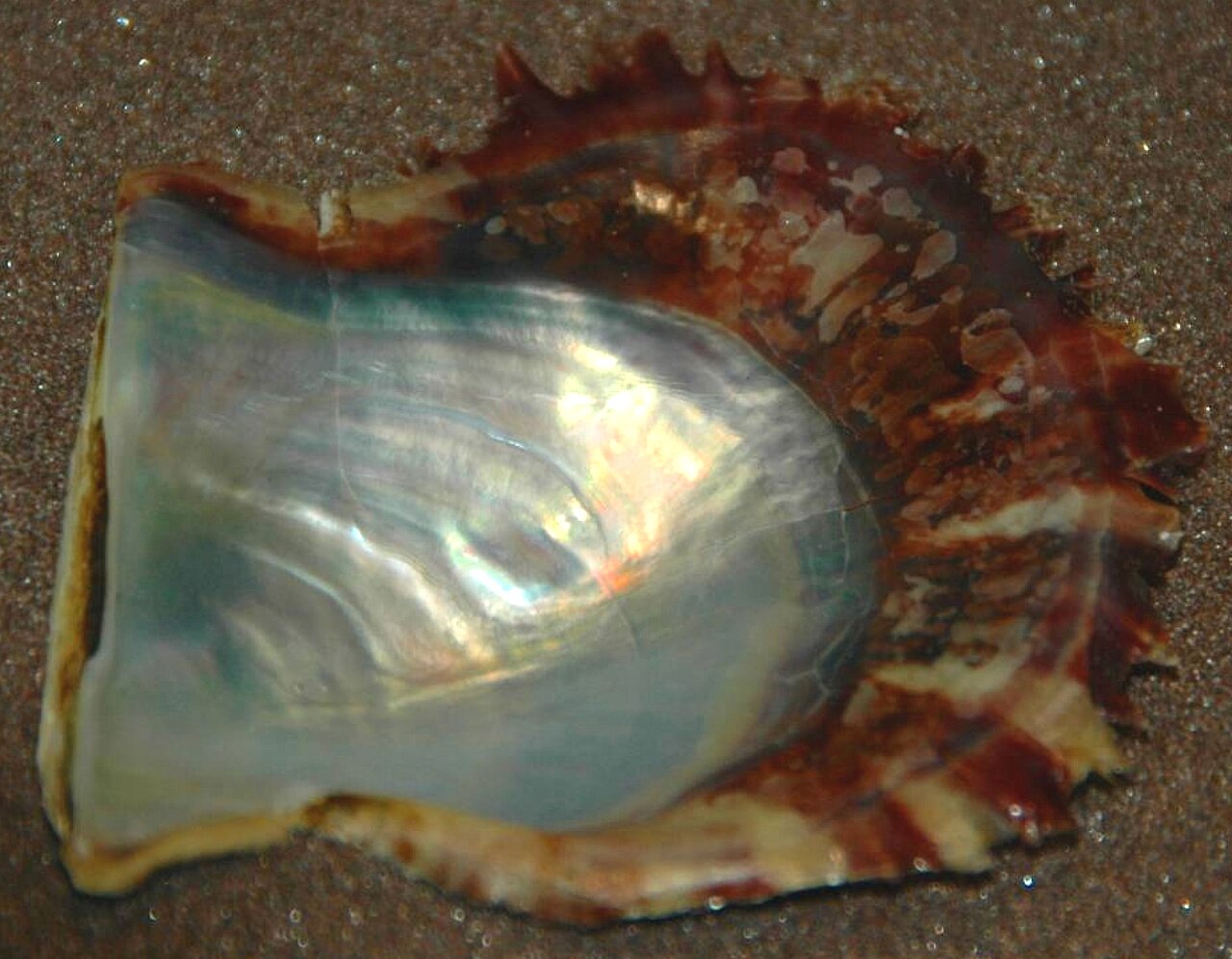
Photographed 2016-12-05
Pinctada fucata (Japanese pearl oyster) (Japan) – Modern pearl-oyster identification, not archaeological shell or proof of a particular ancient fishing ground
Pinctada fucata (Japanese pearl oyster) (Japan). Modern pearl-oyster identification, not archaeological shell or proof of a particular ancient fishing ground.
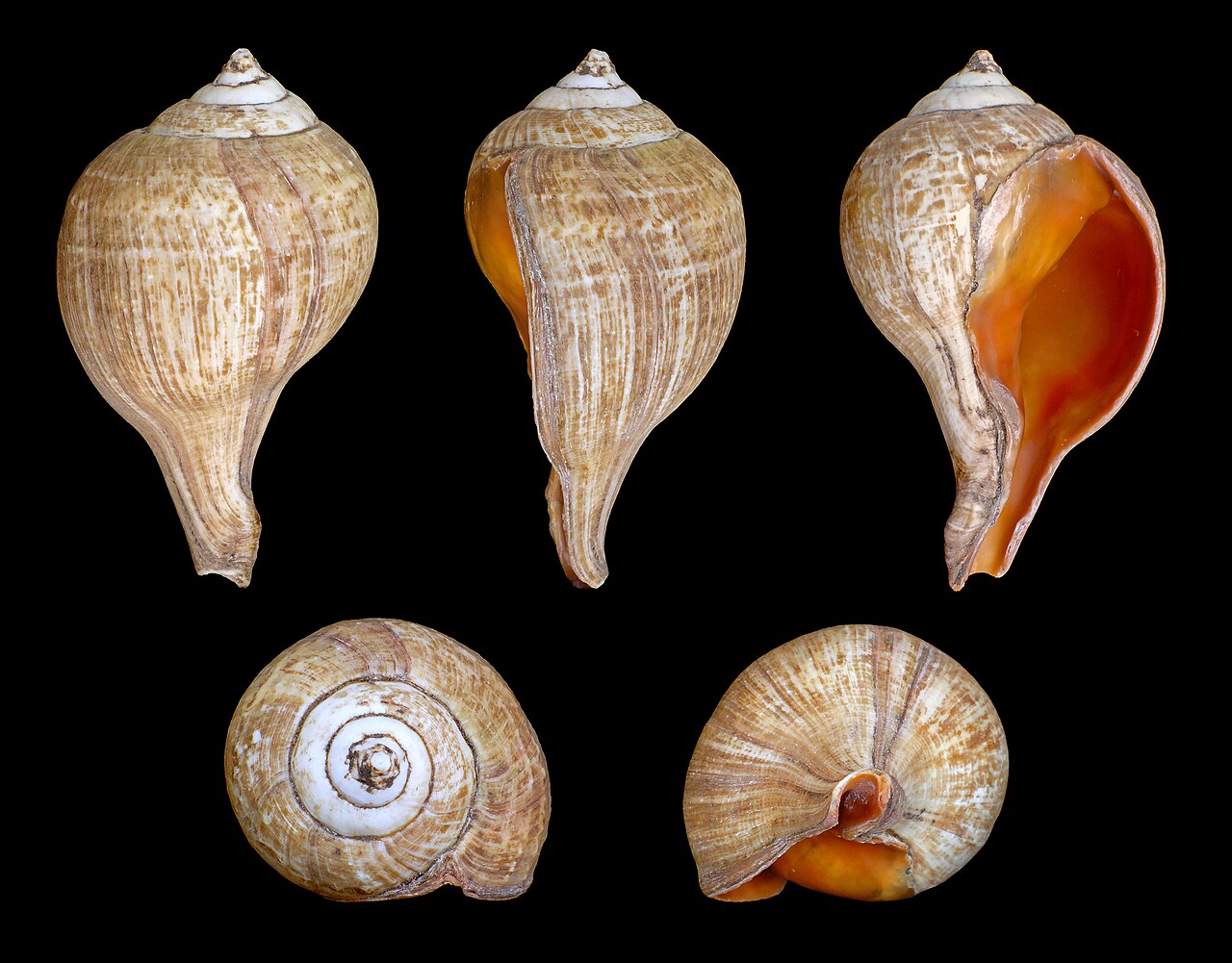
Photographed 2010-11-25
Turbinella pyrum 01 – Modern biological reference specimen of chank shell
Turbinella pyrum 01. Modern biological reference specimen of chank shell; distinguish it from excavated worked shell.
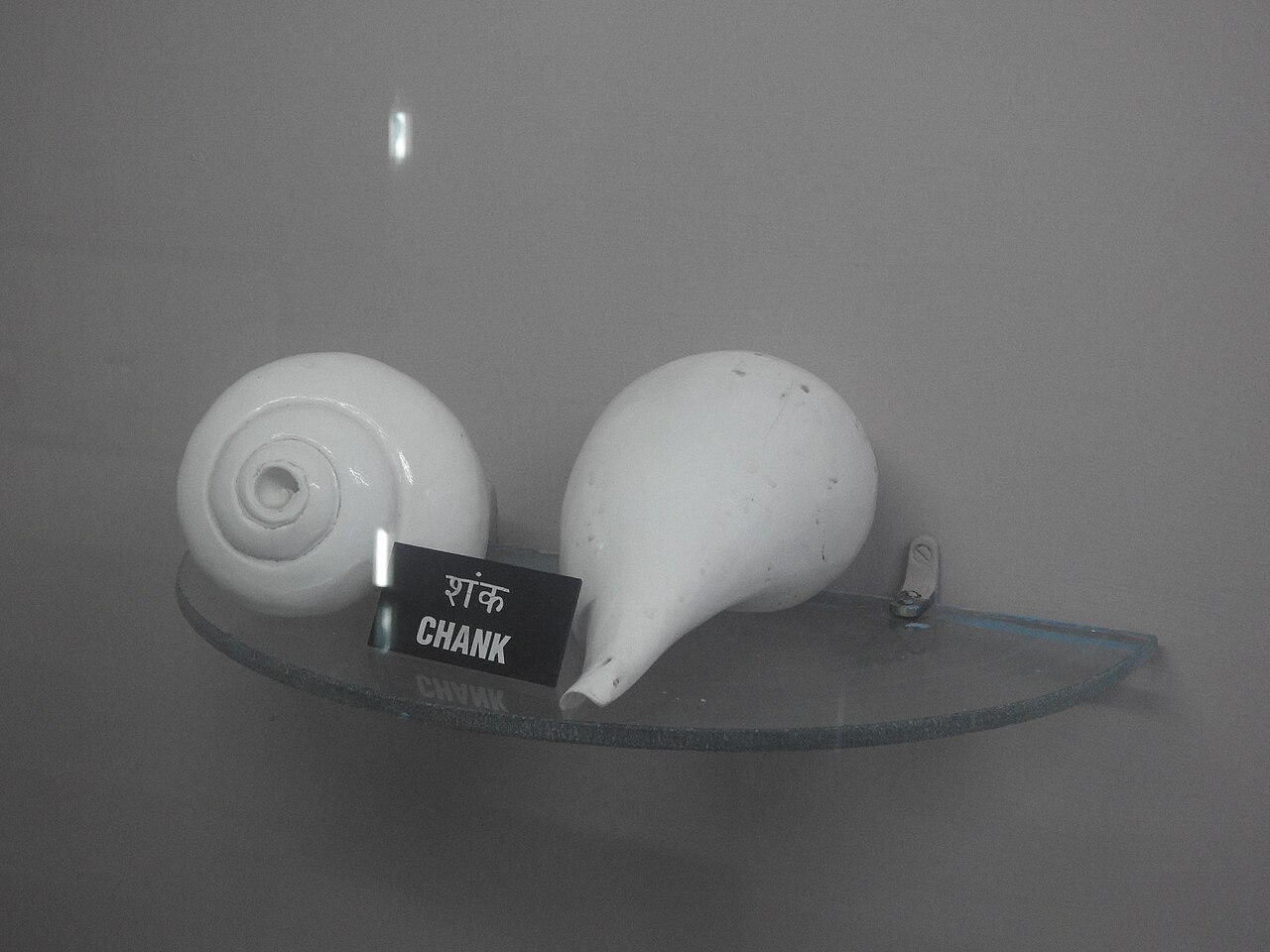
Photographed 2022-02-19 15:04:45
Sacred chank shell specimen (Turbinella pyrum, modern biological reference)
A modern chank-shell specimen (Turbinella pyrum), shown as a biological reference rather than an excavated worked-shell object. Includes source, credit and reuse information.
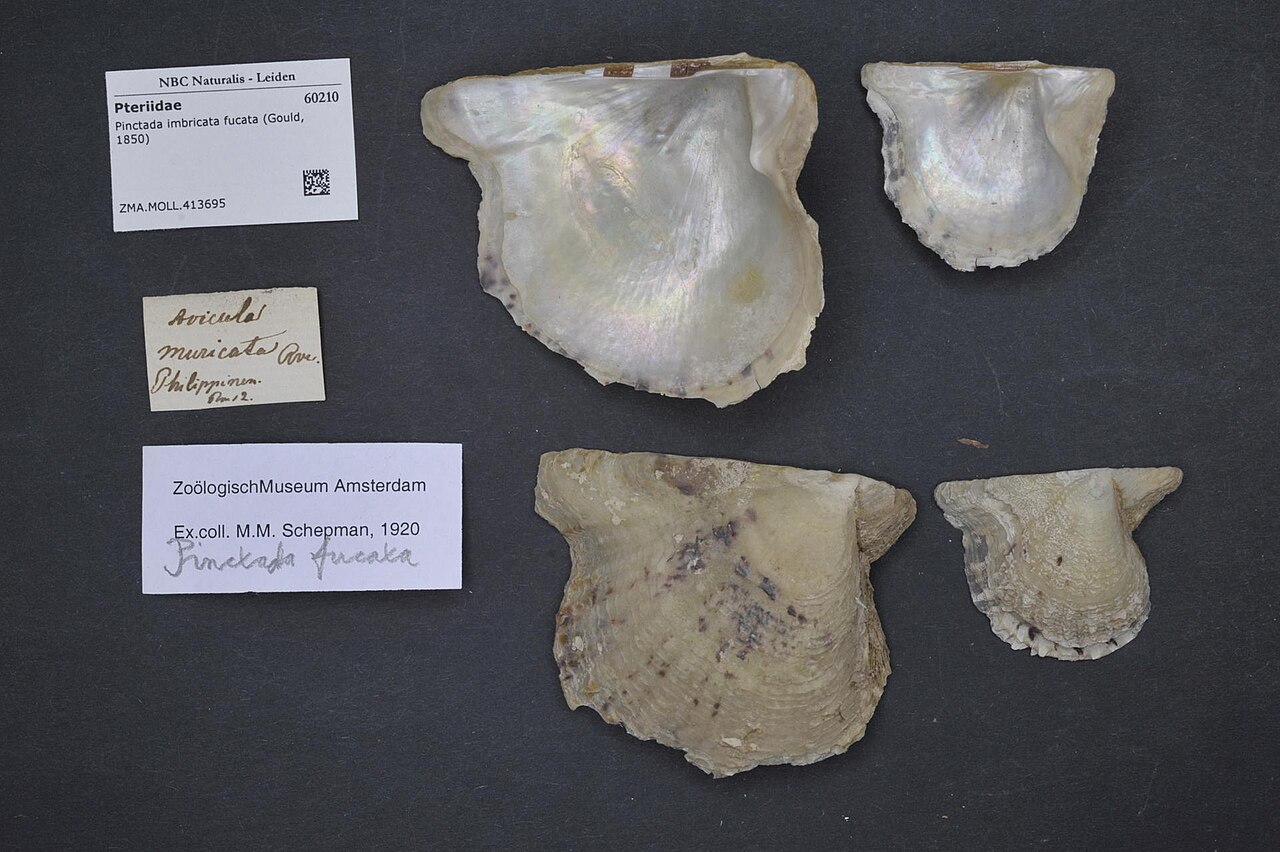
Pearl-oyster shell specimen (Pinctada imbricata fucata, Naturalis Biodiversity Center)
Naturalis Biodiversity Center - ZMA.MOLL.413695 - Pinctada imbricata fucata (Gould, 1850) - Pteriidae - Mollusc shell. Modern pearl-oyster identification, not archaeological shell or proof of a particular ancient fishing ground.
005Where next
All related studies, connected material, books and sources37 · 16
Elsewhere on this site
Excavation Atlas Sites: Korkai (Ancient Pearl-Fishery Port)
Multi-Script Glossary Terms: Koṟkai (Colchi) (கொற்கை / കൊർക്കൈ) · caṅku (Turbinella pyrum) (சங்கு / ശംഖ്) · paratavar (பரதவர் / പരതവർ) · Vaiyai (Vaigai) & Porunai (Tamiraparani) Basins (வையை & பொருநை (தாமிரபரணி) / വൈഗൈ, താമ്രപർണി നദീതടങ്ങൾ)
Connected material
Photographs, drawings, books, videos and other studies linked to this study. A link helps you explore; it does not prove a historical claim.
- Periplus §§58–60: Comari, Colchi, pearl divers and eastern ports,1912 editionhistorical printed pageBackground
- Turbinella pyrum 01 – Modern biological reference specimen of chank shellphotographBackground
- Sacred chank shell specimen (Turbinella pyrum, modern biological reference)photographBackground
- Pinctada fucata (Japanese pearl oyster) (Japan) – Modern pearl-oyster identification, not archaeological shell or proof of a particular ancient fishing groundphotographBackground
- Pearl-oyster shell specimen (Pinctada imbricata fucata, Naturalis Biodiversity Center)photographBackground
Books, videos and websites
Outside reading on this topic. These are not part of the study and we have not checked every claim in them. See all books and videos
- Early Tamil Epigraphy: From the Earliest Times to the Sixth Century A.D. Book · Iravatham Mahadevan · 2003 (Rev. 2nd ed. 2014) · A corpus, palaeographic grammar, and lexicon of Tamil-Brāhmī and early Vaṭṭeḻuttu cave inscriptions, inscribed potsherds, coins, and rings across Tamil Nadu, Kerala (Edakkal), and overseas Red Sea ports.
- Trade, Ideology and Urbanization: South India 300 BC to AD 1300 Book · R. Champakalakshmi · 1996 · Foundational analysis of Early Historic 'dual urban centers' – pairing inland political capitals with coastal maritime entrepôts (Karur & Muciri for the Cheras; Madurai & Korkai/Alagankulam for the Pandyas; Uraiyur & Puhar for the Cholas).
- TNSDA – Tamil Nadu State Department of Archaeology Website · Official repository of excavation monographs, radiocarbon date tables, and epigraphic reports for Keeladi (Keezhadi), Sivagalai, Adichanallur, Korkai, Kodumanal, Mayiladumparai, Alagankulam, and Karur.
- Roja Muthiah Research Library (RMRL) & Indus Research Centre Website · Major research archive for Tamil studies and home of the Indus Research Centre founded by Iravatham Mahadevan, hosting digital concordances, epigraphic databases, and public lectures on Tamil-Brāhmī and South Indian archaeology.
006Sources
The study lists the sources it consulted; we have not rechecked them. A working link does not show that a source was read, and a valid identifier does not show that it supports a claim. We do not link to unofficial uploads or copies of publications. Where a study cited one, we show the published citation, or a publisher, DOI or Internet Archive link when we have one. Tracking codes are removed from links, and the sources themselves are not republished here.
govtmuseumchennai.org · 16567467016803.pdf
D. Dayalan (2019), Ancient Seaports on the Eastern Coast of India (source link 2)
Online copy not linked · use the published editionSource recordnewindianexpress.com · korkai underwater exploration likely next year
Web page (topostext.org)
Web page (topostext.org)
learnsangamtamil.com · பத்துப்பாட்டு மதுரைக்க
sangamtranslationsbyvaidehi.com · ettuthokai akananuru 121 300
pbjournals.com · 7 Vikas K.pdf
learnsangamtamil.com · தமிழ் உரை அகநானூறு 121 300
archive.org · in.ernet.dli.2015.532800
Iravatham Mahadevan Early Tamil Epigraphy From The Earliest Times To The Sixth Century A. D.
Web page (jstor.org)
learnsangamtamil.com · தமிழ் உரை மதுரைக்காஞ்சி
underwater cultural heritage
Indian Archaeology 1969 70 A Review : Tuhina Datta
Agrawal, Gupta & Kusumgar 1971, Tata Institute Radiocarbon Date List IX, Radiocarbon 13(2): 447 (TF-987)
D. P. Agrawal, S. K. Gupta and Sheela Kusumgar, 'Tata Institute Radiocarbon Date List IX,' Radiocarbon 13, no. 2 (1971): 442–449, at p. 447 (sample TF-987, Korkai).
Researchers and institutions whose work this study uses: Iravatham Mahadevan, Vaidehi Herbert
How we know The evidence, claims and dates behind this study
What this study draws on
- Periplus section 59 and Ptolemy's Geography 7.1.10, read in English translation
- Akananuru 130 and 201 and Maduraikkanchi lines 131–138, in Tamil with English renderings
- A Tamil Nadu archaeology synthesis, D. Dayalan's 2019 seaport study and Vikas Verma's 2023 shell-industry review
- Iravatham Mahadevan's edition of a Mangulam inscription naming a superintendent of pearls
- Agrawal, Gupta and Kusumgar's 1971 Tata Institute Radiocarbon Date List VIII (p. 447) for Korkai wood sample TF-987
Dates in this study
| What is dated | Date | How it was dated |
|---|---|---|
| TF-987 wood: 2680 ± 90 BP (5568-yr half-life, comment '730 BC') / 2755 ± 95 BP (5730-yr half-life, ≈ 805 ± 95 BCE); 785 BCE in TNSDA summaries | 805–730 BCE | Laboratory date |
See these dates on the timeline
The study’s claims
20 claims · 1 source passages · 80 paragraphs
Browse the study paragraph by paragraphPeriplus §59 describes Colchi as a place with pearl fisheries in the Pandian kingdom.
Supported in this study
Colchi = modern Korkai is separately interpretive.
Periplus §59 states that condemned persons worked the pearl fisheries.
Supported in this study
It gives no fiscal or bureaucratic mechanism.
Ptolemy places Kolchoi, an emporion, in the Kolchic Gulf associated with pearl fishery.
Supported in this study
Textual geography, not an excavated harbour feature.
Identifying Colchi with Korkai is strong but interpretive.
Supported with qualifications
No bilingual archaeological place-name proof read.
Akananuru 130 associates Korkai’s shore with pearls and a Vazhuthi/Pandyan ruler.
Supported in this study
Poetic description, not administrative documentation.
Akananuru 201 associates Korkai with pearls and valampuri.
Supported in this study
Social-group terminology needs Tamil review.
Maduraikkanchi 131–138 describes Korkai through pearls and conch/bangle imagery.
Supported in this study
Exact occupational gloss requires philological review.
Archaeological synthesis reports brick/ring features and Tamil-Brahmi-inscribed potsherds assigned to 300 BCE–200 CE.
Supported with qualifications
Original field report not yet consulted directly.
Archaeological literature reports shell-bangle pieces, sawn conches and chank-working equipment at Korkai.
Supported with qualifications
Primary reports remain uninspected.
A later review reports Caldwell’s discovery of numerous pearl-oyster shells near Korkai and Kayal.
Supported with qualifications
Not equivalent to a stratified 1968–69 Korkai trench find.
Primary TIFR reporting identifies Korkai sample TF-987 as wood at 2680 ± 90 BP (5568-yr half-life; 2755 ± 95 BP on 5730-yr half-life), whereas secondary summaries call it charcoal and print 785 BCE or 805 ± 95 BCE.
Supported in this study
Full trench-section publication tying KRK-1 layer 5 (3.17 m) to port or shell-working features remains absent.
Geomorphological reconstruction proposes that ancient Korkai lay near a Tamiraparani distributary and sea before deltaic change.
Supported with qualifications
Primary 2006 article not yet read in full.
The consulted excavation evidence does not itself establish a quay, jetty, shipwreck or comparable direct harbour installation.
Supported with qualifications
“Not demonstrated” is not “archaeologically absent.”
Mahadevan reads Mangulam no. 3 as naming a kalitika, “superintendent of pearls,” also associated with the Vellarai merchant guild.
Supported in this study
Inscription is not from Korkai.
Specialized regional oversight of pearls is supported, but Korkai’s administrative mechanism remains unresolved.
Supported with qualifications
No consulted local tax, lease, auction or administrative record.
The proposed Korkai punch-marked-coin assemblage remains unverified in the consulted sources.
Unresolved in this study
Requires catalogue-level check; non-reporting is not absence.
By September 2026, state archaeology had completed side-scan sonar reconnaissance in the Korkai–Azhagankulam region while Korkai diving remained prospective.
Supported in this study
Final sonar report/data were not consulted directly for this study.
“Pandyan Pearl Fishery Capital” is stronger than the consulted evidence warrants.
Supported with qualifications
Capital status might require other evidence not documented in the sources consulted.
Kolchoi/Kolkhoi is plausibly identified with Korkai but the equation remains interpretive.
Supported with qualifications
No bilingual place-name find read.
A government synthesis reports a brick structure and stacked ceramic-ring context at Korkai.
Supported with qualifications
Function cannot be assumed to be maritime or administrative.
Trace one claim through the study’s records
Explore the evidenceAbout this study Status, corrections and how it was made
Status
Draft study, revision 8. No historian, archaeologist, or Tamil or Malayalam specialist has reviewed it yet.
How it was made
Compiled as an editorial synthesis from published scholarship around questions we framed. About this project & workflow
The summary, How sure lines and Two views notes on this page were prepared from this study and cross-checked against its passages. That is an editorial check, not a specialist review.
Corrections and updates
- An author’s name in one reference was corrected. Basis for the correction
Technical details
Study code R113. The text fingerprint changes whenever the study text changes.
- Table headings decide what each column means. Citation links, sample mentions and dates copied as text are kept apart from checked source passages and calibrated measurements.
See how this study’s records were extracted
Text fingerprint (SHA-256): R113 · d8ff7904544f0ab9a518d489… · v8
Evidence tables and technical details are on the web page: https://layersofthesouth.org/read/7909869ebb