Places on the atlas that name this study.
- Made by hand
- Keezhadi (Keeladi)
- Korkai
Korkai shows chank-shell working; Keezhadi has finished bangles
Korkai has sawn conch waste and uncut shells pointing to local bangle making; Keezhadi shows finished shell bangles in the notices consulted, with the full 2019 report not yet checked.
- This page
- 4,467 words · revision 7
Draft study · Awaiting specialist review · Updated
001Dates and places
Places on the atlas that name this study.
1000–500 BCE
Different beginnings
500–200 BCE
Marks & materials
200 BCE–300 CE
Connected worlds
300–600 CE
Change & continuity
- TF-987 wood: 2680 ± 90 BP (5568-yr half-life, '730 BC') / 2755 ± 95 BP (5730-yr half-life); summarized as 785 BCE on TNSDA page
- Laboratory date
Each date belongs to what was dated (a sample, an object, a layer or a text), which is not always the event the study asks about.
Each period has the same width, so spacing is not to scale.
The full table of dates, with their ranges, is under How we know.
- 1 Well supported
- 1 Likely
- 1 Possible
- 1 Not known
002How sure
In brief
Chank is a large sea snail, now named Turbinella pyrum, whose shell was sawn into bangles. At the port of Korkai, James Hornell collected seventeen sawn pieces of shell-working waste from the surface in 1912. A 1968–69 excavation found conch shells packed into a foundation trench as fill, not on a workshop floor. In 2021, excavators reported uncut conches, sawn conches and bangle pieces together, which points to local making. The accessible reports give no counts, so an “industrial” scale is not shown. At Keezhadi, the excavation notices consulted report finished shell bangles with no waste, blanks or tools, though the full 2019 state report and later season summaries were not checked directly. No saw is recorded in the sources checked; Hornell inferred an iron blade from the cut marks. Tata Institute wood sample TF-987 from Korkai (2680 ± 90 BP / 2755 ± 95 BP, summarized on state pages as a 785 BCE charcoal date) does not date the shell working. Teriruveli and Pattanamarudur also have shell-working remains, but neither is securely dated.
Key researchers cited in this study: R. Sivanantham (TNSDA Keezhadi / Keeladi & Tamil Nadu Excavations) · B. B. Lal (Early Historic & Megalithic Archaeology) · Archaeological Survey of India (ASI) · Full bibliography
How sure
- Likely
Shell bangles were made locally at Korkai.
Sawn waste, uncut conches and bangle pieces are reported, but no context tables are published.
- Possible
Korkai's shell working was industrial in scale.
Finds are called “numerous”, but no counts, weights or work-area plans have been found.
- Not known
Keezhadi had a shell-bangle workshop.
Finished bangles are reported; no waste, blanks or tools appear in the sources checked.
- Well supported
No saw is recorded from Korkai or Keezhadi; Hornell's iron saw is an inference.
No consulted excavation source records a saw; Hornell reasoned from cut marks and Bengal practice.
Why it matters
It shows how to tell a place where shell bangles were made from a place where they were only used.
The summary above is the short read. The full study is the complete text it was drawn from, with its tables and source notes.
What the full study covers
- Overview, question, and scope
- Methodology and source control
- Korkai: from surface waste to stratified and recent excavation evidence
- Keezhadi and the regional comparison
- Species, tools, production scale, and organization
- Recent developments, disagreements, and uncertainty
- Conclusions, prioritized recommendations, and source trail
003The study
Overview, question, and scope
What evidence documents chank-shell working and its organization at regional sites?
A common picture has industrial shell-bangle workshops at both Korkai and Keezhadi. This study tests that picture against the excavation record, including the idea, borrowed from Harappan studies, that bronze saws were used. It separates species identification, raw shell, blanks, working waste, finished ornaments, and tool traces, and treats James Hornell’s early-twentieth-century observations as later comparison unless archaeological dating establishes continuity.
The best-supported result is asymmetrical. Korkai has substantial evidence for local chank-shell working, but its chronology and scale are less secure than popular summaries imply. Keezhadi has secure evidence for shell bangles as objects of use or circulation, but the sources read here do not establish a shell-bangle workshop there. At Korkai, Hornell reported seventeen sawn shell-waste fragments collected from the ground surface in 1912, and the 1968–69 state excavation found conch shells in the foundation fill of KRK-4; more importantly, the 2021 excavation was reported by field archaeologists to have produced uncut conches, sawn/cut conches, and bangle fragments. Those three classes together fit successive stages of a manufacturing sequence, although no published context catalogue with counts, species identifications, and stratigraphic assignments appears in the sources consulted. ↗1 ↗2 ↗3
For Keezhadi, official and report-level descriptions document finished shell bangles, including finds in the seventh-phase excavations, but the accessible evidence located here does not document shell blanks, sawn conches, debitage concentrations, shell-specific working floors or shell-working tools. That distinction matters: an ornament at an inland settlement can demonstrate consumption, exchange, repair or curation without proving manufacture at the place where it was found. ↗4 ↗5
The chronology is mixed. Korkai and Keezhadi both contain material within this collection’s 1000 BCE–600 CE period, but the shell-working evidence is not uniformly dated within it. The early Korkai radiocarbon result – recorded by the Tata Institute laboratory as wood sample TF-987 (2680 ± 90 BP on the 5568-year half-life; 2755 ± 95 BP on the 5730-year half-life) from locus KRK-1 layer 5 at 3.17 m, and summarized on state pages as a 785 BCE charcoal date – dates a deep wood sample from the site, not the chank-working assemblage as presently documented; Hornell’s surface waste is archaeologically undated; and the 2021 Korkai shell-working material awaits a fully accessible stratigraphic publication. Recent discoveries at Pattanamarudur are potentially important for regional organization but are, as of 2026, explicitly awaiting firmer dating and occur at a site with later material as well. ↗1 ↗6 ↗7
The practical implication is that the strongest defensible account is not “two industrial shell-bangle factories linked by bronze wire saw technology.” It is a regional craft network with uneven evidential resolution: coastal procurement and cutting are strongly indicated at Korkai and at some comparative sites; finished ornaments circulated to inland settlements such as Keezhadi; and the exact direction, workshop scale, labour organization and tool kit remain open where context data or analytical publication is missing. This conclusion deliberately stops short of assigning Korkai as the supplier of Keezhadi, because no species-level sourcing or direct provenance link between the two sites was located. ↗2 ↗5 ↗8
In this study, “organization” means an archaeologically demonstrable production arrangement rather than a literary or caste attribution. Material outside 1000 BCE–600 CE is used only as background, later comparison, or mixed-chronology evidence unless its archaeological context is independently dated.
Methodology and source control
This study draws first on excavation summaries and official archaeology notices, then on contemporary reports quoting excavation directors, and on zoological taxonomy for Turbinella pyrum, treating ethnographic analogies separately. The 1968–69 Korkai campaign (Indian Archaeology 1968–69 – A Review, p. 32) identifies five cuttings, KRK-4 and KRK-5, and the shell-bearing fill; James Hornell’s 1914 monograph (The Sacred Chank of India) documents the 1912 surface waste (with facsimile plates not yet checked directly). ↗3 ↗9 ↗10
For Keezhadi, the 2019 state report and later season summaries were not checked for this study, so the absence of raw, sawn, or unfinished shell noted here applies only to the excavation notices consulted. ↗4
A “workshop” is treated here as an archaeological interpretation that should normally be supported by a spatially coherent combination of production waste, unfinished products, tools or tool traces, installations, repeated production stages and contextual concentration. A finished bangle alone is not enough. Likewise, “industrial scale” requires more than the presence of craft waste: ideally it needs counts or weights, density by excavated area, repeated work zones, standardized production stages, or another quantitative measure that distinguishes intensive specialized production from small-scale or episodic manufacture. These are evidential thresholds used in this study, rather than assumptions that every ancient craft must preserve every signature.
| Evidence class | What it can establish | What it cannot establish by itself |
|---|---|---|
| Whole or uncut marine conch | Raw-material presence and possible procurement/storage | Local manufacture, species, or date of working |
| Sawn shell, shoulder/columella waste, blanks | Local reduction/cutting activity if context is secure | Tool alloy unless a tool is recovered or trace analysis is diagnostic |
| Finished shell bangle | Use, possession, exchange or deposition | Place of manufacture |
| Tool marks / kerfs | A cutting technique and sometimes tool geometry | “Bronze wire saw” without material or diagnostic analytical evidence |
| Waste concentration + unfinished pieces + spatial context | Strong workshop inference | Labour identity, caste, hereditary organization or output volume without additional evidence |
| Ethnographic analogy | Plausible operational comparison | Direct continuity across centuries |
The search also tested negative propositions. No consulted Korkai or Keezhadi excavation source documented a recovered bronze wire saw. Hornell instead attributed the Korkai kerfs to a “thin-bladed iron saw” by comparison with contemporary Bengal practice; because no saw itself was found, even Hornell’s metal identification is an inference, not an excavated tool identification. Harappan shell-working literature surfaced in the search with discussions of bronze saw technology, but that is much earlier and geographically different background and is not admissible as proof of Early Historic Tamil practice. ↗11 ↗10
Korkai: from surface waste to stratified and recent excavation evidence
Hornell’s observation is the clearest early description of diagnostic manufacturing debris at Korkai, but also the easiest to overstate. In his account of discoveries made in 1912, he described seventeen fragments of chank workshop waste from the landward outskirts of Korkai. He classified eight as obliquely cut shoulder pieces, six as columella/oral-end pieces and three as lip fragments, all with sawn surfaces. Those categories are not merely “shell found at a port”: they correspond to discarded parts produced when a large gastropod shell is opened and sectioned for further working. Yet Hornell also says the entire group was found on the surface, at a place where villagers reported old Pandyan coins had been discovered. There is therefore no excavated layer, sealed feature, or independent date for the seventeen pieces. ↗1 ↗10
Turbinella pyrum 01 – Modern biological reference specimen of chank shell
Photographed 2010-11-25
Hornell’s technological interpretation should be split into observation and analogy. The observation is sawn surfaces on waste pieces. The interpretation is that the cutting had been done with the same kind of thin-bladed iron saw then used in Bengal. This was a comparison with a living craft tradition, not the recovery of an ancient saw from Korkai. The same monograph’s plate list describes a photograph comparing ancient chank-shell waste from Korkai, Kayal and Tuticorin with modern Dacca waste, making the analogical structure of Hornell’s argument unusually explicit. The material is valuable comparative evidence, but it cannot support a claim for a recovered bronze wire saw. ↗10
The 1968–69 excavation adds stratigraphic evidence of conch presence, though it is not in itself a clean workshop context. The campaign, directed by R. Nagaswamy with N. Kashinathan, opened five cuttings. At KRK-4, a nine-course brick platform overlay three terracotta rings interpreted as soakage jars; the report states that the foundation trench was later filled with conch shells, potsherds and grit as reinforcement. The same cutting produced Brahmi-inscribed sherds assigned by the excavators to the first century CE. At KRK-5, two sets of soakage jars were found with inscribed sherds and pearl oysters, while pearl-oyster shells were reported in many levels across the site. ↗3
This is important but needs careful reading. Shell in a foundation fill is secondary construction material: it may derive from nearby refuse or craft waste, but the act of redepositing it breaks the direct connection between the shell’s manufacture and the structure in which it ended up. The 1968–69 summary does not state that the KRK-4 conches were sawn, does not identify them zoologically to Turbinella pyrum, does not provide a count, and does not report a shell-working tool from that context. The first-century CE sherds in the cutting therefore should not be used automatically to date the shell cutting. What the excavation securely establishes is conch-shell presence in an archaeological feature and abundant pearl-oyster exploitation at Korkai; a workshop attribution requires the diagnostic evidence supplied more clearly by Hornell’s surface waste and the later excavation reports. ↗3
The 2020–21 renewed excavation materially strengthens the production case. A July 2021 report, describing statements from archaeologists at the excavation, says that at roughly one metre depth they had found numerous sawn or cut conches, uncut conches, and pieces of shell/conch bangles. In chaîne opératoire terms, that is a much stronger combination than a finished ornament alone: raw/unworked shell, reduction waste or partly processed shell, and finished-product fragments occur in the same excavation campaign. The report also mentions a perforated terracotta pipeline and a brick structure, but the suggestion that the pipe carried “industrial effluence” was explicitly interpretive and should not be made part of the shell-workshop proof without a demonstrated spatial association. ↗2 ↗12
The principal unresolved issue is scale. “Numerous” is not a measurement. The accessible 2021 report does not provide specimen counts, shell weight, trench-by-trench density, percentage of blanks versus waste, minimum number of individuals, kerf metrics, or a plan showing a concentrated work area. A 2026 newspaper account retrospectively refers to remains of conch-shell cutting workshops in the earlier Korkai excavations, but that statement is still a secondary summary rather than the missing quantitative catalogue. Accordingly, local production at Korkai is well supported; “industrial-scale” production is plausible but not demonstrated to a reproducible quantitative standard in the sources read here. ↗2 ↗13
The often-repeated 785 BCE date must also be decoupled from shell craft. The Tamil Nadu Department of Archaeology’s Korkai page summarizes a charcoal date of 785 BCE and separately reports Tamil-Brahmi sherds assignable to 300 BCE–200 CE, whereas the primary Tata Institute date list (Tata Institute Radiocarbon Date List IX, Agrawal, Gupta and Kusumgar 1971, p. 447) identifies Korkai sample TF-987 as wood from KRK-1, trench 0-I, layer 5 (3.17 m) at 2680 ± 90 BP (5568-year half-life; 2755 ± 95 BP on the 5730-year half-life). Neither the primary laboratory entry nor the state summary connects that sample to a shell-working locus, sawn shell, blank or bangle. The date is therefore evidence for antiquity of occupation at the site as reported by the department, not a date for the chank-bangle industry. ↗7
Keezhadi and the regional comparison
Keezhadi presents a different evidential profile. The 2019 state report is a major source for the settlement as a whole, and its bibliographic identity is secure, but in the accessible records used here shell appears primarily as ornament. The seventh-phase state excavation notice also lists bangles made of shell and glass among the finds. These are real archaeological objects and they matter for distribution: marine shell products reached or were used at an inland Vaigai-basin settlement. What is missing from the consulted evidence is the manufacturing signature – sawn whole conches, shoulder/columella waste, ring blanks, failed pieces concentrated in a production zone, or a shell-specific tool assemblage. ↗4 ↗5
That absence is a bounded result, not proof that no shell-working ever occurred at Keezhadi. The state museum itself presents “Shell Bangle Making” as an educational theme, showing that shell craft is part of the interpretive story told to visitors. But an interpretive demonstration or reconstruction is not equivalent to excavated evidence that the operation occurred in a particular trench at Keezhadi. Until the shell-object catalogue and contexts from the relevant phases are checked, the appropriate classification is finished-product presence; local production unproven. ↗14
A comparison with Teriruveli shows why this distinction is useful. The Tamil Nadu archaeology department’s site page explicitly reports both shell bangles and sawed conches among the finds. Even without a fully published quantitative workshop study in the accessible page, the coexistence of finished ornaments and sawn raw material is a stronger local-working indicator than the Keezhadi evidence currently available. It also suggests that shell-working was not confined to one celebrated port. ↗8 No date for these finds is recorded here, however, and “Black-and-red ware owes its colours to carbon, iron and firing” cites a 2012 study that places Theriruveli in the eighth to tenth centuries CE, so Teriruveli may be a later comparison rather than an early one. “Three Tamil Nadu digs: shell workshop, inscribed pots, coffins” describes strong published evidence of shell working at Vembakottai, where state excavators record sawn conches, shell cores, production debris, unfinished pieces and more than 2,000 shell objects.
Kodumanal and other inland sites broaden the distribution picture, but should not be folded into a simple Korkai-to-interior supply chain. Excavation reporting and museum/exhibition accounts document shell bangles at Kodumanal alongside other craft industries. That demonstrates that shell ornaments circulated well inland, but without compositional or morphological sourcing it does not identify Korkai as the source. The same evidential caution applies to Keezhadi: geographic plausibility is not provenance. ↗15 ↗16
Pattanamarudur, excavated in 2026 near the Gulf of Mannar, is the most consequential recent comparison. Excavators reported engraved conch shells, shell bangles and beads, and very large deposits of used conches spread across an area described as about 200 acres. K. Rajan, advising the state archaeology department, characterized it as the largest ancient shell-industry site yet identified in Tamil Nadu. But the excavation director also said further work was required to date the site, and the same excavation has later-period materials including Chinese celadon and Pandya/Vijayanagara coins. For the 1000 BCE–600 CE period, Pattanamarudur is therefore a high-priority mixed-chronology comparator, not yet secure proof for that period. ↗6
In outline, the production sequence runs from marine conch procurement and whole shell, through sawing and reduction, which leave shoulder, columella and lip waste and ring blanks or unfinished pieces, to finished shell bangles and their use and inland circulation. Not every stage is documented at every site. Korkai has evidence for whole shell, sawing waste and bangles, and preserves the most persuasive combination of production-stage evidence of the two main sites studied here; Teriruveli has sawed conches and bangles; Keezhadi sits more securely on the distribution and use side of the sequence; and Pattanamarudur has a large assemblage of mixed date. ↗2 ↗5 ↗8
Species, tools, production scale, and organization
The word chank normally refers to the large marine gastropod now accepted as Turbinella pyrum (Linnaeus, 1767); the World Register of Marine Species/OBIS record treats Xancus pyrum as an unaccepted synonym and Turbinella pyrum as the accepted name. Hornell’s 1914 title likewise explicitly identifies the “sacred chank” as Turbinella pyrum. That does not mean every archaeological “conch” or shell fragment in a field report can be silently assigned to that species. A defensible archaeological identification should cite diagnostic morphology or an analyst’s taxonomic determination, especially when fragments have been cut. Neither the accessible 1968–69 Korkai summary nor the Keezhadi shell-bangle references provide such a specimen-level method. ↗17 ↗9
Popular references to a “bronze wire saw” fail the source test. No bronze wire saw is reported from the Korkai contexts read; no shell-working saw is reported from the Keezhadi evidence read. Hornell’s Korkai waste preserves sawn surfaces, but he inferred a thin-bladed iron saw through comparison with then-contemporary Bengal shell workers. Even that should be written as “Hornell inferred,” not “archaeologists recovered.” The more specific term “wire saw” is especially unsupported: the evidence located concerns sawing and blade-like kerfs, not a recovered wire implement. ↗10
| Site / evidence | Species identified? | Raw shell | Sawn/reduction waste | Finished bangle | Tool recovered | Workshop / scale assessment |
|---|---|---|---|---|---|---|
| Korkai, Hornell 1912 surface collection | Called chank; no modern specimen analysis reported | Not central to group | Yes: 17 pieces; 8 shoulder, 6 columella/oral, 3 lip | Not required for diagnosis | No | Local working strongly indicated; undated surface context; scale not measurable |
| Korkai, 1968–69 KRK-4 | “Conch shells,” species not stated | Unclear | Not described as sawn | Not reported in this feature | No shell-working tool reported | Secondary foundation fill; not a workshop floor |
| Korkai, 2021 excavation reporting | Species not analytically stated | Yes, uncut conches | Yes, sawn/cut conches | Yes, pieces | Not reported in accessible account | Local production strongly supported; quantitative scale unpublished |
| Keezhadi | Species not stated | Not located | Not located | Yes | Not located | Consumption/distribution secure; workshop unproven |
| Teriruveli | Species not stated | Not clear | Yes, sawed conches | Yes | Not reported on official page | Local working probable; date, context and scale need report-level verification |
| Pattanamarudur, 2026 | Called conch; analytical species ID not reported in news account | Used conches in large deposits | Working implied by assemblage | Yes: bangles/beads | Not reported | Very large craft zone proposed; dating still unresolved/mixed |
The organization of production is consequently visible only at a coarse level. Coastal Korkai combines access to marine shell, evidence of cutting, and bangle fragments; inland Keezhadi has finished shell ornaments. This pattern is compatible with a network in which at least some primary reduction occurred near the coast and finished or semi-finished products circulated inland. Yet the data do not establish a centralized Korkai monopoly, a single workshop quarter, hereditary craft corporations, labour quotas, or direct Korkai-to-Keezhadi shipments. Multiple working nodes – Teriruveli and the newly excavated Pattanamarudur among them – argue against assuming a single-source model. ↗6 ↗2 ↗8
Sacred chank shell specimen (Turbinella pyrum, modern biological reference)
Photographed 2022-02-19
The strongest future discriminator would be a context-controlled archaeomalacological study. It should identify species, record complete/fragmented anatomical parts, quantify minimum numbers and weights, measure kerfs, separate unused shells from food/ritual deposits, map debitage densities by locus, and compare blanks and finished bangle dimensions. If paired with trace/experimental work on saw marks and secure absolute or stratigraphic dating, such a study could test both tool type and workshop organization without borrowing technological details from much earlier Harappan contexts or much later ethnography.
Recent developments, disagreements, and uncertainty
The last five years have improved the empirical base but have also made the need for source discipline more obvious. The renewed 2021 Korkai excavation supplied the clearest reported combination of uncut, cut/sawn and bangle-stage shell material at the site. In 2021 at Keezhadi, the seventh-phase excavation continued to recover shell bangles, reinforcing their place in the settlement’s material culture but not, on the accessible notice, adding shell-production debris. The Archaeological Survey of India's report on its 2014–16 Keezhadi seasons, submitted by K. Amarnath Ramakrishna in 2023, remained unpublished and under review as of late 2026 (following revision requests, parliamentary review statements in July 2025, and an ASI on-site re-examination committee ordered in June 2026); if released, its context tables may refine the shell-object evidence beyond the notices used here. ↗18 ↗2 ↗5
In 2026, Pattanamarudur dramatically expanded the scale of shell-industry remains known along the Gulf of Mannar, while explicitly remaining in need of firmer dating. Also in 2026, the Tamil Nadu archaeology department was reported to be collating Korkai sonar-survey data, with diving needed to verify anomalies; officials stated that sonar images alone could not confirm submerged archaeological features. Underwater work may eventually clarify the palaeo-harbour and maritime setting of shell procurement and exchange, but it currently does not date or prove the terrestrial shell-working assemblages. ↗6 ↗13
The major interpretive disagreement is therefore not whether shell ornaments existed – they clearly did – but how far the material permits reconstruction of production organization. A maximal reading treats Korkai as an industrial workshop centre and extends that label to Keezhadi because shell bangles occur there. A stricter contextual reading distinguishes manufacturing signatures from finished objects and asks whether quantified debris, unfinished pieces, tools and spatial concentrations are actually published. The latter approach fits the consulted evidence better. It retains Korkai as a strong production site, downgrades “industrial-scale” to a hypothesis pending quantified publication, and withholds a Keezhadi workshop attribution. ↗2 ↗3 ↗5
A second disagreement concerns technology. Hornell interpreted kerfs through a 1910s Bengal analogy and named an iron saw. Later archaeological discussions of shell working elsewhere in South Asia, especially Harappan contexts, often invoke specialized bronze saws. Conflating those literatures can easily produce a “bronze saw at Korkai” statement that has no local find behind it. The discriminating evidence would be a recovered Korkai/Keezhadi implement in secure context, metallurgical analysis, or kerf microscopy/experimental replication capable of separating candidate tool materials and geometries. None of those appears in the Tamil-site evidence consulted. ↗11 ↗10
A third uncertainty is dating. Site-wide dates are frequently transferred to individual crafts in popular summaries. The Korkai TF-987 wood determination (summarized on state pages as a 785 BCE charcoal date) and Keezhadi’s broader early chronology are important for their settlements, but a craft must be dated through the context containing the craft debris or through directly associated material. Until the 2021 Korkai shell assemblage is linked to published loci/phases and until Keezhadi shell bangles are tied to specific contexts in the reports, claims such as “shell-bangle manufacture at Korkai in 785 BCE” or “Keezhadi shell production from the sixth century BCE” are not warranted by the sources read here. ↗2 ↗7
Conclusions, prioritized recommendations, and source trail
The core answer can be stated with high confidence at the level the evidence permits. Korkai documents chank-shell working through diagnostic sawn waste and, in the 2021 campaign, a reported combination of uncut conches, cut/sawn conches and bangle fragments. That supports local manufacture, but the accessible record does not yet quantify production strongly enough to certify “industrial scale,” and the principal shell assemblages are not yet securely tied to a specific early-historic phase. Keezhadi documents shell bangles, not a shell-bangle workshop, on the evidence read. Teriruveli supplies a useful regional control because its official site description combines sawed conches with shell bangles, although its date is uncertain. Pattanamarudur may eventually transform the regional picture, but in 2026 its shell industry remains insufficiently dated for unqualified placement in the 1000 BCE–600 CE period. ↗6 ↗2 ↗5 ↗8
The term Turbinella pyrum may be used for the modern chank taxon and where an archaeological source actually identifies it, but should not be retrofitted to every excavated “conch” without taxonomic analysis. ↗17 ↗9
What would settle these open questions is first checking the 2020–21 Korkai excavation report or primary field catalogue with trench/locus tables, shell counts, figures and stratigraphy. That single source could resolve production scale, spatial clustering and chronology. Next is the full Keezhadi shell-object catalogue/context documentation, including the 2019 state report and – if published after its ongoing review – the ASI's report on the 2014–16 seasons, to test whether manufacturing waste omitted from public summaries is actually present. Third is specimen-level archaeomalacology and kerf analysis for Korkai, Teriruveli and Keezhadi: species identification, anatomical-part frequencies, measurements, chaîne opératoire classification and microscopic tool-trace work. Fourth is a securely dated publication of Pattanamarudur separating Early Historic deposits from medieval/later material. Each of these records would resolve a concrete open question. ↗18 ↗4 ↗6 ↗19
Bibliography
James Hornell, The Sacred Chank of India: A Monograph of the Indian Conch (Turbinella pyrum), Madras Fisheries Bureau Bulletin no. 7, Madras: Government Press, 1914, viii + 181 pp. + plates. Bibliographic identity and public-domain status verified through Smithsonian Libraries/BHL; Korkai passage consulted in digital text; BHL facsimile plates not yet checked directly. DOI: https://doi.org/10.5962/bhl.title.11887; Smithsonian record: https://www.si.edu/object/siris_sil_166497. ↗20 ↗9
B. B. Lal (ed.), Indian Archaeology 1968–69 – A Review, Archaeological Survey of India, Government of India, New Delhi, 1971, especially p. 32, “Excavation at Korkai, District Tirunelveli.” Records the KRK-4 foundation fill and KRK-5 cuttings (ASI printed report; official facsimile not yet checked directly). ↗3
R. Sivanantham and M. Seran (eds.), Keeladi: An Urban Settlement of Sangam Age on the Banks of River Vaigai, first edition, Chennai: Government of Tamil Nadu, Department of Archaeology, 2019. OCLC 1183420642. WorldCat metadata: https://search.worldcat.org/title/1183420642. Full 2019 report not yet checked directly for shell debitage. ↗4
Tamil Nadu Department of Archaeology, “Korkai,” https://www.tnarch.gov.in/korkai. Official summary of the early excavation, Tamil-Brahmi range and reported 785 BCE charcoal date (contrast primary TIFR wood entry TF-987 in Agrawal, Gupta and Kusumgar 1971, Radiocarbon 13(2): 447, https://doi.org/10.1017/S0033822200008559); it does not itself provide a shell-working catalogue. ↗7
Tamil Nadu Department of Archaeology, “Teriruveli,” https://www.tnarch.gov.in/teriruveli. Official site summary reporting shell bangles and sawed conches; consulted via archived departmental summary. ↗8
Tamil Nadu Department of Archaeology, “Ring wells exposed in ongoing archaeological excavation at Keeladi,” https://www.tnarch.gov.in/ring-wells-exposed-ongoing-archaeological-excavation-keeladi. Official phase-seven notice listing shell and glass bangles among finds; consulted via archived departmental notice. ↗5
Ministry of Culture, Government of India, procedural release dated 30 July 2025 (headlined “ASI Publishes Keezhadi Excavation Report in Line with Scientific Protocols”), https://culture.gov.in/latest-news/asi-publishes-keezhadi-excavation-report-line-scientific-protocols. Despite the headline, this notice documents the Ministry's review/submission procedure rather than an available published monograph: K. Amarnath Ramakrishna's 2014–16 report remained unpublished and under review as of late 2026. ↗18
Times of India, “Evidence of ancient conch industry found in Korkai,” 23 July 2021, https://timesofindia.indiatimes.com/city/madurai/evidence-of-ancient-conch-industry-found-in-korkai/articleshow/84667582.cms. Contemporary excavation report describing uncut conches, sawn/cut conches and bangle fragments; used as provisional field reporting pending the primary final publication. ↗2
Times of India, “Tamil Nadu excavators unearth ancient shell industry off Gulf of Mannar,” 27 July 2026, https://timesofindia.indiatimes.com/city/chennai/tamil-nadu-excavators-unearth-ancient-shell-industry-off-gulf-of-mannar/articleshow/132667355.cms. Contemporary report on Pattanamarudur, including the excavation director’s statement that further excavation is needed to date the site. ↗6
The New Indian Express, “Korkai underwater exploration likely next year,” updated 21 September 2026, https://www.newindianexpress.com/states/tamil-nadu/2026/Sep/21/korkai-underwater-exploration-likely-next-year. Reports that sonar anomalies remain unverified pending diving and that the survey report was still being prepared. ↗13
Ocean Biodiversity Information System / WoRMS taxon record, “Turbinella pyrum (Linnaeus, 1767),” WoRMS AphiaID 208609, https://obis.org/taxon/208609. Used only for modern taxonomic nomenclature, not to assign ancient fragments without analysis. ↗17
Further sources to check: A. Abdul Majeed, “A Note on Korkai Excavations,” Tamil Civilization 5(1–2), 1987, pp. 73–77 (not yet read directly); the full 2020–21 Korkai excavation report and catalogue; the 2019 Keezhadi state report and phase 4–8 summaries; the unpublished ASI Keezhadi excavation report on the 2014–16 seasons (submitted 2023; under review as of late 2026); and report-level publications for Teriruveli and Pattanamarudur with shell inventories, context tables, and figures. ↗21
004Photographs
Photographs of the places and objects this study discusses. Each item carries its creator’s credit, licence and documented source. See all 412 photographs and source images ↗
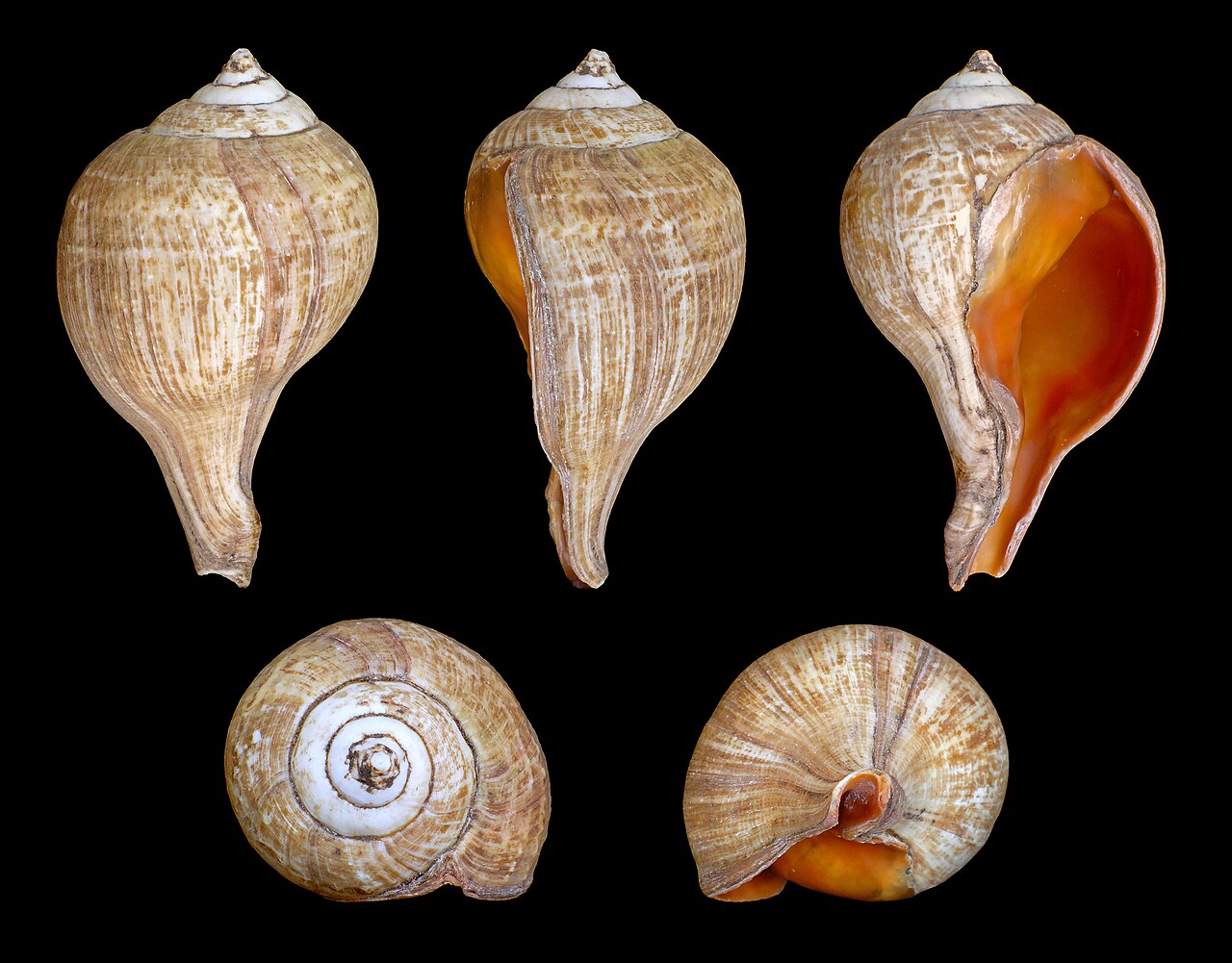
Photographed 2010-11-25
Turbinella pyrum 01 – Modern biological reference specimen of chank shell
Turbinella pyrum 01. Modern biological reference specimen of chank shell; distinguish it from excavated worked shell.
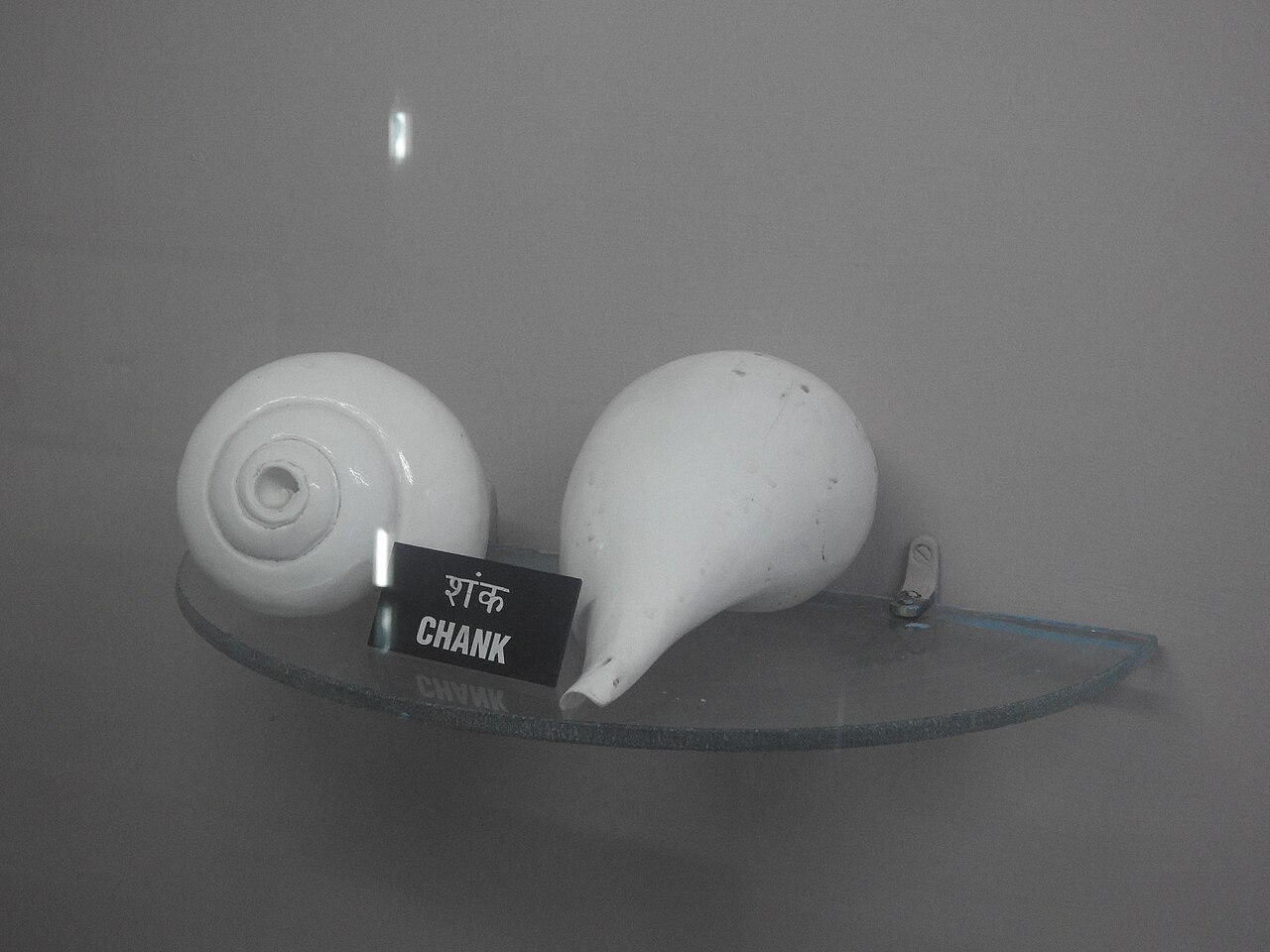
Photographed 2022-02-19 15:04:45
Sacred chank shell specimen (Turbinella pyrum, modern biological reference)
A modern chank-shell specimen (Turbinella pyrum), shown as a biological reference rather than an excavated worked-shell object. Includes source, credit and reuse information.
005Where next
A commentary on the poem identifies some of its workers as conch-bangle cutters; compare this with the evidence for shell-bangle making at Korkai. This is a comparison, not proof that the same makers appear in both records.
On the atlasKeezhadiPublic on-site museum & open-air excavated brick gallery
Explore nextKoṟkai (Colchi) (கொற்கை / കൊർക്കൈ)All related studies, connected material, books and sources20 · 12
Elsewhere on this site
Excavation Atlas Sites: Keezhadi (Vaigai River Brick Settlement) · Korkai (Ancient Pearl-Fishery Port)
Classroom Lesson Plans: Module 5 · Iron, Stone Monuments & Everyday Craft: Technology in Early South India
Multi-Script Glossary Terms: Koṟkai (Colchi) (கொற்கை / കൊർക്കൈ) · caṅku (Turbinella pyrum) (சங்கு / ശംഖ്)
Connected material
Photographs, drawings, books, videos and other studies linked to this study. A link helps you explore; it does not prove a historical claim.
- Turbinella pyrum 01 – Modern biological reference specimen of chank shellphotographBackground
- Sacred chank shell specimen (Turbinella pyrum, modern biological reference)photographBackground
006Sources
The study lists the sources it consulted; we have not rechecked them. A working link does not show that a source was read, and a valid identifier does not show that it supports a claim. We do not link to unofficial uploads or copies of publications. Where a study cited one, we show the published citation, or a publisher, DOI or Internet Archive link when we have one. Tracking codes are removed from links, and the sources themselves are not republished here.
James Hornell, The Sacred Chank of India: A Monograph of the Indian Conch (Turbinella pyrum), Madras Fisheries Bureau Bulletin no. 7, 1914.
B. B. Lal (ed.), Indian Archaeology 1968–69 – A Review, Archaeological Survey of India, Government of India, 1971.
Print or offline sourceSource recordTamil Nadu Department of Archaeology, Korkai.
Times of India, Evidence of ancient conch industry found in Korkai, 23 July 2021.
R. Sivanantham and M. Seran (eds.), Keeladi: An Urban Settlement of Sangam Age on the Banks of River Vaigai, Government of Tamil Nadu Department of Archaeology, 2019.
Ring wells exposed in ongoing archaeological excavation at Keeladi
Tamil Nadu Department of Archaeology, phase-seven Keezhadi excavation notice.
Tamil Nadu Department of Archaeology, Teriruveli.
Ministry of Culture procedural statement on review of the ASI Keezhadi excavation report (30 July 2025)
Ministry of Culture, Government of India, procedural statement on review/submission of the ASI Keezhadi excavation report (30 July 2025; press headline 'ASI Publishes Keezhadi Excavation Report in Line with Scientific Protocols').
OBIS / WoRMS taxon record for Turbinella pyrum (Linnaeus, 1767), AphiaID 208609.
Times of India, Tamil Nadu excavators unearth ancient shell industry off Gulf of Mannar, 27 July 2026.
The New Indian Express, Korkai underwater exploration likely next year, 21 September 2026.
D. P. Agrawal, S. K. Gupta and Sheela Kusumgar, 'Tata Institute Radiocarbon Date List IX,' Radiocarbon 13, no. 2 (1971): 442–449, at p. 447 (TF-987).
Researchers and institutions whose work this study uses: R. Sivanantham, B. B. Lal, Archaeological Survey of India
How we know The evidence, claims and dates behind this study
What this study draws on
- James Hornell's 1914 monograph on the chank, including his 1912 Korkai finds, read through indexed text.
- The 1968–69 Korkai excavation summary in Indian Archaeology – A Review.
- Newspaper reports of the 2021 Korkai excavation and the 2026 Pattanamarudur finds, quoting the excavators.
- Tamil Nadu archaeology department pages for Korkai, Keezhadi and Teriruveli.
Dates in this study
| What is dated | Date | How it was dated |
|---|---|---|
| TF-987 wood: 2680 ± 90 BP (5568-yr half-life, '730 BC') / 2755 ± 95 BP (5730-yr half-life); summarized as 785 BCE on TNSDA page | 785 BCE | Laboratory date |
See these dates on the timeline
The study’s claims
9 claims · 12 source passages · 50 paragraphs
Browse the study paragraph by paragraphHornell's Korkai surface collection comprised seventeen sawn chank-working waste fragments: eight shoulder pieces, six columella/oral-end pieces and three lip fragments.
Supported in this study
All seventeen pieces were surface finds.
Hornell inferred a thin-bladed iron saw from the Korkai kerfs by comparison with Bengal practice; no saw was reported as recovered with those fragments.
Supported with qualifications
Metal identification is an analogical interpretation.
The 1968–69 Korkai excavation found conch shells in the KRK-4 foundation-trench fill, mixed with potsherds and grit as reinforcement.
Supported in this study
Not an in-situ shell-working floor.
Local chank-shell manufacture at Korkai is strongly supported, but 'industrial-scale' production is not quantitatively demonstrated by the accessible evidence.
Supported with qualifications
Requires counts, weights, densities or spatially resolved workshop data for stronger scale claims.
No consulted Korkai or Keezhadi source supports a recovered bronze wire saw; Hornell instead inferred an iron blade from kerfs and analogy.
Supported in this study
Bronze-saw discussions from much earlier Harappan archaeology are not local evidence for these Tamil sites.
Turbinella pyrum is the accepted modern chank taxon, but archaeological Korkai and Keezhadi fragments should not be assigned to it without specimen-level identification.
Supported with qualifications
Korkai radiocarbon sample TF-987 (wood at 2680 ± 90 BP in the primary TIFR report; summarized as a 785 BCE charcoal date on the official TNSDA page) cannot be used to date chank working because neither source links the sample to shell-working debris.
Supported with qualifications
Pattanamarudur is a potentially very large shell-working comparator, but its shell assemblage is not yet securely dated to the 1000 BCE–600 CE core window and occurs amid later-period material.
Supported with qualifications
Do not use the 200-acre claim as secure Early Historic production-area evidence until contexts are dated.
The most defensible regional model is multi-node production and distribution: Korkai has strong local production evidence; Keezhadi securely has finished shell bangles but local production remains unproven; Teriruveli independently documents sawed conches and bangles.
Supported with qualifications
No exclusive Korkai-to-Keezhadi supply relationship is demonstrated. Labour organization and workshop scale remain underdetermined.
Trace one claim through the study’s records
Explore the evidenceOther source lists
Numbered citation links from the study
The numbered links in the study text point here.
Indian Conch & its Relation to Hindu Life and Religion | PDF
Online copy not linked · use the published editionEvidence of ancient conch industry found in Korkai | Madurai News - Times of India
Archaeological Survey of India. Indian Archaeology 1968–69: A Review (New Delhi: ASI)
Print or offline sourceKeeladi : an urban settlement of Sangam age on the banks of River Vaigai | WorldCat.org
RING-WELLS EXPOSED IN THE ONGOING ARCHAEOLOGICAL EXCAVATION AT KEELADI | Department Of Archaeology
Tamil Nadu excavators unearth ancient shell industry off Gulf of Mannar | Chennai News - The Times of India
Korkai | Department Of Archaeology
Teriruveli | Department Of Archaeology
The sacred chank of India; a monograph of the Indian conch (Turbinella pyrum) By James Hornell .. | Smithsonian Institution
Indian Conch & its Relation to Hindu Life and Religion | PDF
Online copy not linked · use the published editionKenoyer, J. M. "Shell Working Industries of the Indus Civilization: A Summary," Paléorient 10, no. 1 (1984): 49–63 (Nageshwar shell-working comparison) (read in an unofficial digital copy; publisher edition not checked)
Print or offline sourceEvidences suggest conch industry may have existed in ancient Korkai | Madurai News - Times of India
Korkai underwater exploration likely next year
Keeladi Museum
Stalin inaugurates archaeological exhibition in Coimbatore | Coimbatore News - Times of India
Tamil Brahmi script dating to 500 BC found near Erode
Turbinella pyrum | Ocean Biodiversity Information System (OBIS)
Ministry of Culture procedural statement on ASI Keezhadi report review (30 July 2025)
Archaeological Excavations conducted by the Department of Archaeology | Department Of Archaeology
The sacred chank of India by Hornell, James | Open Library
Thoothukudi district geographical overview (general reference)
Print or offline source
About this study Status, corrections and how it was made
Status
Draft study, revision 7. No historian, archaeologist, or Tamil or Malayalam specialist has reviewed it yet.
The study itself says more research is needed before its question can be settled.
How it was made
Compiled as an editorial synthesis from published scholarship around questions we framed. About this project & workflow
The summary, How sure lines and Two views notes on this page were prepared from this study and cross-checked against its passages. That is an editorial check, not a specialist review.
Corrections and updates
Technical details
Study code R215. The text fingerprint changes whenever the study text changes.
- The study text is shown as written. Links from its paragraphs to citations help you move around the study; they are not new claims or checked source passages.
See how this study’s records were extracted
Text fingerprint (SHA-256): R215 · 9335b211cac341be889b5aa6… · v7
Evidence tables and technical details are on the web page: https://layersofthesouth.org/read/5f1c845323