Places on the atlas that name this study.
- Made by hand
- Mayiladumparai
Three Tamil Nadu digs: shell workshop, inscribed pots, coffins
Waste shell, unfinished pieces and decorated bangles show shell-working at Vembakottai. The consulted technical account does not securely identify the shell species or every production step. This study compares that evidence with inscribed pottery and burial finds from other recent Tamil Nadu excavations, keeping their different contexts apart.
- This page
- 4,774 words · revision 4
Draft study · Awaiting specialist review · Updated
001Dates and places
Places on the atlas that name this study.
- Mayiladumparai Iron Age & Microlithic-to-Early Historic Site
Excavated upland zone · Krishnagiri District
Before 1000 BCE
1000–500 BCE
Different beginnings
500–200 BCE
Marks & materials
200 BCE–300 CE
Connected worlds
300–600 CE
Change & continuity
- Kilnamandi Meg.3 Beta-666752 minor 95.4-percent calibration component
- Kilnamandi Meg.3 Beta-666752 principal 95.4-percent calibration component
- Thulukkarpatti broad tentative cultural range in proceedings paper
- Vembakottai technical Iron Age phase
- Thulukkarpatti Tamil-Brahmi / Early Historic phase
- Vembakottai technical Early Historic phase
- Laboratory date
- Date from writing, coins or texts
- Period assigned by excavators or scholars
- How it was dated is not stated
Each date belongs to what was dated (a sample, an object, a layer or a text), which is not always the event the study asks about.
Each period has the same width, so spacing is not to scale.
The full table of dates, with their ranges, is under How we know.
- 1 Well supported
- 1 Likely
- 1 Possible
- 1 Not known
002How sure
In brief
This study looks at three recent excavations reported by Tamil Nadu's state Department of Archaeology. At Vembakottai, in the Vaippar basin, diggers found over 2,000 shell objects with sawn conch, cores and unfinished bangles. Shell bangles were clearly made on site. The report names no Roman bullae or Roman coins, and does not identify the shell species. At Thulukkarpatti, on the Nambiyar river, a layered mound held fine black-and-red ware, and the technical paper describes five sherds with Tamil-Brahmi writing. The writing is dated broadly to between the 3rd century BCE and the 1st century CE. Some name readings come only from press announcements. At Kilnamandi, 18 graves held 27 terracotta coffins standing on six to twelve legs. Charcoal from one burial dated to about 1769–1615 BCE. That single date needs replication, and the coffin itself was not dated.
Key researchers cited in this study: R. Sivanantham (TNSDA Keezhadi / Keeladi & Tamil Nadu Excavations) · K. Rajan (Kodumanal & Porunthal Excavations / Epigraphy) · Iravatham Mahadevan (Tamil-Brāhmī Epigraphy) · Full bibliography
How sure
- Well supported
Shell bangles were made at Vembakottai.
Sawn conch, cores, debris, unfinished and finished bangles are all reported in the excavation chapter.
- Likely
Thulukkarpatti's inscribed sherds date to the 3rd century BCE–1st century CE.
Dated by layer and letter shapes; the authors call their dates tentative.
- Possible
Kilnamandi's legged-coffin burials go back to about 1700 BCE.
One charcoal date from one burial context; replicate dates are still needed.
- Not known
A Thulukkarpatti sherd reads 'Puliman'.
No technical source confirms this reading; it circulates only in media reports.
Why it matters
These digs show how to weigh a preliminary report, an official policy note and a press claim against each other.
003Key findings
What the study concludes
- Vembakottai has direct archaeological evidence for on-site shell manufacture extending from sawn conch and cores/debitage through unfinished or semi-finished pieces to completed plain and decorated bangles, but the consulted technical sources do not establish a Turbinella pyrum species identification or a fully documented columella-cutting sequence.
- Vembakottai yielded morphologically described terracotta smoking pipes and approximately twenty-five terracotta seals that the excavators tentatively associate with trade; the published chapter does not identify these seals as Roman bullae.
- The Vembakottai technical coin discussion does not publish a Roman coin attribution; identifiable upper-context copper coinage includes much later Madurai Nayak material and must not be used as evidence for Roman-period trade.
- Thulukkarpatti's lower technical phase contains fine Black-and-Red Ware, white-painted wares, graffiti and iron objects, providing a stratified Iron Age craft and habitation assemblage that the excavators compare with Adichanallur and Sivagalai.
In the study’s own words. How sure each point is, is shown above.
The summary above is the short read. The full study is the complete text it was drawn from, with its tables and source notes.
What the full study covers
004The study
Answer in Brief
The most important methodological result of this study is that the evidence from Vembakottai, Thulukkarpatti, and Kilnamandi now exists at three different documentary levels that must not be collapsed into one another: field observations reported in government technical publications; archaeological or epigraphic interpretations made by the excavators; and faster, often more categorical claims issued through ministers, departmental statements, or press interviews. The strongest common technical source is the Tamil Nadu State Department of Archaeology’s 2025 Archaeological Excavations in Tamil Nadu: A Preliminary Report. It is a formally published government archaeological volume, but its own title and preface identify it as preliminary, produced before the next excavation season rather than as a set of final site monographs. ↗1
At Vembakottai, the published evidence for a shell-working industry is strong, but it is less species-specific than some popular reconstructions imply. The excavators document more than 2,000 shell objects, including bangles, beads, rings and pendants, together with sawed conches, shell cores, unfinished/semi-finished objects, finished bangles, and production debris; finished bangles include plain, incised, cross-hatched and red-pigmented examples. The 2024 departmental policy note likewise lists shell cores, unfinished bangles and shell debitage. Taken together, these observations demonstrate several stages of on-site shell manufacture. ↗2 What the consulted Vembakottai technical chapter does not establish is a species identification as Turbinella pyrum, nor does it publish a detailed operational sequence specifically documenting removal and cutting of that species’ columella. The defensible wording is therefore “conch/shell-bangle manufacture from sawn shell and cores through blanks to decorated finished objects,” not a more precise Turbinella chaîne opératoire unless a future specialist shell report supplies that evidence.
Vembakottai also produced an unusually large ornamental assemblage: nearly 7,000 glass beads in the 2025 report, about forty semi-precious stone beads including carnelian, amethyst, agate, quartz and crystal, and roughly thirty-five soapstone beads, alongside hundreds of terracotta objects. ↗3 Terracotta smoking pipes are technically described as perforated bell-shaped objects with a small upper bowl and decorative impressions. Approximately twenty-five terracotta seals have a knob and flattened sealing face; the excavators suggest that they were probably connected with trade. ↗4 They are not identified in the report as Roman bullae. Nor did a search of the chapter disclose a technical catalogue entry for a “crucible”; firing deposits and slag are reported separately and should not be converted into crucibles by inference. ↗5 Likewise, the published coin discussion does not identify a Roman coin: the identifiable copper material from upper contexts is principally much later, including a Madurai Nayak issue with Siva-Parvati and a Telugu legend, and therefore lies outside the 1000 BCE–600 CE period. ↗6
At Thulukkarpatti, a technical paper by K. Vasanthakumar, T. Kaleeswaran, R. Sivanantham and K. Rajan provides much firmer stratigraphic information than the early news cycle. Its lower Period I layers contained fine Black-and-Red Ware (BRW), black ware, white-painted BRW/black ware, graffiti sherds, iron objects and polished stone axes. The upper Early Historic assemblage included Tamil-Brahmi/Tamili-inscribed pottery, graffiti, terracotta and glass beads, semi-precious stones, iron and copper objects, and two silver punch-marked coins. ↗7 The authors call the locality a habitation-cum-burial site but explicitly state that the relationship between habitation and graves remained unresolved because the graves had not yet been excavated. ↗8 Thus “habitation-cum-burial landscape” is justified; “excavated Iron Age burials at Thulukkarpatti” is not yet an equivalent claim.
The Thulukkarpatti epigraphic record has also grown between reporting stages. The technical proceedings paper discusses five Tamili/Tamil-Brahmi sherds, all on BRW and from specified trenches in the northeast part of the mound, and assigns them broadly to the third century BCE–first century CE on stratigraphic and palaeographic grounds. ↗9 A subsequent government policy note reports twelve fragmentary Tamili-inscribed sherds and nearly 4,800 graffiti-bearing sherds across two seasons, together with 3,138 antiquities. TNSDA Policy Note 2024–25 July 2023 press reporting, citing the minister and a departmental statement, gave individual readings transliterated as “Thieeya,” “Thisa,” and “Kuvira(n).” ↗11 Those readings should remain attributed press/departmental announcements unless matched to a legible published epigraphic plate and specialist reading. The accessible text extraction of the technical paper corrupts the actual characters in its inscription table, and the 2026 official catalogue Inscribed Potsherds of Tamil Nadu: Graffiti and Tamili – Vol. 1 could be verified bibliographically as including Thulukkarpatti but its individual plates/readings were not consulted directly for this study through the available interface. ↗12 Crucially, no consulted technical source confirmed the “Puliman” reading. It therefore remains an unverified media-level attribution rather than a finding of this study.
At Kilnamandi, the published evidence is both more spectacular and more chronologically consequential. The 2025 preliminary report records more than fifty graves over roughly fifty-five acres and, after two excavation seasons, eighteen excavated burials containing twenty-seven terracotta sarcophagi, eight substantially intact. Two mortuary configurations are distinguished: cists containing sarcophagi and pit burials containing sarcophagi, with cairn circles and capstones varying by grave. ↗13 The sarcophagi are handmade red ware, generally oblong, and stand on six to twelve legs; some carry finger-impressed chain-like ornament, lid-retaining hooks and pre-firing perforations, while associated finds include pottery, iron objects, beads and human bone. ↗14 A 2023 newspaper interview used the Tamil transliteration “Eeema Pezhai” for these coffins; “imam” is not the terminology documented in the consulted technical report. ↗15
Kilnamandi’s key chronological datum is Beta-666752, an AMS radiocarbon determination on charcoal from the Meg.3 stone-circle/pit-burial context containing a sarcophagus and associated finds. The reported conventional determination is 3400 ± 30 BP. Its 95.4% calibration is disjoint: a principal 93.3% probability interval at 1769–1615 cal BCE and a small 2.1% interval at 1866–1852 cal BCE. The excavation report summarizes the result with a mean around 1692 BCE. ↗16 The epistemically correct formulation is therefore “charcoal associated with the Meg.3 sarcophagus burial dates principally to 1769–1615 cal BCE”, not “the terracotta sarcophagus itself was radiocarbon-dated to 1692 BCE.” This distinction also applies to graffiti-bearing grave pottery: its proposed seventeenth-century-BCE antiquity is an association-based inference, not direct dating of an incised sherd. The later press formulation that charcoal was “inside the coffin” and that the sarcophagus itself was scientifically dated is more definite than the context description in the excavation report. ↗17
The result is earlier than the principal period covered here, 1000 BCE–600 CE, but it cannot responsibly be omitted: it is the most consequential scientific datum attached to the three sites. It is a single determination that still awaits replication; if confirmed, it would substantially change the chronology of northern Tamil Nadu sarcophagus burial. It is treated here as earlier contextual evidence, not pulled into the 1000 BCE–600 CE period. “Tamil Nadu: no single Iron Age to Early Historic boundary shown” places the same date within Tamil Nadu's regional chronologies.
Scope & Chronological Control
This study focuses on 1000 BCE–600 CE, but that period is not allowed to limit what the excavated evidence can show. That distinction matters particularly at Kilnamandi, where the principal AMS result is centuries earlier than the target start. Conversely, Vembakottai contains medieval and Nayak-period material substantially later than 600 CE; such finds are mentioned only when needed to prevent later coins or artifacts from being misassigned to the Early Historic horizon. ↗18
The source hierarchy used here is:
| Evidentiary tier | Source class | Proper use in this study |
|---|---|---|
| Published technical evidence | TNSDA 2025 Archaeological Excavations in Tamil Nadu: A Preliminary Report; the 2024 Recent Advances in Archaeological Investigations of South India proceedings | Primary source for excavated object classes, contexts, stratigraphic schemes, the Kilnamandi laboratory number and calibrated result, and excavators’ stated interpretations. Both still require qualification: the first explicitly calls itself preliminary, and the Thulukkarpatti authors call their chronology tentative. ↗19 |
| Administrative reporting | Tamil Nadu Archaeology Policy Note 2024–25 | Valuable for cumulative season totals and official status updates; less detailed than an excavation chapter and not a substitute for context sheets or a final report. It raises Thulukkarpatti’s two-season total to 3,138 antiquities, twelve Tamili sherds and about 4,800 graffiti-bearing sherds. TNSDA Policy Note 2024–25 |
| Specialized catalogue, incompletely accessible here | Rajan and Sivanantham, Inscribed Potsherds of Tamil Nadu: Graffiti and Tamili – Vol. 1 (2026) | Bibliographically verified official publication including Thulukkarpatti and Kilnamandi. Only catalogue metadata was accessible in this study, so it is not used here to certify an individual reading. ↗12 |
| Press/development announcement | TNIE, DT Next, Times of India | Evidence that an official or excavator publicly made a claim at a particular date. Such reports cannot by themselves establish typology, provenance, palaeographic reading or laboratory association. ↗20 |
Chronological control is uneven across the three sites. Vembakottai’s 2025 chapter proposes an Iron Age component around the sixth–third centuries BCE and an Early Historic component around the third century BCE–fourth century CE on archaeological grounds; its conclusion specifically notes the absence of Tamil-Brahmi sherds in the excavated assemblage. ↗21 These are phase assignments, not equivalent to a radiocarbon sequence.
Thulukkarpatti’s proceedings paper proposes two periods, broadly an Iron Age phase before the third century BCE and an Early Historic phase from the third century BCE to first century CE, while stating explicitly that its dates are tentative pending further scientific analysis. ↗22 There is an important internal chronological tension: the same paper elsewhere compares Period I ceramics with Sivagalai and Adichanallur material cited at 1150 BCE and 950 BCE and says a similar date may tentatively apply at Thulukkarpatti, even though its headline scheme begins around the seventh century BCE. ↗23 Until a sample-by-sample absolute chronology is published, this study does not derive a single precise foundation date from these two statements.
Kilnamandi has the strongest absolute datum. Yet its 95.4% probability distribution is not a single date. The common “1692 BCE” headline compresses a calibration probability distribution into a central summary; the principal and minor calibrated intervals are best reported separately. ↗16
Turbinella pyrum 01 – Modern biological reference specimen of chank shell
Photographed 2010-11-25
One further control affects comparison with the southern urn fields. The excavators themselves repeatedly identify Adichanallur and Sivagalai as southern comparators for Thulukkarpatti, while the 2025 volume and subsequent discussion add Thirumalapuram as an important southern urn-burial comparison. ↗24 “Adichanallur cemetery: varied burials over a long span of time” covers the Adichanallur burials and “Sivagalai's dated rice grain came from inside a burial urn” the Sivagalai burials and their dates.
Primary Archaeological & Textual Evidence
Vembakottai. The site lies in the Vaippar basin and has been excavated through multiple seasons; the 2025 preliminary report describes fifty-eight trenches and a large artifact assemblage. ↗25 Its shell evidence provides the clearest craft sequence among the three sites:
| Manufacturing or use stage | Vembakottai evidence | Evidentiary judgment |
|---|---|---|
| Raw/early working | Sawn conch pieces | Direct physical observation in published technical report. ↗26 |
| Reduction | Shell cores and, in the policy note, shell debitage | Strong direct evidence for on-site cutting/reduction. ↗2 |
| Intermediate manufacture | Unfinished and semi-finished shell objects/bangles | Direct evidence for production rather than mere consumption. ↗2 |
| Finished manufacture | Plain and decorated bangles; beads, rings and pendants | Direct. More than 2,000 shell objects are reported. ↗26 |
| Finishing/decoration | Incised and criss-cross patterns; some red ochre/pigment | Direct observation of finishing treatment. ↗26 |
| Species-specific Turbinella pyrum columella sequence | Not provided in the consulted chapter | Unresolved. The evidence supports conch working, not a full species-specific reconstruction. |
This sequence is enough to identify a workshop economy in a meaningful archaeological sense; “Chank-shell working is attested at Korkai; Keezhadi so far shows only finished bangles” compares chank-shell working at Korkai and Keezhadi. It is not enough to identify the marine source bed, procurement organization or precise shell species without specialist zoological characterization. The same caution applies to trade. Carnelian, amethyst, agate, quartz and crystal demonstrate access to non-local or potentially non-local materials, but an artifact’s mineral type by itself does not establish a specific Afghanistan–Vembakottai route. The technical publication reports the materials; stronger geographic provenance requires petrographic, elemental or source-specific analysis. ↗27
The terracotta assemblage – about five hundred pieces in the relevant report – includes figurines, beads, wheels, gamesmen, bulls, weighing units, seals, pendants, smoking pipes, dice, rings, toy vessels and spindle whorls. ↗27 Scholarly interpretation: the excavators regard the rounded knob-backed terracotta seals as probably trade-related, and industrial deposits including ash and slag support craft activity. ↗28 Unresolved: no residue analysis, seal-impression corpus or administrative archive has yet demonstrated precisely what commodities the seals controlled.
Thulukkarpatti. The settlement mound lies on the southern bank of the Nambiyar. ↗29 The excavators’ Period I comprises lower cultural layers with fine BRW, black ware, white-painted BRW/black ware, graffiti, iron artifacts and polished stone axes. Period II continues some ceramic forms but adds Tamil-Brahmi/Tamili inscriptions, additional graffiti, glass and semi-precious stone beads, iron objects, copper objects and silver punch-marked coins. ↗7
White-painted pottery is particularly important because the Thulukkarpatti authors explicitly compare it with finds from Adichanallur and Sivagalai. They argue that Thulukkarpatti’s better habitation stratigraphy may eventually help place this ceramic tradition more securely, since comparable painted material at the southern sites had problems of stratigraphic control. ↗30 That proposition is a scholarly interpretation and research program, not yet an independent absolute date for painted BRW.
The epigraphic evidence is unusually informative but demands source discipline. The proceedings paper states that five Tamili/Tamil-Brahmi sherds came from the habitation mound, all on BRW and concentrated in northeast-sector trenches; it tabulates trench, depth, layer and ware and dates the group broadly by stratigraphy and palaeography to the third century BCE–first century CE. ↗9 Unfortunately, the text extraction available for this study garbles the actual script readings. A subsequent policy note’s count of twelve fragments reflects two seasons rather than necessarily contradicting the earlier paper. TNSDA Policy Note 2024–25
The July 2023 newspaper report attributes “Thieeya,” “Thisa,” and “Kuvira(n)” to a ministerial announcement and department statement. ↗11 Those are therefore textual observations about what officials announced, not equivalent to independently verified epigraphic readings. A “Puliman” reading could not be recovered from the consulted proceedings, the official policy note material, or searchable official catalogue metadata. This study therefore does not reproduce it as fact.
The burial dimension is similarly constrained. The technical authors call Thulukkarpatti a habitation-cum-burial site and compare its cultural sequence with Adichanallur and Sivagalai, but explicitly say that they could not understand the relationship between settlement and graves because the graves had not been excavated. ↗31 Thus the site is exceptionally important for connecting a habitation mound with a surrounding mortuary landscape, but its funerary sequence is currently weaker than Kilnamandi’s excavated grave sequence.
Kilnamandi. Eighteen graves yielded twenty-seven sarcophagi in the later technical count, with two principal architectures: cist burials containing sarcophagi and pit burials containing sarcophagi. Cairn heaps, circles of boulders, stone orthostats, capstones and in some cases additional cist chambers form the stone architecture. ↗13 The sarcophagi themselves are large handmade red-ware containers with six to twelve legs. Finger impressions form chain-like decoration beneath rims and at corners; some examples have inverted hooks associated with lids and holes made before firing. ↗14
The site’s nearby Locality 2 provides a revealing but interpretive counterpart. Excavators found an Iron Age deposit with BRW, graffiti, pits containing broken pottery and animal remains, and postholes. They interpret this zone as a temporary mortuary camp used by people constructing graves or participating in associated rituals. ↗32 The features and refuse are observations; the “mortuary camp” function is the authors’ interpretation.
Graffiti on Kilnamandi pottery includes recurring geometrical forms, among them a motif comprising two vertical strokes crossed or superimposed by a wavy line, as well as curved and semi-concentric forms. ↗33 The report argues that recurring signs within particular burials might relate to social grouping, family or community. That remains interpretive: no decipherment or demonstrated semantic value exists in the excavation evidence itself.
Finally, the AMS result materially changes the site’s chronological discussion. Earlier reporting in July 2023 quoted site personnel estimating the sarcophagi at roughly 2,500 years old while emphasizing that exact dating still had to be undertaken. ↗15 The later Beta-666752 result places associated charcoal far earlier. ↗16 This is a textbook example of why an initial press estimate must be superseded by a later laboratory result without retroactively pretending that the earlier estimate was “wrong archaeology”: it was explicitly preliminary.
Analytical Comparison & Competing Interpretations
Across the three sites, “craft” is visible in three distinct archaeological registers. Vembakottai offers production debris and manufacturing stages; Thulukkarpatti offers ceramic technology, painting, inscribing and a mixed craft/consumption assemblage; Kilnamandi offers large-scale specialized mortuary ceramics, where the manufacture of multi-legged sarcophagi itself implies substantial technical knowledge in forming, drying and firing unusually large terracotta containers. The archaeological data therefore permit a craft-centered comparison without requiring all three communities to belong to a single cultural formation.
The contrast between Kilnamandi and the southern Tamil Nadu urn fields is particularly useful. Kilnamandi’s deceased were associated with legged terracotta sarcophagi placed within stone-built or stone-marked mortuary constructions. By contrast, the southern comparator literature emphasized by the excavators concerns large urn burial traditions, including Adichanallur, Sivagalai and, in the recent TNSDA volume, Thirumalapuram. ↗34 The contrast is therefore not simply “north versus south pottery”: it concerns the architecture of burial – the relationship among corpse/remains, ceramic container, stone enclosure and visible grave marker.
Yet the two regions share several material vocabularies: BRW, graffiti-bearing pottery, iron, beads and formalized grave offerings. Those similarities justify regional comparison but do not establish ethnic identity, migration or a unitary “Megalithic people.” The technical evidence is more securely read as overlapping mortuary and craft traditions whose chronology and local organization varied.
Thulukkarpatti is potentially the critical bridge because its excavators directly compare its lower ceramic assemblage, especially white-painted ware, with Adichanallur and Sivagalai. ↗35 But precisely because Thulukkarpatti’s grave area had not been excavated in the reported work, it cannot yet demonstrate that the people who used its habitation mound practiced an identical burial rite. The settlement–cemetery connection is a hypothesis awaiting direct contextual testing.
Kilnamandi’s 17th-century-BCE-associated date raises a larger chronological question. The 2025 report notes much later scientific dates previously obtained for Tamil Nadu sarcophagus contexts and argues that Kilnamandi pushes the tradition substantially earlier. ↗16 This is potentially transformative, but the evidentiary chain must be represented exactly:
charcoal sample → archaeological burial context → associated sarcophagus and grave assemblage → chronological inference about the mortuary tradition.
Sacred chank shell specimen (Turbinella pyrum, modern biological reference)
Photographed 2022-02-19
It is not:
terracotta coffin → directly radiocarbon-dated ceramic → exact manufacturing year 1692 BCE.
The same logic controls the report’s suggestion that Kilnamandi supplies an early date for graffiti. The graffiti-bearing pots are contextually linked to burials; the radiocarbon sample dates organic material from a burial context. The result can place associated graffiti within an early chronological horizon if contextual integrity is secure, but the marks themselves were not radiocarbon-dated. ↗36
The proposed northern trade connection at Kilnamandi is still another step removed. A 2025 press report quotes K. Rajan interpreting etched carnelian beads as evidence of northern contact because of raw-material associations with western and northern regions. ↗37 The excavated beads are physical evidence. A specific Maharashtra/Gujarat supply route is a provenance interpretation. A link to “Late Harappan” trading networks is a broader historical hypothesis. Without published compositional/source analysis of the individual beads, these three statements should remain at separate confidence levels.
Exactly the same rule applies to Vembakottai. Shell-production debris plus exotic-looking materials and seals make exchange activity plausible; the excavators themselves suggest a trade function for the seals. ↗4 But “trade seal” does not equal “Roman bulla,” carnelian does not automatically equal Afghanistan, and a late Nayak coin cannot document Roman-period commerce. The later identifiable coin material should actually function as a chronological warning against decontextualized trade narratives. ↗6
Thulukkarpatti’s inscriptions also illustrate the same hierarchy. The existence of incised Tamil-Brahmi/Tamili sherds in stratified habitation deposits is technically reported. ↗38 The palaeographic placement in the third century BCE–first century CE is a specialist interpretation. The reading of a particular cluster of strokes as a personal name is a further epigraphic proposition that requires a legible artifact, drawing/photograph, sign-by-sign reading and preferably specialist publication. Media transliterations cannot substitute for those steps.
Evidential Limits & Common Misconceptions
The first misconception is that a government “excavation report” automatically means a final archaeological monograph. The 2025 volume is unusually valuable because TNSDA deliberately published technical preliminary reports before the following excavation season, but that same editorial decision means stratigraphic syntheses, artifact counts and interpretations can change as excavation and laboratory work continue. ↗1 Its evidence deserves substantially greater weight than a news report, while still being labeled published preliminary technical evidence.
The second is that changing counts necessarily indicate contradiction. At Vembakottai, the 2024 policy note reported thirty-four trenches and more than 7,800 antiquities after earlier phases; the 2025 volume reports fifty-eight trenches and a larger assemblage. At Kilnamandi, an earlier administrative account listed twelve excavated graves and twenty-one sarcophagi, whereas the later technical volume reports eighteen burials and twenty-seven. TNSDA Policy Note 2024–25 These are best interpreted as cumulative excavation-stage totals unless the final report says otherwise.
The third is the over-specification of Vembakottai shell technology. Sawn conches, cores, debitage, unfinished pieces and finished decorated bangles constitute compelling manufacturing evidence. ↗2 But neither Turbinella pyrum identification nor a detailed columella-cutting sequence should be inserted into the Vembakottai record from general knowledge of South Asian chank industries.
The fourth is the conflation of smoking pipes, crucibles and metallurgical equipment. The Vembakottai report gives a morphological description of smoking pipes and separately notes evidence of firing, ash and slag. ↗28 No consulted technical passage establishes that the smoking pipes are crucibles. A crucible identification would ideally require appropriate morphology, vitrification/slag adherence and/or residue analysis.
The fifth is “Romanizing” every seal or coin from an Early Historic site. Vembakottai’s terracotta objects are called seals in the report; “bulla” and “Roman bulla” are not the published technical identifications. The identifiable upper-level coinage is substantially later than 600 CE. ↗40 This study therefore excludes “Roman-style bulla” and “Roman coin” from its factual summary unless a later specialist catalogue supplies a documented specimen.
The sixth concerns Thulukkarpatti inscription readings. It is safe to state that the excavations produced Tamil-Brahmi/Tamili sherds, that five are treated in the proceedings paper, that twelve fragments were reported across both seasons in the later policy note, and that the technical paper places its five examples on BRW. ↗41 It is not safe to merge every reading circulated in newspapers into a definitive epigraphic corpus. “Thieeya,” “Thisa,” and “Kuvira(n)” are properly attributed to the July 2023 official/media announcement; “Puliman” remains unverified in the technical material read for this study. ↗11
The seventh is treating Thulukkarpatti’s chronology as radiometrically fixed. Its technical authors themselves say the broad dates are tentative, and the paper juxtaposes a seventh-century-BCE beginning with earlier analogical dates from southern sites. ↗42 The safest chronology is therefore: Iron Age occupation continuing into an Early Historic phase, with the inscribed sherd group palaeographically/stratigraphically assigned to roughly the third century BCE–first century CE; absolute lower-bound chronology unresolved in the consulted publications.
The eighth is treating 1692 BCE as a direct object date at Kilnamandi. It is a convenient summary used by the excavators and later press, whereas the laboratory evidence is a calibrated probability distribution from associated charcoal. ↗16 An accurate account keeps Beta-666752 and the reported calibrated intervals, identifies charcoal as the dated material, and states the archaeological association explicitly.
The ninth is treating the early Kilnamandi chronology as already proving long-distance Harappan cultural transmission. Etched carnelian and an early burial date are important; specific procurement routes and cultural relationships remain interpretive without artifact-level sourcing. ↗37 Likewise, formal similarities between Tamil Nadu graffiti and Indus signs may justify comparative study but do not, by themselves, constitute decipherment or proof that both systems encoded the same language.
The largest outstanding research needs are consequently straightforward: species and technological analysis of Vembakottai shell waste; publication of metallurgical/residue studies and seal impressions; a fully legible specialist edition of the Thulukkarpatti inscriptions; absolute dates tied to its lower stratigraphy and excavation of its grave area; and publication of the complete Kilnamandi sample-context documentation, human osteology and additional replicate dates. Until those appear, the current evidence is already significant without being made more precise than its sources allow.
Bibliography & Source Register
Rajan, K., R. Sivanantham, and V. P. Yathees Kumar, eds. 2025. Archaeological Excavations in Tamil Nadu: A Preliminary Report. Chennai: Department of Archaeology, Government of Tamil Nadu, Publication No. 362. This is the principal technical source for Vembakottai and Kilnamandi. The bibliographic record identifies the editors, department, 2025 publication date and government publication status; its preface explicitly frames the constituent site reports as preliminary reports released before subsequent excavation seasons. Full searchable OCR of the volume was read. ↗1
P. Baskar and R. Barathkumar, Vembakottai excavation chapter in the 2025 TNSDA preliminary volume. Read sections include artifact totals, glass and stone beads, terracotta objects, coins, terracotta seals, smoking pipes, shell objects, cultural phases and conclusion. It is the controlling source for the claim that the site preserves shell-production stages and for rejecting unsupported “crucible,” “Roman bulla,” or Roman-coin terminology. ↗43
G. Victor Gnanaraj and M. Suresh, Kilnamandi excavation chapter in the 2025 TNSDA preliminary volume. Read sections cover burial architecture, sarcophagi, Locality 2, graffiti and AMS dating, including Beta-666752. This is the controlling source for twenty-seven sarcophagi in eighteen excavated burials, their six-to-twelve-legged morphology and the calibrated charcoal date. ↗44
K. Vasanthakumar, T. Kaleeswaran, R. Sivanantham, and K. Rajan. “Excavation at Thulukkarpatti.” In Recent Advances in Archaeological Investigations of South India: Proceedings of the 2nd International Seminar in Commemoration of Padmasri Iravatham Mahadevan. Department of Archaeology, Government of Tamil Nadu, 2024. The full searchable text extraction was read, although OCR corruption affects Tamil-Brahmi characters. It documents the two-period sequence, white-painted BRW, iron objects, five Tamili-inscribed BRW sherds and the authors’ own chronological qualifications. ↗45
Tamil Nadu Department of Archaeology. Archaeology Policy Note 2024–2025. Selected indexed text was read rather than the PDF page images. It is useful as a cumulative administrative checkpoint: Vembakottai shell cores/debitage and earlier artifact totals; Thulukkarpatti’s two-season total of 3,138 antiquities, twelve Tamili fragments and nearly 4,800 graffiti-bearing sherds; and earlier-stage Kilnamandi counts. TNSDA Policy Note 2024–25
K. Rajan and R. Sivanantham. 2026. Inscribed Potsherds of Tamil Nadu: Graffiti and Tamili – Vol. 1. Chennai: Department of Archaeology, Government of Tamil Nadu. The official Tamil Digital Library catalogue confirms the title, authorship, 2026 publication, government publisher and inclusion of both Thulukkarpatti and Kilnamandi among its indexed topics. Only bibliographic/selected metadata were accessible here; the flipbook plates were not available for inspection, so this study does not claim to have verified individual Thulukkarpatti readings from it. ↗12
The New Indian Express, 5 July 2023, “Potsherd with Tamil inscriptions unearthed at Thulukkarpatti in TN.” A contemporary press source for the ministerial/departmental announcement of readings rendered “Thieeya,” “Thisa,” and “Kuvira(n)” and for early running artifact totals. It is used only to document the announcement, not to replace specialist epigraphy. ↗11
The New Indian Express, 6 April 2022, “Archaeologists ‘bowl’ed over by at Thulukkarpatti site.” An early field-season press report explicitly mentioning BRW, graffiti and white-painted BRW before the later technical publication. Its value is historiographic: it shows which claims entered public circulation before formal synthesis. ↗46
DT Next, 11 July 2023, “15 sarcophagus unearthed near Vandavasi.” A particularly useful preliminary-source control for Kilnamandi because it records an early count of fifteen sarcophagi and a rough estimate of about 2,500 years while simultaneously noting that exact dating still had to be completed. Later excavation and AMS results supersede those running figures. ↗15
A. Ragu Raman, Times of India, 21 September 2025, “TN had trade contact with north during late Harappan period indicates scientific dating of sarcophagus in Kilnamandi.” This provides the subsequent public interpretation of the AMS result, carnelian provenance and graffiti chronology. It is useful precisely when read against the excavation report: the news article’s “sarcophagus dated to 1692 BCE” phrasing should be decomposed into the more exact technical chain of an associated charcoal determination and archaeological inference. ↗37
Research judgment: The study’s highest-confidence new findings are the Vembakottai shell-production sequence; Thulukkarpatti’s stratified white-painted BRW, iron-rich Iron Age horizon and technically documented Tamili sherds; and Kilnamandi’s well-described multi-legged sarcophagus cemetery plus an associated AMS charcoal determination extending the mortuary horizon into the second millennium BCE. The weakest claims are species-specific shell reconstruction, Roman/bulla identifications, specific unplated Thulukkarpatti name readings such as “Puliman,” and direct equivalence between Kilnamandi’s radiocarbon determination and the manufacture date of either a sarcophagus or an incised graffito. Those should remain explicitly unresolved.
005Photographs
Photographs of the places and objects this study discusses. Each item carries its creator’s credit, licence and documented source. See all 412 photographs and source images ↗
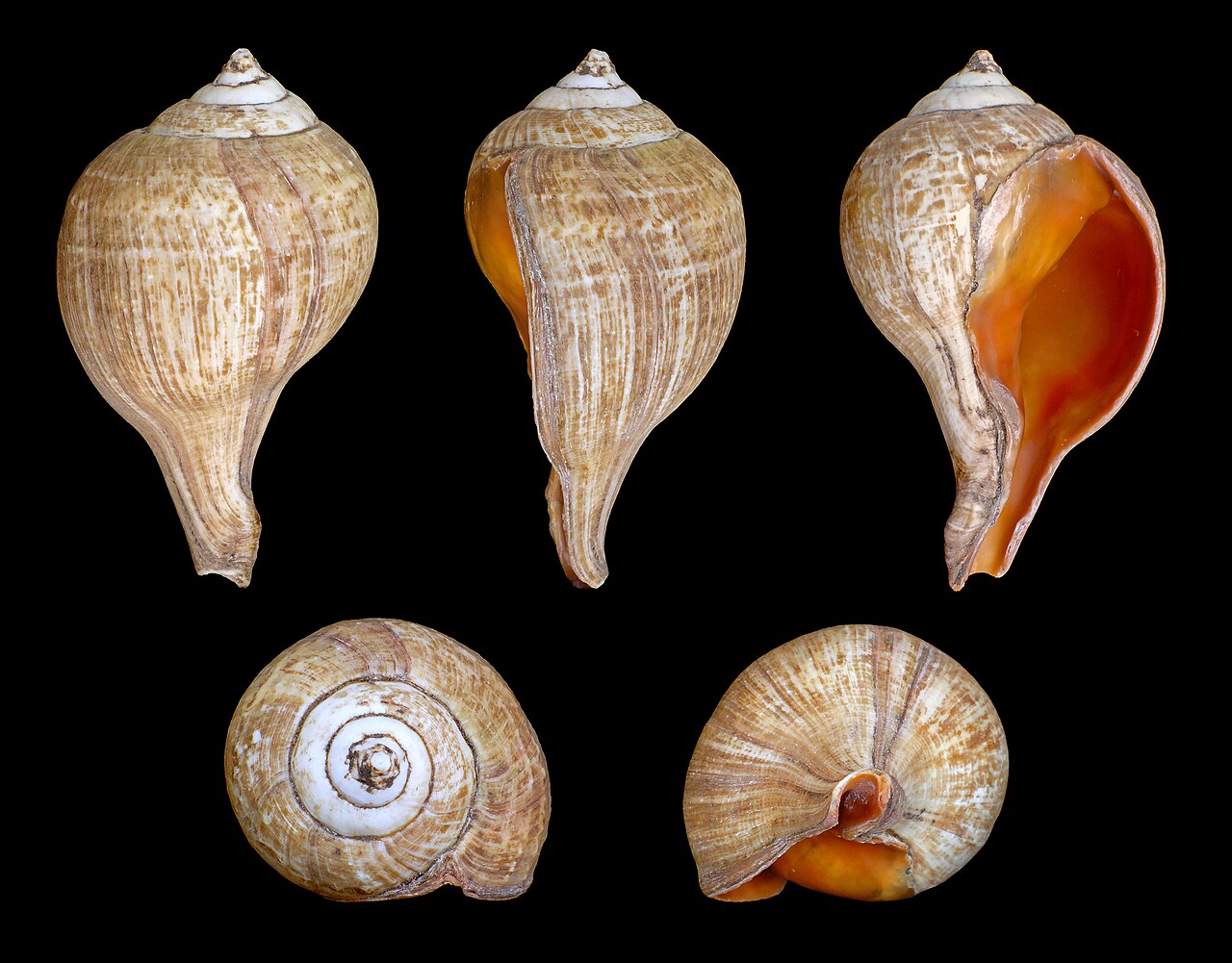
Photographed 2010-11-25
Turbinella pyrum 01 – Modern biological reference specimen of chank shell
Turbinella pyrum 01. Modern biological reference specimen of chank shell; distinguish it from excavated worked shell.
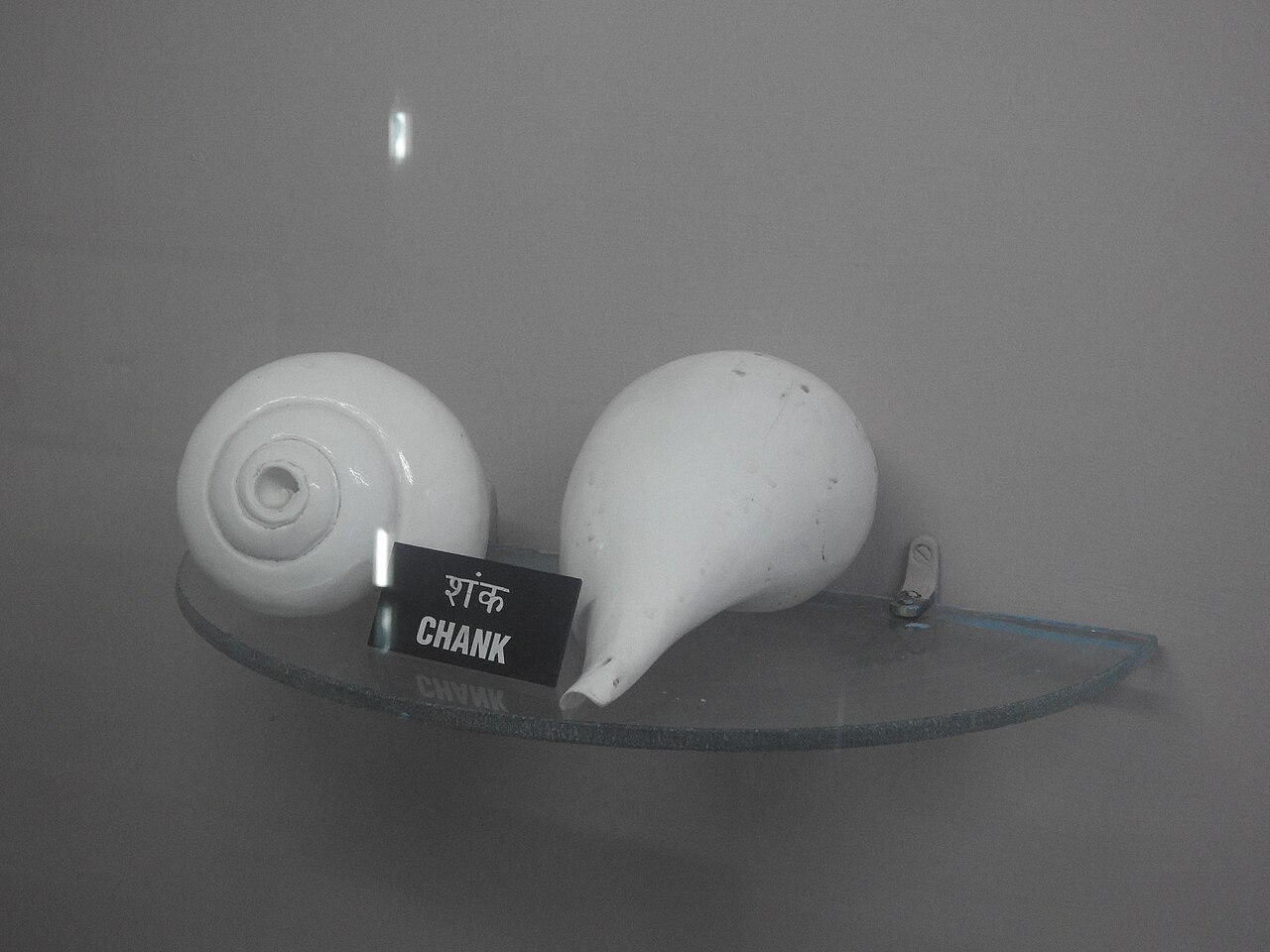
Photographed 2022-02-19 15:04:45
Sacred chank shell specimen (Turbinella pyrum, modern biological reference)
A modern chank-shell specimen (Turbinella pyrum), shown as a biological reference rather than an excavated worked-shell object. Includes source, credit and reuse information.
006Where next
Both studies discuss Kilnamandi in Tamil Nadu; the steel study treats its early reported date with caution.
On the atlasMayiladumparai Iron Age & Microlithic-to-Early Historic SiteExcavated upland zone · Krishnagiri District
Explore nexturukku / eḵku (Kannada/Telugu ukku) (உருக்கு / எஃகு / ഉരുക്ക്)All related studies, connected material, books and sources15 · 10
Elsewhere on this site
Excavation Atlas Sites: Mayiladumparai Iron Age & Microlithic-to-Early Historic Site
Classroom Lesson Plans: Module 5 · Iron, Stone Monuments & Everyday Craft: Technology in Early South India
Multi-Script Glossary Terms: urukku / eḵku (Kannada/Telugu ukku) (உருக்கு / எஃகு / ഉരുക്ക്) · turutti (துருத்தி / തുരുത്തി) · ūtu-kuḻal (Terracotta Tuyère / Bellows Nozzle) (ஊதுகுழல் (உலைக் குழாய்) / ഊതുകുഴൽ (ചൂളക്കുഴൽ / ട്യൂയർ)) · irumpu-k-kiṭṭam (Metallurgical Tap Slag & Furnace Bloom) (இரும்புக் கிட்டம் / ഇരുമ്പുകിട്ടം (സ്ലാഗ്)) · takkaḷi / nūṟpu-k-katir (Terracotta Spindle Whorls & Loom Weights) (தக்களி / நூற்புக் கதிர் & தறி எடைக்கற்கள் / തക്ലി / നൂൽക്കതിരും തറിക്കല്ലുകളും)
Connected material
Photographs, drawings, books, videos and other studies linked to this study. A link helps you explore; it does not prove a historical claim.
- Turbinella pyrum 01 – Modern biological reference specimen of chank shellphotographBackground
- Sacred chank shell specimen (Turbinella pyrum, modern biological reference)photographBackground
007Sources
The study lists the sources it consulted; we have not rechecked them. A working link does not show that a source was read, and a valid identifier does not show that it supports a claim. We do not link to unofficial uploads or copies of publications. Where a study cited one, we show the published citation, or a publisher, DOI or Internet Archive link when we have one. Tracking codes are removed from links, and the sources themselves are not republished here.
Rajan, K., R. Sivanantham, and V. P. Yathees Kumar, eds. 2025. Archaeological Excavations in Tamil Nadu: A Preliminary Report. Chennai: Department of Archaeology, Government of Tamil Nadu. Publication No. 362. ISBN 978-81-977842-9-3.
Vembakottai excavation chapter in Archaeological Excavations in Tamil Nadu: A Preliminary Report
Baskar, P., and R. Barathkumar. 2025. Vembakottai excavation chapter in K. Rajan, R. Sivanantham and V. P. Yathees Kumar, eds., Archaeological Excavations in Tamil Nadu: A Preliminary Report. Chennai: Department of Archaeology, Government of Tamil Nadu.
Kilnamandi excavation chapter in Archaeological Excavations in Tamil Nadu: A Preliminary Report
Gnanaraj, G. Victor, and M. Suresh. 2025. Kilnamandi excavation chapter in K. Rajan, R. Sivanantham and V. P. Yathees Kumar, eds., Archaeological Excavations in Tamil Nadu: A Preliminary Report. Chennai: Department of Archaeology, Government of Tamil Nadu.
Vasanthakumar, K., T. Kaleeswaran, R. Sivanantham, and K. Rajan. 2024. Excavation at Thulukkarpatti. In Recent Advances in Archaeological Investigations of South India: Proceedings of the 2nd International Seminar in Commemoration of Padmasri Iravatham Mahadevan. Chennai: Department of Archaeology, Government of Tamil Nadu.
Tamil Nadu Department of Archaeology. 2024. Archaeology Policy Note 2024–2025. Government of Tamil Nadu.
Rajan, K., and R. Sivanantham. 2026. Inscribed Potsherds of Tamil Nadu: Graffiti and Tamili - Vol. 1. Chennai: Department of Archaeology, Government of Tamil Nadu.
The New Indian Express. 5 July 2023. Potsherd with Tamil inscriptions unearthed at Thulukkarpatti in TN.
The New Indian Express. 6 April 2022. Archaeologists 'bowl'ed over by at Thulukkarpatti site.
DT Next. 11 July 2023. 15 sarcophagus unearthed near Vandavasi.
Ragu Raman, A. 21 September 2025. TN had trade contact with north during late harappan period indicates scientific dating of sarcophagus in Kilnamandi. Times of India.
Researchers and institutions whose work this study uses: R. Sivanantham, K. Rajan, Iravatham Mahadevan
How we know The evidence, claims and dates behind this study
What this study draws on
- Tamil Nadu Department of Archaeology, 2025 preliminary report: chapters on Vembakottai and Kilnamandi.
- A 2024 seminar paper on the Thulukkarpatti excavation by Vasanthakumar, Kaleeswaran, Sivanantham and Rajan.
- One radiocarbon (AMS) date on charcoal from a Kilnamandi burial, with its calibrated ranges.
- The 2024–25 archaeology policy note and newspaper reports, used as lower-level evidence.
Dates in this study
| What is dated | Date | How it was dated |
|---|---|---|
| Kilnamandi Meg.3 Beta-666752 minor 95.4-percent calibration component | 1866–1852 BCE | Laboratory date |
| Kilnamandi Meg.3 Beta-666752 principal 95.4-percent calibration component | 1769–1615 BCE | Laboratory date |
| Thulukkarpatti broad tentative cultural range in proceedings paper | 700 BCE – 100 CE | How it was dated is not stated |
| Vembakottai technical Iron Age phase | 600–200 BCE | Period assigned by excavators or scholars |
| Thulukkarpatti Tamil-Brahmi / Early Historic phase | 300 BCE – 100 CE | Date from writing, coins or texts |
| Vembakottai technical Early Historic phase | 300 BCE – 400 CE | Period assigned by excavators or scholars |
See these dates on the timeline
The study’s claims
10 claims · 13 source passages · 61 paragraphs
Browse the study paragraph by paragraphVembakottai has direct archaeological evidence for on-site shell manufacture extending from sawn conch and cores/debitage through unfinished or semi-finished pieces to completed plain and decorated bangles, but the consulted technical sources do not establish a Turbinella pyrum species identification or a fully documented columella-cutting sequence.
Supported in this study
Species-level identification is not supplied in the consulted Vembakottai technical chapter. The manufacturing reconstruction is limited to physically reported stages and does not import a generic South Asian shell-working sequence.
Vembakottai yielded morphologically described terracotta smoking pipes and approximately twenty-five terracotta seals that the excavators tentatively associate with trade; the published chapter does not identify these seals as Roman bullae.
Supported in this study
Trade function is an excavator interpretation. Roman-bulla terminology is not established by the consulted technical source. No consulted technical passage established crucibles.
The Vembakottai technical coin discussion does not publish a Roman coin attribution; identifiable upper-context copper coinage includes much later Madurai Nayak material and must not be used as evidence for Roman-period trade.
Supported in this study
This is a statement about the consulted published chapter, not a claim that no Roman coin could ever be discovered at the site. Later material lies outside the project target window.
Thulukkarpatti's lower technical phase contains fine Black-and-Red Ware, white-painted wares, graffiti and iron objects, providing a stratified Iron Age craft and habitation assemblage that the excavators compare with Adichanallur and Sivagalai.
Supported in this study
The Iron Age chronology is tentative in the source. Ceramic analogy to Adichanallur and Sivagalai is an interpretation rather than an absolute date.
The Thulukkarpatti proceedings paper reports five Tamili/Tamil-Brahmi sherds on Black-and-Red Ware, while the later government policy note reports twelve fragmentary inscribed sherds across two seasons and nearly 4,800 graffiti-bearing sherds.
Supported in this study
The different totals reflect different reporting stages and should not automatically be treated as contradictory. The five-shard technical group is stratigraphically and palaeographically assigned to approximately the third century BCE through first century CE.
Specific Thulukkarpatti readings rendered in 2023 press coverage as Thieeya, Thisa and Kuvira(n) are attributable official/media claims but were not independently verified from legible technical plates in this study; the reported Puliman reading could not be confirmed in a consulted technical source.
Unresolved in this study
The searchable proceedings text corrupts the inscription characters. The 2026 official inscribed-potsherd catalogue was verified bibliographically but its artifact plates were not accessible. Puliman must remain unverified pending an inspectable specialist publication. Supplied assessment: uncertain
Thulukkarpatti should presently be described as a habitation-cum-burial landscape rather than as a technically excavated cemetery sequence, because the authors explicitly state that the settlement-grave relationship remained unresolved owing to non-excavation of the graves.
Supported in this study
The designation habitation-cum-burial site is used by the excavators. The funerary component is less directly excavated than at Kilnamandi.
Kilnamandi's later published technical count records twenty-seven handmade red-ware sarcophagi in eighteen excavated burials, with six to twelve legs and cist or pit-burial configurations associated with cairn and capstone architecture.
Supported in this study
Earlier press and administrative counts were lower because excavation was still in progress. Eight sarcophagi are reported as intact in the later technical account.
An early second-millennium-BCE date for Kilnamandi graffiti is an association-based inference from dated burial context and associated graffiti-bearing pottery, not direct radiocarbon dating of the incised signs.
Supported with qualifications
Contextual integrity is essential to the inference. The graffiti marks themselves are inorganic and were not radiocarbon dated. Similarity to Indus signs does not by itself establish linguistic or cultural identity. Supplied assessment: supported_with_qualification
Kilnamandi Locality 2 contains BRW, graffiti, pits with pottery and animal remains, and postholes; its identification as a temporary mortuary camp is the excavators' interpretation rather than a directly observable artifact category.
Supported with qualifications
The archaeological features are directly observed. The temporary funerary-use function remains interpretive. Supplied assessment: supported_with_qualification
Trace one claim through the study’s records
Explore the evidenceOther source lists
Numbered citation links from the study
The numbered links in the study text point here.
Archaeological excavations in Tamil Nadu : a preliminary report
Archaeological excavations in Tamil Nadu : a preliminary report
Archaeological excavations in Tamil Nadu : a preliminary report
Archaeological excavations in Tamil Nadu : a preliminary report
Archaeological excavations in Tamil Nadu : a preliminary report
Archaeological excavations in Tamil Nadu : a preliminary report
Recent Advances in Archaeological Investigations of South India Proceedings (2nd International Seminar in Commemoration of Padmasri Iravatham Mahadevan)
Recent Advances in Archaeological Investigations of South India Proceedings (2nd International Seminar in Commemoration of Padmasri Iravatham Mahadevan)
Recent Advances in Archaeological Investigations of South India Proceedings (2nd International Seminar in Commemoration of Padmasri Iravatham Mahadevan)
Tamil Nadu Department of Archaeology, Archaeology Policy Note 2024–2025
Department of Archaeology, Government of Tamil Nadu, Archaeology Policy Note 2024–2025.
Print or offline sourcePotsherd with Tamil inscriptions unearthed at ...
Inscribed Potsherds of Tamil Nadu - நூல்
Archaeological excavations in Tamil Nadu : a preliminary report
Archaeological excavations in Tamil Nadu : a preliminary report
15 sarcophagus unearthed near Vandavasi
Archaeological excavations in Tamil Nadu : a preliminary report
TN had trade contact with north during late harappan period indicates scientific dating of sarcophagus in Kilnamandi | Chennai News - The Times of India
Archaeological excavations in Tamil Nadu : a preliminary report
Archaeological excavations in Tamil Nadu : a preliminary report
Potsherd with Tamil inscriptions unearthed at ...
Archaeological excavations in Tamil Nadu : a preliminary report
Recent Advances in Archaeological Investigations of South India Proceedings (2nd International Seminar in Commemoration of Padmasri Iravatham Mahadevan)
Recent Advances in Archaeological Investigations of South India Proceedings (2nd International Seminar in Commemoration of Padmasri Iravatham Mahadevan)
Recent Advances in Archaeological Investigations of South India Proceedings (2nd International Seminar in Commemoration of Padmasri Iravatham Mahadevan)
Archaeological excavations in Tamil Nadu : a preliminary report
Archaeological excavations in Tamil Nadu : a preliminary report
Archaeological excavations in Tamil Nadu : a preliminary report
Archaeological excavations in Tamil Nadu : a preliminary report
Recent Advances in Archaeological Investigations of South India Proceedings (2nd International Seminar in Commemoration of Padmasri Iravatham Mahadevan)
Recent Advances in Archaeological Investigations of South India Proceedings (2nd International Seminar in Commemoration of Padmasri Iravatham Mahadevan)
Recent Advances in Archaeological Investigations of South India Proceedings (2nd International Seminar in Commemoration of Padmasri Iravatham Mahadevan)
Archaeological excavations in Tamil Nadu : a preliminary report
Archaeological excavations in Tamil Nadu : a preliminary report
Recent Advances in Archaeological Investigations of South India Proceedings (2nd International Seminar in Commemoration of Padmasri Iravatham Mahadevan)
Recent Advances in Archaeological Investigations of South India Proceedings (2nd International Seminar in Commemoration of Padmasri Iravatham Mahadevan)
Archaeological excavations in Tamil Nadu : a preliminary report
TN had trade contact with north during late harappan period indicates scientific dating of sarcophagus in Kilnamandi | Chennai News - The Times of India
Recent Advances in Archaeological Investigations of South India Proceedings (2nd International Seminar in Commemoration of Padmasri Iravatham Mahadevan)
Tamil Nadu Department of Archaeology, Archaeology Policy Note 2024–2025
Department of Archaeology, Government of Tamil Nadu, Archaeology Policy Note 2024–2025.
Print or offline sourceArchaeological excavations in Tamil Nadu : a preliminary report
Recent Advances in Archaeological Investigations of South India Proceedings (2nd International Seminar in Commemoration of Padmasri Iravatham Mahadevan)
Recent Advances in Archaeological Investigations of South India Proceedings (2nd International Seminar in Commemoration of Padmasri Iravatham Mahadevan)
Archaeological excavations in Tamil Nadu : a preliminary report
Archaeological excavations in Tamil Nadu : a preliminary report
Recent Advances in Archaeological Investigations of South ...
Archaeologists 'bowl'ed over by at Thulukkarpatti site
About this study Status, corrections and how it was made
Status
Draft study, revision 4. No historian, archaeologist, or Tamil or Malayalam specialist has reviewed it yet.
The study itself says more research is needed before its question can be settled.
How it was made
Compiled as an editorial synthesis from published scholarship around questions we framed. About this project & workflow
The summary, How sure lines and Two views notes on this page were prepared from this study and cross-checked against its passages. That is an editorial check, not a specialist review.
Technical details
Study code R237. The text fingerprint changes whenever the study text changes.
- The study text is shown as written. Links from its paragraphs to citations help you move around the study; they are not new claims or checked source passages.
See how this study’s records were extracted
Text fingerprint (SHA-256): R237 · 1f47dbf7003cf5647222ddfd… · v4
Evidence tables and technical details are on the web page: https://layersofthesouth.org/read/aab21710ff