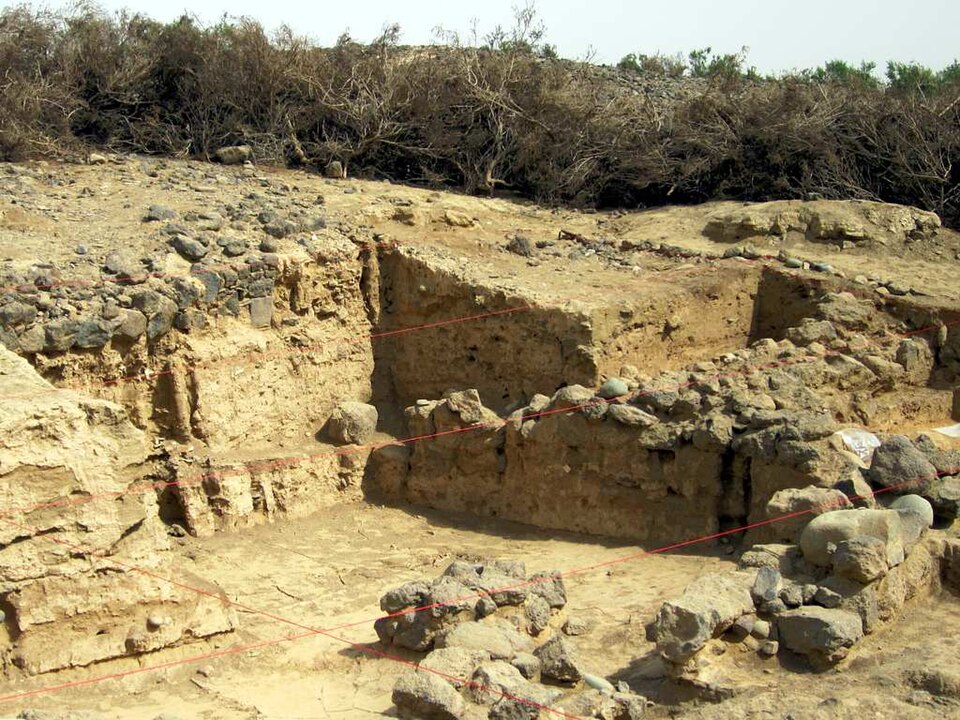
Stone walls exposed by excavation at Adulis, Eritrea, photographed in 2012
Adulis
Photographed 2012-12-20
- Across the water
Adulis: an African port active in the same ocean trade as Kerala
The Periplus and Eritrean–Italian excavations show Adulis as an African port with its own anchorages, inland road, ruler and buyers.
- This page
- 2,733 words · revision 5
Draft study · Awaiting specialist review · Updated
001Dates and places

No mapped place in this study.
Dates in this study are stated in words only.
- 1 Well supported
- 1 Likely
- 1 Possible
- 1 Not known
002How sure
In brief
Adulis was an African port in what is now Eritrea. The Periplus of the Erythraean Sea is a commercial account usually dated to the mid-first century CE. It describes the port's offshore anchorage, its inland road to Coloe and Aksum, and two-way trade. Imports included cloth, glass, copper and iron, with Indian iron, steel and cotton cloth from the region the text calls Ariaca. Exports included ivory, rhinoceros horn and tortoise-shell. The 2013–2014 Eritrean–Italian excavation found a living area tentatively dated to the first–second centuries CE. It held Nabataean fineware and Egyptian amphorae. Churches of the sixth and early seventh centuries are much later. No source used here names Pattanam or any Kerala port as the origin of the Indian goods. A 2024 announcement of earlier occupation still awaits a final report.
Key researchers cited in this study: Wilfred H. Schoff (Periplus Translation & Commentary) · Full bibliography
How sure
- Well supported
The Periplus lists Indian iron, steel and cotton cloth among goods reaching Adulis.
Stated in Periplus section 6, read in Schoff's 1912 English translation.
- Likely
People lived in Sector 1 at Adulis in the first–second centuries CE.
The 2014 excavation report dates the deposits tentatively, from pottery and layers.
- Possible
Adulis was occupied before the first century CE.
Reported only in a 2024 preliminary announcement, not a final excavation report.
- Not known
Whether the Indian goods at Adulis came from Kerala.
The Periplus names Ariaca; no source used here ties them to Kerala ports.
Why it matters
It shows an African port as an active partner in the ocean trade that also reached Kerala, with its own routes, ruler and customers.
003Key findings
What the study concludes
- The Periplus describes Adulis through its anchorages, inland connections and two-way exchange; it is an outsider’s commercial account, not a complete social history.
- Published early domestic deposits must be distinguished from the later figurines, workshops and churches that also make Adulis important.
- Evidence of African–Indian connections does not establish a particular direct voyage between Adulis and Pattanam.
In the study’s own words. How sure each point is, is shown above.
The summary above is the short read. The full study is the complete text it was drawn from, with its tables and source notes.
What the full study covers
- Main findings
- Begin on the African shore
- A harbor could be several places
- The inland road belongs in the maritime story
- What came in: cloth, metal and different customers
- What went out – and what the list leaves out
- Political knowledge is also uneven
- What excavation adds to the earlier picture
- Later buildings must remain later
- What Adulis does and does not tell us about South India
- What remains uncertain
- The next questions
- References and access notes
- Further reading and listening
004The study
Main findings
- The Periplus describes Adulis through its anchorages, inland connections and two-way exchange; it is an outsider’s commercial account, not a complete social history.
- Published early domestic deposits must be distinguished from the later figurines, workshops and churches that also make Adulis important.
- Adulis shows Indian goods reaching an African port, but no source used here links it directly to Pattanam or the Kerala coast.
Begin on the African shore
In a familiar account of oceanic trade, a ship leaves Egypt, collects cargo in India and returns to Mediterranean customers. Adulis asks us to turn the picture around. What happened where people received textiles and metal, moved goods between the coast and the interior, and made imported materials useful in their own lives? This article begins with that shore rather than treating it as empty space between better-known destinations. The core literary witness is the Periplus, read here in Schoff’s 1912 translation. We compare its account with selected excavation-report sections and later archaeological work. Those sources do not describe precisely the same centuries. Keeping their dates visible lets us see continuity and change without constructing a timeless “African port.” The analysis below is a synthesis; it is not a newly translated ancient text or an independently reviewed excavation.
Excavated basilica platform and masonry at Adulis, Eritrea, photographed in 2012
Adulis
Photographed 2012-12-20
A harbor could be several places
Section 4 of the Periplus does not describe a single town with ships conveniently tied beside every house. It distinguishes an offshore anchorage, an earlier place of anchoring and Adulis inland from the shore. The account explains the move of anchorage through danger from the mainland. Whatever its bias, the report makes the route from sea to market part of the port’s identity. 1 Our practical inference is that arrival involved several decisions: where a vessel could wait, how people and goods would reach land, and how they would continue to a market. These are functions rather than an exact reconstructed plan. A map connecting ancient names to modern islands requires its own geographical argument; a translation alone cannot supply precise coordinates. The old English translation also uses hostile collective labels for some local people. Those terms disclose the commercial observer’s expectations and the history of translation. They should not become our neutral description of an entire population. We can report that the writer perceived a safety problem without adopting his judgment of everyone living ashore. 2
The inland road belongs in the maritime story
The Periplus links Adulis with Coloe and with the city of the Auxumites, describing stages of inland travel and the movement of ivory. Its route is not merely a decorative line behind the port. It connects the exchange at the water’s edge with people and activities beyond it. 3 Read this as an ancient itinerary, not a present-day journey planner. Reported days may depend on the traveler, load, road and circumstances. The useful historical finding is the asserted relationship between coast and interior. We should not silently convert that into an exact walking speed or assume that every item followed the entire route. Our interpretation also shifts attention away from a single merchant. Goods must reach a point of exchange before a foreign ship can acquire them. That observation opens questions about carrying, negotiation, local knowledge, access and the distribution of earnings. The surviving text does not answer all those questions, but its inland connections make it unreasonable to imagine that only the people aboard ships acted in the trade.
What came in: cloth, metal and different customers
Section 6 names imported cloth, glass, copper and iron, along with limited wine and olive oil. Some goods are distinguished by intended customers or uses. Copper could enter cooking vessels and personal adornment; iron could become implements and weapons. There is also a distinction between ordinary imports and articles directed toward a ruler. 4 The reader can see more than a cargo list here. A material arriving from elsewhere did not remain merely “foreign.” The text describes local uses and transformation. Our inference is that an imported sheet of copper and a finished bracelet belong to different stages of value and work. It would be a mistake to count every imported object as proof that local people lacked technical skill. The same passage explicitly includes Indian iron, steel and cotton textiles from the region of Ariaca. These are valuable signs of an Indian connection, but the source does not specify Pattanam as their point of origin. “Indian steel” also does not by itself identify a particular excavated furnace, manufacturing recipe or later celebrated sword tradition. 5
What went out – and what the list leaves out
The listed exports include ivory, rhinoceros horn and the material the translation calls tortoise-shell. The text associates some supply with inland hunting and some with island communities. These are historical records of exploitation and exchange, not endorsements of contemporary wildlife trade. 6 A list prepared for commerce tells us little about the people who never met its writer, the distribution of benefits, or the losses borne by animals and communities. It is also silent about much of a day’s unremarkable work. Our reading should acknowledge those absences without filling them with invented testimony. The people missing from a merchant’s description are not people missing from the past. Farther along the African coast, the Periplus describes voyages by traders from Indian ports and exchanges in foodstuffs as well as cloth. This broader material shows why the ocean cannot be reduced to Roman demand for pepper. It is comparative evidence for the network, however: the goods listed for those other markets must not simply be copied into Adulis’s own entry. 7
Political knowledge is also uneven
The Periplus names Zoskales, comments on his conduct and mentions his familiarity with Greek learning. It does not supply a constitutional history of the region. We therefore retain the person named in this account without automatically making him the securely identified ruler of every territory later associated with Aksum. 8 The same restraint applies to the phrase rendered “a port established by law.” It indicates a recognized commercial arrangement in the translation, not a warrant for inventing a Roman customs office at Adulis. Authority, permissions and collection of dues require more evidence than a modern reader’s familiarity with Roman administration. A connection to the Roman world is not the same thing as Roman government.
Standing monumental stelae at Aksum, photographed in 2013
Aksum
Photographed 2013-05-02
What excavation adds to the earlier picture
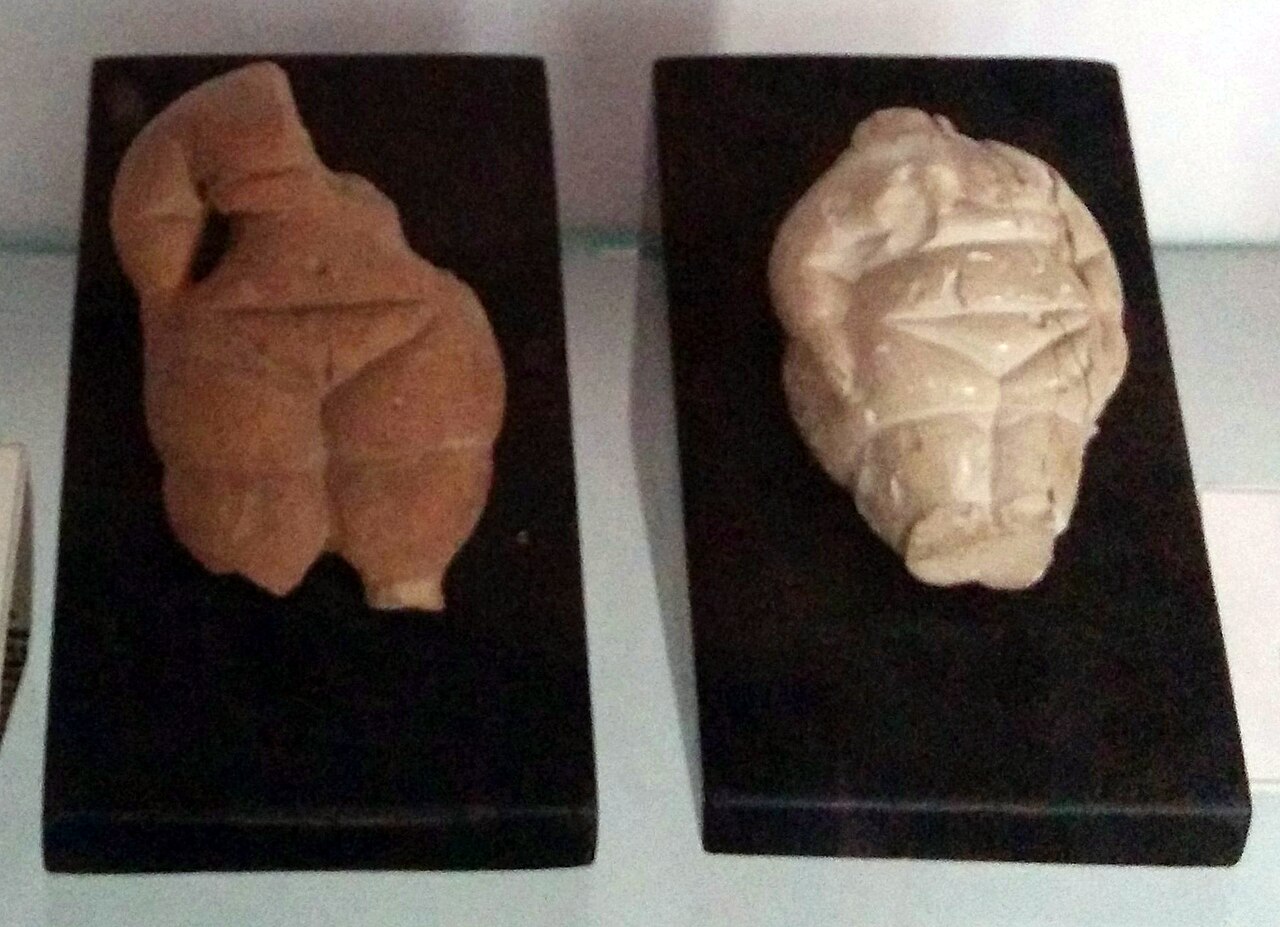
The 2013–2014 report describes a Sector 1 occupation tentatively dated to the first–second centuries CE through pottery and stratified deposits. It associates domestic material and a substantial wall with the level, including Nabataean fineware and Egyptian amphorae. That is evidence for an earlier inhabited area, not a complete plan of the town in a particular year. 9 A different context produced a figurine assigned stylistically to the fourth–sixth centuries. The report treats its Indian connection as significant but does not securely identify the depicted person or its owner. We can discuss a traveling object without announcing the recovered biography of an Indian merchant. 10 The shell study examines possible ornamental and dietary uses and warns that not every hole can be classified through indirect observation. It also notes the absence of pearls and working traces in the discussed pearl-oyster material. A shell species with a potential use is not evidence that all those uses occurred in the sampled deposit. 11
Later buildings must remain later
Castiglia’s 2022 article concerns church archaeology several centuries after the Periplus: its abstract discusses sixth- to early seventh-century buildings. The sixth-century material overlaps the end of the 1000 BCE–600 CE period covered here, while early seventh-century material is a later comparison. Neither establishes the setting of an earlier visit. This study read the abstract, not the complete excavation analysis. 12 An official mission announcement in 2024 reported material interpreted as earlier than the first-century evidence emphasized in previous work. We treat this as a reason to follow the emerging sequence, not as proof that a fully developed seaport existed throughout every date mentioned in the announcement. 13 Together these cases show why “the age of Adulis” is not one answer. First occupation, a recognizable commercial settlement, surviving domestic contexts and church construction concern different events. Connecting them needs published contexts, not the oldest or most spectacular date.
What Adulis does and does not tell us about South India
Adulis gives a grounded account of African participation in Indian Ocean exchange. For South India it is a comparison, not a direct link. The Periplus names Indian iron, steel and cotton cloth arriving at Adulis from the region it calls Ariaca; it does not name Pattanam or any Kerala port as their source. 5 Textual evidence describes two-way exchange and an inland connection; archaeology adds inhabitants, materials and changing activities. What Adulis offers a reader in Kerala is the shape of the wider network: Indian goods reached an African market with its own inland routes, ruler and customers. Local settlement history deserves attention in its own right.
What remains uncertain
- The Periplus is an interested outsider’s account, used through an older English translation rather than a new examination of the Greek manuscript tradition.
- Only selected sections of the long 2014 report were read; its photographs and tables were not independently analyzed.
- The church study was read at abstract level, and the proposed earlier occupation in the 2024 announcement requires final context publication.
The next questions
- Where the Adulis–Coloe–Aksum route ran on the ground needs its own geographical study; a translation alone cannot supply coordinates.
- Examine the dated local-production and food-processing contexts without mixing early and later assemblages.
- Compare the final results of the 2025 church monograph with the earlier announcements.
References and access notes
1 Anonymous; translated by Wilfred H. Schoff (1912 translation). The Periplus of the Erythraean Sea. §4: Mountain Island, Diodorus and the settlement inland. Relevant numbered sections read. University of Washington transcription of the 1912 translation, with some later editorial glosses. Ancient composition is usually placed around the middle of the first century CE, not the translation date. Schoff’s translation is public domain in the United States; no complete modern translation is reproduced. Open source: depts.washington.edu
2 Anonymous; translated by Wilfred H. Schoff (1912 translation). The Periplus of the Erythraean Sea. §§2–5; compare the website’s bracketed translation notes. Relevant numbered sections read. University of Washington transcription of the 1912 translation, with some later editorial glosses. Ancient composition is usually placed around the middle of the first century CE, not the translation date. Schoff’s translation is public domain in the United States; no complete modern translation is reproduced. Open source: depts.washington.edu
3 Anonymous; translated by Wilfred H. Schoff (1912 translation). The Periplus of the Erythraean Sea. §4: Coloe, the Auxumites and the inland supply route. Relevant numbered sections read. University of Washington transcription of the 1912 translation, with some later editorial glosses. Ancient composition is usually placed around the middle of the first century CE, not the translation date. Schoff’s translation is public domain in the United States; no complete modern translation is reproduced. Open source: depts.washington.edu
4 Anonymous; translated by Wilfred H. Schoff (1912 translation). The Periplus of the Erythraean Sea. §6: Egyptian imports, worked materials and gifts for the ruler. Relevant numbered sections read. University of Washington transcription of the 1912 translation, with some later editorial glosses. Ancient composition is usually placed around the middle of the first century CE, not the translation date. Schoff’s translation is public domain in the United States; no complete modern translation is reproduced. Open source: depts.washington.edu
Book XI, p 366 of McCrindle’s 1897 Cosmas translation, describing traded products, Male’s pepper and exchanges among ports
1897
5 Anonymous; translated by Wilfred H. Schoff (1912 translation). The Periplus of the Erythraean Sea. §6: imports from Ariaca. Relevant numbered sections read. University of Washington transcription of the 1912 translation, with some later editorial glosses. Ancient composition is usually placed around the middle of the first century CE, not the translation date. Schoff’s translation is public domain in the United States; no complete modern translation is reproduced. Open source: depts.washington.edu
6 Anonymous; translated by Wilfred H. Schoff (1912 translation). The Periplus of the Erythraean Sea. §§4 and 6: supply and exports. Relevant numbered sections read. University of Washington transcription of the 1912 translation, with some later editorial glosses. Ancient composition is usually placed around the middle of the first century CE, not the translation date. Schoff’s translation is public domain in the United States; no complete modern translation is reproduced. Open source: depts.washington.edu
7 Anonymous; translated by Wilfred H. Schoff (1912 translation). The Periplus of the Erythraean Sea. §14, specifically the farther African markets; distinguish from §6. Relevant numbered sections read. University of Washington transcription of the 1912 translation, with some later editorial glosses. Ancient composition is usually placed around the middle of the first century CE, not the translation date. Schoff’s translation is public domain in the United States; no complete modern translation is reproduced. Open source: depts.washington.edu
8 Anonymous; translated by Wilfred H. Schoff (1912 translation). The Periplus of the Erythraean Sea. §5: Zoskales. Relevant numbered sections read. University of Washington transcription of the 1912 translation, with some later editorial glosses. Ancient composition is usually placed around the middle of the first century CE, not the translation date. Schoff’s translation is public domain in the United States; no complete modern translation is reproduced. Open source: depts.washington.edu
9 Chiara Zazzaro; Enzo Cocca; Alfredo Carannante; Anna Filigenzi; Romolo Loreto; Andrea Manzo; Valentina Perna; Caroline Durand; Serena Massa; Chiara Mandelli; Rosanna Nardi; Dario Nappo (2014). The contribution of the Università degli Studi di Napoli “L’Orientale” to the 2013–2014 Eritrean-Italian archaeological field season at Adulis. pp. 509–510: overview of Sector 1. Selected complete sections of the author-uploaded report text read; repository metadata cross-checked; photographs and original tables not visually read. The report separates early domestic deposits from much later buildings and finds. A Gupta-style figurine is not evidence for a first-century Indian resident. The shell analysis contains uncertainties; no new specimen counts are calculated. Open source: www.researchgate.net
10 Chiara Zazzaro; Enzo Cocca; Alfredo Carannante; Anna Filigenzi; Romolo Loreto; Andrea Manzo; Valentina Perna; Caroline Durand; Serena Massa; Chiara Mandelli; Rosanna Nardi; Dario Nappo (2014). The contribution of the Università degli Studi di Napoli “L’Orientale” to the 2013–2014 Eritrean-Italian archaeological field season at Adulis. pp. 547–548: Anna Filigenzi’s figurine discussion and context note. Selected complete sections of the author- uploaded report text read; repository metadata cross-checked; photographs and original tables not visually read. The report separates early domestic deposits from much later buildings and finds. A Gupta-style figurine is not evidence for a first-century Indian resident. The shell analysis contains uncertainties; no new specimen counts are calculated. Open source: www.researchgate.net
11 Chiara Zazzaro; Enzo Cocca; Alfredo Carannante; Anna Filigenzi; Romolo Loreto; Andrea Manzo; Valentina Perna; Caroline Durand; Serena Massa; Chiara Mandelli; Rosanna Nardi; Dario Nappo (2014). The contribution of the Università degli Studi di Napoli “L’Orientale” to the 2013–2014 Eritrean-Italian archaeological field season at Adulis. pp. 555–557: archaeomalacological study. Selected complete sections of the author-uploaded report text read; repository metadata cross-checked; photographs and original tables not visually read. The report separates early domestic deposits from much later buildings and finds. A Gupta-style figurine is not evidence for a first-century Indian resident. The shell analysis contains uncertainties; no new specimen counts are calculated. Open source: www.researchgate.net
12 Gabriele Castiglia (2022). An archaeology of conversion? Evidence from Adulis for early Christianity and religious transition in the Horn of Africa. Abstract. Publisher abstract and publication details read; full article not yet consulted directly. The abstract concerns sixth- to early seventh-century churches. It is not proof of Christianity at Adulis in the early first century CE or a conversion date for all inhabitants. Open source: www.cambridge.org
13 Italian Ministry of Foreign Affairs and International Cooperation (6 March 2024). Eritrea: new discoveries at the archaeological site of Adulis. Early material and proposed revision of the occupation history. Announcement text read. A preliminary public announcement, not a final stratigraphic report. It does not establish a fully developed seaport throughout the broad early dates it discusses. Open source: www.esteri.it
Further reading and listening
Onward resources, not additional evidence for this article. The recorded access limits still apply. Gabriele Castiglia; Philippe Pergola (editors) (2025). Early Christianity on the Margins (?): The PIAC Excavations in Adulis, Eritrea (2017–2020). Publisher description and metadata read; book not yet read. A further-reading lead on later Adulis. No claim in this study relies on the unread book. Open source: bcp.archaeopress.com
005Photographs
Photographs of the places and objects this study discusses. Each item carries its creator’s credit, licence and documented source. See all 412 photographs and source images ↗
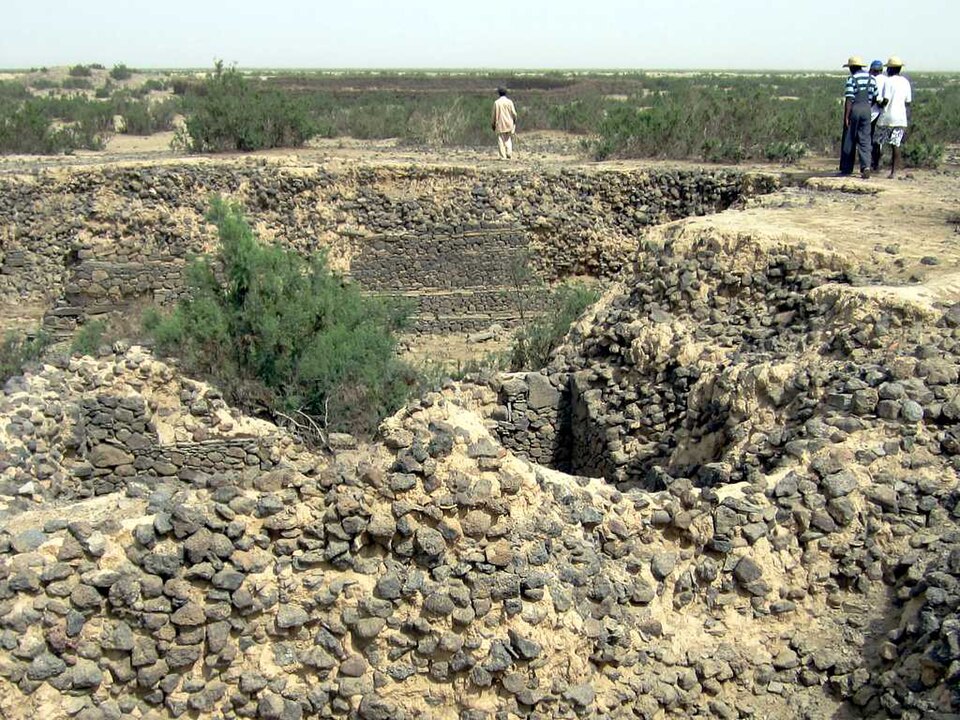
Adulis · Photographed 2012-12-20 11:43
Stone walls exposed by excavation at Adulis, Eritrea, photographed in 2012

Aksum · Photographed 2013-05-02 02:11
Standing monumental stelae at Aksum, photographed in 2013

1897
Book XI, p 366 of McCrindle’s 1897 Cosmas translation, describing traded products, Male’s pepper and exchanges among ports
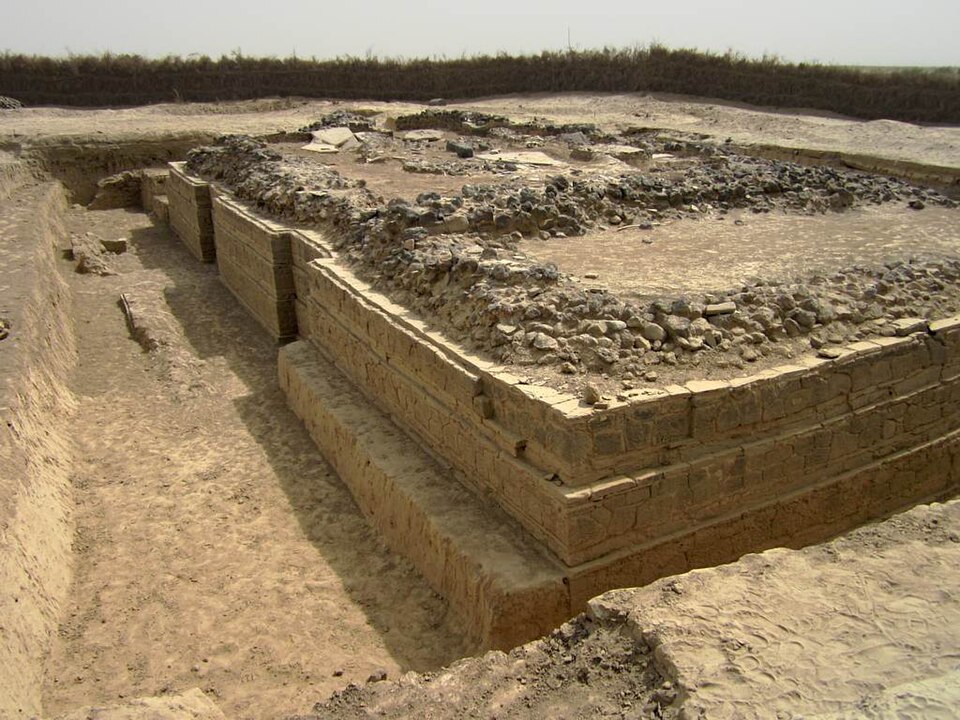
Adulis · Photographed 2012-12-20 11:47
Excavated basilica platform and masonry at Adulis, Eritrea, photographed in 2012
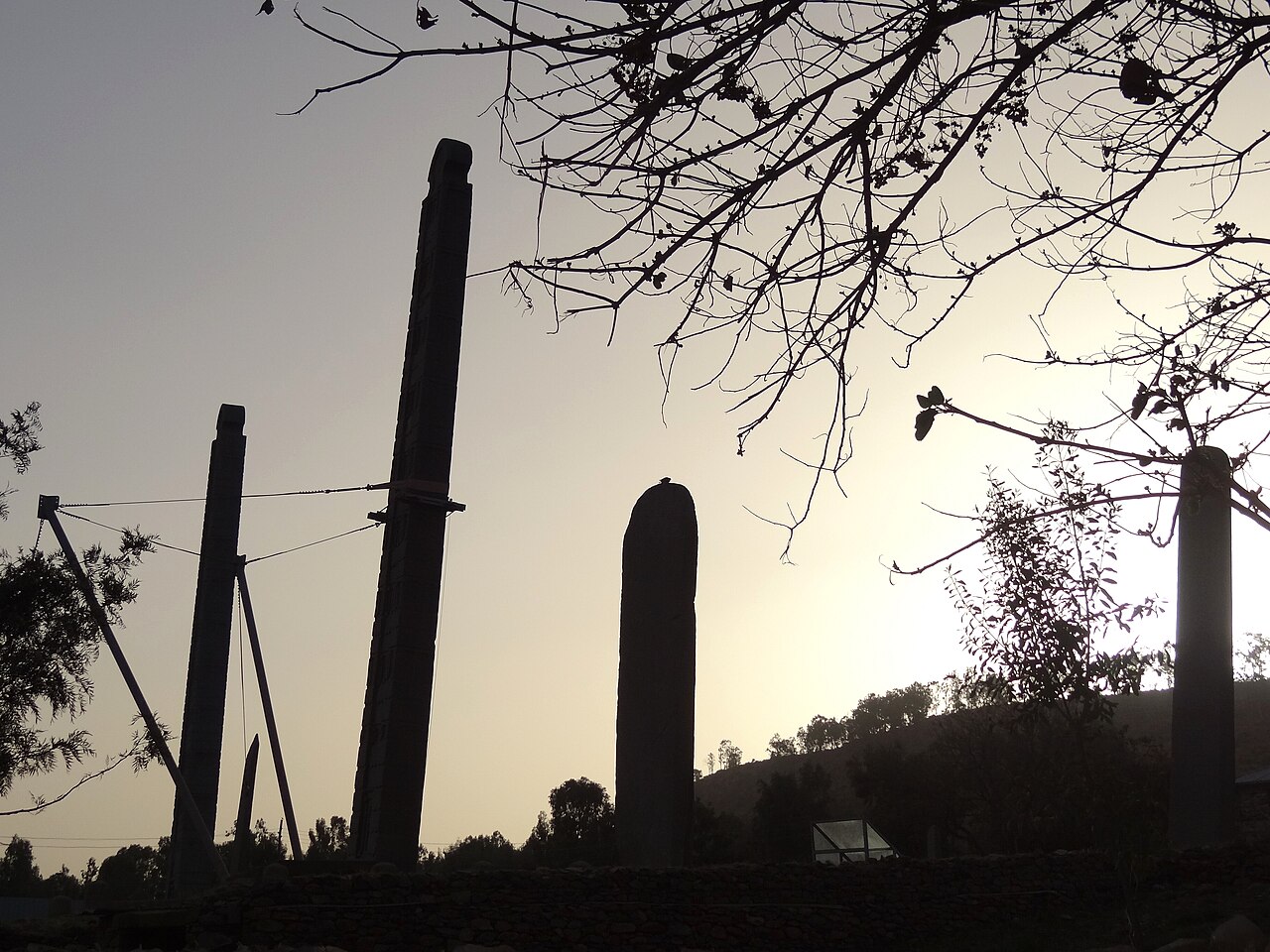
Aksum · Photographed 2013-05-01 08:59
Silhouettes of stelae at Aksum at sunset
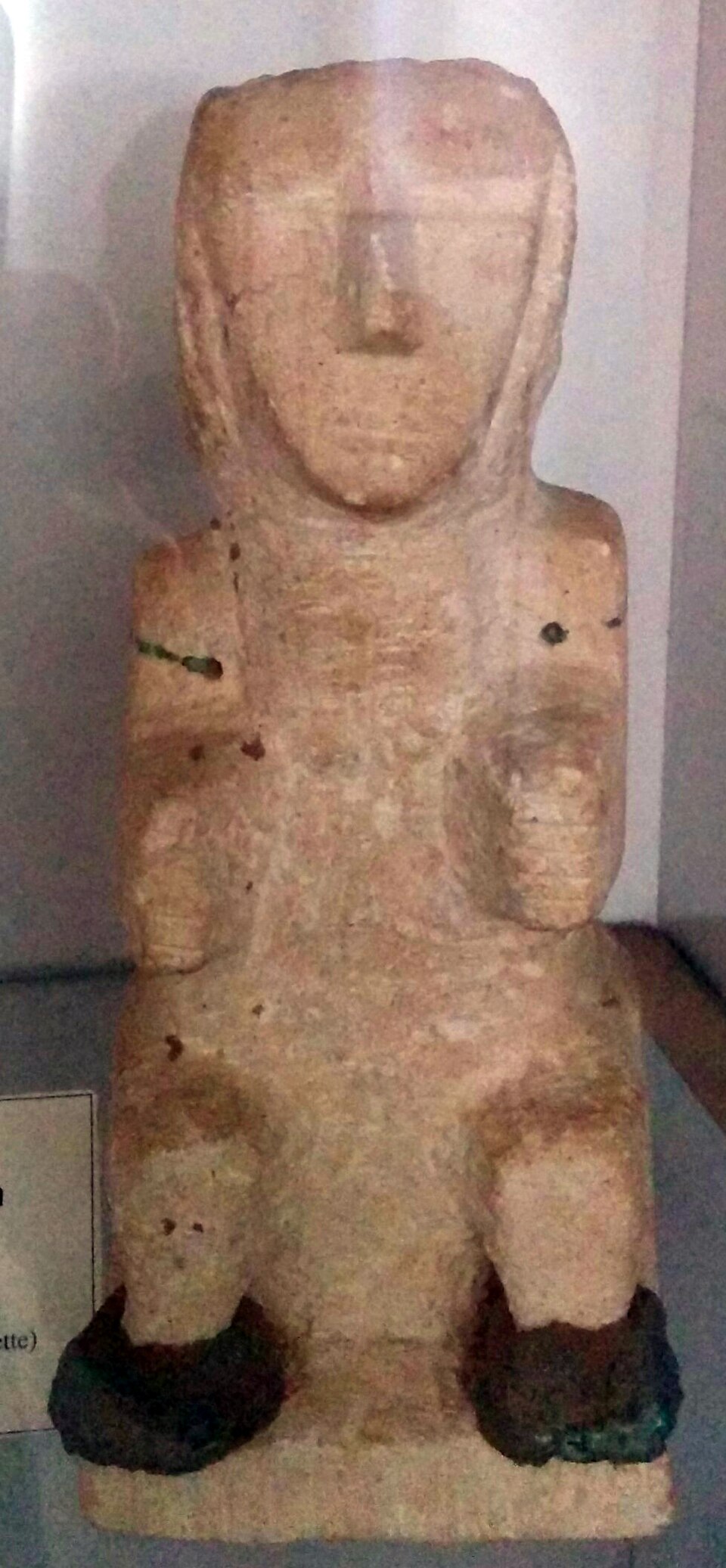
Adulis · Photographed 2015-11-24 15:00:29
Museum figure identified in the source as a royal figure from Adulis, dated to the first millennium BCE

Aksum · Photographed 2013-05-02 01:59
Fallen decorated stela fragments in the main stelae field at Aksum

Adulis · Photographed 2005-01-01
Rock-cut southern irrigation canal near Adulis, looking east
Show 5 more photographs and source images ↓
Aksum · Photographed 2013-05-02 02:02
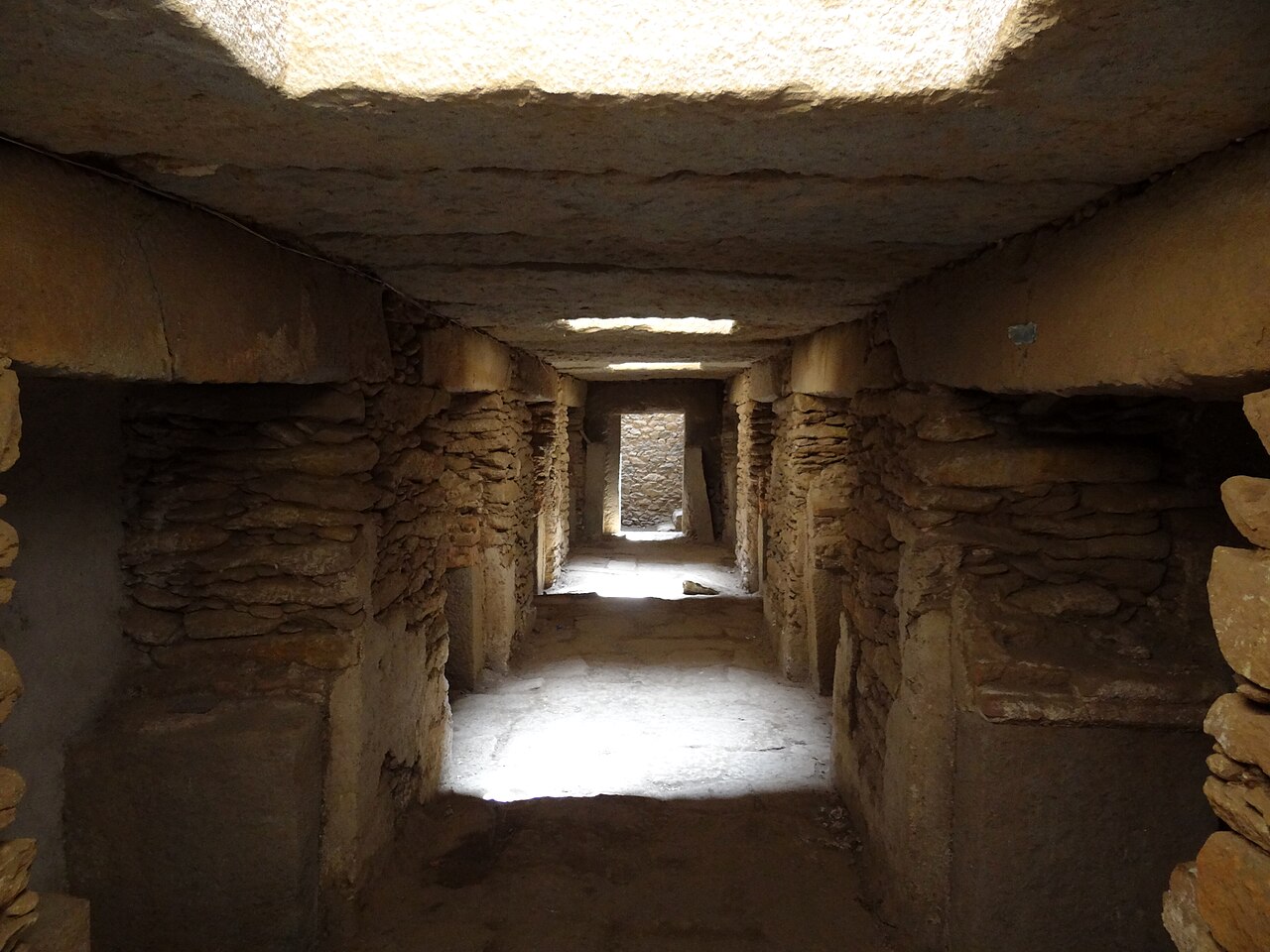
Interior passage of the tomb labelled Remhai’s Tomb at Aksum
Adulis · Photographed 2012-12-20 11:36
Excavated masonry at Adulis, Eritrea, photographed by David Stanley in 2012

Aksum · Photographed 2013-05-02 02:24
Later house facade beside the main stelae field at Aksum, photographed in 2013
Adulis · Photographed 2015-11-24 14:59:58
Two small figurines attributed to Adulis in the source museum photograph, dated there to the first millennium BCE

Adulis · Photographed 2007-02-06
Rock-cut northern irrigation canal serving the oasis near Adulis
006Where next
All related studies, connected material, books and sources10 · 13
Elsewhere on this site
Read this study with a guided path: Follow a voyage
Connected material
Photographs, drawings, books, videos and other studies linked to this study. A link helps you explore; it does not prove a historical claim.
- Book XI, p 366 of McCrindle’s 1897 Cosmas translation, describing traded products, Male’s pepper and exchanges among portshistorical printed pageBackground
- Rock-cut southern irrigation canal near Adulis, looking eastphotographShows the subject
- Rock-cut northern irrigation canal serving the oasis near AdulisphotographShows the subject
- Later house facade beside the main stelae field at Aksum, photographed in 2013photographBackground
- Two small figurines attributed to Adulis in the source museum photograph, dated there to the first millennium BCEphotographShows the subject
- Fallen decorated stela fragments in the main stelae field at AksumphotographShows the subject
- Silhouettes of stelae at Aksum at sunsetphotographShows the subject
- Interior passage of the tomb labelled Remhai’s Tomb at AksumphotographShows the subject
- Standing monumental stelae at Aksum, photographed in 2013photographShows the subject
- Excavated masonry at Adulis, Eritrea, photographed by David Stanley in 2012photographShows the subject
- Excavated basilica platform and masonry at Adulis, Eritrea, photographed in 2012photographShows the subject
- Stone walls exposed by excavation at Adulis, Eritrea, photographed in 2012photographShows the subject
- Museum figure identified in the source as a royal figure from Adulis, dated to the first millennium BCEphotographShows the subject
Books, videos and websites
Outside reading on this topic. These are not part of the study and we have not checked every claim in them. See all books and videos
- The Indo-Roman Pepper Trade and the Muziris Papyrus Book · Federico De Romanis · 2020 · Exhaustive historical, agronomic, and papyrological study of P.Vindob. G 40822 (the 2nd-century CE Muziris Papyrus, whose surviving Greek lines preserve Gangetic nard, sound ivory tusks, and schidai – interpreted by De Romanis as ivory trimmings/fragments and in older editions as fabric/textiles), proposing scholarly reconstructions for pepper and malabathron tonnages and Red Sea–Alexandria fiscal logistics.
- Indo-Roman Trade: From Pots to Pepper Book · Roberta Tomber · 2008 · Concise ceramic guide connecting Red Sea ports (Myos Hormos, Berenike), Southern Arabia (Khor Rori, Qana), and Indian ports (Pattanam, Arikamedu, Alagankulam) through petrography of amphorae, torpedo jars, and Indian coarse wares.
- Berenike and the Ancient Maritime Spice Route Book · Steven E. Sidebotham · 2011 · Comprehensive field report and synthesis by the co-director of the Berenike excavations on Egypt's Red Sea coast, detailing the 7.55 kg Malabar black pepper cache, Indian cotton sails, teak wood, beads, and Tamil-Brāhmī ostraca.
- The Ancient Port of Arikamedu: New Excavations and Researches 1989–1992 (Vols. 1 & 2) Book · Vimala Begley, Peter Francis Jr., Iravatham Mahadevan, K. V. Raman, Steven Sidebotham, Kathleen Warner Slane & Elizabeth Lyding Will · 1996 & 2004 · Two-volume specialist reassessment of Arikamedu (Poduke), replacing Mortimer Wheeler's 1945 'Roman trading station' model with an indigenous South Indian port and Indo-Pacific glass/stone bead manufacturing hub.
- PAMA – Institute for the Advancement of Transdisciplinary Archaeological Sciences Website · Interdisciplinary research portal for the Periyar–Muziris/Pattanam cultural zone, featuring specialist seminars, community archaeology initiatives, and ongoing artefact post-excavation analyses.
- The Metropolitan Museum of Art – Open Access Collection (CC0) Website · Provides high-resolution CC0 public-domain photographs and curatorial records of 1st-century CE Roman pillar-moulded glass bowls, terracotta amphorae, and South Asian sculptures used as comparative specimens in our Media Register.
007Sources
The study lists the sources it consulted; we have not rechecked them. A working link does not show that a source was read, and a valid identifier does not show that it supports a claim. We do not link to unofficial uploads or copies of publications. Where a study cited one, we show the published citation, or a publisher, DOI or Internet Archive link when we have one. Tracking codes are removed from links, and the sources themselves are not republished here.
Anonymous; translated by Wilfred H. Schoff (1912 translation). The Periplus of the Erythraean Sea. §4: Mountain Island, Diodorus and the settlement inland. Relevant numbered sections read. University of Washington transcription of the 1912 translation, with some later editorial glosses. Ancient composition is usually placed around the middle of the first century CE, not the translation date. Schoff’s translation is public domain in the United States; no complete modern translation is reproduced.
Anonymous; translated by Wilfred H. Schoff (1912 translation). The Periplus of the Erythraean Sea. §§2–5; compare the website’s bracketed translation notes. Relevant numbered sections read. University of Washington transcription of the 1912 translation, with some later editorial glosses. Ancient composition is usually placed around the middle of the first century CE, not the translation date. Schoff’s translation is public domain in the United States; no complete modern translation is reproduced.
Anonymous; translated by Wilfred H. Schoff (1912 translation). The Periplus of the Erythraean Sea. §4: Coloe, the Auxumites and the inland supply route. Relevant numbered sections read. University of Washington transcription of the 1912 translation, with some later editorial glosses. Ancient composition is usually placed around the middle of the first century CE, not the translation date. Schoff’s translation is public domain in the United States; no complete modern translation is reproduced.
Anonymous; translated by Wilfred H. Schoff (1912 translation). The Periplus of the Erythraean Sea. §6: Egyptian imports, worked materials and gifts for the ruler. Relevant numbered sections read. University of Washington transcription of the 1912 translation, with some later editorial glosses. Ancient composition is usually placed around the middle of the first century CE, not the translation date. Schoff’s translation is public domain in the United States; no complete modern translation is reproduced.
Anonymous; translated by Wilfred H. Schoff (1912 translation). The Periplus of the Erythraean Sea. §6: imports from Ariaca. Relevant numbered sections read. University of Washington transcription of the 1912 translation, with some later editorial glosses. Ancient composition is usually placed around the middle of the first century CE, not the translation date. Schoff’s translation is public domain in the United States; no complete modern translation is reproduced.
Anonymous; translated by Wilfred H. Schoff (1912 translation). The Periplus of the Erythraean Sea. §§4 and 6: supply and exports. Relevant numbered sections read. University of Washington transcription of the 1912 translation, with some later editorial glosses. Ancient composition is usually placed around the middle of the first century CE, not the translation date. Schoff’s translation is public domain in the United States; no complete modern translation is reproduced.
Anonymous; translated by Wilfred H. Schoff (1912 translation). The Periplus of the Erythraean Sea. §14, specifically the farther African markets; distinguish from §6. Relevant numbered sections read. University of Washington transcription of the 1912 translation, with some later editorial glosses. Ancient composition is usually placed around the middle of the first century CE, not the translation date. Schoff’s translation is public domain in the United States; no complete modern translation is reproduced.
Anonymous; translated by Wilfred H. Schoff (1912 translation). The Periplus of the Erythraean Sea. §5: Zoskales. Relevant numbered sections read. University of Washington transcription of the 1912 translation, with some later editorial glosses. Ancient composition is usually placed around the middle of the first century CE, not the translation date. Schoff’s translation is public domain in the United States; no complete modern translation is reproduced.
Chiara Zazzaro; Enzo Cocca; Alfredo Carannante; Anna Filigenzi; Romolo Loreto; Andrea Manzo; Valentina Perna; Caroline Durand; Serena Massa; Chiara Mandelli; Rosanna Nardi; Dario Nappo (2014). The contribution of the Università degli Studi di Napoli “L’Orientale” to the 2013–2014 Eritrean-Italian archaeological field season at Adulis. pp. 509–510: overview of Sector 1. Selected complete sections of the author-uploaded report text read; repository metadata cross-checked; photographs and original tables not visually read. The report separates early domestic deposits from much later buildings and finds. A Gupta-style figurine is not evidence for a first-century Indian resident. The shell analysis contains uncertainties; no new specimen counts are calculated.
Chiara Zazzaro; Enzo Cocca; Alfredo Carannante; Anna Filigenzi; Romolo Loreto; Andrea Manzo; Valentina Perna; Caroline Durand; Serena Massa; Chiara Mandelli; Rosanna Nardi; Dario Nappo (2014). The contribution of the Università degli Studi di Napoli “L’Orientale” to the 2013–2014 Eritrean-Italian archaeological field season at Adulis. pp. 547–548: Anna Filigenzi’s figurine discussion and context note. Selected complete sections of the author- uploaded report text read; repository metadata cross-checked; photographs and original tables not visually read. The report separates early domestic deposits from much later buildings and finds. A Gupta-style figurine is not evidence for a first-century Indian resident. The shell analysis contains uncertainties; no new specimen counts are calculated.
Chiara Zazzaro; Enzo Cocca; Alfredo Carannante; Anna Filigenzi; Romolo Loreto; Andrea Manzo; Valentina Perna; Caroline Durand; Serena Massa; Chiara Mandelli; Rosanna Nardi; Dario Nappo (2014). The contribution of the Università degli Studi di Napoli “L’Orientale” to the 2013–2014 Eritrean-Italian archaeological field season at Adulis. pp. 555–557: archaeomalacological study. Selected complete sections of the author-uploaded report text read; repository metadata cross-checked; photographs and original tables not visually read. The report separates early domestic deposits from much later buildings and finds. A Gupta-style figurine is not evidence for a first-century Indian resident. The shell analysis contains uncertainties; no new specimen counts are calculated.
Gabriele Castiglia (2022). An archaeology of conversion? Evidence from Adulis for early Christianity and religious transition in the Horn of Africa. Abstract. Publisher abstract and publication details read; full article not yet consulted directly. The abstract concerns sixth- to early seventh-century churches. It is not proof of Christianity at Adulis in the early first century CE or a conversion date for all inhabitants.
Italian Ministry of Foreign Affairs and International Cooperation (6 March 2024). Eritrea: new discoveries at the archaeological site of Adulis. Early material and proposed revision of the occupation history. Announcement text read. A preliminary public announcement, not a final stratigraphic report. It does not establish a fully developed seaport throughout the broad early dates it discusses.
Researchers and institutions whose work this study uses: Wilfred H. Schoff
How we know The evidence, claims and dates behind this study
What this study draws on
- Periplus of the Erythraean Sea sections 2–6 and 14, read in Schoff's 1912 English translation.
- Selected sections of the 2013–2014 Eritrean–Italian field report (Zazzaro and colleagues, 2014); its photographs and tables were not analysed.
- Castiglia's 2022 church study read as an abstract; the 2025 church monograph seen only as a publisher description.
- A 2024 Italian foreign ministry announcement, treated as preliminary.
Dates in this study
This study has no dates recorded in a form we can chart, so there is no date chart. Any dates it gives are in the full study.
The study’s claims
0 claims · 0 source passages · 26 paragraphs
Browse the study paragraph by paragraphThis study has no separately listed claims. Its paragraphs can be browsed one by one.
About this study Status, corrections and how it was made
Status
Draft study, revision 5. No historian, archaeologist, or Tamil or Malayalam specialist has reviewed it yet.
How it was made
Compiled as an editorial synthesis from published scholarship around questions we framed. About this project & workflow
The summary, How sure lines and Two views notes on this page were prepared from this study and cross-checked against its passages. That is an editorial check, not a specialist review.
Technical details
Study code R014. The text fingerprint changes whenever the study text changes.
- The study text is shown as written. Links from its paragraphs to citations help you move around the study; they are not new claims or checked source passages.
See how this study’s records were extracted
Text fingerprint (SHA-256): R014 · 072197bd651be659b66df6a7… · v5
Evidence tables and technical details are on the web page: https://layersofthesouth.org/read/bcb0af1310