Pliny: Muziris, Barace, Pandion and Cottonara,1855 edition
1855
Its nineteenth-century footnote identifying Muziris with Mangalore is an outdated proposal, not a present conclusion.
- Land & water
A route has three layers: places, carriers and owners
A Tamil poem's salt wagon shows a household and its supplies on the move, and a route's places, carriers and owners can change separately.
- This page
- 1,664 words · revision 4
Draft study · Awaiting specialist review · Updated
001Dates and places

No mapped place in this study.
Dates in this study are stated in words only.
- 2 Well supported
- 1 Likely
- 1 Not known
002How sure
In brief
This short study separates three kinds of route. The geographical route links places, and the handling route records which carrier or vehicle has the load. The commercial route follows ownership, permission and responsibility, and one layer can change while another stays the same. The Tamil guide-poem Perumpanattruppadai describes a salt wagon with household belongings and a food vessel, its oxen driven by a woman with a child. The poem was written for a patron and points toward Kanchi, so it is neither a census nor a surveyed road. The study suggests judging any reconstruction by the load first: its container, shape and condition. Reaching the coast was not the same as loading an ocean ship. A change of boat did not by itself mean a change of owner. No uniform ancient daily speed, animal load or transport charge is established.
Key researchers cited in this study: Vaidehi Herbert (Sangam Poetry Translations & Commentaries) · Wilfred H. Schoff (Periplus Translation & Commentary) · René Cappers (Berenike Roman Pepper & Archaeobotany) · Full bibliography
How sure
- Well supported
A Tamil poem shows a salt wagon carrying household goods, its oxen driven by a woman with a child.
Perumpanattruppadai lines 46 to 65 describe the scene directly; it is a poem, not a record.
- Well supported
Pliny's twelve-day desert crossing applies only to the road from Coptos to Berenike.
Pliny names the Berenike road; the figure cannot fill gaps on the Myos Hormos road.
- Likely
Important development of Egypt's desert road stations came in the later first century CE.
Van der Veen and colleagues date important development of the organised road-station system to then.
- Not known
Daily speeds, animal loads and transport charges on these routes.
No uniform ancient speed, camel capacity or transport tariff is established in the sources used.
Why it matters
It gives readers a simple test for any trade map: ask which kind of route each line claims to show.
003Key findings
What the study concludes
- Tamil poetry makes transport workers, animals and provisions visible, but its route belongs to a particular literary and political landscape, not a surveyed Muziris road.
- The Coptos–Berenike and Coptos–Myos Hormos approaches must be researched separately. A dated station or a reported journey time cannot simply be transferred between them.
In the study’s own words. How sure each point is, is shown above.
The summary above is the short read. The full study is the complete text it was drawn from, with its tables and source notes.
What the full study covers
004The study
Main findings
- Tamil poetry makes transport workers, animals and provisions visible, but its route belongs to a particular literary and political landscape, not a surveyed Muziris road.
- The Coptos–Berenike and Coptos–Myos Hormos approaches must be researched separately. A dated station or a reported journey time cannot simply be transferred between them.
- A place-to-place route, a sequence of physical handovers and a chain of commercial responsibility are different things. A map should not imply that one documents all three.
What the arrow leaves out
On a map, a consignment can travel from an inland district to a port in the width of a line. On the ground, someone has to make it move. This study puts the labor back into the route. It considers a Tamil poem’s wagons and pack animals, Pliny’s account of the Egyptian approach to the Red Sea, and a later document concerned with getting valuable goods through Egypt. Together they offer several views of transport, but not one continuous observed journey. The aim is to recover operations and responsibilities without inventing a travel schedule. Three kinds of route will be kept apart. The geographical route connects places. The handling route records which vehicle or carrier has the load. The commercial route follows ownership, permission and responsibility. They may overlap, but one can change while another remains the same. This distinction is our analytical framework. It makes the surviving evidence more useful because it does not ask a road description to answer a question that only a contract or a receipt could resolve.
A wagon can carry a working household
In Perumpanattruppadai’s salt-transport passage, the equipment around a wagon includes practical belongings and a food vessel; a woman with a child drives the oxen. The poem’s attention reaches beyond an abstract cargo to the people and things travelling with it. These details occur within a patron-oriented guide-poem. They are not a census of all salt traders or proof that every travelling woman had the same kinship relation to the other workers. 1 For a reader, the important shift is from imagining a vehicle hired for one isolated delivery to asking what portion of everyday life travelled with the work. A child’s presence can change the questions about rest, food and attention. It does not by itself reveal whether the arrangement was chosen, comfortable, inherited or compulsory. The scene gives us reason to investigate a moving household, not permission to write a general social rule from one poetic image. It also encourages a less glamorous history of cargo. Salt, food and carrying equipment deserve attention beside expensive imports. Further questions follow: who supplied replacement parts, what happened to an injured animal and whether a load could be divided between carriers. These are questions prompted by the depicted machinery and its demands. No particular repair station or local transport tariff has been established by this passage.
Different loads ask different questions
The same poem also places pepper on pack animals; “Texts link pepper to inland Cottonara, not a whole route” reads that passage in detail. The contrasting scenes show a literary repertoire of transport, not a rule that pepper always travelled by donkey or salt by cart. 2 We can nevertheless reason clearly about a proposed reconstruction. A bulky load, a fragile object and a liquid container pose different handling problems even before assigning an ancient vehicle. To evaluate a scene, specify the object first: its container, shape, condition and the kind of access available at each end. Then test the proposed movement. Choosing a picturesque cart first and inventing a suitable road afterward reverses the evidentiary order. A functional model should make the assumptions visible rather than conceal them inside a convincing illustration.
Periplus §§53–56: Muziris, Nelcynda and the Pandian kingdom,1912 edition
1912
The desert has its own itinerary
“India-trade cargo crossed Egypt by camel, warehouse and Nile boat” follows the Egyptian half of the journey in detail. Pliny’s twelve-day crossing in Natural History 6.102–103 is an author’s route account, not a guarantee for an individual caravan. It belongs to the road from Coptos to Berenike and should not fill gaps on the separate approach to Myos Hormos. 3 Van der Veen and colleagues show that the desert road also had to supply people and working animals. They place important development of its road stations in the later first century, so that system cannot be projected back onto earlier decades. 4 A route study therefore needs two columns: what moves toward the destination, and what must be available for that movement to happen. The Muziris Papyrus, generally placed in the second century CE, shows transport and the creditor’s control being specified together. It does not name the original Malabar producer or establish one standard Indo-Roman forwarding system. 6 “Muziris Papyrus records credit, cargo values and a quarter tax” and “India-trade cargo crossed Egypt by camel, warehouse and Nile boat” discuss it further.
Arriving at shore was not finishing the delivery
The Periplus distinguishes the river positions of southwestern Indian trading places from the places where vessels and cargo could be handled. Its descriptions make access part of commercial geography rather than treating the coastline as one uncomplicated loading edge. In the case of Muziris, the text’s river location must be read with the separate archaeological debate about the port’s identification. The literary name does not supply a surveyed landing plan. 5 This gives us a simple but consequential distinction: reaching the coastal region is not the same event as putting goods aboard an ocean-going vessel. It is useful to ask where a smaller craft could approach, where someone might set down a load, and how waiting goods were protected. Those are questions about a transfer, not a licence to invent a monumental quay. The scale and construction of any reconstructed landing need evidence of their own. Nor does a change of craft prove a change of ownership. A carrier could deliver goods that remained another person’s property; a buyer could acquire goods that stayed temporarily in the same store. The actual arrangement must come from a particular source. Keeping these possibilities distinct prevents the visual shorthand of handing over a basket from becoming an unsupported legal conclusion.
How to draw a route that admits what is missing
On a map of such a route, use a separate layer for each kind of evidence. Mark an ancient author’s named places as textual claims. Mark excavated features with their own date ranges. Place a reconstructed connection in a third layer, with its supporting argument available on selection. Travel-time estimates belong in notes that say whether each is a quoted report, a calculation under explicit assumptions or an unresolved estimate. A single smooth line should not quietly convert all these different degrees of knowledge into equal certainty. A reader can follow a route while seeing where confidence changes. Transfer, waiting and acknowledgement expose the work and dependence within transport. Each operation should remain open to examination rather than disappear inside an apparently precise line.
What remains uncertain
-
The Tamil guide-poem is not a measured road survey or a direct itinerary between inland pepper cultivation and Muziris.
-
No uniform ancient daily speed, camel capacity or transport tariff is established. Egyptian evidence remains dated and route-specific.
-
A waterway, archaeological landing, literary port and commercial handover are not interchangeable evidence.
References and access notes
1 Ancient poem attributed to Kadiyalur Uruttirankannanar; English translation and commentary by Vaidehi Herbert (Ancient Tamil anthology; modern online translation). Perumpanattruppadai: Tamil text, English translation and notes. Perumpanattruppadai 46–65; transport scene and translated notes. Selected Tamil/English passages and accompanying notes read; no manuscript collation or specialist translation review. The guide-poem is oriented toward Tondaiman Ilantiraiyan and Kanchi. Its travel scenes are not a surveyed road to Muziris. Dating the individual poem remains a separate question. Open source: sangamtranslationsbyvaidehi.com
Book XI, p 366 of McCrindle’s 1897 Cosmas translation, describing traded products, Male’s pepper and exchanges among ports
1897
2 Ancient poem attributed to Kadiyalur Uruttirankannanar; English translation and commentary by Vaidehi Herbert (Ancient Tamil anthology; modern online translation). Perumpanattruppadai: Tamil text, English translation and notes. Perumpanattruppadai 66–82, in relation to 46–65. Selected Tamil/English passages and accompanying notes read; no manuscript collation or specialist translation review. The guide-poem is oriented toward Tondaiman Ilantiraiyan and Kanchi. Its travel scenes are not a surveyed road to Muziris. Dating the individual poem remains a separate question. Open source: sangamtranslationsbyvaidehi.com
3 Pliny the Elder; translated by H. Rackham (1952), with minor alterations on Attalus (First century CE; modern translation 1952). Natural History, Book 6, sections 101–106. Natural History 6.102–103. Selected English text and webpage translation attribution read; not a fresh Latin edition. Pliny associates the Cottonara pepper and hollowed-log boats with Becare. Do not silently transfer the sentence to Muziris or convert his itinerary into a guaranteed timetable. Open source: www.attalus.org
4 Marijke van der Veen, Charlène Bouchaud, René Cappers and Claire Newton (2018). Roman Life in the Eastern Desert of Egypt: Food, Imperial Power and Geopolitics. §§2–6: chronological scope, stations, food and animal provisioning. Author-posted full-text transcription read selectively: title page, §§2–10 and 25–28. No quantitative figures or tables transcribed. Canonical OpenEdition endpoint encountered an access challenge. ResearchGate header lists volume editors among authors; the chapter title page identifies the four authors used here. Sampling, deposition and chronological scope qualify the reported plant evidence. Open source: www.researchgate.net
Periplus §§56–57: pepper, imports and sailing winds,1912 edition
1912
The wording is the 1912 translator’s English, not the Greek original.
5 Anonymous; translated by Wilfred H. Schoff (1912 translation). The Periplus of the Erythraean Sea. Sections 53–55, especially river locations and approaches. Relevant numbered sections read. University of Washington transcription of the 1912 translation, with some later editorial glosses. Ancient composition is usually placed around the middle of the first century CE, not the translation date. Schoff’s translation is public domain in the United States; no complete modern translation is reproduced. Open source: depts.washington.edu
6 Bernhard Palme (2018). Der Muziris-Papyrus. Discussion of P. Vindob. G 40822: Egyptian transport, storage and the creditor’s control. German webpage text read. The lost exact date is distinguished from a palaeographic placement around the middle of the second century CE. Quantitative cargo tables were not used in this edition. Open source: www.onb.ac.at
005Photographs
Photographs of the places and objects this study discusses. Each item carries its creator’s credit, licence and documented source. See all 412 photographs and source images ↗

1855
Pliny: Muziris, Barace, Pandion and Cottonara,1855 edition
Book VI, chapter 26, p 65 of the 1855 Bostock–Riley translation of Pliny, naming Muziris, Barace, Pandion, Modiera and Cottonara and discussing voyages and pepper.
Its nineteenth-century footnote identifying Muziris with Mangalore is an outdated proposal, not a present conclusion.

1912
Periplus §§53–56: Muziris, Nelcynda and the Pandian kingdom,1912 edition
Printed p 44 of Schoff’s 1912 translation of the Periplus, describing Muziris, Nelcynda, river distances, kingdoms and ships carrying pepper.

1897
Book XI, p 366 of McCrindle’s 1897 Cosmas translation, describing traded products, Male’s pepper and exchanges among ports

1912
Periplus §§56–57: pepper, imports and sailing winds,1912 edition
Printed p 45 of Schoff’s 1912 Periplus translation, continuing the list of imports and exports and discussing the ocean crossing and Hippalus wind.
The wording is the 1912 translator’s English, not the Greek original.

1855
Pliny: Coptos, Berenice and the voyage toward India,1855 edition
Book VI, chapter 26, p 64 of the 1855 Bostock–Riley translation of Pliny, describing the desert route to Berenice and the sea voyage toward India.

Photographed 2015-08-13 11:37:10
View point of Thamarassery Churam – Present-day Thamarassery pass, including modern roads
View point of Thamarassery Churam. Present-day Thamarassery pass, including modern roads; not an ancient route reconstruction.
Photographed 2019-02-18 07:38:41
Thamarassery Churam Pano view – Present-day Thamarassery pass, including modern roads
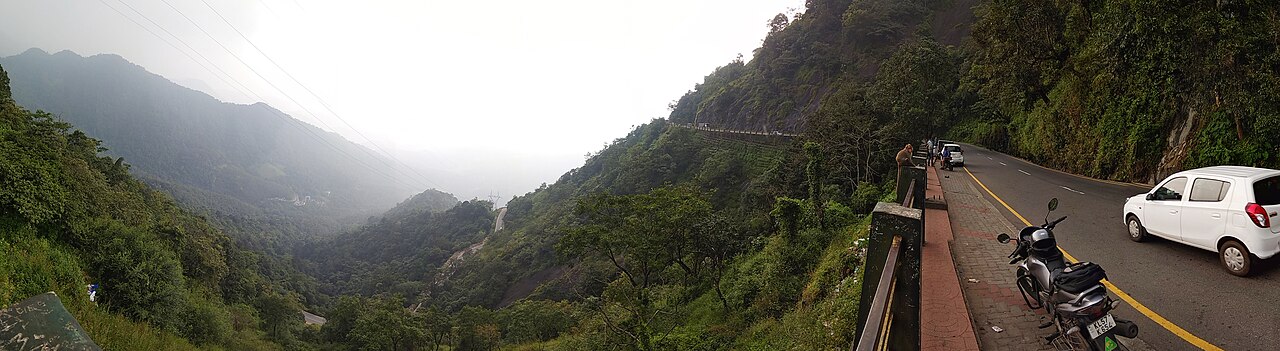
Thamarassery Churam Pano view. Present-day Thamarassery pass, including modern roads; not an ancient route reconstruction.
Palakkad Gap · Photographed 2023-08-20
Palghat gap western ghats 04 – Modern landscape at the Palakkad/Palghat Gap
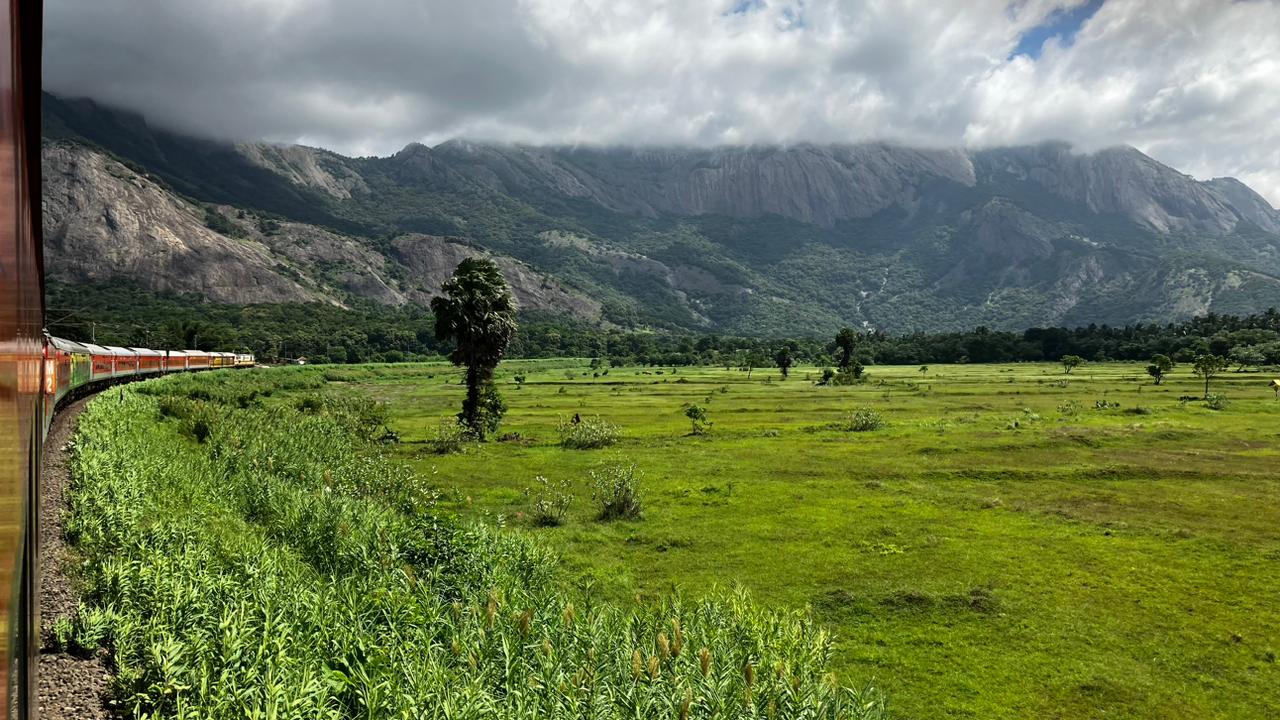
Palghat gap western ghats 04. Modern landscape at the Palakkad/Palghat Gap. Does not independently establish a particular ancient route or settlement.
Show 4 more photographs and source images ↓

Photographed 2019-05-27 10:57:25
Salt workers of Marakkanam – Modern salt-production landscape
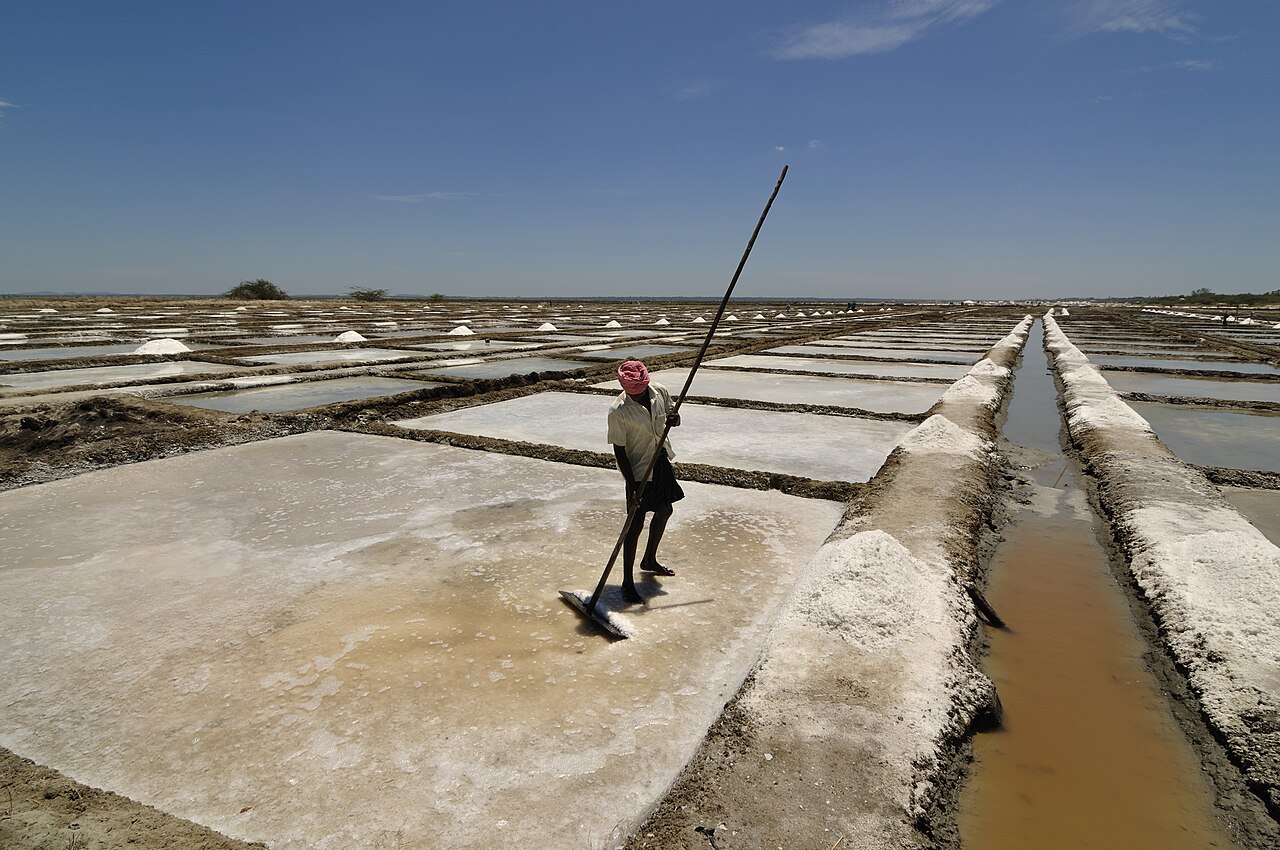
Salt workers of Marakkanam. Modern salt-production landscape; not an ancient saltworks excavation.
Photographed 2012-06-07 11:31:25
Marakkanam Salt Pans – Modern salt-production landscape
Marakkanam Salt Pans. Modern salt-production landscape; not an ancient saltworks excavation.

Photographed 2007-10
Modern railway through the Shenkottah/Aryankavu pass
Modern railway through the Shenkottah/Aryankavu pass. Landscape and present transport context; this does not establish a pre-600 CE route or date the railway to antiquity.
Palakkad Gap · Photographed 2023-08-20
Palghat gap western ghats 09 – Modern landscape at the Palakkad/Palghat Gap
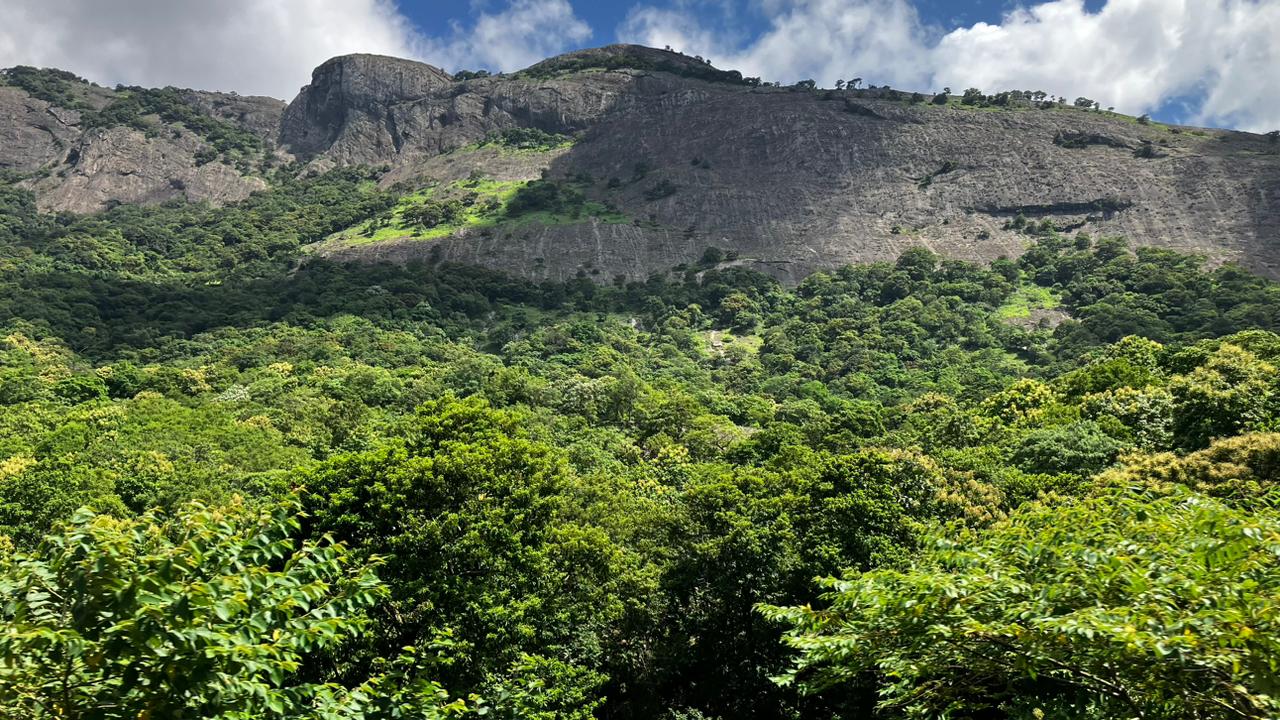
Palghat gap western ghats 09. Modern landscape at the Palakkad/Palghat Gap. Does not independently establish a particular ancient route or settlement.
006Where next
All related studies, connected material, books and sources10 · 6
Elsewhere on this site
Read this study with a guided path: Read a Tamil poem
Multi-Script Glossary Terms: pālai (பாலை / പാല) · umaṇar (உமணர் / ഉമണർ)
Connected material
Photographs, drawings, books, videos and other studies linked to this study. A link helps you explore; it does not prove a historical claim.
- Periplus §§53–56: Muziris, Nelcynda and the Pandian kingdom,1912 editionhistorical printed pageBackground
- Periplus §§56–57: pepper, imports and sailing winds,1912 editionhistorical printed pageBackground
- Book XI, p 366 of McCrindle’s 1897 Cosmas translation, describing traded products, Male’s pepper and exchanges among portshistorical printed pageBackground
- Pliny: Coptos, Berenice and the voyage toward India,1855 editionhistorical printed pageBackground
- Pliny: Muziris, Barace, Pandion and Cottonara,1855 editionhistorical printed pageBackground
- Modern railway through the Shenkottah/Aryankavu passphotographBackground
- View point of Thamarassery Churam – Present-day Thamarassery pass, including modern roadsphotographBackground
- Thamarassery Churam Pano view – Present-day Thamarassery pass, including modern roadsphotographBackground
- Marakkanam Salt Pans – Modern salt-production landscapephotographBackground
- Salt workers of Marakkanam – Modern salt-production landscapephotographBackground
- Palghat gap western ghats 09 – Modern landscape at the Palakkad/Palghat GapphotographBackground
- Palghat gap western ghats 04 – Modern landscape at the Palakkad/Palghat GapphotographBackground
007Sources
The study lists the sources it consulted; we have not rechecked them. A working link does not show that a source was read, and a valid identifier does not show that it supports a claim. We do not link to unofficial uploads or copies of publications. Where a study cited one, we show the published citation, or a publisher, DOI or Internet Archive link when we have one. Tracking codes are removed from links, and the sources themselves are not republished here.
Ancient poem attributed to Kadiyalur Uruttirankannanar; English translation and commentary by Vaidehi Herbert (Ancient Tamil anthology; modern online translation). Perumpanattruppadai: Tamil text, English translation and notes. Perumpanattruppadai 46–65; transport scene and translated notes. Selected Tamil/English passages and accompanying notes read; no manuscript collation or specialist translation review. The guide-poem is oriented toward Tondaiman Ilantiraiyan and Kanchi. Its travel scenes are not a surveyed road to Muziris. Dating the individual poem remains a separate question.
Ancient poem attributed to Kadiyalur Uruttirankannanar; English translation and commentary by Vaidehi Herbert (Ancient Tamil anthology; modern online translation). Perumpanattruppadai: Tamil text, English translation and notes. Perumpanattruppadai 66–82, in relation to 46–65. Selected Tamil/English passages and accompanying notes read; no manuscript collation or specialist translation review. The guide-poem is oriented toward Tondaiman Ilantiraiyan and Kanchi. Its travel scenes are not a surveyed road to Muziris. Dating the individual poem remains a separate question.
Pliny the Elder; translated by H. Rackham (1952), with minor alterations on Attalus (First century CE; modern translation 1952). Natural History, Book 6, sections 101–106. Natural History 6.102–103. Selected English text and webpage translation attribution read; not a fresh Latin edition. Pliny associates the Cottonara pepper and hollowed-log boats with Becare. Do not silently transfer the sentence to Muziris or convert his itinerary into a guaranteed timetable.
Marijke van der Veen, Charlène Bouchaud, René Cappers and Claire Newton (2018). Roman Life in the Eastern Desert of Egypt: Food, Imperial Power and Geopolitics. §§2–6: chronological scope, stations, food and animal provisioning. Author-posted full-text transcription read selectively: title page, §§2–10 and 25–28. No quantitative figures or tables transcribed. Canonical OpenEdition endpoint encountered an access challenge. ResearchGate header lists volume editors among authors; the chapter title page identifies the four authors used here. Sampling, deposition and chronological scope qualify the reported plant evidence.
Anonymous; translated by Wilfred H. Schoff (1912 translation). The Periplus of the Erythraean Sea. Sections 53–55, especially river locations and approaches. Relevant numbered sections read. University of Washington transcription of the 1912 translation, with some later editorial glosses. Ancient composition is usually placed around the middle of the first century CE, not the translation date. Schoff’s translation is public domain in the United States; no complete modern translation is reproduced.
Bernhard Palme (2018). Der Muziris-Papyrus. Discussion of P. Vindob. G 40822: Egyptian transport, storage and the creditor’s control. German webpage text read. The lost exact date is distinguished from a palaeographic placement around the middle of the second century CE. Quantitative cargo tables were not used in this edition.
Researchers and institutions whose work this study uses: Vaidehi Herbert, Wilfred H. Schoff, René Cappers
How we know The evidence, claims and dates behind this study
What this study draws on
- A reading of Perumpanattruppadai, lines 46 to 82, in Vaidehi Herbert's English translation.
- Pliny's Natural History 6.102 to 103 and the Periplus, sections 53 to 55, in published translations.
- Van der Veen and colleagues' 2018 study of plant remains from Egyptian ports and road stations.
- Bernhard Palme's account of the Muziris Papyrus, a second-century CE document about goods under a creditor's control.
Dates in this study
This study has no dates recorded in a form we can chart, so there is no date chart. Any dates it gives are in the full study.
The study’s claims
0 claims · 0 source passages · 14 paragraphs
Browse the study paragraph by paragraphThis study has no separately listed claims. Its paragraphs can be browsed one by one.
About this study Status, corrections and how it was made
Status
Draft study, revision 4. No historian, archaeologist, or Tamil or Malayalam specialist has reviewed it yet.
How it was made
Compiled as an editorial synthesis from published scholarship around questions we framed. About this project & workflow
The summary, How sure lines and Two views notes on this page were prepared from this study and cross-checked against its passages. That is an editorial check, not a specialist review.
Technical details
Study code R034. The text fingerprint changes whenever the study text changes.
- The study text is shown as written. Links from its paragraphs to citations help you move around the study; they are not new claims or checked source passages.
See how this study’s records were extracted
Text fingerprint (SHA-256): R034 · 5b9aded55f9db12a5dbd2e75… · v4
Evidence tables and technical details are on the web page: https://layersofthesouth.org/read/86fc9677eb