Pepper, texts and finds: Cut-out cards
Cut-out cards
D2 Pepper, texts and finds
2 pages, A4 or US Letter3 pages, A4 or US Letter
Print at actual size, with scaling turned off.
Lesson D2 · Ages 14 to 18 · Cut-out cards
Cut along the lines. One set for each group.
Key words English · Malayalam · Tamil
Muziris Papyrusമുസിരിസ് പാപ്പിറസ് രേഖமுசிறிப் பாப்பிரஸ் ஆவணம்
A Greek loan and customs document that records a valuable cargo shipment.
Periplusപെരിപ്ലസ് മാരിസ് എറിത്രേയിபெரிப்ளஸ் (செங்கடல் பயண நூல்)
A Greek handbook for merchants that describes ports and cargoes.
Yavanaയവനർயவனர்
An early Tamil word for people from the west.
Rouletted Wareറൗലറ്റഡ് വെയർ (കൊത്തുപണി മൺപാത്രങ്ങൾ)சக்கரப் பொறிப்பு மண்பாண்டம் (ரௌலட்டட் பாண்டம்)
Fine grey-and-black dishes made on a wheel, with rings of small pressed marks inside the base.
amphora
A Mediterranean clay transport jar. Some types carried mainly wine.
Tamil-Brahmiതമിഴി (തമിഴ് ബ്രാഹ്മി)தமிழி (தமிழ் பிராமி)
The earliest known way of writing Tamil: Brahmi letters adapted, with extra letters for Tamil sounds.
facsimile
A close copy of a document, shown in place of the original.
hoard
A group of coins or valuables deposited together and found together.
corroborate
To check a claim against a separate, independent source.
D2-SC1 · From a text
What the documents say
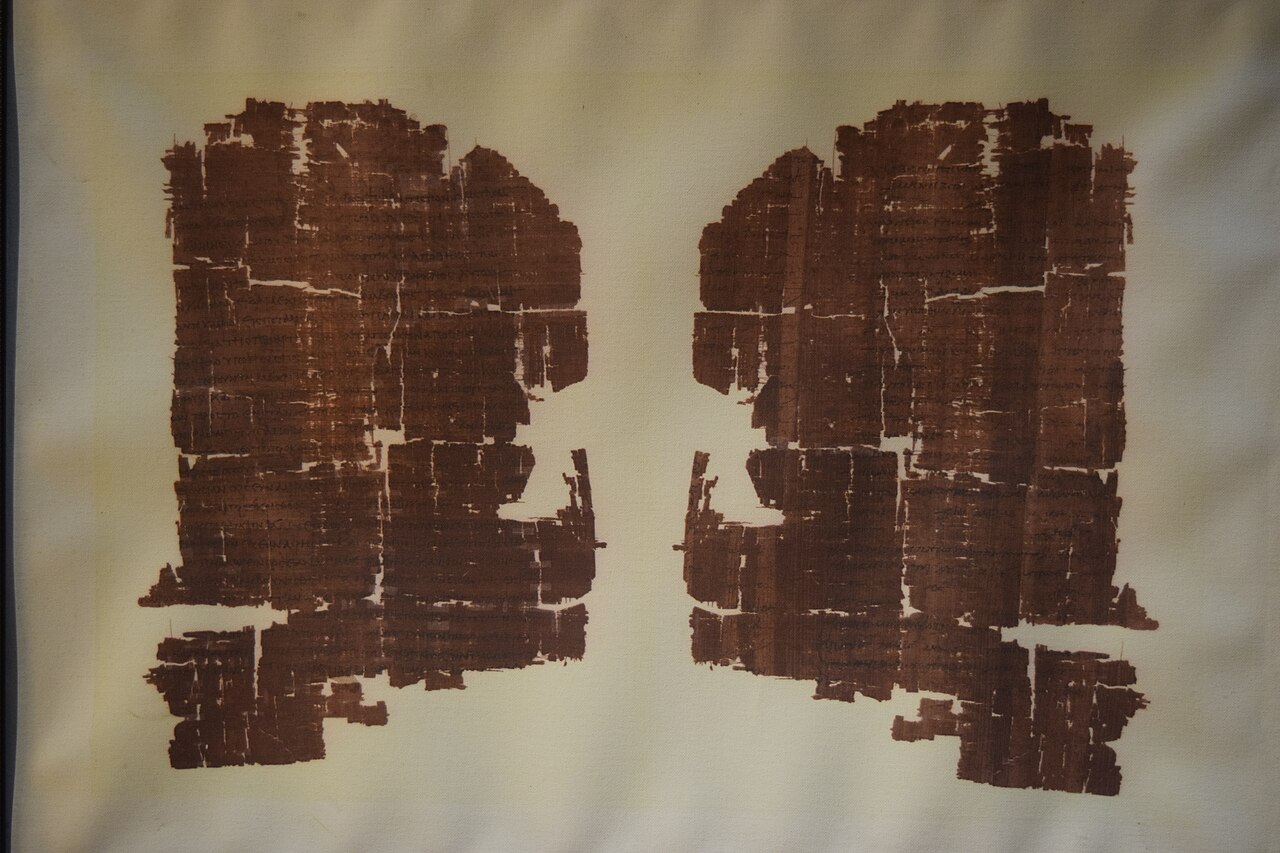
Photo: KannanVM (Wikimedia Commons). Licence: CC BY-SA 4.0 (https://creativecommons.org/licenses/by-sa/4.0). Source: https://commons.wikimedia.org/wiki/File:Muziris_Papyrus.jpg
- The Muziris Papyrus is a Greek papyrus placed by its handwriting around the mid-second century CE.
- It sets out how the cargo was to be moved: from a Red Sea arrival point across the desert to Koptos, into public warehouses, on a Nile boat and on to Alexandria.
- Its pepper quantities are reconstructions from damaged figures, arithmetic and parallels, not labels that can be read on the papyrus.
- The Periplus, a Greek guide for sea traders, names Cottonara as the inland pepper district.
- Early Tamil poems probably use the word Yavana for people in several different roles: the study read the Tamil through one modern translation.
What it cannot tell us Documents survive in pieces: the papyrus has lost the name of the Red Sea port where its cargo arrived.
- Look What does each document say about goods, and what does it say about people?
- Talk Which of these statements rest on a surviving word, and which on a reconstruction?
- Ask What would you want to know about who wrote each document, and why?
Lesson D2 · Ages 14 to 18 · Cut-out cards
Cut along the lines. One set for each group.
D2-SC2 · From the ground
What was found in Egypt

Drawing: A diagram shows a storage jar, probably made in India, set into a first-century CE courtyard floor at Berenike, with black peppercorns inside and the Great Temple to the south. The courtyard is only conditionally linked to the temple. A map shows Berenike and the south-west Indian pepper region as geographical context; it does not identify the growers or carriers of this find. The jar shape and section are explanatory, not a measured excavation drawing.
- Tamil inscriptions in Tamil-Brahmi letters have been published from pots at Quseir al-Qadim and at Berenike, Red Sea ports of Roman Egypt.
- Iravatham Mahadevan reads personal names on two Quseir sherds.
- At Berenike, an Indian-made storage jar excavated in 1999 held more than 7.5 kg of black peppercorns.
- Berenike has teak pieces with maritime features, and reused Late Roman beams interpreted as ship parts.
- One Indian pot at Quseir carries a South Arabian monogram: where a pot was made does not tell us who later wrote on it.
What it cannot tell us The sherds show Tamil written in the trade network. On their own they do not show where the writers lived, what work they did or who they were.
- Look Which finds are goods, and which carry writing?
- Talk Which tells you more about people: a jar of pepper or a name scratched on a pot? Why?
- Ask What else would you need to find to show that Tamil speakers lived at these ports?
D2-SC3 · From the ground
What was found in South India

Drawing: Five stages of a quartz bead with waste chips; a clay air pipe with a glazed tip and glassy slag; two schematic Roman gold coins, one slashed and one pierced, with a gold plug.
- At Arikamedu, people lived before Mediterranean imports and Rouletted Ware arrived.
- Mediterranean amphorae there show that goods moved, not who carried or used them.
- Imported Mediterranean objects do not establish a Roman colony at Arikamedu.
- Roman gold and silver coins reached several parts of Kerala, including inland Thrissur and Idukki.
- Nobody knows yet who buried the coin hoards, or why: their find contexts are poor.
- Roman coins do not by themselves prove that Roman traders were physically present.
What it cannot tell us A findspot cannot identify the carrier, the direction or the exact route.
- Look Which finds came from far away, and which were made or used locally?
- Talk Which statements on this card are about goods, and which are about people?
- Ask What kind of find would show that foreign merchants lived here?
Lesson D2 · Ages 14 to 18 · Cut-out cards
Cut along the lines. One set for each group.
D2-SC1 · From a text
What the documents say
Photo: KannanVM (Wikimedia Commons). Licence: CC BY-SA 4.0 (https://creativecommons.org/licenses/by-sa/4.0). Source: https://commons.wikimedia.org/wiki/File:Muziris_Papyrus.jpg
- The Muziris Papyrus is a Greek papyrus placed by its handwriting around the mid-second century CE.
- It sets out how the cargo was to be moved: from a Red Sea arrival point across the desert to Koptos, into public warehouses, on a Nile boat and on to Alexandria.
- Its pepper quantities are reconstructions from damaged figures, arithmetic and parallels, not labels that can be read on the papyrus.
- The Periplus, a Greek guide for sea traders, names Cottonara as the inland pepper district.
- Early Tamil poems probably use the word Yavana for people in several different roles: the study read the Tamil through one modern translation.
What it cannot tell us Documents survive in pieces: the papyrus has lost the name of the Red Sea port where its cargo arrived.
- Look What does each document say about goods, and what does it say about people?
- Talk Which of these statements rest on a surviving word, and which on a reconstruction?
- Ask What would you want to know about who wrote each document, and why?
Lesson D2 · Ages 14 to 18 · Cut-out cards
Cut along the lines. One set for each group.
D2-SC2 · From the ground
What was found in Egypt
Drawing: A diagram shows a storage jar, probably made in India, set into a first-century CE courtyard floor at Berenike, with black peppercorns inside and the Great Temple to the south. The courtyard is only conditionally linked to the temple. A map shows Berenike and the south-west Indian pepper region as geographical context; it does not identify the growers or carriers of this find. The jar shape and section are explanatory, not a measured excavation drawing.
- Tamil inscriptions in Tamil-Brahmi letters have been published from pots at Quseir al-Qadim and at Berenike, Red Sea ports of Roman Egypt.
- Iravatham Mahadevan reads personal names on two Quseir sherds.
- At Berenike, an Indian-made storage jar excavated in 1999 held more than 7.5 kg of black peppercorns.
- Berenike has teak pieces with maritime features, and reused Late Roman beams interpreted as ship parts.
- One Indian pot at Quseir carries a South Arabian monogram: where a pot was made does not tell us who later wrote on it.
What it cannot tell us The sherds show Tamil written in the trade network. On their own they do not show where the writers lived, what work they did or who they were.
- Look Which finds are goods, and which carry writing?
- Talk Which tells you more about people: a jar of pepper or a name scratched on a pot? Why?
- Ask What else would you need to find to show that Tamil speakers lived at these ports?
Lesson D2 · Ages 14 to 18 · Cut-out cards
Cut along the lines. One set for each group.
D2-SC3 · From the ground
What was found in South India
Drawing: Five stages of a quartz bead with waste chips; a clay air pipe with a glazed tip and glassy slag; two schematic Roman gold coins, one slashed and one pierced, with a gold plug.
- At Arikamedu, people lived before Mediterranean imports and Rouletted Ware arrived.
- Mediterranean amphorae there show that goods moved, not who carried or used them.
- Imported Mediterranean objects do not establish a Roman colony at Arikamedu.
- Roman gold and silver coins reached several parts of Kerala, including inland Thrissur and Idukki.
- Nobody knows yet who buried the coin hoards, or why: their find contexts are poor.
- Roman coins do not by themselves prove that Roman traders were physically present.
What it cannot tell us A findspot cannot identify the carrier, the direction or the exact route.
- Look Which finds came from far away, and which were made or used locally?
- Talk Which statements on this card are about goods, and which are about people?
- Ask What kind of find would show that foreign merchants lived here?
Key words English · Malayalam · Tamil
Muziris Papyrusമുസിരിസ് പാപ്പിറസ് രേഖமுசிறிப் பாப்பிரஸ் ஆவணம்
A Greek loan and customs document that records a valuable cargo shipment.
Periplusപെരിപ്ലസ് മാരിസ് എറിത്രേയിபெரிப்ளஸ் (செங்கடல் பயண நூல்)
A Greek handbook for merchants that describes ports and cargoes.
Yavanaയവനർயவனர்
An early Tamil word for people from the west.
Rouletted Wareറൗലറ്റഡ് വെയർ (കൊത്തുപണി മൺപാത്രങ്ങൾ)சக்கரப் பொறிப்பு மண்பாண்டம் (ரௌலட்டட் பாண்டம்)
Fine grey-and-black dishes made on a wheel, with rings of small pressed marks inside the base.
amphora
A Mediterranean clay transport jar. Some types carried mainly wine.
Tamil-Brahmiതമിഴി (തമിഴ് ബ്രാഹ്മി)தமிழி (தமிழ் பிராமி)
The earliest known way of writing Tamil: Brahmi letters adapted, with extra letters for Tamil sounds.
facsimile
A close copy of a document, shown in place of the original.
hoard
A group of coins or valuables deposited together and found together.
corroborate
To check a claim against a separate, independent source.