Skip to content
Layers of the South
Search

Classroom screen · A1

Two-colour pots

The screen fills the window. Right and Left arrows, or Page Down and Page Up, move between screens. Home and End go to the first and last. F fills the whole screen. T starts a timer.

Each screen prints on its own landscape page, for a classroom without a projector.

Back to the lesson plan

00:00 / 05:00

    Timings are the plan's suggestion, not a measure of pupils.
    Look first

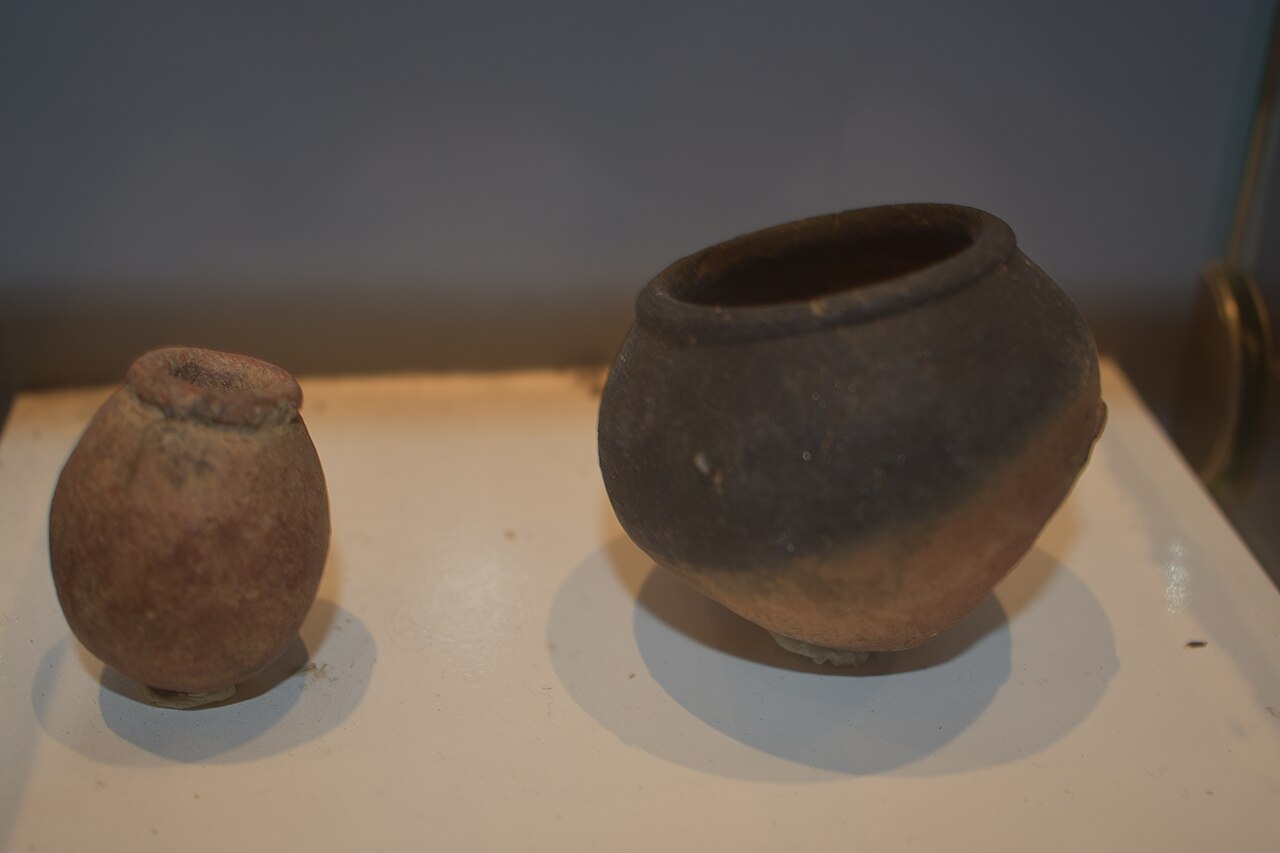
    Two archaeological pottery vessels on display in the Keezhadi museum.

    Photo: Rajeshodayanchal (Wikimedia Commons). Licence: CC BY-SA 4.0 (https://creativecommons.org/licenses/by-sa/4.0). Source: https://commons.wikimedia.org/wiki/File:Keezhadi (Keeladi)-archeological-site-photos_100.jpg

    Look at the pot. What do you see? What do you think? What do you wonder?

    • I see
    • I think
    • I wonder

    1/8

    From the ground

    A pot with two colours

    Two archaeological pottery vessels on display in the Keezhadi museum.

    Photo: Rajeshodayanchal (Wikimedia Commons). Licence: CC BY-SA 4.0 (https://creativecommons.org/licenses/by-sa/4.0). Source: https://commons.wikimedia.org/wiki/File:Keeladi-archeological-site-photos_100.jpg

    • This kind of pot was made long, long ago.
    • Its top is black.
    • Its bottom is red.

    What it cannot tell us Looking cannot tell us what makes the colours. Scientists needed a test.

    • Teacher notes People call pots like this black-and-red ware.
    • Look What colours can you see?
    • Talk Why might one pot have two colours?
    • Ask What would you ask the person who made it?

    2/8

    From a laboratory

    What the test found

    A small round-bodied pot with a flared rim. Its top half is black and its bottom half is red. Not to scale.
    • Scientists tested a piece of black-and-red pot.
    • The piece came from a place called Keezhadi.
    • The black part has carbon in it.

    What it cannot tell us They tested a piece from Keezhadi. They did not test every pot.

    • Teacher notes The red part has hematite in it.
    • Look Which part has carbon in it?
    • Talk Why did the scientists need a test?
    • Ask What else would you like a test to find out?

    3/8

    From a laboratory

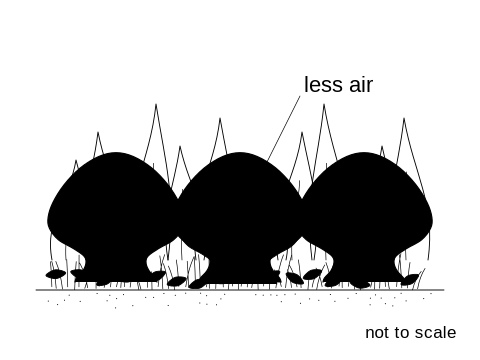
    How the pots were fired

    Three pots stand upside down in a fire, with plants packed round them. The side that got less air is marked: the inside and the rim. The drawing does not show what kind of kiln was used. Not to scale.
    • Scientists think the pots went into the fire upside down.
    • They think plants went into the fire with them.
    • They think this gave one side less air.

    What it cannot tell us Nobody watched these potters at work. Scientists worked out the steps from clues.

    • Teacher notes They think the burnt plants left black carbon on that side.
    • Look Which way up did the pots go into the fire?
    • Talk How could burning plants make one side black?
    • Ask What would you need to see to be sure?

    4/8

    How sure can we be? 1/3

    In a Keezhadi sample, the black surface has carbon and the red surface has hematite.

    • strong evidence
    • probably
    • maybe
    • nobody knows yet

    5/8

    How sure can we be? 2/3

    The pots went into the fire upside down, with plants, so one side got less air.

    • strong evidence
    • probably
    • maybe
    • nobody knows yet

    6/8

    How sure can we be? 3/3

    The white patterns on some old pots were painted with kaolin.

    • strong evidence
    • probably
    • maybe
    • nobody knows yet

    7/8

    Before you go

    Draw a two-colour pot. Shade the black part. Write or say one thing you wonder.

    8/8