Unit pack
Unit B: How do we find out?
52 pages, A4 or US Letter73 pages, A4 or US Letter
Print at actual size, with scaling turned off.
Unit B · Ages 9 to 11
How do we find out?
How do archaeologists find out about people who lived long ago?
Four lessons for ages 9 to 11, each about 40 minutes. Pupils find out how archaeologists dig, read objects and writing, and decide how sure they can be, with a reason for each level.
Lessons in this pack
| B1 Deeper is older? | Is the deepest thing always the oldest? | 30 / 40 / 45 |
|---|---|---|
| B2 Letters on pots | Who wrote on these pots? | 30 / 40 / 45 |
| B3 Made here? | Were these beads made here or brought here? | 30 / 40 / 45 |
| B4 Coins from far away | What can a coin tell us, and what can't it? | 30 / 40 / 45 |
When the lessons sit in time
- B3
- B1
- B4
1000 BCE–600 CE Entire principal period: B2
Places in this unit
- Pattanam (North Paravur, Periyar Delta) Ernakulam District, Kerala B1
- Keezhadi (Vaigai River Brick Settlement) Sivaganga District, Tamil Nadu B2, B3
- Kodumanal (Noyyal River Craft & Trade Town) Erode District, Tamil Nadu B3
- Korkai (Ancient Pearl-Fishery Port) Thoothukudi District, Tamil Nadu B3
- Eyyal (Iyyal) Hoard & Burial Landscape Thrissur District, Kerala B4
- Karur (Amaravathi River Trade Node & Proposed Chera Capital Vanchi) Karur District, Tamil Nadu B4
Unit B · Ages 9 to 11
Class record sheet
Write pupils' names by hand. Nothing here is stored or sent anywhere.
| Pupil | B1 | B2 | B3 | B4 | Comment |
|---|---|---|---|---|---|
Unit B · Ages 9 to 11
Marking rubric
Choose the two or three dimensions that match a lesson's objectives. The levels describe what a pupil's answer shows, never a pupil's ability.
| Not yet | Developing | Secure | Extended | |
|---|---|---|---|---|
| 1. Observation & Source Handling | Gives an unsupported impression or confuses a modern reconstruction/diagram with an excavated find. | Identifies a relevant detail from the source card but mixes visible observation with interpretation. | Accurately identifies relevant details and distinguishes what the source records from one's own inference. | Explains how excavation recording, preservation, translation, or sampling affects what can be observed. |
| 2. Claim & Evidence Connection | States a conclusion without citing any clue from the source cards. | Mentions a relevant detail from a source card but leaves its link to the claim implicit. | Answers the historical question with specific evidence and explains why ('because...') it supports the claim. | Weighs evidence of differing strength and revises or calibrates the claim to match its actual reach. |
| 3. Context, Chronology & Genre | Transfers facts between sites, centuries, or genres without justification. | Notices a date, site, or genre difference but does not apply it consistently. | Keeps the relevant site, period window (1000 BCE–600 CE vs earlier/later), and source purpose attached to the claim. | Explains how stratigraphic context, textual transmission, or poetic convention changes the historical interpretation. |
| 4. Limits & Alternative Explanations | Treats a possibility as 100% settled fact, or claims nothing at all can be known. | Mentions a generic uncertainty ('we weren't there') without tying it to the specific source. | States a specific evidential limit and explains what remains reasonably supported alongside what is open. | Compares a plausible alternative model and names the exact kind of new evidence that could distinguish between them. |
| 5. Communication & Attribution | Reasoning cannot be followed or sources are unidentifiable. | Gives a partly clear explanation with incomplete references to the source cards. | Makes the reasoning clear in any accessible format and cites the relevant source card or locator. | Builds a coherent argument while representing scholarly disagreement and source dependence accurately. |
Unit B · Ages 9 to 11
Cut along the lines. One set for each group.
The four certainty cards
Lesson B1 · Ages 9 to 11 · Lesson plan
Deeper is older?
Is the deepest thing always the oldest?
Unit B: How do we find out? · Ladder step Sort, Grade · Draft written with AI assistance; not yet tried in a classroom
Objectives
- I can sort what diggers found from what they worked out.
- I can explain why a deeper layer is not always older.
- I can say how sure we can be about a statement and give a reason.
Pupils should already know
- Pupils know that things put down later usually end up on top, as in a pile of books.
- Pupils have met the four certainty cards in unit A. If they have not, add five minutes at the start to introduce the cards.
Materials
- Print One sheet per pupil: support, core or stretch; The cut-out page for each pair: three source cards and the four certainty cards
- Screen The classroom screen for this lesson
- Devices Optional: the practice trench on the explorers page, one device per group
- Paper only Print the cut-out page for each pair and a sheet for each pupil. Draw the practice trench large on the board, with the pit edge as a dashed line. Pupils sort and grade on paper and shade their certainty boxes in pencil.
Timings
| Step | 30 minutes | 40 minutes | 45 minutes |
|---|---|---|---|
| hook Show the practice trench. | 4 | 5 | 5 |
Lesson B1 · Ages 9 to 11 · Lesson plan
Deeper is older?
| Step | 30 minutes | 40 minutes | 45 minutes |
|---|---|---|---|
| model Trace the edge of the pit with your finger. | 5 | 7 | 8 |
| guided Read the Pattanam card together. | 6 | 8 | 9 |
| independent Pupils sort the sentences from the Pattanam card into three boxes: found, worked out, nobody knows yet. | 6 | 8 | 9 |
| claim Read each statement in the claim task. | 6 | 8 | 9 |
| exit Ask the enquiry question again: is the deepest thing always the oldest? | 3 | 4 | 5 |
Misunderstandings to listen for (not yet observed in a classroom)
- The deepest layer is always the oldest. A cut is later than the layer it cuts, so a pit dug later can reach deeper than an earlier floor. Trace the cut before deciding.
- A date on the canoe's wood tells us when the wharf was built. The wood dates show when the trees grew, not when anything was built or used. When the wharf was built is not known.
- If something was worked out, it is only a guess. Working out uses evidence. That people lived at Pattanam early on is worked out from charcoal dates, layers and pottery, and the study rates it Likely.
Lesson B1 · Ages 9 to 11 · Support
Deeper is older?
Is the deepest thing always the oldest?
Look first
Look at the practice trench. Which layer do you think is the oldest? Why?
Invented teaching section. Made up for practice. Not a real dig. Depths in centimetres. The dashed line is the edge of the later pit.
- 01
Circle which was made first: the floor or the pit.
- the floor
- the pit
- 02
Tick one: the pit fill goes deeper than the floor, or not as deep.
- the pit fill goes deeper than the floor
- not as deep
- 03
Draw a line from each Pattanam sentence to its box: found, worked out, nobody knows yet.
- 1At Pattanam, diggers found an old waterfront.
- 2It had a canoe, posts and a brick edge.
- 3Under the canoe was a layer full of broken pots.
- 4So the canoe came to rest after that layer formed.
- 5The diggers think a deeper layer was laid down to build on.
- 6Charcoal dates, layers and Iron Age pottery are clues that people lived at Pattanam very long ago.
- 7A test on the canoe's wood shows when its tree grew.
- 8Nobody knows yet when the boat was made or used.
FoundWorked outNobody knows yet
Lesson B1 · Ages 9 to 11 · Support
Deeper is older?
Name- 04
Shade a box for each statement: strong evidence, probably, maybe or nobody knows yet.
| strong evidenceShade it in | probablySlanting lines | maybeDots | nobody knows yetLeave it empty and ring it | ||
|---|---|---|---|---|---|
| A | Diggers at Pattanam found a waterlogged waterfront with a canoe, posts and a brick-lined edge. | ||||
| B | People lived at Pattanam in the first half of the first millennium BCE. | ||||
| C | When was the wharf built, used, repaired or abandoned? |
- 05
Exit ticket Is the deepest thing always the oldest? Circle yes or no. Then finish: because
What nobody knows yet
After you have graded, write one thing nobody knows yet.
Lesson B1 · Ages 9 to 11 · Core
Deeper is older?
Is the deepest thing always the oldest?
Look first
Look at the practice trench. Which layer do you think is the oldest? Why?
- 01
The was made first, because
- 02
The pit fill goes than the floor.
- 03
Sort each Pattanam sentence into a box: found, worked out, nobody knows yet.
- 1At Pattanam, diggers found an old waterfront.
- 2It had a canoe, posts and a brick edge.
- 3Under the canoe was a layer full of broken pots.
- 4So the canoe came to rest after that layer formed.
- 5The diggers think a deeper layer was laid down to build on.
- 6Charcoal dates, layers and Iron Age pottery are clues that people lived at Pattanam very long ago.
- 7A test on the canoe's wood shows when its tree grew.
- 8Nobody knows yet when the boat was made or used.
FoundWorked outNobody knows yet
Lesson B1 · Ages 9 to 11 · Core
Deeper is older?
Name- 04
Shade a box for each statement. I chose it because
| strong evidenceShade it in | probablySlanting lines | maybeDots | nobody knows yetLeave it empty and ring it | ||
|---|---|---|---|---|---|
| A | Diggers at Pattanam found a waterlogged waterfront with a canoe, posts and a brick-lined edge. | ||||
Because | |||||
| B | People lived at Pattanam in the first half of the first millennium BCE. | ||||
Because | |||||
| C | When was the wharf built, used, repaired or abandoned? | ||||
Because | |||||
- 05
Exit ticket Is the deepest thing always the oldest? My answer is because
What nobody knows yet
After you have graded, write one thing nobody knows yet.
Lesson B1 · Ages 9 to 11 · Stretch
Deeper is older?
Is the deepest thing always the oldest?
Look first
Look at the practice trench. Which layer do you think is the oldest? Why?
- 01
Explain which was made first, the floor or the pit, and how you know.
- 02
Explain how an object deep in a pit could be older than the pit.
- 03
Sort each Pattanam sentence and explain one of your choices.
- 1At Pattanam, diggers found an old waterfront.
- 2It had a canoe, posts and a brick edge.
- 3Under the canoe was a layer full of broken pots.
- 4So the canoe came to rest after that layer formed.
- 5The diggers think a deeper layer was laid down to build on.
- 6Charcoal dates, layers and Iron Age pottery are clues that people lived at Pattanam very long ago.
- 7A test on the canoe's wood shows when its tree grew.
- 8Nobody knows yet when the boat was made or used.
FoundWorked outNobody knows yet
Lesson B1 · Ages 9 to 11 · Stretch
Deeper is older?
Name- 04
Grade each statement and explain your level.
| strong evidenceShade it in | probablySlanting lines | maybeDots | nobody knows yetLeave it empty and ring it | ||
|---|---|---|---|---|---|
| A | Diggers at Pattanam found a waterlogged waterfront with a canoe, posts and a brick-lined edge. | ||||
Because | |||||
| B | People lived at Pattanam in the first half of the first millennium BCE. | ||||
Because | |||||
| C | When was the wharf built, used, repaired or abandoned? | ||||
Because | |||||
- 05
Exit ticket Is the deepest thing always the oldest? Use the trench and Pattanam in your answer.
What nobody knows yet
After you have graded, write one thing nobody knows yet.
Lesson B1 · Ages 9 to 11 · Cut-out cards
Cut along the lines. One set for each group.
B1-SC1 · From a laboratory
A practice trench
Invented teaching section. Made up for practice. Not a real dig. Depths in centimetres. The dashed line is the edge of the later pit.
- This trench is made up for practice. It is not a real dig.
- Layer 102 is an earlier floor.
- Later, someone dug a pit down through the floor.
- The pit was filled in. Its fill is layer 103.
- The pit fill goes deeper than the floor.
- An older object can end up in the later fill.
What it cannot tell us The numbers and depths are for practice. They do not come from a real dig.
- Look Find the floor and the pit. Which one goes deeper?
- Talk Which came first, the floor or the pit? How can you tell?
- Ask How could an old object get into a newer pit?
B1-SC2 · From the ground
A real waterfront at Pattanam

Drawing: Conceptual section: a dugout canoe and teak post preserved in waterlogged mud beside a brick lining at Pattanam; radiocarbon dates the wood, not the boat.
- At Pattanam, diggers found an old waterfront.
- It had a canoe, posts and a brick edge.
- Under the canoe was a layer full of broken pots.
- So the canoe came to rest after that layer formed.
- The diggers think a deeper layer was laid down to build on.
- Charcoal dates, layers and Iron Age pottery are clues that people lived at Pattanam very long ago.
What it cannot tell us A test on the canoe's wood shows when its tree grew. Nobody knows yet when the boat was made or used.
- Look What lay under the canoe?
- Talk Which sentences on this card were worked out, not found?
- Ask What would you like to know about the canoe?
Lesson B1 · Ages 9 to 11 · Cut-out cards
Cut along the lines. One set for each group.
B1-SC3 · From a text
Found, worked out or not known?

Drawing: Three-tier stepped foundation diagram with recorded material and texts at the base, specialist inference in the middle, and open scholarly debate at the top.
- This website keeps different kinds of statement apart.
- Some things were seen and recorded at the dig.
- Some things were worked out from what was seen.
- Sometimes the honest answer is that nobody knows yet.
What it cannot tell us "Worked out" does not mean wrong. It means people used thinking as well as finding.
- Look Which kind is "a canoe was found"?
- Talk Is "worked out" the same as "wrong"? Why or why not?
- Ask What would you put in the "nobody knows yet" box about Pattanam?
The four certainty cards
Lesson B1 · Ages 9 to 11 · Answer key and mark guidance
What the study says
Deeper is older? Is the deepest thing always the oldest?
For the teacher only. Each level and reason below comes from this website's own draft summary of the published research. Keep this page away from pupils until they have answered.
How sure can we be?
Well supportedstrong evidence
A waterlogged waterfront with a canoe, posts and a brick-lined edge was excavated at Pattanam.
Pupils read Diggers at Pattanam found a waterlogged waterfront with a canoe, posts and a brick-lined edge.
Field reports and Cherian's 2011 conference paper describe the structure, canoe, posts and pottery layers directly.
Likelyprobably
People lived at Pattanam in the first half of the first millennium BCE.
Broad charcoal dates combined with layers and Iron Age pottery; no exact founding date.
Not knownnobody knows yet
When the wharf was built, used, repaired or abandoned.
Pupils read When was the wharf built, used, repaired or abandoned?
The wood ranges are too broad and date tree growth, not building or use.
The other tasks
B1-SC1 Talk Which came first, the floor or the pit? How can you tell?
The floor came first. The pit cuts through it, so the floor had to exist before the pit was dug. The pit's fill came later still, even though it reaches deeper.
B1-SC2 Talk Which sentences on this card were worked out, not found?
These were worked out: that the canoe came to rest after the layer of broken pots formed, that a deeper layer was laid down to build on, and that people lived at Pattanam very long ago. The excavators interpreted the deeper layer; the layer itself was found.
Core 02 The pit fill goes ... than the floor.
Deeper.
Lesson B1 · Ages 9 to 11 · Answer key and mark guidance
Deeper is older?
Core 03 Sort each Pattanam sentence into a box: found, worked out, nobody knows yet.
Found: the old waterfront; the canoe, posts and brick edge; the layer of broken pots under the canoe; the test on the canoe's wood, which shows when its tree grew. Worked out: that the canoe came to rest after that layer formed, that a deeper layer was laid down to build on, and that people lived at Pattanam very long ago. Nobody knows yet: when the boat was made or used. Credit a different box with a sound reason, for example that the canoe resting after the layer is close to a direct observation.
Exit ticket Is the deepest thing always the oldest? Write your answer and one reason.
No. A later pit can reach deeper than an earlier floor, and an older object can end up in a later fill. Where layers are not cut, the lower one formed first, as with the layer under the Pattanam canoe. Credit any answer that gives one of these reasons.
What to look for
- Observation & Source Handling Separates what was found (the canoe, the posts, the brick edge, the layer under the canoe) from what was worked out.
- Claim & Evidence Connection Answers the enquiry question with a reason from the trench (the pit cuts the floor) or from Pattanam.
- Limits & Alternative Explanations Gives a reason for a certainty level that names what is known or what is missing.
A different level with a reason that names real evidence or a real gap earns the reasoning credit. Note the reason.
Secure Example written by us, not real pupil work
No. In the practice trench the pit goes deeper than the floor, but the floor had to be there first, so the pit is newer. At Pattanam the canoe lay on top of a layer of broken pots, so that layer formed before the canoe came to rest. Nobody knows when the wharf was built, because the wood test shows when the trees grew.
Comment Uses both sources, explains the pit as cutting the floor, and keeps the unknown building date apart from what was found.
Developing Example written by us, not real pupil work
Yes, the deepest thing is the oldest because it was put there first.
Comment Gives the usual rule, which is a good start, but does not notice the pit that cuts through the floor. Next step: trace the pit line and ask which came first.
What nobody knows yet
- Nobody knows yet when the Pattanam wharf was built, used, repaired or abandoned.
Lesson B2 · Ages 9 to 11 · Lesson plan
Letters on pots
Who wrote on these pots?
Unit B: How do we find out? · Ladder step Sort, Grade · Draft written with AI assistance; not yet tried in a classroom
Objectives
- I can sort what was found on the pots from what people worked out about them.
- I can explain why a name on a pot does not tell us who wrote it.
- I can grade a statement about writing and give a reason.
Pupils should already know
- Pupils have sorted sentences into found, worked out and nobody knows yet, and graded statements, in lesson B1.
- Pupils know that the letters of a script stand for sounds.
Materials
- Print One sheet per pupil: support, core or stretch; The cut-out page for each pair: three source cards and the four certainty cards
- Screen The classroom screen for this lesson
- Paper only Print the cut-out page for each pair and a sheet for each pupil. Pass the photo card round or hold it up for the hook. Copy one scratched mark large on the board to point at during the Keezhadi (Keeladi) card. Pupils sort and grade on paper and shade their certainty boxes in pencil.
Timings
| Step | 30 minutes | 40 minutes | 45 minutes |
|---|---|---|---|
| hook Show the photograph of the broken pot. | 4 | 5 | 5 |
Lesson B2 · Ages 9 to 11 · Lesson plan
Letters on pots
| Step | 30 minutes | 40 minutes | 45 minutes |
|---|---|---|---|
| model Model sorting with the photograph, before pupils meet the claim statements. | 5 | 7 | 8 |
| guided Read the Keezhadi card together. | 6 | 8 | 9 |
| independent Pupils sort the sentences from the Keezhadi card and the last card into the boxes found, worked out and nobody knows yet. | 6 | 8 | 9 |
| claim Read each statement in the claim task. | 6 | 8 | 9 |
| exit Ask the enquiry question again: who wrote on these pots? | 3 | 4 | 5 |
Misunderstandings to listen for (not yet observed in a classroom)
- A name on a pot was written by that person. A name scratched after firing does not show who scratched it, who bought the pot, who is named or who owned it, and they need not be one person.
- Lots of written pots means everyone could read. The sherds supply no population figure and no count of writers, so they cannot give a share of readers.
- The big letters in the museum photo are the ancient writing. They are a modern display tracing. The tracing is not a facsimile or an independent reading of the inscription.
Lesson B2 · Ages 9 to 11 · Support
Letters on pots
Who wrote on these pots?
Look first
Look at the broken pot and the big letters drawn above it. What do you think you see? What puzzles you?
- 01
Circle what the big drawn letters in the photo are: a modern tracing or the old writing.
- a modern tracing
- the old writing
- 02
Tick one: the words were scratched before the pots were fired, or after.
- the words were scratched before the pots were fired
- after
- 03
Draw a line from each sentence to its box: found, worked out, nobody knows yet.
- 1Keezhadi is a big old settlement in Tamil Nadu, with buildings of brick.
- 2Writing was scratched on lots of broken pots there.
- 3Some of the words are read as people's names.
- 4A report says the words were scratched after the pots were fired.
- 5Other marks on the pots are signs that nobody can read yet.
- 6One report says the names are probably the names of the pots' owners.
- 7But the marks alone cannot show who owned a pot.
- 8The pots give no count of people and no count of writers.
- 9Scientists tested a sample from Keezhadi to find its date.
- 10It has not been shown to come from the same layer as the written pots.
FoundWorked outNobody knows yet
Lesson B2 · Ages 9 to 11 · Support
Letters on pots
Name- 04
Shade a box for each statement: strong evidence, probably, maybe or nobody knows yet.
| strong evidenceShade it in | probablySlanting lines | maybeDots | nobody knows yetLeave it empty and ring it | ||
|---|---|---|---|---|---|
| A | Writing on pots was part of everyday life at Keezhadi. | ||||
| B | Tamil-Brahmi belongs to the Brahmi family of letters. | ||||
| C | The people named on the pots owned them. | ||||
| D | How many people at Keezhadi could read or write? |
- 05
Exit ticket Who wrote on these pots? Circle one: the pots tell us, or the pots do not tell us. Then finish: because
What nobody knows yet
- Nobody knows yet if the writing at Keezhadi is as old as 580 BCE.
Lesson B2 · Ages 9 to 11 · Core
Letters on pots
Who wrote on these pots?
Look first
Look at the broken pot and the big letters drawn above it. What do you think you see? What puzzles you?
- 01
The big drawn letters are , because
- 02
The words were scratched the pots were fired.
- 03
Sort each sentence into a box: found, worked out, nobody knows yet.
- 1Keezhadi is a big old settlement in Tamil Nadu, with buildings of brick.
- 2Writing was scratched on lots of broken pots there.
- 3Some of the words are read as people's names.
- 4A report says the words were scratched after the pots were fired.
- 5Other marks on the pots are signs that nobody can read yet.
- 6One report says the names are probably the names of the pots' owners.
- 7But the marks alone cannot show who owned a pot.
- 8The pots give no count of people and no count of writers.
- 9Scientists tested a sample from Keezhadi to find its date.
- 10It has not been shown to come from the same layer as the written pots.
FoundWorked outNobody knows yet
Lesson B2 · Ages 9 to 11 · Core
Letters on pots
Name- 04
Shade a box for each statement. I chose it because
| strong evidenceShade it in | probablySlanting lines | maybeDots | nobody knows yetLeave it empty and ring it | ||
|---|---|---|---|---|---|
| A | Writing on pots was part of everyday life at Keezhadi. | ||||
Because | |||||
| B | Tamil-Brahmi belongs to the Brahmi family of letters. | ||||
Because | |||||
| C | The people named on the pots owned them. | ||||
Because | |||||
| D | How many people at Keezhadi could read or write? | ||||
Because | |||||
- 05
Exit ticket Who wrote on these pots? My answer is because
What nobody knows yet
- Nobody knows yet if the writing at Keezhadi is as old as 580 BCE.
Lesson B2 · Ages 9 to 11 · Stretch
Letters on pots
Who wrote on these pots?
Look first
Look at the broken pot and the big letters drawn above it. What do you think you see? What puzzles you?
- 01
Explain what the photo shows and what the drawn letters are.
- 02
Explain why a name scratched after firing does not tell us who wrote it.
- 03
Sort each sentence and explain one of your choices.
- 1Keezhadi is a big old settlement in Tamil Nadu, with buildings of brick.
- 2Writing was scratched on lots of broken pots there.
- 3Some of the words are read as people's names.
- 4A report says the words were scratched after the pots were fired.
- 5Other marks on the pots are signs that nobody can read yet.
- 6One report says the names are probably the names of the pots' owners.
- 7But the marks alone cannot show who owned a pot.
- 8The pots give no count of people and no count of writers.
- 9Scientists tested a sample from Keezhadi to find its date.
- 10It has not been shown to come from the same layer as the written pots.
FoundWorked outNobody knows yet
Lesson B2 · Ages 9 to 11 · Stretch
Letters on pots
Name- 04
Grade each statement and explain your level.
| strong evidenceShade it in | probablySlanting lines | maybeDots | nobody knows yetLeave it empty and ring it | ||
|---|---|---|---|---|---|
| A | Writing on pots was part of everyday life at Keezhadi. | ||||
Because | |||||
| B | Tamil-Brahmi belongs to the Brahmi family of letters. | ||||
Because | |||||
| C | The people named on the pots owned them. | ||||
Because | |||||
| D | How many people at Keezhadi could read or write? | ||||
Because | |||||
- 05
Exit ticket Who wrote on these pots? Use two cards in your answer.
What nobody knows yet
- Nobody knows yet if the writing at Keezhadi is as old as 580 BCE.
Lesson B2 · Ages 9 to 11 · Cut-out cards
Cut along the lines. One set for each group.
B2-SC1 · Writing on stone or pottery
Writing on a broken pot
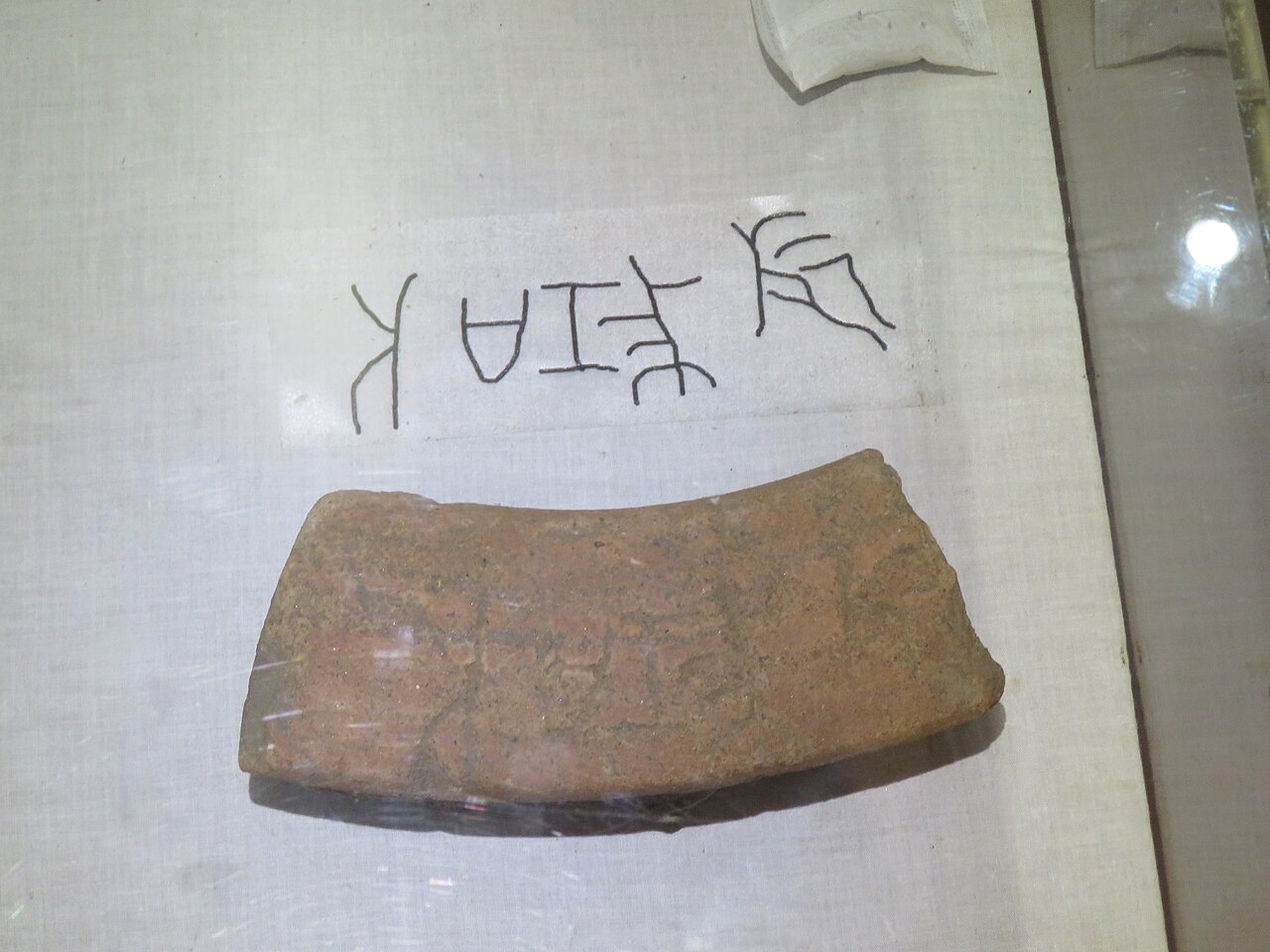
Photo: Vinayaraj (Wikimedia Commons). Licence: CC BY-SA 4.0 (https://creativecommons.org/licenses/by-sa/4.0). Source: https://commons.wikimedia.org/wiki/File:Tamil-Brahmi_Inscription,_Pattanam_excavation_museum,_Kottappuram,_Kodungallur.jpg
- This broken pot was on show in the museum at Pattanam.
- The museum shows its marks as Tamil-Brahmi writing.
- The big letters drawn above it are a modern tracing, not a reading.
- Tamil-Brahmi letters belong to a wider family of letters called Brahmi.
- Experts compared the shapes and sounds of the letters.
- Experts do not agree about when people first wrote Tamil in these letters.
What it cannot tell us Letter shapes show a family link. They do not give an exact date.
- Look What can you see on the broken pot? What is drawn above it?
- Talk Why does the museum draw the letters large above the pot?
- Ask What would you like to know about the person who wrote on it?
B2-SC2 · Writing on stone or pottery
Names scratched at Keezhadi
Drawing: Not to scale.
- Keezhadi is a big old settlement in Tamil Nadu, with buildings of brick.
- Writing was scratched on lots of broken pots there.
- Some of the words are read as people's names.
- A report says the words were scratched after the pots were fired.
- Other marks on the pots are signs that nobody can read yet.
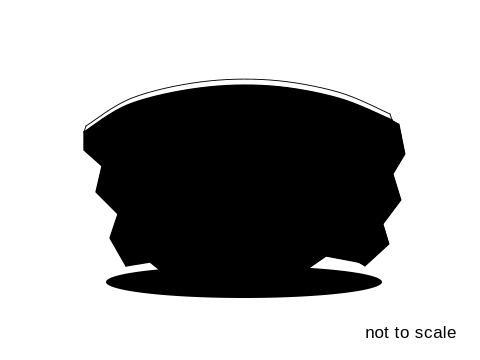
What it cannot tell us A name scratched after firing does not tell us who scratched it.
- Look What was scratched on the pots?
- Talk Why does it matter that the words were scratched after the pots were fired?
- Ask Whose names do you think these were?
Lesson B2 · Ages 9 to 11 · Cut-out cards
Cut along the lines. One set for each group.
B2-SC3 · From a text
What the pots cannot tell us

Drawing: Teaching sherd with one modern score and two possible groove profiles: a rounded soft-clay example and a chipped fired-surface example. These drawings are not a diagnostic key.
- One report says the names are probably the names of the pots' owners.
- But the marks alone cannot show who owned a pot.
- The pots give no count of people and no count of writers.
- Scientists tested a sample from Keezhadi to find its date.
- It has not been shown to come from the same layer as the written pots.
What it cannot tell us Lots of written pots show that writing was used. They do not show how many people could read.
- Look Whose names does one report think these are?
- Talk Why can't a name on a pot prove who owned it?
- Ask What would you need to find out how many people could read?
The four certainty cards
Lesson B2 · Ages 9 to 11 · Answer key and mark guidance
What the study says
Letters on pots Who wrote on these pots?
For the teacher only. Each level and reason below comes from this website's own draft summary of the published research. Keep this page away from pupils until they have answered.
How sure can we be?
Well supportedstrong evidence
Writing on pottery was part of everyday settlement life at Keezhadi
Pupils read Writing on pots was part of everyday life at Keezhadi.
Both excavation reports publish repeated inscriptions on red and black-and-red ware.
Well supportedstrong evidence
Tamil-Brahmi was adapted from the Brahmi script family.
Pupils read Tamil-Brahmi belongs to the Brahmi family of letters.
Letter forms and sound values match closely.
Possiblemaybe
The people named on the pots owned them
Pupils read The people named on the pots owned them.
The 2018 report calls them probably owners' names; the marks alone cannot show ownership.
Not knownnobody knows yet
How many people at Keezhadi could read or write
Pupils read How many people at Keezhadi could read or write?
The sherds supply no population figure, no count of writers and no earlier figure to compare with.
The other tasks
B2-SC1 Look What can you see on the broken pot? What is drawn above it?
Marks on a curved piece of pot, with large modern letters drawn above it.
B2-SC2 Talk Why does it matter that the words were scratched after the pots were fired?
The words were added to a finished pot. That does not tell us who scratched them, who bought the pot, who is named, or whether they were the same person.
Core 02 The words were scratched ... the pots were fired.
After.
Lesson B2 · Ages 9 to 11 · Answer key and mark guidance
Letters on pots
Core 03 Sort each sentence into a box: found, worked out, nobody knows yet.
Found: Keezhadi is a big old settlement in Tamil Nadu, with buildings of brick; writing was scratched on lots of broken pots there; a report says the words were scratched after the pots were fired; other marks on the pots are signs that nobody can read yet; scientists tested a sample from Keezhadi to find its date. Worked out: some of the words are read as people's names; one report says the names are probably the names of the pots' owners; the marks alone cannot show who owned a pot (a limit on what can be worked out). Nobody knows yet: the pots give no count of people and no count of writers (how many could read or write); whether the dated sample came from the same layer as the written pots. Credit a different box with a sound reason, for example that reading the letters is worked out.
Core 05 Who wrote on these pots? My answer is ... because ...
The pots do not tell us. Writing was part of everyday life at Keezhadi and many words are read as names, but a name scratched after firing does not show who scratched it. Credit any answer that gives one of these reasons.
Exit ticket Who wrote on these pots? Write your answer and one reason from the cards.
As core.5: the pots show writing in everyday use, but not who wrote each name.
What to look for
- Observation & Source Handling Separates what is on the pots (scratched writing, signs nobody can read) from what people worked out (names, owners).
- Claim & Evidence Connection Answers the enquiry question with a reason from a card, such as the words being scratched after firing.
- Limits & Alternative Explanations Gives a reason for a level that names what the pots show or what they cannot show.
A different level with a reason that names real evidence or a real gap earns the reasoning credit. Note the reason.
Secure Example written by us, not real pupil work
The pots do not tell us who wrote on them. Lots of broken pots from Keezhadi have writing scratched on them, and some words are read as names. But the words were scratched after the pots were fired, so the marks do not show who scratched them. One report thinks they are owners' names. I chose "maybe" for that, because the marks alone cannot show who owned a pot.
Comment Keeps what is on the pots apart from what was worked out, and gives a reason for the "maybe" card that names a real gap.
Developing Example written by us, not real pupil work
The people whose names are on the pots wrote them, and everyone at Keezhadi could read.
Comment Treats a name as a signature and many pots as a count of readers. Next step: read the third card, then ask: does a name tell us who scratched it? Do the pots count the people who could read?
What nobody knows yet
- Nobody knows yet how many people at Keezhadi could read or write.
- Nobody knows yet whether Tamil-Brahmi writing at Keezhadi goes back to 580 BCE.
Lesson B3 · Ages 9 to 11 · Lesson plan
Made here?
Were these beads made here or brought here?
Unit B: How do we find out? · Ladder step Sort, Grade · Draft written with AI assistance; not yet tried in a classroom
Objectives
- I can sort clues of making from finished things.
- I can use clues to say whether something was made in a place or brought there.
- I can grade a statement about making and give a reason.
Pupils should already know
- Pupils have sorted found, worked out and nobody knows yet, and graded statements, in lessons B1 and B2.
- Pupils know that making things leaves waste behind, such as wood shavings or paper offcuts.
Materials
- Print One sheet per pupil: support, core or stretch; The cut-out page for each pair: three source cards and the four certainty cards
- Screen The classroom screen for this lesson
- Devices Optional: the bead lab on the labs page, one device per group
- Paper only Print the cut-out page for each pair and a sheet for each pupil. The bead drawing and the shell photo work in black and white. Draw the five pieces from the bead drawing on the board, side by side. Pupils sort and grade on paper and shade their certainty boxes in pencil.
Timings
| Step | 30 minutes | 40 minutes | 45 minutes |
|---|---|---|---|
| hook Show the bead drawing. | 4 | 5 | 5 |
Lesson B3 · Ages 9 to 11 · Lesson plan
Made here?
| Step | 30 minutes | 40 minutes | 45 minutes |
|---|---|---|---|
| model Model the rule with the drawing, before pupils meet the claim statements. | 5 | 7 | 8 |
| guided Read the Perur card and the shell card together. | 6 | 8 | 9 |
| independent Pupils sort the clue words on their sheet into the boxes clues of making and finished things. | 6 | 8 | 9 |
| claim Read each statement in the claim task. | 6 | 8 | 9 |
| exit Ask the enquiry question again. | 3 | 4 | 5 |
Misunderstandings to listen for (not yet observed in a classroom)
- If beads are found somewhere, they were made there. Finished beads alone do not identify their manufacturing location. Making leaves waste, rough-outs and unfinished pieces.
- We know which tool cut the shell bangles. No inspected excavation source records a saw; Hornell reasoned from cut marks and Bengal practice.
- Lots of finds means a big factory. Korkai's finds are called numerous, but no counts, weights or work-area plans have been found, so the scale is not shown.
Lesson B3 · Ages 9 to 11 · Support
Made here?
Were these beads made here or brought here?
Look first
Look at the five pieces of stone in the drawing. What do you notice? What do you wonder?
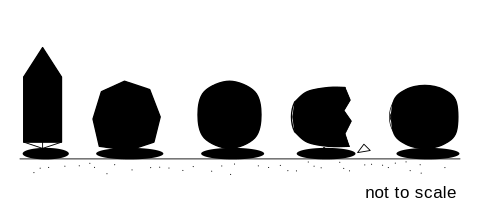
Drawing: Not to scale.
- 01
Circle the pieces in the drawing that are clues of making.
- 02
Draw a line from each clue word to its box: clues of making or finished things.
- 1 chips
- 2 rough-outs
- 3 half-drilled beads
- 4 finished beads
- 5 sawn shell waste
- 6 uncut shells found with sawn shell waste
- 7 finished bangles
Clues of makingFinished things - 03
Circle what was missing at Perur: a furnace, or glass beads.
- a furnace
- glass beads
Lesson B3 · Ages 9 to 11 · Support
Made here?
Name- 04
Shade a box for each statement: strong evidence, probably, maybe or nobody knows yet.
| strong evidenceShade it in | probablySlanting lines | maybeDots | nobody knows yetLeave it empty and ring it | ||
|---|---|---|---|---|---|
| A | Stone beads, especially quartz beads, were made at Kodumanal. | ||||
| B | Shell bangles were made locally at Korkai. | ||||
| C | Korkai made shell bangles on a very big scale. | ||||
| D | Glass beads were made at Perur. | ||||
| E | Keezhadi had a shell-bangle workshop. |
- 05
Were the Kodumanal beads made there? Circle yes or no. Then finish: because
What nobody knows yet
After you have graded, write one thing nobody knows yet.
Exit ticket
Cut along the line and hand it in.Were these beads made here or brought here? Pick Kodumanal or Perur. Write your answer and one clue.
Lesson B3 · Ages 9 to 11 · Core
Made here?
Were these beads made here or brought here?
Look first
Look at the five pieces of stone in the drawing. What do you notice? What do you wonder?
- 01
The clues of making in the drawing are
- 02
Sort each clue word into a box: clues of making or finished things.
- 1 chips
- 2 rough-outs
- 3 half-drilled beads
- 4 finished beads
- 5 sawn shell waste
- 6 uncut shells found with sawn shell waste
- 7 finished bangles
Clues of makingFinished things - 03
At Perur, the reports show no
- 04
Shade a box for each statement. I chose it because
| strong evidenceShade it in | probablySlanting lines | maybeDots | nobody knows yetLeave it empty and ring it | ||
|---|---|---|---|---|---|
| A | Stone beads, especially quartz beads, were made at Kodumanal. | ||||
Because | |||||
Lesson B3 · Ages 9 to 11 · Core
Made here?
Name| strong evidenceShade it in | probablySlanting lines | maybeDots | nobody knows yetLeave it empty and ring it | ||
|---|---|---|---|---|---|
| B | Shell bangles were made locally at Korkai. | ||||
Because | |||||
| C | Korkai made shell bangles on a very big scale. | ||||
Because | |||||
| D | Glass beads were made at Perur. | ||||
Because | |||||
| E | Keezhadi had a shell-bangle workshop. | ||||
Because | |||||
- 05
The beads at were made there / brought there / we cannot tell, because
What nobody knows yet
After you have graded, write one thing nobody knows yet.
Exit ticket
Cut along the line and hand it in.Were these beads made here or brought here? Pick Kodumanal or Perur. Write your answer and one clue.
Lesson B3 · Ages 9 to 11 · Stretch
Made here?
Were these beads made here or brought here?
Look first
Look at the five pieces of stone in the drawing. What do you notice? What do you wonder?
- 01
Explain which pieces in the drawing are clues of making, and why.
- 02
Sort the clue words and explain why a finished bead is not a clue of making.
- 1 chips
- 2 rough-outs
- 3 half-drilled beads
- 4 finished beads
- 5 sawn shell waste
- 6 uncut shells found with sawn shell waste
- 7 finished bangles
Clues of makingFinished things - 03
Compare the clues at Perur with the clues at Kodumanal.
Lesson B3 · Ages 9 to 11 · Stretch
Made here?
Name- 04
Grade each statement and explain your level.
| strong evidenceShade it in | probablySlanting lines | maybeDots | nobody knows yetLeave it empty and ring it | ||
|---|---|---|---|---|---|
| A | Stone beads, especially quartz beads, were made at Kodumanal. | ||||
Because | |||||
| B | Shell bangles were made locally at Korkai. | ||||
Because | |||||
| C | Korkai made shell bangles on a very big scale. | ||||
Because | |||||
| D | Glass beads were made at Perur. | ||||
Because | |||||
| E | Keezhadi had a shell-bangle workshop. | ||||
Because | |||||
- 05
Exit ticket Were these beads made here or brought here? Use two places in your answer.
What nobody knows yet
After you have graded, write one thing nobody knows yet.
Lesson B3 · Ages 9 to 11 · Cut-out cards
Cut along the lines. One set for each group.
B3-SC1 · From the ground
Bead clues at Kodumanal
- Kodumanal is an old site beside the Noyyal river in Tamil Nadu.
- Diggers there found stone chips, rough-outs and half-drilled beads.
- These are the waste and the unfinished stages of making beads.
- So stone beads, especially quartz beads, were made at Kodumanal.
- Finished beads can travel far, but chips and half-drilled beads stay where the work was done.
What it cannot tell us Finding a bead at Kodumanal does not, on its own, show it was made there.
- Look Which pieces in the drawing show work, not just a finished bead?
- Talk Why do waste chips tell us more than a finished bead?
- Ask What would you like to know about the people who made the beads?
B3-SC2 · From the ground
Glass beads at Perur

Drawing: A carnelian bead and a quartz crystal; quartz shaped from nodule to rough-out, blank and bead, with waste flakes and a drill hole; a soil section with a tagged bead.
- Perur is another old site beside the Noyyal river.
- Diggers there found beads made of glass.
- The reports the study read show no furnace for making glass.
- They show no glass waste and no unfinished beads either.
What it cannot tell us Finished beads alone do not tell us where they were made.
- Look What did diggers find at Perur?
- Talk Which clues of making are missing at Perur?
- Ask Where else might the Perur beads have come from?
Lesson B3 · Ages 9 to 11 · Cut-out cards
Cut along the lines. One set for each group.
B3-SC3 · From the ground
Shell bangles at Korkai and Keezhadi
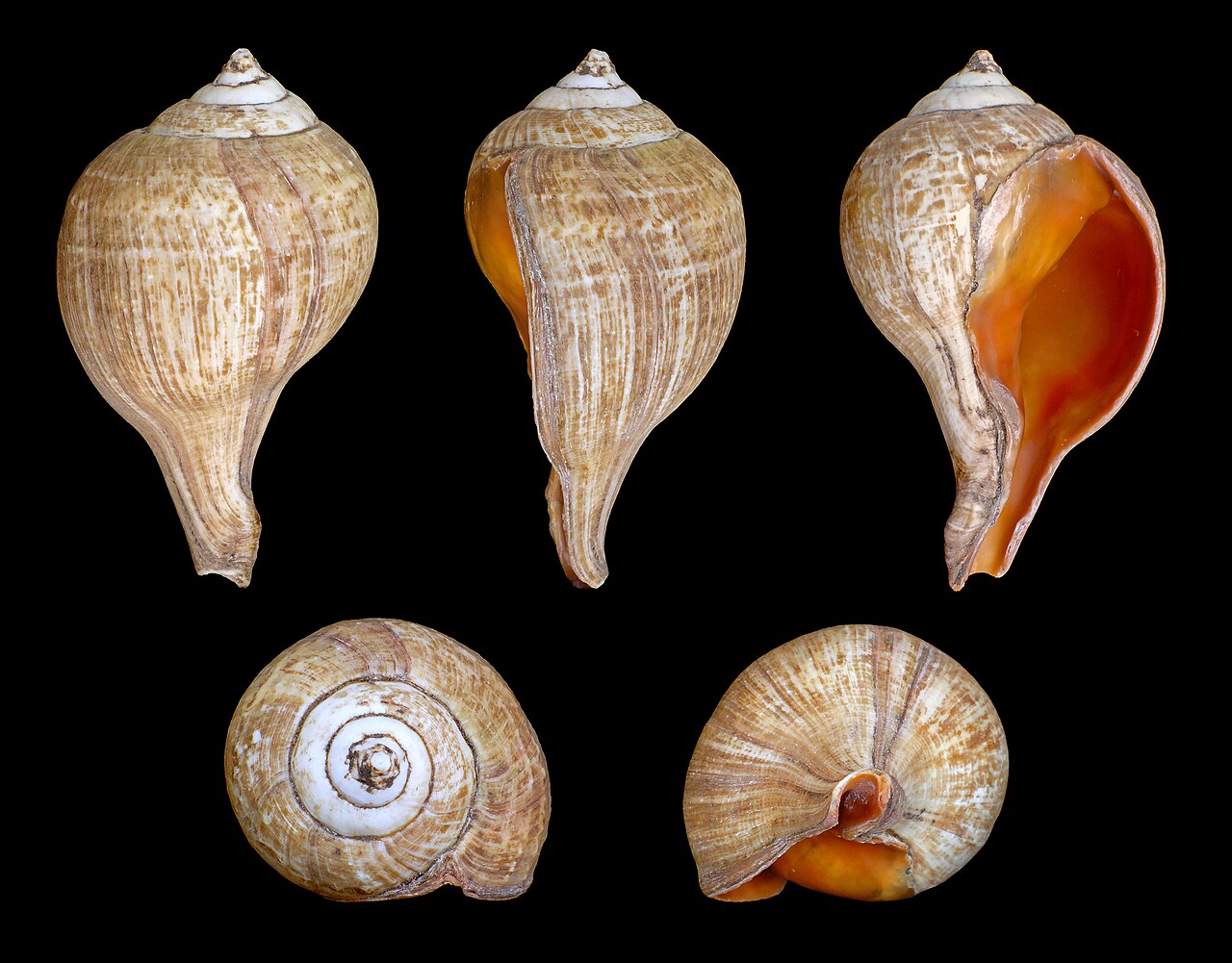
Photo: H. Zell (Wikimedia Commons). Licence: CC BY-SA 3.0 (https://creativecommons.org/licenses/by-sa/3.0). Source: https://commons.wikimedia.org/wiki/File:Turbinella_pyrum_01.jpg
- This photo shows a chank shell today. It is not an old find.
- At Korkai, diggers found sawn shell waste, uncut shells and bangle pieces.
- So bangles were probably made at Korkai.
- The reports do not count the finds or show where the work was done.
- At Keezhadi, the reports checked show finished bangles, but no shell waste and no tools.
- No dig report the study read records a saw from either place.
What it cannot tell us Finished bangles show that bangles were used. On their own, they do not show where they were made.
- Look What did diggers find at Korkai that they did not find at Keezhadi?
- Talk What makes the Korkai clues stronger than the Keezhadi clues?
- Ask What would diggers need to find at Keezhadi to show bangles were made there?
The four certainty cards
Lesson B3 · Ages 9 to 11 · Answer key and mark guidance
What the study says
Made here? Were these beads made here or brought here?
For the teacher only. Each level and reason below comes from this website's own draft summary of the published research. Keep this page away from pupils until they have answered.
How sure can we be?
Well supportedstrong evidence
Stone beads, especially quartz beads, were made at Kodumanal.
Rough-outs, blanks and debris are reported across the site; the study marks this supported.
Likelyprobably
Shell bangles were made locally at Korkai.
Sawn waste, uncut conches and bangle pieces are reported, but no context tables are published.
Possiblemaybe
Korkai's shell working was industrial in scale.
Pupils read Korkai made shell bangles on a very big scale.
Finds are called “numerous”, but no counts, weights or work-area plans have been found.
Not knownnobody knows yet
Glass beads were made at Perur.
No furnace, slag, wasters, or unfinished beads appear in the sources read.
Not knownnobody knows yet
Keezhadi had a shell-bangle workshop.
Finished bangles are reported; no waste, blanks or tools appear in the sources checked.
The other tasks
B3-SC1 Look Which pieces in the drawing show work, not just a finished bead?
The rough-out, the rounded piece with no hole and the bead that broke while it was drilled are stages of work. The finished bead could have been made somewhere else. The raw crystal is stone before any work: it is a clue of making only when it is found with waste and half-made beads.
B3-SC2 Talk Which clues of making are missing at Perur?
A furnace, glass waste and unfinished beads: none appears in the reports the study read. Compare Kodumanal, where chips, rough-outs and half-drilled beads were found.
B3-SC3 Look What did diggers find at Korkai that they did not find at Keezhadi?
Sawn shell waste and uncut shells. Keezhadi securely has finished shell bangles, but local making there is unproven.
Lesson B3 · Ages 9 to 11 · Answer key and mark guidance
Made here?
Core 02 Sort each clue word into a box: clues of making or finished things.
Clues of making: chips, rough-outs, half-drilled beads, sawn shell waste, uncut shells found with it. Finished things: finished beads, finished bangles.
Core 03 At Perur, the reports show no ...
A furnace, glass waste or unfinished beads.
Core 05 The beads at ... were made there / brought there / we cannot tell, because ...
Kodumanal: made there, because chips, rough-outs and half-drilled beads were found. Perur: the reports read show no furnace, waste or unfinished beads, so finished beads alone cannot tell. Credit any answer that names a clue or a missing clue.
Exit ticket Were these beads made here or brought here? Pick Kodumanal or Perur. Write your answer and one clue.
As core.5.
What to look for
- Observation & Source Handling Names the clues of making in the drawing and on the cards before deciding.
- Claim & Evidence Connection Links a place to a clue: chips and half-drilled beads at Kodumanal, sawn shell waste at Korkai.
- Limits & Alternative Explanations Says which clues are missing at Perur or Keezhadi, and why that matters.
A different level with a reason that names real evidence or a real gap earns the reasoning credit. Note the reason.
Secure Example written by us, not real pupil work
Beads were made at Kodumanal, because diggers found chips, rough-outs and half-drilled beads, and those stay where the work was done. At Perur, glass beads were found, but the reports read show no furnace, waste or unfinished beads. So I chose "nobody knows yet" for Perur, because finished beads alone do not tell us where they were made.
Comment Uses clues of making as evidence, keeps the bounded words, and gives a reason for "nobody knows yet".
Developing Example written by us, not real pupil work
The beads were made at Perur, because lots of beads were found there.
Comment Uses finding beads as the clue. Next step: compare the Perur card with the bead drawing and ask which clues of making are missing.
What nobody knows yet
- Nobody knows yet whether glass beads were made at Perur.
- Nobody knows yet whether Keezhadi had a shell-bangle workshop.
Lesson B4 · Ages 9 to 11 · Lesson plan
Coins from far away
What can a coin tell us, and what can't it?
Unit B: How do we find out? · Ladder step Look, Grade · Draft written with AI assistance; not yet tried in a classroom
Objectives
- I can describe a coin's marks before I explain them.
- I can grade a statement about coins on the four levels and give a reason.
- I can say what a coin can tell us and what it cannot.
Pupils should already know
- Pupils have graded statements and given reasons in lessons B1 to B3.
- Pupils have met Tamil-Brahmi letters in lesson B2.
- Pupils know that a coin is metal money with pictures or writing on it.
Materials
- Print One sheet per pupil: support, core or stretch; The cut-out page for each pair: three source cards and the four certainty cards
- Screen The classroom screen for this lesson
- Paper only Print the cut-out page for each pair and a sheet for each pupil. The coin drawing works in black and white. Draw one coin large on the board with a cut across the face and two holes near the edge. Pupils grade on paper and shade their certainty boxes in pencil.
Timings
| Step | 30 minutes | 40 minutes | 45 minutes |
|---|---|---|---|
| hook Show the coin drawing. | 4 | 5 | 5 |
Lesson B4 · Ages 9 to 11 · Lesson plan
Coins from far away
| Step | 30 minutes | 40 minutes | 45 minutes |
|---|---|---|---|
| model Model grading with statements that are not in the claim task, and give a reason from the evidence each time, not from one word. | 5 | 7 | 8 |
| guided Read the cards with the class, one at a time. | 6 | 8 | 9 |
| claim Read each statement in the claim task. | 6 | 8 | 9 |
| independent Pupils make lists on their sheet: what a coin can tell us, and what it cannot. | 6 | 8 | 9 |
| exit Ask the enquiry question again. | 3 | 4 | 5 |
Misunderstandings to listen for (not yet observed in a classroom)
- Roman coins in Kerala show that Romans lived there. These hoards do not establish resident Roman communities in Kerala. Roman-origin objects show connections, not who handled them or where they lived.
- The date on a coin tells us when it was cut or buried. A coin is made before it is cut, worn or buried. Coin issue dates do not date the slashing event.
- A coin found in a river is as easy to date as one from a dig. Riverbed provenance is weaker than a sealed archaeological context.
Lesson B4 · Ages 9 to 11 · Support
Coins from far away
What can a coin tell us, and what can't it?
Look first
Look at the coins in the drawing. What do you see? What do you think? What do you wonder?
Drawing: Not to scale.
- 01
Circle the marks you can see on the coins: a cut, two holes, or both.
- a cut
- two holes
- both
- 02
Circle what was in the pot at Eyyal: Roman coins only, or Roman and Indian coins.
- Roman coins only
- Roman and Indian coins
- 03
Shade a box for each statement: strong evidence, probably, maybe or nobody knows yet.
| strong evidenceShade it in | probablySlanting lines | maybeDots | nobody knows yetLeave it empty and ring it | ||
|---|---|---|---|---|---|
| A | Most of the Pudukkottai gold coins were cut across the portrait. |
Lesson B4 · Ages 9 to 11 · Support
Coins from far away
Name| strong evidenceShade it in | probablySlanting lines | maybeDots | nobody knows yetLeave it empty and ring it | ||
|---|---|---|---|---|---|
| B | Coins with two holes were worn or sewn on as ornaments. | ||||
| C | The coin names belong to kings praised in early Tamil poems. | ||||
| D | Why were the portraits slashed? | ||||
| E | Who buried the hoards, and why? |
- 04
Draw a line from each sentence to its list: a coin can tell us, or it cannot.
A coin can tell usIt cannot - 05
Finish: A coin can tell us A coin cannot tell us
What nobody knows yet
- Nobody knows yet exactly when the Chera silver coins were made.
Exit ticket
Cut along the line and hand it in.What can a coin tell us, and what can't it? Write one thing for each, with a reason.
Lesson B4 · Ages 9 to 11 · Core
Coins from far away
What can a coin tell us, and what can't it?
Look first
Look at the coins in the drawing. What do you see? What do you think? What do you wonder?
- 01
On the coins I can see
- 02
The pot at Eyyal held
- 03
Shade a box for each statement. I chose it because
| strong evidenceShade it in | probablySlanting lines | maybeDots | nobody knows yetLeave it empty and ring it | ||
|---|---|---|---|---|---|
| A | Most of the Pudukkottai gold coins were cut across the portrait. | ||||
Because | |||||
Lesson B4 · Ages 9 to 11 · Core
Coins from far away
Name| strong evidenceShade it in | probablySlanting lines | maybeDots | nobody knows yetLeave it empty and ring it | ||
|---|---|---|---|---|---|
| B | Coins with two holes were worn or sewn on as ornaments. | ||||
Because | |||||
| C | The coin names belong to kings praised in early Tamil poems. | ||||
Because | |||||
| D | Why were the portraits slashed? | ||||
Because | |||||
| E | Who buried the hoards, and why? | ||||
Because | |||||
- 04
A coin can tell us A coin cannot tell us
- 05
Exit ticket What can a coin tell us, and what can't it? My answer is because
What nobody knows yet
- Nobody knows yet exactly when the Chera silver coins were made.
Lesson B4 · Ages 9 to 11 · Stretch
Coins from far away
What can a coin tell us, and what can't it?
Look first
Look at the coins in the drawing. What do you see? What do you think? What do you wonder?
- 01
Describe the marks on the coins before you explain them.
- 02
Explain what the Eyyal pot shows, and what it does not.
- 03
Grade each statement and explain your level.
| strong evidenceShade it in | probablySlanting lines | maybeDots | nobody knows yetLeave it empty and ring it | ||
|---|---|---|---|---|---|
| A | Most of the Pudukkottai gold coins were cut across the portrait. | ||||
Because | |||||
| B | Coins with two holes were worn or sewn on as ornaments. | ||||
Because | |||||
Lesson B4 · Ages 9 to 11 · Stretch
Coins from far away
Name| strong evidenceShade it in | probablySlanting lines | maybeDots | nobody knows yetLeave it empty and ring it | ||
|---|---|---|---|---|---|
| C | The coin names belong to kings praised in early Tamil poems. | ||||
Because | |||||
| D | Why were the portraits slashed? | ||||
Because | |||||
| E | Who buried the hoards, and why? | ||||
Because | |||||
- 04
Make two lists: what a coin can tell us and what it cannot. Use all three cards.
- 05
Exit ticket What can a coin tell us, and what can't it? Use two cards in your answer.
What nobody knows yet
- Nobody knows yet exactly when the Chera silver coins were made.
Lesson B4 · Ages 9 to 11 · Cut-out cards
Cut along the lines. One set for each group.
B4-SC1 · From the ground
Marks on Roman coins
Drawing: Not to scale.
- Most coins in a big hoard of gold coins from Pudukkottai were cut across the portrait.
- Some Roman coins found in India have two small holes.
- Experts think coins with two holes were worn, or sewn on, as ornaments.
- Experts have different ideas about why the portraits were cut.
- One idea: the cut was a test, to find fake coins with only a thin skin of gold.
- Another idea: the cut cancelled the emperor's picture but kept the gold.
What it cannot tell us Both ideas, testing for fake gold and cancelling the portrait, fit the marks. No study used here has tested the metal inside the cuts.
- Look What marks can you see on the coins in the drawing?
- Talk Why might someone make two holes in a coin?
- Ask What test would you do to find out why the portraits were cut?
B4-SC2 · From the ground
Coins buried in Kerala

Drawing: A worn punch-marked silver piece, a schematic Roman denarius with a chisel cut, both faces of a square Chera copper coin, and an Eyyal jar timeline: minted, cut, buried after 98–99 CE, found 1945.
- Roman gold and silver coins have been found in several parts of Kerala.
- Some were found far inland, away from the coast.
- At Eyyal, one pot held Roman coins and Indian silver coins together.
- Experts think the hoards fit coins moving across the hills through the Palakkad Gap.
- The records of how the hoards were found are poor.
What it cannot tell us A hoard shows where coins ended up. It does not show who carried them there.
- Look What was in the pot at Eyyal?
- Talk Why does it matter that the find records are poor?
- Ask What would you like to ask the person who buried the coins?
Lesson B4 · Ages 9 to 11 · Cut-out cards
Cut along the lines. One set for each group.
B4-SC3 · From the ground
Silver coins from Karur
Drawing: Not to scale.
- Some small silver coins show a head and a name.
- The name is written in Tamil-Brahmi letters.
- Experts think the heads look like Roman coin portraits.
- Most coins from Karur come from a riverbed or from people who collected them, not from a dig.
- Experts do not agree about when one of these coins was made.
What it cannot tell us The names match kings in old poems. No date or text yet links the coins to those kings.
- Look What two things are on these silver coins?
- Talk Why is a coin from a riverbed harder to date than one from a dig?
- Ask What would help experts agree on when the coin was made?
The four certainty cards
Lesson B4 · Ages 9 to 11 · Answer key and mark guidance
What the study says
Coins from far away What can a coin tell us, and what can't it?
For the teacher only. Each level and reason below comes from this website's own draft summary of the published research. Keep this page away from pupils until they have answered.
How sure can we be?
Well supportedstrong evidence
Most Pudukkottai gold coins were slashed across the portrait
Pupils read Most of the Pudukkottai gold coins were cut across the portrait.
Oxford's hoard database describes about 90 percent of 501 aurei as slashed; the Chennai museum lists 461.
Likelyprobably
Double-pierced coins were worn or attached as ornaments
Pupils read Coins with two holes were worn or sewn on as ornaments.
Two holes keep a coin facing forward when strung or sewn; no intact early necklace survives.
Possiblemaybe
The coin names belong to kings praised in early Tamil poems
Pupils read The coin names belong to kings praised in early Tamil poems.
The names match, but no independent date or text links issuer and poem king.
Not knownnobody knows yet
Why the portraits were slashed
Pupils read Why were the portraits slashed?
Assay and cancellation both fit; no study used here has analysed the metal inside the cuts.
Not knownnobody knows yet
Who buried the hoards, and why.
Pupils read Who buried the hoards, and why?
Find contexts are poor, so savings, trade capital, ritual and other motives all remain possible.
The other tasks
B4-SC1 Look What marks can you see on the coins in the drawing?
A cut across the portrait and two small holes. Accept any words that describe the marks in the drawing.
B4-SC1 Ask What test would you do to find out why the portraits were cut?
Look at the cut surfaces closely and map the metal in them, comparing cut and uncut coins from one hoard.
B4-SC2 Look What was in the pot at Eyyal?
Roman coins and Indian silver coins together.
Lesson B4 · Ages 9 to 11 · Answer key and mark guidance
Coins from far away
B4-SC3 Talk Why is a coin from a riverbed harder to date than one from a dig?
A riverbed find has no recorded layer in a dig. No source the study read reports these coins from a dated layer, so their find gives weaker evidence than a sealed layer would.
Core 02 The pot at Eyyal held ...
Roman coins and Indian silver coins together.
Core 04 A coin can tell us ... A coin cannot tell us ...
Can: what metal it looks like, what is on it, and marks made on it later, such as cuts and holes. Cannot, on its own: why the portraits were cut, why a hoard was buried, or the exact date of a riverbed coin.
Exit ticket What can a coin tell us, and what can't it? Write one thing for each, with a reason.
As core.4: one thing from each list, each with a reason from a card.
What to look for
- Observation & Source Handling Describes the marks on the coins, a cut across the portrait and two holes, before explaining them.
- Claim & Evidence Connection Gives each level a reason from a card.
- Limits & Alternative Explanations Names something a coin cannot tell us and says why, such as poor find records or two ideas that both fit.
A different level with a reason that names real evidence or a real gap earns the reasoning credit. Note the reason.
Secure Example written by us, not real pupil work
A coin can tell us what is on it and what was done to it later. Most of the Pudukkottai gold coins were cut across the portrait, and some coins have two holes. A coin cannot tell us why the portrait was cut. Experts have two ideas, and no study used here has tested the metal inside the cuts, so I chose "nobody knows yet".
Comment Describes the marks before explaining, keeps the two ideas as ideas, and gives a bounded reason.
Developing Example written by us, not real pupil work
The coins were cut because the people did not like the Roman emperor.
Comment Gives one idea as if it were a fact. Next step: read the limitation on the first card and ask: do both ideas fit the marks?
What nobody knows yet
- Nobody knows yet why the portraits on the gold coins were slashed.
- Nobody knows yet who buried the Kerala coin hoards, or why.
- Nobody knows yet when the coins were made.
Unit B · Ages 9 to 11
How do we find out?
How do archaeologists find out about people who lived long ago?
Four lessons for ages 9 to 11, each about 40 minutes. Pupils find out how archaeologists dig, read objects and writing, and decide how sure they can be, with a reason for each level.
Lessons in this pack
| B1 Deeper is older? | Is the deepest thing always the oldest? | 30 / 40 / 45 |
|---|---|---|
| B2 Letters on pots | Who wrote on these pots? | 30 / 40 / 45 |
| B3 Made here? | Were these beads made here or brought here? | 30 / 40 / 45 |
| B4 Coins from far away | What can a coin tell us, and what can't it? | 30 / 40 / 45 |
When the lessons sit in time
- B3
- B1
- B4
1000 BCE–600 CE Entire principal period: B2
Places in this unit
- Pattanam (North Paravur, Periyar Delta) Ernakulam District, Kerala B1
- Keezhadi (Vaigai River Brick Settlement) Sivaganga District, Tamil Nadu B2, B3
- Kodumanal (Noyyal River Craft & Trade Town) Erode District, Tamil Nadu B3
- Korkai (Ancient Pearl-Fishery Port) Thoothukudi District, Tamil Nadu B3
- Eyyal (Iyyal) Hoard & Burial Landscape Thrissur District, Kerala B4
- Karur (Amaravathi River Trade Node & Proposed Chera Capital Vanchi) Karur District, Tamil Nadu B4
Unit B · Ages 9 to 11
Class record sheet
Write pupils' names by hand. Nothing here is stored or sent anywhere.
| Pupil | B1 | B2 | B3 | B4 | Comment |
|---|---|---|---|---|---|
Unit B · Ages 9 to 11
Marking rubric
Choose the two or three dimensions that match a lesson's objectives. The levels describe what a pupil's answer shows, never a pupil's ability.
| Not yet | Developing | Secure | Extended | |
|---|---|---|---|---|
| 1. Observation & Source Handling | Gives an unsupported impression or confuses a modern reconstruction/diagram with an excavated find. | Identifies a relevant detail from the source card but mixes visible observation with interpretation. | Accurately identifies relevant details and distinguishes what the source records from one's own inference. | Explains how excavation recording, preservation, translation, or sampling affects what can be observed. |
| 2. Claim & Evidence Connection | States a conclusion without citing any clue from the source cards. | Mentions a relevant detail from a source card but leaves its link to the claim implicit. | Answers the historical question with specific evidence and explains why ('because...') it supports the claim. | Weighs evidence of differing strength and revises or calibrates the claim to match its actual reach. |
Unit B · Ages 9 to 11
| Not yet | Developing | Secure | Extended | |
|---|---|---|---|---|
| 3. Context, Chronology & Genre | Transfers facts between sites, centuries, or genres without justification. | Notices a date, site, or genre difference but does not apply it consistently. | Keeps the relevant site, period window (1000 BCE–600 CE vs earlier/later), and source purpose attached to the claim. | Explains how stratigraphic context, textual transmission, or poetic convention changes the historical interpretation. |
| 4. Limits & Alternative Explanations | Treats a possibility as 100% settled fact, or claims nothing at all can be known. | Mentions a generic uncertainty ('we weren't there') without tying it to the specific source. | States a specific evidential limit and explains what remains reasonably supported alongside what is open. | Compares a plausible alternative model and names the exact kind of new evidence that could distinguish between them. |
| 5. Communication & Attribution | Reasoning cannot be followed or sources are unidentifiable. | Gives a partly clear explanation with incomplete references to the source cards. | Makes the reasoning clear in any accessible format and cites the relevant source card or locator. | Builds a coherent argument while representing scholarly disagreement and source dependence accurately. |
Unit B · Ages 9 to 11
Cut along the lines. One set for each group.
The four certainty cards
Lesson B1 · Ages 9 to 11 · Lesson plan
Deeper is older?
Is the deepest thing always the oldest?
Unit B: How do we find out? · Ladder step Sort, Grade · Draft written with AI assistance; not yet tried in a classroom
Objectives
- I can sort what diggers found from what they worked out.
- I can explain why a deeper layer is not always older.
- I can say how sure we can be about a statement and give a reason.
Pupils should already know
- Pupils know that things put down later usually end up on top, as in a pile of books.
- Pupils have met the four certainty cards in unit A. If they have not, add five minutes at the start to introduce the cards.
Materials
- Print One sheet per pupil: support, core or stretch; The cut-out page for each pair: three source cards and the four certainty cards
- Screen The classroom screen for this lesson
- Devices Optional: the practice trench on the explorers page, one device per group
- Paper only Print the cut-out page for each pair and a sheet for each pupil. Draw the practice trench large on the board, with the pit edge as a dashed line. Pupils sort and grade on paper and shade their certainty boxes in pencil.
Timings
| Step | 30 minutes | 40 minutes | 45 minutes |
|---|---|---|---|
| hook Show the practice trench. | 4 | 5 | 5 |
Lesson B1 · Ages 9 to 11 · Lesson plan
Deeper is older?
| Step | 30 minutes | 40 minutes | 45 minutes |
|---|---|---|---|
| model Trace the edge of the pit with your finger. | 5 | 7 | 8 |
| guided Read the Pattanam card together. | 6 | 8 | 9 |
| independent Pupils sort the sentences from the Pattanam card into three boxes: found, worked out, nobody knows yet. | 6 | 8 | 9 |
| claim Read each statement in the claim task. | 6 | 8 | 9 |
| exit Ask the enquiry question again: is the deepest thing always the oldest? | 3 | 4 | 5 |
Misunderstandings to listen for (not yet observed in a classroom)
- The deepest layer is always the oldest. A cut is later than the layer it cuts, so a pit dug later can reach deeper than an earlier floor. Trace the cut before deciding.
- A date on the canoe's wood tells us when the wharf was built. The wood dates show when the trees grew, not when anything was built or used. When the wharf was built is not known.
- If something was worked out, it is only a guess. Working out uses evidence. That people lived at Pattanam early on is worked out from charcoal dates, layers and pottery, and the study rates it Likely.
Lesson B1 · Ages 9 to 11 · Support
Deeper is older?
Is the deepest thing always the oldest?
Look first
Look at the practice trench. Which layer do you think is the oldest? Why?
Invented teaching section. Made up for practice. Not a real dig. Depths in centimetres. The dashed line is the edge of the later pit.
- 01
Circle which was made first: the floor or the pit.
- the floor
- the pit
- 02
Tick one: the pit fill goes deeper than the floor, or not as deep.
- the pit fill goes deeper than the floor
- not as deep
Lesson B1 · Ages 9 to 11 · Support
Deeper is older?
Name- 03
Draw a line from each Pattanam sentence to its box: found, worked out, nobody knows yet.
- 1At Pattanam, diggers found an old waterfront.
- 2It had a canoe, posts and a brick edge.
- 3Under the canoe was a layer full of broken pots.
- 4So the canoe came to rest after that layer formed.
- 5The diggers think a deeper layer was laid down to build on.
- 6Charcoal dates, layers and Iron Age pottery are clues that people lived at Pattanam very long ago.
- 7A test on the canoe's wood shows when its tree grew.
- 8Nobody knows yet when the boat was made or used.
FoundWorked outNobody knows yet - 04
Shade a box for each statement: strong evidence, probably, maybe or nobody knows yet.
| strong evidenceShade it in | probablySlanting lines | maybeDots | nobody knows yetLeave it empty and ring it | ||
|---|---|---|---|---|---|
| A | Diggers at Pattanam found a waterlogged waterfront with a canoe, posts and a brick-lined edge. |
Lesson B1 · Ages 9 to 11 · Support
Deeper is older?
Name| strong evidenceShade it in | probablySlanting lines | maybeDots | nobody knows yetLeave it empty and ring it | ||
|---|---|---|---|---|---|
| B | People lived at Pattanam in the first half of the first millennium BCE. | ||||
| C | When was the wharf built, used, repaired or abandoned? |
- 05
Exit ticket Is the deepest thing always the oldest? Circle yes or no. Then finish: because
What nobody knows yet
After you have graded, write one thing nobody knows yet.
Lesson B1 · Ages 9 to 11 · Core
Deeper is older?
Is the deepest thing always the oldest?
Look first
Look at the practice trench. Which layer do you think is the oldest? Why?
- 01
The was made first, because
- 02
The pit fill goes than the floor.
- 03
Sort each Pattanam sentence into a box: found, worked out, nobody knows yet.
- 1At Pattanam, diggers found an old waterfront.
- 2It had a canoe, posts and a brick edge.
- 3Under the canoe was a layer full of broken pots.
- 4So the canoe came to rest after that layer formed.
- 5The diggers think a deeper layer was laid down to build on.
- 6Charcoal dates, layers and Iron Age pottery are clues that people lived at Pattanam very long ago.
- 7A test on the canoe's wood shows when its tree grew.
- 8Nobody knows yet when the boat was made or used.
FoundWorked outNobody knows yet
Lesson B1 · Ages 9 to 11 · Core
Deeper is older?
Name- 04
Shade a box for each statement. I chose it because
| strong evidenceShade it in | probablySlanting lines | maybeDots | nobody knows yetLeave it empty and ring it | ||
|---|---|---|---|---|---|
| A | Diggers at Pattanam found a waterlogged waterfront with a canoe, posts and a brick-lined edge. | ||||
Because | |||||
Lesson B1 · Ages 9 to 11 · Core
Deeper is older?
Name| strong evidenceShade it in | probablySlanting lines | maybeDots | nobody knows yetLeave it empty and ring it | ||
|---|---|---|---|---|---|
| B | People lived at Pattanam in the first half of the first millennium BCE. | ||||
Because | |||||
| C | When was the wharf built, used, repaired or abandoned? | ||||
Because | |||||
- 05
Exit ticket Is the deepest thing always the oldest? My answer is because
What nobody knows yet
After you have graded, write one thing nobody knows yet.
Lesson B1 · Ages 9 to 11 · Stretch
Deeper is older?
Is the deepest thing always the oldest?
Look first
Look at the practice trench. Which layer do you think is the oldest? Why?
- 01
Explain which was made first, the floor or the pit, and how you know.
- 02
Explain how an object deep in a pit could be older than the pit.
Lesson B1 · Ages 9 to 11 · Stretch
Deeper is older?
Name- 03
Sort each Pattanam sentence and explain one of your choices.
- 1At Pattanam, diggers found an old waterfront.
- 2It had a canoe, posts and a brick edge.
- 3Under the canoe was a layer full of broken pots.
- 4So the canoe came to rest after that layer formed.
- 5The diggers think a deeper layer was laid down to build on.
- 6Charcoal dates, layers and Iron Age pottery are clues that people lived at Pattanam very long ago.
- 7A test on the canoe's wood shows when its tree grew.
- 8Nobody knows yet when the boat was made or used.
FoundWorked outNobody knows yet - 04
Grade each statement and explain your level.
| strong evidenceShade it in | probablySlanting lines | maybeDots | nobody knows yetLeave it empty and ring it | ||
|---|---|---|---|---|---|
| A | Diggers at Pattanam found a waterlogged waterfront with a canoe, posts and a brick-lined edge. | ||||
Because | |||||
Lesson B1 · Ages 9 to 11 · Stretch
Deeper is older?
Name| strong evidenceShade it in | probablySlanting lines | maybeDots | nobody knows yetLeave it empty and ring it | ||
|---|---|---|---|---|---|
| B | People lived at Pattanam in the first half of the first millennium BCE. | ||||
Because | |||||
| C | When was the wharf built, used, repaired or abandoned? | ||||
Because | |||||
- 05
Exit ticket Is the deepest thing always the oldest? Use the trench and Pattanam in your answer.
What nobody knows yet
After you have graded, write one thing nobody knows yet.
Lesson B1 · Ages 9 to 11 · Cut-out cards
Cut along the lines. One set for each group.
B1-SC1 · From a laboratory
A practice trench
Invented teaching section. Made up for practice. Not a real dig. Depths in centimetres. The dashed line is the edge of the later pit.
- This trench is made up for practice. It is not a real dig.
- Layer 102 is an earlier floor.
- Later, someone dug a pit down through the floor.
- The pit was filled in. Its fill is layer 103.
- The pit fill goes deeper than the floor.
- An older object can end up in the later fill.
What it cannot tell us The numbers and depths are for practice. They do not come from a real dig.
- Look Find the floor and the pit. Which one goes deeper?
- Talk Which came first, the floor or the pit? How can you tell?
- Ask How could an old object get into a newer pit?
Lesson B1 · Ages 9 to 11 · Cut-out cards
Cut along the lines. One set for each group.
B1-SC2 · From the ground
A real waterfront at Pattanam
Drawing: Conceptual section: a dugout canoe and teak post preserved in waterlogged mud beside a brick lining at Pattanam; radiocarbon dates the wood, not the boat.
- At Pattanam, diggers found an old waterfront.
- It had a canoe, posts and a brick edge.
- Under the canoe was a layer full of broken pots.
- So the canoe came to rest after that layer formed.
- The diggers think a deeper layer was laid down to build on.
- Charcoal dates, layers and Iron Age pottery are clues that people lived at Pattanam very long ago.
What it cannot tell us A test on the canoe's wood shows when its tree grew. Nobody knows yet when the boat was made or used.
- Look What lay under the canoe?
- Talk Which sentences on this card were worked out, not found?
- Ask What would you like to know about the canoe?
Lesson B1 · Ages 9 to 11 · Cut-out cards
Cut along the lines. One set for each group.
B1-SC3 · From a text
Found, worked out or not known?
Drawing: Three-tier stepped foundation diagram with recorded material and texts at the base, specialist inference in the middle, and open scholarly debate at the top.
- This website keeps different kinds of statement apart.
- Some things were seen and recorded at the dig.
- Some things were worked out from what was seen.
- Sometimes the honest answer is that nobody knows yet.
What it cannot tell us "Worked out" does not mean wrong. It means people used thinking as well as finding.
- Look Which kind is "a canoe was found"?
- Talk Is "worked out" the same as "wrong"? Why or why not?
- Ask What would you put in the "nobody knows yet" box about Pattanam?
The four certainty cards
Lesson B1 · Ages 9 to 11 · Answer key and mark guidance
What the study says
Deeper is older? Is the deepest thing always the oldest?
For the teacher only. Each level and reason below comes from this website's own draft summary of the published research. Keep this page away from pupils until they have answered.
How sure can we be?
Well supportedstrong evidence
A waterlogged waterfront with a canoe, posts and a brick-lined edge was excavated at Pattanam.
Pupils read Diggers at Pattanam found a waterlogged waterfront with a canoe, posts and a brick-lined edge.
Field reports and Cherian's 2011 conference paper describe the structure, canoe, posts and pottery layers directly.
Likelyprobably
People lived at Pattanam in the first half of the first millennium BCE.
Broad charcoal dates combined with layers and Iron Age pottery; no exact founding date.
Not knownnobody knows yet
When the wharf was built, used, repaired or abandoned.
Pupils read When was the wharf built, used, repaired or abandoned?
The wood ranges are too broad and date tree growth, not building or use.
The other tasks
B1-SC1 Talk Which came first, the floor or the pit? How can you tell?
The floor came first. The pit cuts through it, so the floor had to exist before the pit was dug. The pit's fill came later still, even though it reaches deeper.
Lesson B1 · Ages 9 to 11 · Answer key and mark guidance
Deeper is older?
B1-SC2 Talk Which sentences on this card were worked out, not found?
These were worked out: that the canoe came to rest after the layer of broken pots formed, that a deeper layer was laid down to build on, and that people lived at Pattanam very long ago. The excavators interpreted the deeper layer; the layer itself was found.
Core 02 The pit fill goes ... than the floor.
Deeper.
Core 03 Sort each Pattanam sentence into a box: found, worked out, nobody knows yet.
Found: the old waterfront; the canoe, posts and brick edge; the layer of broken pots under the canoe; the test on the canoe's wood, which shows when its tree grew. Worked out: that the canoe came to rest after that layer formed, that a deeper layer was laid down to build on, and that people lived at Pattanam very long ago. Nobody knows yet: when the boat was made or used. Credit a different box with a sound reason, for example that the canoe resting after the layer is close to a direct observation.
Exit ticket Is the deepest thing always the oldest? Write your answer and one reason.
No. A later pit can reach deeper than an earlier floor, and an older object can end up in a later fill. Where layers are not cut, the lower one formed first, as with the layer under the Pattanam canoe. Credit any answer that gives one of these reasons.
What to look for
- Observation & Source Handling Separates what was found (the canoe, the posts, the brick edge, the layer under the canoe) from what was worked out.
Lesson B1 · Ages 9 to 11 · Answer key and mark guidance
Deeper is older?
- Claim & Evidence Connection Answers the enquiry question with a reason from the trench (the pit cuts the floor) or from Pattanam.
- Limits & Alternative Explanations Gives a reason for a certainty level that names what is known or what is missing.
A different level with a reason that names real evidence or a real gap earns the reasoning credit. Note the reason.
Secure Example written by us, not real pupil work
No. In the practice trench the pit goes deeper than the floor, but the floor had to be there first, so the pit is newer. At Pattanam the canoe lay on top of a layer of broken pots, so that layer formed before the canoe came to rest. Nobody knows when the wharf was built, because the wood test shows when the trees grew.
Comment Uses both sources, explains the pit as cutting the floor, and keeps the unknown building date apart from what was found.
Developing Example written by us, not real pupil work
Yes, the deepest thing is the oldest because it was put there first.
Comment Gives the usual rule, which is a good start, but does not notice the pit that cuts through the floor. Next step: trace the pit line and ask which came first.
What nobody knows yet
- Nobody knows yet when the Pattanam wharf was built, used, repaired or abandoned.
Lesson B2 · Ages 9 to 11 · Lesson plan
Letters on pots
Who wrote on these pots?
Unit B: How do we find out? · Ladder step Sort, Grade · Draft written with AI assistance; not yet tried in a classroom
Objectives
- I can sort what was found on the pots from what people worked out about them.
- I can explain why a name on a pot does not tell us who wrote it.
- I can grade a statement about writing and give a reason.
Pupils should already know
- Pupils have sorted sentences into found, worked out and nobody knows yet, and graded statements, in lesson B1.
- Pupils know that the letters of a script stand for sounds.
Materials
- Print One sheet per pupil: support, core or stretch; The cut-out page for each pair: three source cards and the four certainty cards
- Screen The classroom screen for this lesson
- Paper only Print the cut-out page for each pair and a sheet for each pupil. Pass the photo card round or hold it up for the hook. Copy one scratched mark large on the board to point at during the Keezhadi card. Pupils sort and grade on paper and shade their certainty boxes in pencil.
Timings
| Step | 30 minutes | 40 minutes | 45 minutes |
|---|---|---|---|
| hook Show the photograph of the broken pot. | 4 | 5 | 5 |
Lesson B2 · Ages 9 to 11 · Lesson plan
Letters on pots
| Step | 30 minutes | 40 minutes | 45 minutes |
|---|---|---|---|
| model Model sorting with the photograph, before pupils meet the claim statements. | 5 | 7 | 8 |
| guided Read the Keezhadi card together. | 6 | 8 | 9 |
| independent Pupils sort the sentences from the Keezhadi card and the last card into the boxes found, worked out and nobody knows yet. | 6 | 8 | 9 |
| claim Read each statement in the claim task. | 6 | 8 | 9 |
| exit Ask the enquiry question again: who wrote on these pots? | 3 | 4 | 5 |
Misunderstandings to listen for (not yet observed in a classroom)
- A name on a pot was written by that person. A name scratched after firing does not show who scratched it, who bought the pot, who is named or who owned it, and they need not be one person.
- Lots of written pots means everyone could read. The sherds supply no population figure and no count of writers, so they cannot give a share of readers.
- The big letters in the museum photo are the ancient writing. They are a modern display tracing. The tracing is not a facsimile or an independent reading of the inscription.
Lesson B2 · Ages 9 to 11 · Support
Letters on pots
Who wrote on these pots?
Look first
Look at the broken pot and the big letters drawn above it. What do you think you see? What puzzles you?
Lesson B2 · Ages 9 to 11 · Support
Letters on pots
Name- 01
Circle what the big drawn letters in the photo are: a modern tracing or the old writing.
- a modern tracing
- the old writing
- 02
Tick one: the words were scratched before the pots were fired, or after.
- the words were scratched before the pots were fired
- after
- 03
Draw a line from each sentence to its box: found, worked out, nobody knows yet.
- 1Keezhadi is a big old settlement in Tamil Nadu, with buildings of brick.
- 2Writing was scratched on lots of broken pots there.
- 3Some of the words are read as people's names.
- 4A report says the words were scratched after the pots were fired.
- 5Other marks on the pots are signs that nobody can read yet.
- 6One report says the names are probably the names of the pots' owners.
- 7But the marks alone cannot show who owned a pot.
- 8The pots give no count of people and no count of writers.
- 9Scientists tested a sample from Keezhadi to find its date.
- 10It has not been shown to come from the same layer as the written pots.
FoundWorked outNobody knows yet
Lesson B2 · Ages 9 to 11 · Support
Letters on pots
Name- 04
Shade a box for each statement: strong evidence, probably, maybe or nobody knows yet.
| strong evidenceShade it in | probablySlanting lines | maybeDots | nobody knows yetLeave it empty and ring it | ||
|---|---|---|---|---|---|
| A | Writing on pots was part of everyday life at Keezhadi. | ||||
| B | Tamil-Brahmi belongs to the Brahmi family of letters. | ||||
| C | The people named on the pots owned them. | ||||
| D | How many people at Keezhadi could read or write? |
- 05
Exit ticket Who wrote on these pots? Circle one: the pots tell us, or the pots do not tell us. Then finish: because
What nobody knows yet
- Nobody knows yet if the writing at Keezhadi is as old as 580 BCE.
Lesson B2 · Ages 9 to 11 · Core
Letters on pots
Who wrote on these pots?
Look first
Look at the broken pot and the big letters drawn above it. What do you think you see? What puzzles you?
- 01
The big drawn letters are , because
- 02
The words were scratched the pots were fired.
Lesson B2 · Ages 9 to 11 · Core
Letters on pots
Name- 03
Sort each sentence into a box: found, worked out, nobody knows yet.
- 1Keezhadi is a big old settlement in Tamil Nadu, with buildings of brick.
- 2Writing was scratched on lots of broken pots there.
- 3Some of the words are read as people's names.
- 4A report says the words were scratched after the pots were fired.
- 5Other marks on the pots are signs that nobody can read yet.
- 6One report says the names are probably the names of the pots' owners.
- 7But the marks alone cannot show who owned a pot.
- 8The pots give no count of people and no count of writers.
- 9Scientists tested a sample from Keezhadi to find its date.
- 10It has not been shown to come from the same layer as the written pots.
FoundWorked outNobody knows yet - 04
Shade a box for each statement. I chose it because
| strong evidenceShade it in | probablySlanting lines | maybeDots | nobody knows yetLeave it empty and ring it | ||
|---|---|---|---|---|---|
| A | Writing on pots was part of everyday life at Keezhadi. | ||||
Because | |||||
Lesson B2 · Ages 9 to 11 · Core
Letters on pots
Name| strong evidenceShade it in | probablySlanting lines | maybeDots | nobody knows yetLeave it empty and ring it | ||
|---|---|---|---|---|---|
| B | Tamil-Brahmi belongs to the Brahmi family of letters. | ||||
Because | |||||
| C | The people named on the pots owned them. | ||||
Because | |||||
| D | How many people at Keezhadi could read or write? | ||||
Because | |||||
- 05
Exit ticket Who wrote on these pots? My answer is because
What nobody knows yet
- Nobody knows yet if the writing at Keezhadi is as old as 580 BCE.
Lesson B2 · Ages 9 to 11 · Stretch
Letters on pots
Who wrote on these pots?
Look first
Look at the broken pot and the big letters drawn above it. What do you think you see? What puzzles you?
- 01
Explain what the photo shows and what the drawn letters are.
- 02
Explain why a name scratched after firing does not tell us who wrote it.
Lesson B2 · Ages 9 to 11 · Stretch
Letters on pots
Name- 03
Sort each sentence and explain one of your choices.
- 1Keezhadi is a big old settlement in Tamil Nadu, with buildings of brick.
- 2Writing was scratched on lots of broken pots there.
- 3Some of the words are read as people's names.
- 4A report says the words were scratched after the pots were fired.
- 5Other marks on the pots are signs that nobody can read yet.
- 6One report says the names are probably the names of the pots' owners.
- 7But the marks alone cannot show who owned a pot.
- 8The pots give no count of people and no count of writers.
- 9Scientists tested a sample from Keezhadi to find its date.
- 10It has not been shown to come from the same layer as the written pots.
FoundWorked outNobody knows yet - 04
Grade each statement and explain your level.
| strong evidenceShade it in | probablySlanting lines | maybeDots | nobody knows yetLeave it empty and ring it | ||
|---|---|---|---|---|---|
| A | Writing on pots was part of everyday life at Keezhadi. | ||||
Because | |||||
Lesson B2 · Ages 9 to 11 · Stretch
Letters on pots
Name| strong evidenceShade it in | probablySlanting lines | maybeDots | nobody knows yetLeave it empty and ring it | ||
|---|---|---|---|---|---|
| B | Tamil-Brahmi belongs to the Brahmi family of letters. | ||||
Because | |||||
| C | The people named on the pots owned them. | ||||
Because | |||||
| D | How many people at Keezhadi could read or write? | ||||
Because | |||||
- 05
Exit ticket Who wrote on these pots? Use two cards in your answer.
What nobody knows yet
- Nobody knows yet if the writing at Keezhadi is as old as 580 BCE.
Lesson B2 · Ages 9 to 11 · Cut-out cards
Cut along the lines. One set for each group.
B2-SC1 · Writing on stone or pottery
Writing on a broken pot
Photo: Vinayaraj (Wikimedia Commons). Licence: CC BY-SA 4.0 (https://creativecommons.org/licenses/by-sa/4.0). Source: https://commons.wikimedia.org/wiki/File:Tamil-Brahmi_Inscription,_Pattanam_excavation_museum,_Kottappuram,_Kodungallur.jpg
- This broken pot was on show in the museum at Pattanam.
- The museum shows its marks as Tamil-Brahmi writing.
- The big letters drawn above it are a modern tracing, not a reading.
- Tamil-Brahmi letters belong to a wider family of letters called Brahmi.
- Experts compared the shapes and sounds of the letters.
- Experts do not agree about when people first wrote Tamil in these letters.
What it cannot tell us Letter shapes show a family link. They do not give an exact date.
- Look What can you see on the broken pot? What is drawn above it?
- Talk Why does the museum draw the letters large above the pot?
- Ask What would you like to know about the person who wrote on it?
Lesson B2 · Ages 9 to 11 · Cut-out cards
Cut along the lines. One set for each group.
B2-SC2 · Writing on stone or pottery
Names scratched at Keezhadi
Drawing: Not to scale.
- Keezhadi is a big old settlement in Tamil Nadu, with buildings of brick.
- Writing was scratched on lots of broken pots there.
- Some of the words are read as people's names.
- A report says the words were scratched after the pots were fired.
- Other marks on the pots are signs that nobody can read yet.
What it cannot tell us A name scratched after firing does not tell us who scratched it.
- Look What was scratched on the pots?
- Talk Why does it matter that the words were scratched after the pots were fired?
- Ask Whose names do you think these were?
Lesson B2 · Ages 9 to 11 · Cut-out cards
Cut along the lines. One set for each group.
B2-SC3 · From a text
What the pots cannot tell us
Drawing: Teaching sherd with one modern score and two possible groove profiles: a rounded soft-clay example and a chipped fired-surface example. These drawings are not a diagnostic key.
- One report says the names are probably the names of the pots' owners.
- But the marks alone cannot show who owned a pot.
- The pots give no count of people and no count of writers.
- Scientists tested a sample from Keezhadi to find its date.
- It has not been shown to come from the same layer as the written pots.
What it cannot tell us Lots of written pots show that writing was used. They do not show how many people could read.
- Look Whose names does one report think these are?
- Talk Why can't a name on a pot prove who owned it?
- Ask What would you need to find out how many people could read?
The four certainty cards
Lesson B2 · Ages 9 to 11 · Answer key and mark guidance
What the study says
Letters on pots Who wrote on these pots?
For the teacher only. Each level and reason below comes from this website's own draft summary of the published research. Keep this page away from pupils until they have answered.
How sure can we be?
Well supportedstrong evidence
Writing on pottery was part of everyday settlement life at Keezhadi
Pupils read Writing on pots was part of everyday life at Keezhadi.
Both excavation reports publish repeated inscriptions on red and black-and-red ware.
Well supportedstrong evidence
Tamil-Brahmi was adapted from the Brahmi script family.
Pupils read Tamil-Brahmi belongs to the Brahmi family of letters.
Letter forms and sound values match closely.
Possiblemaybe
The people named on the pots owned them
Pupils read The people named on the pots owned them.
The 2018 report calls them probably owners' names; the marks alone cannot show ownership.
Not knownnobody knows yet
How many people at Keezhadi could read or write
Pupils read How many people at Keezhadi could read or write?
The sherds supply no population figure, no count of writers and no earlier figure to compare with.
Lesson B2 · Ages 9 to 11 · Answer key and mark guidance
Letters on pots
The other tasks
B2-SC1 Look What can you see on the broken pot? What is drawn above it?
Marks on a curved piece of pot, with large modern letters drawn above it.
B2-SC2 Talk Why does it matter that the words were scratched after the pots were fired?
The words were added to a finished pot. That does not tell us who scratched them, who bought the pot, who is named, or whether they were the same person.
Core 02 The words were scratched ... the pots were fired.
After.
Core 03 Sort each sentence into a box: found, worked out, nobody knows yet.
Found: Keezhadi is a big old settlement in Tamil Nadu, with buildings of brick; writing was scratched on lots of broken pots there; a report says the words were scratched after the pots were fired; other marks on the pots are signs that nobody can read yet; scientists tested a sample from Keezhadi to find its date. Worked out: some of the words are read as people's names; one report says the names are probably the names of the pots' owners; the marks alone cannot show who owned a pot (a limit on what can be worked out). Nobody knows yet: the pots give no count of people and no count of writers (how many could read or write); whether the dated sample came from the same layer as the written pots. Credit a different box with a sound reason, for example that reading the letters is worked out.
Core 05 Who wrote on these pots? My answer is ... because ...
The pots do not tell us. Writing was part of everyday life at Keezhadi and many words are read as names, but a name scratched after firing does not show who scratched it. Credit any answer that gives one of these reasons.
Exit ticket Who wrote on these pots? Write your answer and one reason from the cards.
As core.5: the pots show writing in everyday use, but not who wrote each name.
Lesson B2 · Ages 9 to 11 · Answer key and mark guidance
Letters on pots
What to look for
- Observation & Source Handling Separates what is on the pots (scratched writing, signs nobody can read) from what people worked out (names, owners).
- Claim & Evidence Connection Answers the enquiry question with a reason from a card, such as the words being scratched after firing.
- Limits & Alternative Explanations Gives a reason for a level that names what the pots show or what they cannot show.
A different level with a reason that names real evidence or a real gap earns the reasoning credit. Note the reason.
Secure Example written by us, not real pupil work
The pots do not tell us who wrote on them. Lots of broken pots from Keezhadi have writing scratched on them, and some words are read as names. But the words were scratched after the pots were fired, so the marks do not show who scratched them. One report thinks they are owners' names. I chose "maybe" for that, because the marks alone cannot show who owned a pot.
Comment Keeps what is on the pots apart from what was worked out, and gives a reason for the "maybe" card that names a real gap.
Developing Example written by us, not real pupil work
The people whose names are on the pots wrote them, and everyone at Keezhadi could read.
Comment Treats a name as a signature and many pots as a count of readers. Next step: read the third card, then ask: does a name tell us who scratched it? Do the pots count the people who could read?
What nobody knows yet
- Nobody knows yet how many people at Keezhadi could read or write.
- Nobody knows yet whether Tamil-Brahmi writing at Keezhadi goes back to 580 BCE.
Lesson B3 · Ages 9 to 11 · Lesson plan
Made here?
Were these beads made here or brought here?
Unit B: How do we find out? · Ladder step Sort, Grade · Draft written with AI assistance; not yet tried in a classroom
Objectives
- I can sort clues of making from finished things.
- I can use clues to say whether something was made in a place or brought there.
- I can grade a statement about making and give a reason.
Pupils should already know
- Pupils have sorted found, worked out and nobody knows yet, and graded statements, in lessons B1 and B2.
- Pupils know that making things leaves waste behind, such as wood shavings or paper offcuts.
Materials
- Print One sheet per pupil: support, core or stretch; The cut-out page for each pair: three source cards and the four certainty cards
- Screen The classroom screen for this lesson
- Devices Optional: the bead lab on the labs page, one device per group
- Paper only Print the cut-out page for each pair and a sheet for each pupil. The bead drawing and the shell photo work in black and white. Draw the five pieces from the bead drawing on the board, side by side. Pupils sort and grade on paper and shade their certainty boxes in pencil.
Timings
| Step | 30 minutes | 40 minutes | 45 minutes |
|---|---|---|---|
| hook Show the bead drawing. | 4 | 5 | 5 |
Lesson B3 · Ages 9 to 11 · Lesson plan
Made here?
| Step | 30 minutes | 40 minutes | 45 minutes |
|---|---|---|---|
| model Model the rule with the drawing, before pupils meet the claim statements. | 5 | 7 | 8 |
| guided Read the Perur card and the shell card together. | 6 | 8 | 9 |
| independent Pupils sort the clue words on their sheet into the boxes clues of making and finished things. | 6 | 8 | 9 |
| claim Read each statement in the claim task. | 6 | 8 | 9 |
| exit Ask the enquiry question again. | 3 | 4 | 5 |
Misunderstandings to listen for (not yet observed in a classroom)
- If beads are found somewhere, they were made there. Finished beads alone do not identify their manufacturing location. Making leaves waste, rough-outs and unfinished pieces.
- We know which tool cut the shell bangles. No inspected excavation source records a saw; Hornell reasoned from cut marks and Bengal practice.
- Lots of finds means a big factory. Korkai's finds are called numerous, but no counts, weights or work-area plans have been found, so the scale is not shown.
Lesson B3 · Ages 9 to 11 · Support
Made here?
Were these beads made here or brought here?
Look first
Look at the five pieces of stone in the drawing. What do you notice? What do you wonder?
Drawing: Not to scale.
- 01
Circle the pieces in the drawing that are clues of making.
- 02
Draw a line from each clue word to its box: clues of making or finished things.
- 1 chips
- 2 rough-outs
- 3 half-drilled beads
- 4 finished beads
- 5 sawn shell waste
- 6 uncut shells found with sawn shell waste
- 7 finished bangles
Clues of makingFinished things
Lesson B3 · Ages 9 to 11 · Support
Made here?
Name- 03
Circle what was missing at Perur: a furnace, or glass beads.
- a furnace
- glass beads
- 04
Shade a box for each statement: strong evidence, probably, maybe or nobody knows yet.
| strong evidenceShade it in | probablySlanting lines | maybeDots | nobody knows yetLeave it empty and ring it | ||
|---|---|---|---|---|---|
| A | Stone beads, especially quartz beads, were made at Kodumanal. | ||||
| B | Shell bangles were made locally at Korkai. |
Lesson B3 · Ages 9 to 11 · Support
Made here?
Name| strong evidenceShade it in | probablySlanting lines | maybeDots | nobody knows yetLeave it empty and ring it | ||
|---|---|---|---|---|---|
| C | Korkai made shell bangles on a very big scale. | ||||
| D | Glass beads were made at Perur. | ||||
| E | Keezhadi had a shell-bangle workshop. |
- 05
Were the Kodumanal beads made there? Circle yes or no. Then finish: because
What nobody knows yet
After you have graded, write one thing nobody knows yet.
Exit ticket
Cut along the line and hand it in.Were these beads made here or brought here? Pick Kodumanal or Perur. Write your answer and one clue.
Lesson B3 · Ages 9 to 11 · Core
Made here?
Were these beads made here or brought here?
Look first
Look at the five pieces of stone in the drawing. What do you notice? What do you wonder?
- 01
The clues of making in the drawing are
- 02
Sort each clue word into a box: clues of making or finished things.
- 1 chips
- 2 rough-outs
- 3 half-drilled beads
- 4 finished beads
- 5 sawn shell waste
- 6 uncut shells found with sawn shell waste
- 7 finished bangles
Clues of makingFinished things - 03
At Perur, the reports show no
Lesson B3 · Ages 9 to 11 · Core
Made here?
Name- 04
Shade a box for each statement. I chose it because
| strong evidenceShade it in | probablySlanting lines | maybeDots | nobody knows yetLeave it empty and ring it | ||
|---|---|---|---|---|---|
| A | Stone beads, especially quartz beads, were made at Kodumanal. | ||||
Because | |||||
| B | Shell bangles were made locally at Korkai. | ||||
Because | |||||
| C | Korkai made shell bangles on a very big scale. | ||||
Because | |||||
| D | Glass beads were made at Perur. | ||||
Because | |||||
Lesson B3 · Ages 9 to 11 · Core
Made here?
Name| strong evidenceShade it in | probablySlanting lines | maybeDots | nobody knows yetLeave it empty and ring it | ||
|---|---|---|---|---|---|
| E | Keezhadi had a shell-bangle workshop. | ||||
Because | |||||
- 05
The beads at were made there / brought there / we cannot tell, because
What nobody knows yet
After you have graded, write one thing nobody knows yet.
Exit ticket
Cut along the line and hand it in.Were these beads made here or brought here? Pick Kodumanal or Perur. Write your answer and one clue.
Lesson B3 · Ages 9 to 11 · Stretch
Made here?
Were these beads made here or brought here?
Look first
Look at the five pieces of stone in the drawing. What do you notice? What do you wonder?
- 01
Explain which pieces in the drawing are clues of making, and why.
- 02
Sort the clue words and explain why a finished bead is not a clue of making.
- 1 chips
- 2 rough-outs
- 3 half-drilled beads
- 4 finished beads
- 5 sawn shell waste
- 6 uncut shells found with sawn shell waste
- 7 finished bangles
Clues of makingFinished things
Lesson B3 · Ages 9 to 11 · Stretch
Made here?
Name- 03
Compare the clues at Perur with the clues at Kodumanal.
- 04
Grade each statement and explain your level.
| strong evidenceShade it in | probablySlanting lines | maybeDots | nobody knows yetLeave it empty and ring it | ||
|---|---|---|---|---|---|
| A | Stone beads, especially quartz beads, were made at Kodumanal. | ||||
Because | |||||
| B | Shell bangles were made locally at Korkai. | ||||
Because | |||||
| C | Korkai made shell bangles on a very big scale. | ||||
Because | |||||
Lesson B3 · Ages 9 to 11 · Stretch
Made here?
Name| strong evidenceShade it in | probablySlanting lines | maybeDots | nobody knows yetLeave it empty and ring it | ||
|---|---|---|---|---|---|
| D | Glass beads were made at Perur. | ||||
Because | |||||
| E | Keezhadi had a shell-bangle workshop. | ||||
Because | |||||
- 05
Exit ticket Were these beads made here or brought here? Use two places in your answer.
What nobody knows yet
After you have graded, write one thing nobody knows yet.
Lesson B3 · Ages 9 to 11 · Cut-out cards
Cut along the lines. One set for each group.
B3-SC1 · From the ground
Bead clues at Kodumanal
- Kodumanal is an old site beside the Noyyal river in Tamil Nadu.
- Diggers there found stone chips, rough-outs and half-drilled beads.
- These are the waste and the unfinished stages of making beads.
- So stone beads, especially quartz beads, were made at Kodumanal.
- Finished beads can travel far, but chips and half-drilled beads stay where the work was done.
What it cannot tell us Finding a bead at Kodumanal does not, on its own, show it was made there.
- Look Which pieces in the drawing show work, not just a finished bead?
- Talk Why do waste chips tell us more than a finished bead?
- Ask What would you like to know about the people who made the beads?
B3-SC2 · From the ground
Glass beads at Perur
Drawing: A carnelian bead and a quartz crystal; quartz shaped from nodule to rough-out, blank and bead, with waste flakes and a drill hole; a soil section with a tagged bead.
- Perur is another old site beside the Noyyal river.
- Diggers there found beads made of glass.
- The reports the study read show no furnace for making glass.
- They show no glass waste and no unfinished beads either.
What it cannot tell us Finished beads alone do not tell us where they were made.
- Look What did diggers find at Perur?
- Talk Which clues of making are missing at Perur?
- Ask Where else might the Perur beads have come from?
Lesson B3 · Ages 9 to 11 · Cut-out cards
Cut along the lines. One set for each group.
B3-SC3 · From the ground
Shell bangles at Korkai and Keezhadi
Photo: H. Zell (Wikimedia Commons). Licence: CC BY-SA 3.0 (https://creativecommons.org/licenses/by-sa/3.0). Source: https://commons.wikimedia.org/wiki/File:Turbinella_pyrum_01.jpg
- This photo shows a chank shell today. It is not an old find.
- At Korkai, diggers found sawn shell waste, uncut shells and bangle pieces.
- So bangles were probably made at Korkai.
- The reports do not count the finds or show where the work was done.
- At Keezhadi, the reports checked show finished bangles, but no shell waste and no tools.
- No dig report the study read records a saw from either place.
What it cannot tell us Finished bangles show that bangles were used. On their own, they do not show where they were made.
- Look What did diggers find at Korkai that they did not find at Keezhadi?
- Talk What makes the Korkai clues stronger than the Keezhadi clues?
- Ask What would diggers need to find at Keezhadi to show bangles were made there?
Lesson B3 · Ages 9 to 11 · Cut-out cards
Cut along the lines. One set for each group.
The four certainty cards
Lesson B3 · Ages 9 to 11 · Answer key and mark guidance
What the study says
Made here? Were these beads made here or brought here?
For the teacher only. Each level and reason below comes from this website's own draft summary of the published research. Keep this page away from pupils until they have answered.
How sure can we be?
Well supportedstrong evidence
Stone beads, especially quartz beads, were made at Kodumanal.
Rough-outs, blanks and debris are reported across the site; the study marks this supported.
Likelyprobably
Shell bangles were made locally at Korkai.
Sawn waste, uncut conches and bangle pieces are reported, but no context tables are published.
Possiblemaybe
Korkai's shell working was industrial in scale.
Pupils read Korkai made shell bangles on a very big scale.
Finds are called “numerous”, but no counts, weights or work-area plans have been found.
Not knownnobody knows yet
Glass beads were made at Perur.
No furnace, slag, wasters, or unfinished beads appear in the sources read.
Not knownnobody knows yet
Keezhadi had a shell-bangle workshop.
Finished bangles are reported; no waste, blanks or tools appear in the sources checked.
Lesson B3 · Ages 9 to 11 · Answer key and mark guidance
Made here?
The other tasks
B3-SC1 Look Which pieces in the drawing show work, not just a finished bead?
The rough-out, the rounded piece with no hole and the bead that broke while it was drilled are stages of work. The finished bead could have been made somewhere else. The raw crystal is stone before any work: it is a clue of making only when it is found with waste and half-made beads.
B3-SC2 Talk Which clues of making are missing at Perur?
A furnace, glass waste and unfinished beads: none appears in the reports the study read. Compare Kodumanal, where chips, rough-outs and half-drilled beads were found.
B3-SC3 Look What did diggers find at Korkai that they did not find at Keezhadi?
Sawn shell waste and uncut shells. Keezhadi securely has finished shell bangles, but local making there is unproven.
Core 02 Sort each clue word into a box: clues of making or finished things.
Clues of making: chips, rough-outs, half-drilled beads, sawn shell waste, uncut shells found with it. Finished things: finished beads, finished bangles.
Core 03 At Perur, the reports show no ...
A furnace, glass waste or unfinished beads.
Core 05 The beads at ... were made there / brought there / we cannot tell, because ...
Kodumanal: made there, because chips, rough-outs and half-drilled beads were found. Perur: the reports read show no furnace, waste or unfinished beads, so finished beads alone cannot tell. Credit any answer that names a clue or a missing clue.
Exit ticket Were these beads made here or brought here? Pick Kodumanal or Perur. Write your answer and one clue.
As core.5.
Lesson B3 · Ages 9 to 11 · Answer key and mark guidance
Made here?
What to look for
- Observation & Source Handling Names the clues of making in the drawing and on the cards before deciding.
- Claim & Evidence Connection Links a place to a clue: chips and half-drilled beads at Kodumanal, sawn shell waste at Korkai.
- Limits & Alternative Explanations Says which clues are missing at Perur or Keezhadi, and why that matters.
A different level with a reason that names real evidence or a real gap earns the reasoning credit. Note the reason.
Secure Example written by us, not real pupil work
Beads were made at Kodumanal, because diggers found chips, rough-outs and half-drilled beads, and those stay where the work was done. At Perur, glass beads were found, but the reports read show no furnace, waste or unfinished beads. So I chose "nobody knows yet" for Perur, because finished beads alone do not tell us where they were made.
Comment Uses clues of making as evidence, keeps the bounded words, and gives a reason for "nobody knows yet".
Developing Example written by us, not real pupil work
The beads were made at Perur, because lots of beads were found there.
Comment Uses finding beads as the clue. Next step: compare the Perur card with the bead drawing and ask which clues of making are missing.
What nobody knows yet
- Nobody knows yet whether glass beads were made at Perur.
- Nobody knows yet whether Keezhadi had a shell-bangle workshop.
Lesson B4 · Ages 9 to 11 · Lesson plan
Coins from far away
What can a coin tell us, and what can't it?
Unit B: How do we find out? · Ladder step Look, Grade · Draft written with AI assistance; not yet tried in a classroom
Objectives
- I can describe a coin's marks before I explain them.
- I can grade a statement about coins on the four levels and give a reason.
- I can say what a coin can tell us and what it cannot.
Pupils should already know
- Pupils have graded statements and given reasons in lessons B1 to B3.
- Pupils have met Tamil-Brahmi letters in lesson B2.
- Pupils know that a coin is metal money with pictures or writing on it.
Materials
- Print One sheet per pupil: support, core or stretch; The cut-out page for each pair: three source cards and the four certainty cards
- Screen The classroom screen for this lesson
- Paper only Print the cut-out page for each pair and a sheet for each pupil. The coin drawing works in black and white. Draw one coin large on the board with a cut across the face and two holes near the edge. Pupils grade on paper and shade their certainty boxes in pencil.
Timings
| Step | 30 minutes | 40 minutes | 45 minutes |
|---|---|---|---|
| hook Show the coin drawing. | 4 | 5 | 5 |
Lesson B4 · Ages 9 to 11 · Lesson plan
Coins from far away
| Step | 30 minutes | 40 minutes | 45 minutes |
|---|---|---|---|
| model Model grading with statements that are not in the claim task, and give a reason from the evidence each time, not from one word. | 5 | 7 | 8 |
| guided Read the cards with the class, one at a time. | 6 | 8 | 9 |
| claim Read each statement in the claim task. | 6 | 8 | 9 |
| independent Pupils make lists on their sheet: what a coin can tell us, and what it cannot. | 6 | 8 | 9 |
| exit Ask the enquiry question again. | 3 | 4 | 5 |
Misunderstandings to listen for (not yet observed in a classroom)
- Roman coins in Kerala show that Romans lived there. These hoards do not establish resident Roman communities in Kerala. Roman-origin objects show connections, not who handled them or where they lived.
- The date on a coin tells us when it was cut or buried. A coin is made before it is cut, worn or buried. Coin issue dates do not date the slashing event.
- A coin found in a river is as easy to date as one from a dig. Riverbed provenance is weaker than a sealed archaeological context.
Lesson B4 · Ages 9 to 11 · Support
Coins from far away
What can a coin tell us, and what can't it?
Look first
Look at the coins in the drawing. What do you see? What do you think? What do you wonder?
Drawing: Not to scale.
- 01
Circle the marks you can see on the coins: a cut, two holes, or both.
- a cut
- two holes
- both
- 02
Circle what was in the pot at Eyyal: Roman coins only, or Roman and Indian coins.
- Roman coins only
- Roman and Indian coins
Lesson B4 · Ages 9 to 11 · Support
Coins from far away
Name- 03
Shade a box for each statement: strong evidence, probably, maybe or nobody knows yet.
| strong evidenceShade it in | probablySlanting lines | maybeDots | nobody knows yetLeave it empty and ring it | ||
|---|---|---|---|---|---|
| A | Most of the Pudukkottai gold coins were cut across the portrait. | ||||
| B | Coins with two holes were worn or sewn on as ornaments. | ||||
| C | The coin names belong to kings praised in early Tamil poems. | ||||
| D | Why were the portraits slashed? |
Lesson B4 · Ages 9 to 11 · Support
Coins from far away
Name| strong evidenceShade it in | probablySlanting lines | maybeDots | nobody knows yetLeave it empty and ring it | ||
|---|---|---|---|---|---|
| E | Who buried the hoards, and why? |
- 04
Draw a line from each sentence to its list: a coin can tell us, or it cannot.
A coin can tell usIt cannot - 05
Finish: A coin can tell us A coin cannot tell us
What nobody knows yet
- Nobody knows yet exactly when the Chera silver coins were made.
Exit ticket
Cut along the line and hand it in.What can a coin tell us, and what can't it? Write one thing for each, with a reason.
Lesson B4 · Ages 9 to 11 · Core
Coins from far away
What can a coin tell us, and what can't it?
Look first
Look at the coins in the drawing. What do you see? What do you think? What do you wonder?
- 01
On the coins I can see
- 02
The pot at Eyyal held
- 03
Shade a box for each statement. I chose it because
| strong evidenceShade it in | probablySlanting lines | maybeDots | nobody knows yetLeave it empty and ring it | ||
|---|---|---|---|---|---|
| A | Most of the Pudukkottai gold coins were cut across the portrait. | ||||
Because | |||||
Lesson B4 · Ages 9 to 11 · Core
Coins from far away
Name| strong evidenceShade it in | probablySlanting lines | maybeDots | nobody knows yetLeave it empty and ring it | ||
|---|---|---|---|---|---|
| B | Coins with two holes were worn or sewn on as ornaments. | ||||
Because | |||||
| C | The coin names belong to kings praised in early Tamil poems. | ||||
Because | |||||
| D | Why were the portraits slashed? | ||||
Because | |||||
| E | Who buried the hoards, and why? | ||||
Because | |||||
- 04
A coin can tell us A coin cannot tell us
Lesson B4 · Ages 9 to 11 · Core
Coins from far away
Name- 05
Exit ticket What can a coin tell us, and what can't it? My answer is because
What nobody knows yet
- Nobody knows yet exactly when the Chera silver coins were made.
Lesson B4 · Ages 9 to 11 · Stretch
Coins from far away
What can a coin tell us, and what can't it?
Look first
Look at the coins in the drawing. What do you see? What do you think? What do you wonder?
- 01
Describe the marks on the coins before you explain them.
- 02
Explain what the Eyyal pot shows, and what it does not.
Lesson B4 · Ages 9 to 11 · Stretch
Coins from far away
Name- 03
Grade each statement and explain your level.
| strong evidenceShade it in | probablySlanting lines | maybeDots | nobody knows yetLeave it empty and ring it | ||
|---|---|---|---|---|---|
| A | Most of the Pudukkottai gold coins were cut across the portrait. | ||||
Because | |||||
| B | Coins with two holes were worn or sewn on as ornaments. | ||||
Because | |||||
| C | The coin names belong to kings praised in early Tamil poems. | ||||
Because | |||||
| D | Why were the portraits slashed? | ||||
Because | |||||
Lesson B4 · Ages 9 to 11 · Stretch
Coins from far away
Name| strong evidenceShade it in | probablySlanting lines | maybeDots | nobody knows yetLeave it empty and ring it | ||
|---|---|---|---|---|---|
| E | Who buried the hoards, and why? | ||||
Because | |||||
- 04
Make two lists: what a coin can tell us and what it cannot. Use all three cards.
- 05
Exit ticket What can a coin tell us, and what can't it? Use two cards in your answer.
What nobody knows yet
- Nobody knows yet exactly when the Chera silver coins were made.
Lesson B4 · Ages 9 to 11 · Cut-out cards
Cut along the lines. One set for each group.
B4-SC1 · From the ground
Marks on Roman coins
Drawing: Not to scale.
- Most coins in a big hoard of gold coins from Pudukkottai were cut across the portrait.
- Some Roman coins found in India have two small holes.
- Experts think coins with two holes were worn, or sewn on, as ornaments.
- Experts have different ideas about why the portraits were cut.
- One idea: the cut was a test, to find fake coins with only a thin skin of gold.
- Another idea: the cut cancelled the emperor's picture but kept the gold.
What it cannot tell us Both ideas, testing for fake gold and cancelling the portrait, fit the marks. No study used here has tested the metal inside the cuts.
- Look What marks can you see on the coins in the drawing?
- Talk Why might someone make two holes in a coin?
- Ask What test would you do to find out why the portraits were cut?
Lesson B4 · Ages 9 to 11 · Cut-out cards
Cut along the lines. One set for each group.
B4-SC2 · From the ground
Coins buried in Kerala
Drawing: A worn punch-marked silver piece, a schematic Roman denarius with a chisel cut, both faces of a square Chera copper coin, and an Eyyal jar timeline: minted, cut, buried after 98–99 CE, found 1945.
- Roman gold and silver coins have been found in several parts of Kerala.
- Some were found far inland, away from the coast.
- At Eyyal, one pot held Roman coins and Indian silver coins together.
- Experts think the hoards fit coins moving across the hills through the Palakkad Gap.
- The records of how the hoards were found are poor.
What it cannot tell us A hoard shows where coins ended up. It does not show who carried them there.
- Look What was in the pot at Eyyal?
- Talk Why does it matter that the find records are poor?
- Ask What would you like to ask the person who buried the coins?
Lesson B4 · Ages 9 to 11 · Cut-out cards
Cut along the lines. One set for each group.
B4-SC3 · From the ground
Silver coins from Karur
Drawing: Not to scale.
- Some small silver coins show a head and a name.
- The name is written in Tamil-Brahmi letters.
- Experts think the heads look like Roman coin portraits.
- Most coins from Karur come from a riverbed or from people who collected them, not from a dig.
- Experts do not agree about when one of these coins was made.
What it cannot tell us The names match kings in old poems. No date or text yet links the coins to those kings.
- Look What two things are on these silver coins?
- Talk Why is a coin from a riverbed harder to date than one from a dig?
- Ask What would help experts agree on when the coin was made?
The four certainty cards
Lesson B4 · Ages 9 to 11 · Answer key and mark guidance
What the study says
Coins from far away What can a coin tell us, and what can't it?
For the teacher only. Each level and reason below comes from this website's own draft summary of the published research. Keep this page away from pupils until they have answered.
How sure can we be?
Well supportedstrong evidence
Most Pudukkottai gold coins were slashed across the portrait
Pupils read Most of the Pudukkottai gold coins were cut across the portrait.
Oxford's hoard database describes about 90 percent of 501 aurei as slashed; the Chennai museum lists 461.
Likelyprobably
Double-pierced coins were worn or attached as ornaments
Pupils read Coins with two holes were worn or sewn on as ornaments.
Two holes keep a coin facing forward when strung or sewn; no intact early necklace survives.
Possiblemaybe
The coin names belong to kings praised in early Tamil poems
Pupils read The coin names belong to kings praised in early Tamil poems.
The names match, but no independent date or text links issuer and poem king.
Not knownnobody knows yet
Why the portraits were slashed
Pupils read Why were the portraits slashed?
Assay and cancellation both fit; no study used here has analysed the metal inside the cuts.
Lesson B4 · Ages 9 to 11 · Answer key and mark guidance
Coins from far away
Not knownnobody knows yet
Who buried the hoards, and why.
Pupils read Who buried the hoards, and why?
Find contexts are poor, so savings, trade capital, ritual and other motives all remain possible.
The other tasks
B4-SC1 Look What marks can you see on the coins in the drawing?
A cut across the portrait and two small holes. Accept any words that describe the marks in the drawing.
B4-SC1 Ask What test would you do to find out why the portraits were cut?
Look at the cut surfaces closely and map the metal in them, comparing cut and uncut coins from one hoard.
B4-SC2 Look What was in the pot at Eyyal?
Roman coins and Indian silver coins together.
B4-SC3 Talk Why is a coin from a riverbed harder to date than one from a dig?
A riverbed find has no recorded layer in a dig. No source the study read reports these coins from a dated layer, so their find gives weaker evidence than a sealed layer would.
Core 02 The pot at Eyyal held ...
Roman coins and Indian silver coins together.
Core 04 A coin can tell us ... A coin cannot tell us ...
Can: what metal it looks like, what is on it, and marks made on it later, such as cuts and holes. Cannot, on its own: why the portraits were cut, why a hoard was buried, or the exact date of a riverbed coin.
Exit ticket What can a coin tell us, and what can't it? Write one thing for each, with a reason.
As core.4: one thing from each list, each with a reason from a card.
Lesson B4 · Ages 9 to 11 · Answer key and mark guidance
Coins from far away
What to look for
- Observation & Source Handling Describes the marks on the coins, a cut across the portrait and two holes, before explaining them.
- Claim & Evidence Connection Gives each level a reason from a card.
- Limits & Alternative Explanations Names something a coin cannot tell us and says why, such as poor find records or two ideas that both fit.
A different level with a reason that names real evidence or a real gap earns the reasoning credit. Note the reason.
Secure Example written by us, not real pupil work
A coin can tell us what is on it and what was done to it later. Most of the Pudukkottai gold coins were cut across the portrait, and some coins have two holes. A coin cannot tell us why the portrait was cut. Experts have two ideas, and no study used here has tested the metal inside the cuts, so I chose "nobody knows yet".
Comment Describes the marks before explaining, keeps the two ideas as ideas, and gives a bounded reason.
Developing Example written by us, not real pupil work
The coins were cut because the people did not like the Roman emperor.
Comment Gives one idea as if it were a fact. Next step: read the limitation on the first card and ask: do both ideas fit the marks?
What nobody knows yet
- Nobody knows yet why the portraits on the gold coins were slashed.
- Nobody knows yet who buried the Kerala coin hoards, or why.
- Nobody knows yet when the coins were made.