Mission A1 · Ages 7 to 9 · About 20 minutes
The two-colour pot
Why is this pot two colours?
Look closely
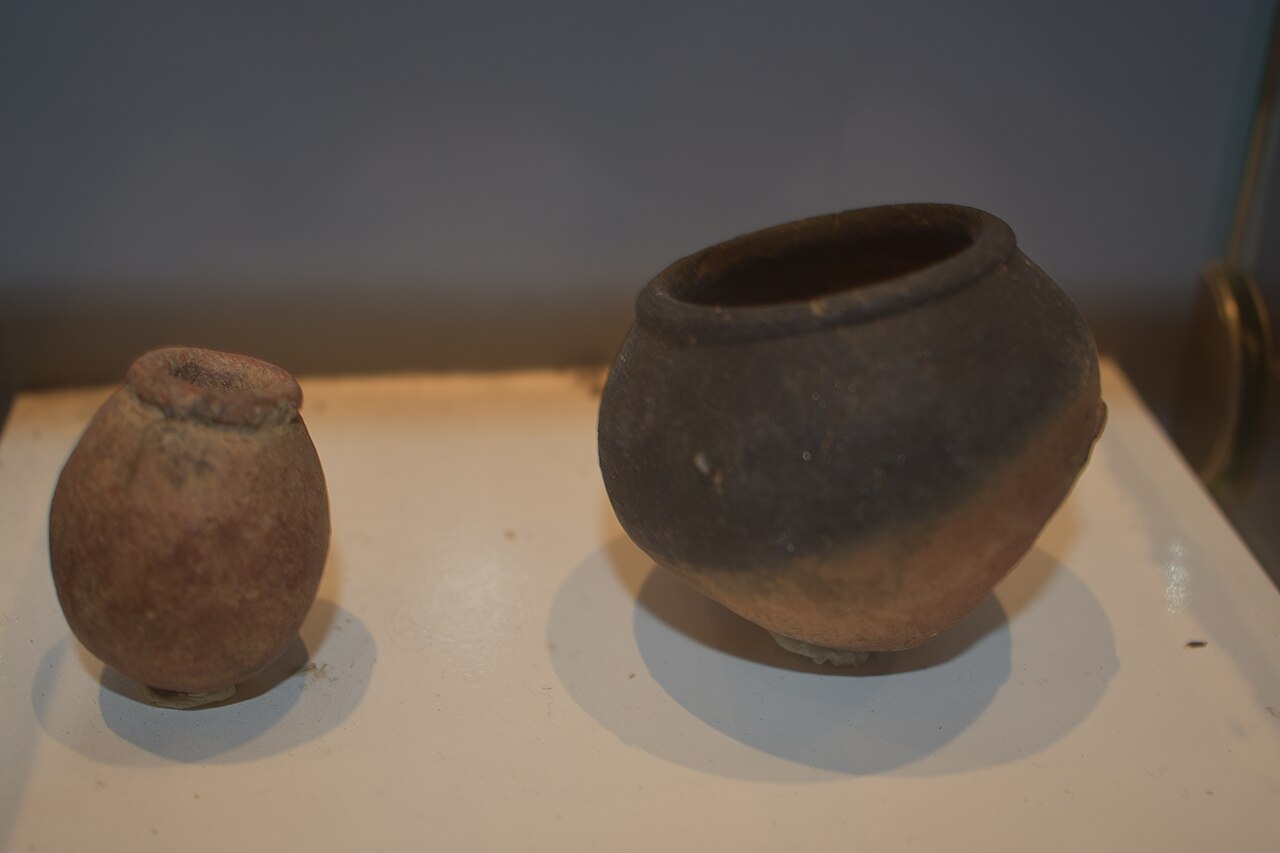
Photo: Rajeshodayanchal (Wikimedia Commons). Licence: CC BY-SA 4.0. Full credit for this photo
Look at the pot. What do you see? What do you think? What do you wonder?
Turn it over: what do we know?
What the picture cannot tell us
Looking cannot tell us what makes the colours. Scientists needed a test.
What we know
- strong evidenceThe black part of a tested pot has carbon in it.
- strong evidenceThe red part of that tested pot has hematite in it.
Nobody knows yet
- nobody knows yetNobody knows yet if the white paint on some old pots was kaolin.
Where did this come from?
Facts from: Black-and-red ware owes its colours to carbon, iron and firing. Photo record: Two archaeological pottery vessels on display in the Keezhadi (Keeladi) museum.
Three steps
- 1 Look at the pot and say what you see.
- 2 Find out what is in the black part and the red part.
- 3 Hold up a card to show how sure we can be.
Three quick checks
1. Where is this pot black, and where is it red?
Black at the top and inside, red at the bottom: Tests found carbon in the black part and hematite, a red iron mineral, in the red part.
2. How do scientists think potters made both colours?
They put the pot in the fire upside down: Scientists think the pot stood upside down in the fire. That is a 'probably', not a certainty.
3. What does nobody know yet about the white painted lines?
What the white paint was made of: Nobody has tested the paint, so nobody knows if it was kaolin, a white clay.
Words to know
- black-and-red ware കറുപ്പും ചുവപ്പും മൺപാത്രങ്ങൾ
- Pots that are black on one part and red on another.
- carbon
- The black stuff in soot and charcoal.
- hematite
- Red stuff with iron in it.