Early Tamil poems show children with small toy carts. This is a picture of the poems’ words, not of a toy that was found.
- Everyday lives
Early Tamil poems show children playing with toy carts
Two early Tamil poems show children playing with small toy carts; they reveal adult affection, but they are poems, not records of real toys.
- This page
- 972 words · revision 5
Draft study · Awaiting specialist review · Updated
001Dates and places

No mapped place in this study.
Dates in this study are stated in words only.
- 1 Well supported
- 1 Possible
- 2 Not known
002How sure
In brief
Two early Tamil poems, Kuruntokai 61 and Ainkurunuru 403, describe children with small toy carts. In Kuruntokai 61, children pull little horse carts made by a carpenter, an image used as a comparison inside a love poem. In Ainkurunuru 403, a father watches his young child, named after the grandfather, move a toy cart. Both poems are read here through Vaidehi Herbert's online translations and notes. They show adult tenderness toward children, but they are literary images, not dated finds or records of real households. Wooden toys rarely survive in tropical soils, though other studies record terracotta hopscotch pieces at Agaram and a gamesman at Nachivayal. Research on ancient game boards adds a caution: a marked board does not come with its rules. Which children played, and how, is not known.
Key researchers cited in this study: Vaidehi Herbert (Sangam Poetry Translations & Commentaries) · Full bibliography
How sure
- Well supported
Kuruntokai 61 and Ainkurunuru 403 show children with small toy carts
Both scenes are explicit in the poems, read in an online translation with notes.
- Possible
The poems' tenderness reflects how real households treated children
The poems show an imagined literary world; they are not records of real households.
- Not known
Naming a child after the grandfather was a general rule
One poem gives one literary instance; it does not prove a household naming rule.
- Not known
The rules once played on ancient game boards and pieces
Boards and pieces survive without their rules; rules shown today are modern reconstructions.
Why it matters
It shows how to read a poem's picture of children at play without mistaking it for a record of real toys.
003Key findings
What the study concludes
- Kuruntokai 61 and Ainkurunuru 403 depict young children pulling small carpenter-made toy carts within vivid domestic and poetic scenes.
- Literary depictions of play preserve adult tenderness and observation while operating as similes and emotional turns within Sangam love poetry.
- Archaeological game-board research (such as Locus Ludi) shows why marked surfaces and play pieces must be distinguished from modern reconstructed rules.
In the study’s own words. How sure each point is, is shown above.
The summary above is the short read. The full study is the complete text it was drawn from, with its tables and source notes.
What the full study covers
004The study
A small object is not a small question
A toy cart in a poem or a game board incised on stone asks us to consider how children and adults played in the ancient world. This study examines early Tamil poetic scenes of children’s play in Kuruntokai 61 and Ainkurunuru 403 alongside methodological research on ancient game boards. It distinguishes literary imagery of play from excavated playthings and separates surviving game surfaces from reconstructed rules.
A Tamil cart inside an adult comparison
Kuruntokai 61 describes children pulling small carpenter-made horse carts, taking pleasure in drawing them along by hand. In Vaidehi Herbert’s translation, their delight becomes a comparison within the heroine’s friend’s speech to messengers.1 Reading the image inside its poetic frame preserves both the concrete craft detail – a small wheeled cart made by a carpenter (taccaṉ) – and its literary purpose.
Ivory die, 30 BCE–330 CE
30 BCE–330 CE
Ainkurunuru 403 offers a complementary angle: a father watching his young child, named after the grandfather, move with a toy cart (tiṇ tēr). The poem shows that a family name carried on from a grandfather could carry affection, but one poem does not prove that every household followed such a naming rule.2 Together the two poems show that small wooden playthings and attentive adult observation belonged to the imagined domestic world of early Tamilakam, without turning a poetic simile into a dated excavation inventory.
Affection without one universal childhood
These poems allow tenderness to be part of the represented literary world without requiring a claim that all ancient childhoods were alike. An affectionate representation can coexist with unequal opportunity and forms of work that require their own research. Conversely, evidence of hardship would not prove that play and attachment were absent. The task is to resist turning one class of evidence into the whole experience. We should ask which children a source makes visible, who speaks about them and what the source’s purpose allows it to show. A useful research question is not only which toys existed but who had the time, company and permission to use one: whether another person could interrupt, whether an object was shared or repaired, and what a child could do without adult help. These are proposed research questions, not answers attributed to the poems. They make room for different personalities and situations without inventing a uniform ancient childhood handbook. They also prevent a child’s preference from being treated as a fixed fact about all boys or all girls.
A board is not a complete set of rules
The Locus Ludi project’s Ludus database organizes ancient game-board evidence by such features as location, period and material, including boards on stone floors and other supports. That approach usefully separates the recorded object from a playable reconstruction; it does not establish that every marked surface had the same rules, or that a game documented elsewhere was played at an early South Indian site. 3 The project’s rules guide and educational museum films, made with present-day children, are modern teaching and reconstruction, not footage of an unchanged ancient practice; only their landing-page description was read for this study. 4 The finding of this study is deliberately bounded: children and play appear here through adult poetry and game-board research, each opening a different window. None gives us the whole room.
What remains uncertain
- Kuruntokai 61 and Ainkurunuru 403 are literary witnesses, not dated archaeological observations of particular children.
- Perishable wooden toys (such as the carpenter-made carts named in the poems) rarely survive in tropical soils; terracotta hopscotches, gamesmen, and wheels require site-specific context records. “Agaram and Manalur: no site dates in the excavation reports so far” reports terracotta hopscotch pieces among the most common finds at Agaram, and “Ordinary settlements beyond the ports are known but hard to count” records a gamesman from a trial trench at Nachivayal.
- Excavated boards and pieces alone do not give a complete set of rules; “Agaram and Manalur: no site dates in the excavation reports so far” makes the same point for the Agaram hopscotch pieces.
The next questions
- Retrieve object-level contextual records for terracotta gamesmen, hopscotches, and toy wheels from Keezhadi (Keeladi), Pattanam, and Kodumanal.
References and access notes
1 Thumpiser Keeranar (traditional attribution); Vaidehi Herbert, translation and notes (ancient poem; modern online translation). Kuruntokai 61: a toy cart inside a love poem. Kuruntokai 61, lines 1–6 and notes on speaker and messengers. Poem 61, surrounding identification and translator’s notes read. The children’s activity is a simile in speech assigned to the heroine’s friend addressing messengers. Translation spelling differs from other editions; no critical edition claimed. Open source: learnsangamtamil.com
2 Peyanar (traditional attribution); Vaidehi Herbert, translation and notes (ancient poems; modern online translation). Ainkurunuru 403 and 407–408: names, play and music. Ainkurunuru 403. Selected Tamil text, English translations and notes read; not a manuscript collation. Poem 403 contains the grandfather-name and toy-cart scene; 407 concerns listening with the beloved and 408 music in a family setting. This is the same translator and anthology as another source in this list, not independent corroboration. Open source: learnsangamtamil.com
3 Locus Ludi research project, University of Fribourg (online project description). The Ludus database: evidence for game boards. Database scope, media and stated filters. Project description and stated scope read; no complete dataset downloaded. A guide to how researchers organize evidence. A database’s proposed comprehensive scope is not proof of complete coverage or of a particular game at any one site. Open source: locusludi.ch
4 Locus Ludi; scientific direction Véronique Dasen and Ulrich Schädler (modern research-outreach resource). Ancient games rules and educational museum films. Instructions-manual and educational-movies descriptions. Landing-page description read; linked films not watched and rulebook PDF not read. Useful external destination, not documentary footage of antiquity. Modern reconstructions and teaching rules require labels; neither videos nor the rulebook are rehosted or represented as reviewed in full. Open source: locusludi.ch
005Photographs
Photographs of the places and objects this study discusses. Each item carries its creator’s credit, licence and documented source. See all 412 photographs and source images ↗
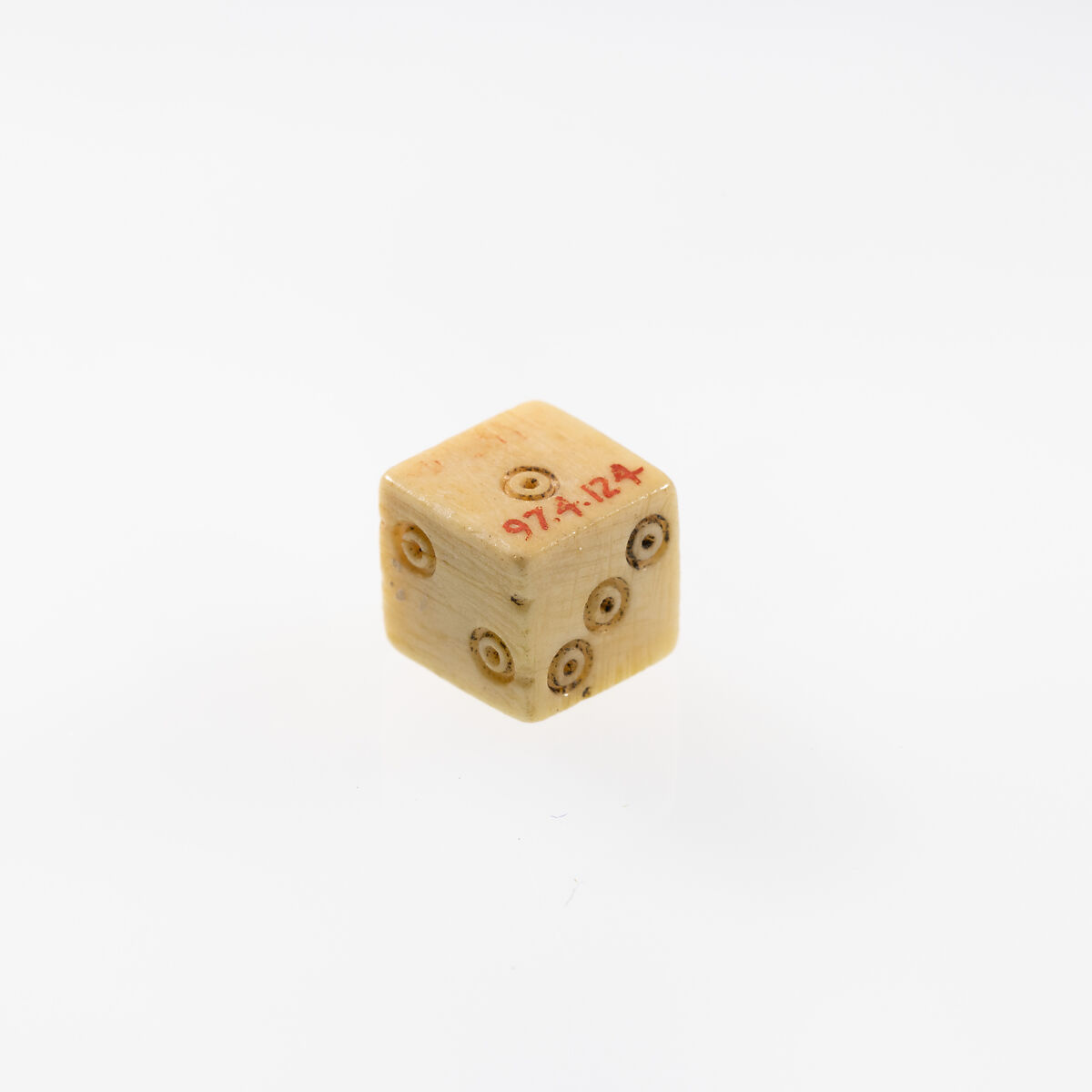
30 BCE–330 CE
Ivory die, 30 BCE–330 CE
Ivory die, 30 BCE–330 CE. Excavated at Oxyrhynchus, Egypt, in 1896–97. Comparative gaming object, not evidence of a specific game or childhood practice in Tamilakam.
006Where next

All related studies, connected material, books and sources6 · 4
Elsewhere on this site
Connected material
Photographs, drawings, books, videos and other studies linked to this study. A link helps you explore; it does not prove a historical claim.
- Ivory die, 30 BCE–330 CEphotographBackground
- A toy cart from a poemdiagramA picture of the toy carts in the two poems this study reads; it shows the poems’ words, not a find.
Books, videos and websites
Outside reading on this topic. These are not part of the study and we have not checked every claim in them. See all books and videos
- Porkalam 1948: Excavation of a Megalithic Urn-Burial (Ancient India No. 8) Book · B. K. Thapar (Archaeological Survey of India) · 1952 · The classic stratigraphic report on the excavation of a laterite-circle pyriform urn burial at Porkalam (Thrissur district, Kerala), documenting 48 etched carnelian beads, iron implements, and four-legged Black-and-Red Ware bowls.
- Jacob Schmidt-Madsen on South Asian games Video · Jacob Schmidt-Madsen, Kenneth G. Zysk · University of Copenhagen; India International Centre / SAMHiTA programme · 1:18:35 · A research lecture on games and play across a long span of South Asian history. An optional wider-history link that credits a specialist in the history of games. Chronology extends from the Indus world into later periods. Do not assign every game mentioned to 1000 BCE–600 CE, South India, or specifically to children. Use as a clearly labelled comparison.
007Sources
The study lists the sources it consulted; we have not rechecked them. A working link does not show that a source was read, and a valid identifier does not show that it supports a claim. We do not link to unofficial uploads or copies of publications. Where a study cited one, we show the published citation, or a publisher, DOI or Internet Archive link when we have one. Tracking codes are removed from links, and the sources themselves are not republished here.
Thumpiser Keeranar (traditional attribution); Vaidehi Herbert, translation and notes (ancient poem; modern online translation). Kuruntokai 61: a toy cart inside a love poem. Kuruntokai 61, lines 1–6 and notes on speaker and messengers. Poem 61, surrounding identification and translator’s notes read. The children’s activity is a simile in speech assigned to the heroine’s friend addressing messengers. It does not identify the owner or construction of the Egyptian horse in S100. Translation spelling differs from other editions; no critical edition claimed.
Peyanar (traditional attribution); Vaidehi Herbert, translation and notes (ancient poems; modern online translation). Ainkurunuru 403 and 407–408: names, play and music. Ainkurunuru 403; cross-reference to the names study. Selected Tamil text, English translations and notes read; not a manuscript collation. Poem 403 contains the grandfather-name and toy-cart scene; 407 concerns listening with the beloved and 408 music in a family setting. Earlier web search snippets misassigned the cart scene to 407; the main text was checked and corrected before drafting. This is the same translator and anthology as another source in this list, not independent corroboration.
Locus Ludi research project, University of Fribourg (online project description). The Ludus database: evidence for game boards. Database scope, media and stated filters. Project description and stated scope read; no complete dataset downloaded. A guide to how researchers organize evidence. A database’s proposed comprehensive scope is not proof of complete coverage or of a particular game at Pattanam.
Locus Ludi; scientific direction Véronique Dasen and Ulrich Schädler (modern research-outreach resource). Ancient games rules and educational museum films. Instructions-manual and educational-movies descriptions. Landing-page description read; linked films not watched and rulebook PDF not read. Useful external destination, not documentary footage of antiquity. Modern reconstructions and teaching rules require labels; neither videos nor the rulebook are rehosted or represented as reviewed in full.
Researchers and institutions whose work this study uses: Vaidehi Herbert
How we know The evidence, claims and dates behind this study
What this study draws on
- Vaidehi Herbert's online English translations and notes for Kuruntokai 61 and Ainkurunuru 403
- The University of Fribourg's Locus Ludi project description of its game-board database
- Excavated play pieces recorded in related studies of Agaram and Nachivayal
Dates in this study
This study has no dates recorded in a form we can chart, so there is no date chart. Any dates it gives are in the full study.
The study’s claims
0 claims · 0 source passages · 11 paragraphs
Browse the study paragraph by paragraphThis study has no separately listed claims. Its paragraphs can be browsed one by one.
About this study Status, corrections and how it was made
Status
Draft study, revision 5. No historian, archaeologist, or Tamil or Malayalam specialist has reviewed it yet.
How it was made
Compiled as an editorial synthesis from published scholarship around questions we framed. About this project & workflow
The summary, How sure lines and Two views notes on this page were prepared from this study and cross-checked against its passages. That is an editorial check, not a specialist review.
Technical details
Study code R028. The text fingerprint changes whenever the study text changes.
- The study text is shown as written. Links from its paragraphs to citations help you move around the study; they are not new claims or checked source passages.
See how this study’s records were extracted
Text fingerprint (SHA-256): R028 · b0b5a2674798835f249109b6… · v5
Evidence tables and technical details are on the web page: https://layersofthesouth.org/read/7346e4ef17