Kings in stone and coin: Cut-out cards
Cut-out cards
C3 Kings in stone and coin
2 pages, A4 or US Letter3 pages, A4 or US Letter
Print at actual size, with scaling turned off.
Lesson C3 · Ages 11 to 14 · Cut-out cards
Cut along the lines. One set for each group.
Key words English · Malayalam · Tamil
inscription
Writing cut or scratched into stone or another hard surface.
Tamil-Brahmiതമിഴി (തമിഴ് ബ്രാഹ്മി)தமிழி (தமிழ் பிராமி)
The earliest known way of writing Tamil: Brahmi letters adapted, with extra letters for Tamil sounds.
edict
A public message from a ruler, such as the edicts cut into rock.
Aśoka
The emperor whose Rock Edict II names southern peoples by the third century BCE.
generation
One step in a family line: a father, his son, his grandson.
paḷiപാഴി / പള്ളിபளி / பள்ளி & பாழி
A rock shelter with a ledge to keep off rain and stone beds, made for monks.
Atiyan Neṭumāṉ Añciസതിയപുതോ അതിയൻ നെടുമാൻ അഞ്ചിசதியபுதோ அதியன் நெடுமான் அஞ்சி
The giver named in the Jambai cave inscription, who is called satiyaputō there.
Pugalur inscriptionsപുകളൂർ ചേര ഇരുമ്പൊറൈ തമിഴ്-ബ്രാഹ്മി ലിഖിതംபுகளூர் சேரல் இரும்பொறை தமிழி கல்வெட்டு
Tamil-Brahmi inscriptions near Karur that name three generations of one ruling family.
portrait coinമാക്കോതൈ, കുട്ടുവൻ കോതൈ ചേര നാണയങ്ങൾமாக்கோதை & குட்டுவன் கோதை சேர நாணயங்கள்
An early silver coin with a portrait head and a Tamil-Brahmi name, found mainly at Karur.
Pathitruppathu
An early Tamil collection of poems that praise rulers; also spelled Patiṟṟuppattu.
Jaina
Belonging to the Jain religion.
C3-SC1 · Writing on stone or pottery
A family named at Pugalur
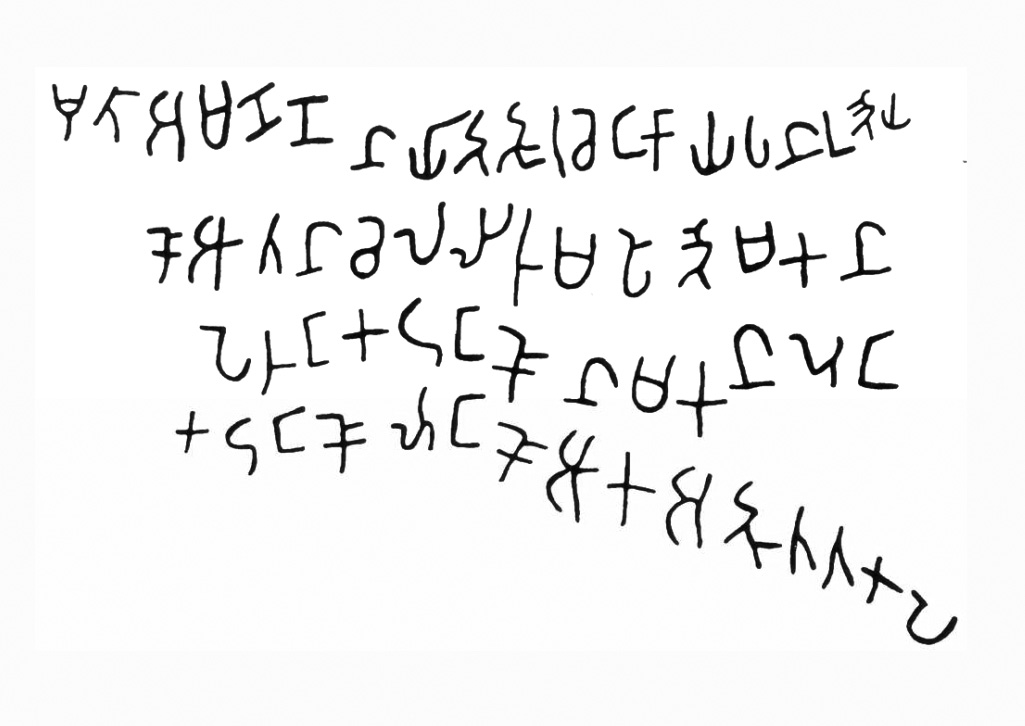
Photo: Rajesh of Raigad (Wikimedia Commons). Licence: CC BY-SA 4.0 (https://creativecommons.org/licenses/by-sa/4.0). Source: https://commons.wikimedia.org/wiki/File:Chera_Inscription_from_Pugalur,_near_Karur.jpg
- Inscriptions 61 and 62 are cut on a rock shelter at Pugalur, close to Karur.
- Inscription 61 names three generations, linked by the word makaṉ, "son".
- They are Kō Ātaṉ Cel Irumpoṟai, his son Peruṅkaṭuṅkōṉ and his grandson Iḷaṅkaṭuṅkō.
- The shelter is named as the home of a Jaina monk, Ceṅkāyapaṉ.
- Mahadevan's collection of inscriptions dates the letter shapes to about the second century CE; others say the third to fourth centuries CE.
What it cannot tell us The inscriptions give no reign years, no capital and no borders.
- Look Which names does the inscription give, and how are they linked?
- Talk The stone names a family. What would you need before calling them the kings of a kingdom?
- Ask Which other kind of evidence could tell us when these men lived?
Lesson C3 · Ages 11 to 14 · Cut-out cards
Cut along the lines. One set for each group.
C3-SC2 · Writing on stone or pottery
A gift at Jambai and an emperor's edict
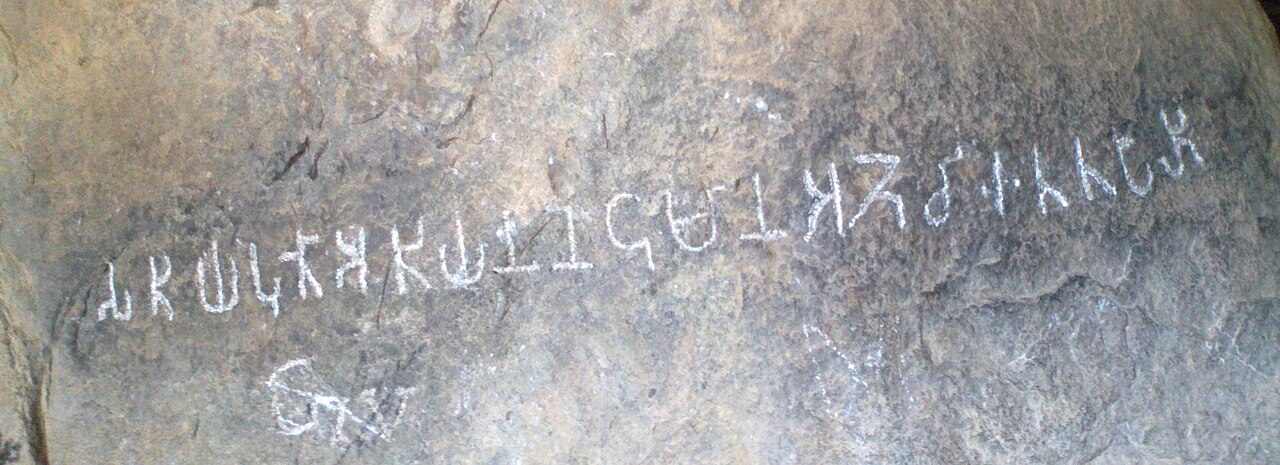
Photo: Tnexplore (Wikimedia Commons). Licence: CC BY-SA 3.0 (https://creativecommons.org/licenses/by-sa/3.0). Source: https://commons.wikimedia.org/wiki/File:Jambai_Tamil_Brahmi.jpg
- In a cave at Jambai, one line of writing records the gift of a paḷi, a cave shelter.
- It names the giver as Atiyan Neṭumāṉ Añci and calls him satiyaputō.
- Its letter shapes place it around the first century CE, though one official page says the first century BCE.
- Aśoka's Rock Edict II lists southern names: Choda, Pandiya, Kelalaputo and Satiyaputo.
- The edict shows that Chola and Pandya were known southern names by the third century BCE.
- Naming a people in an edict is not evidence that the emperor ruled them.
What it cannot tell us A one-line gift gives no family tree, no territory and no date for any poem.
- Look Which word appears both in the edict and at Jambai?
- Talk The edict and the Jambai line were cut centuries apart. Does a shared word make them about the same people? Why?
- Ask What would you want to know about the person who cut the Jambai line?
C3-SC3 · From the ground
Silver coins with a ruler's name

Drawing: A worn punch-marked silver piece, a schematic Roman denarius with a chisel cut, both faces of a square Chera copper coin, and an Eyyal jar timeline: minted, cut, buried after 98–99 CE, found 1945.
- Small silver coins show a portrait head and a name or title in Tamil-Brahmi.
- One series reads Makkotai above the portrait, and its other side is plain.
- Scholars think the portraits look like Roman imperial coin portraits.
- Excavations at Karur report Roman coins and pieces of Mediterranean jars.
- The coins are linked to the Amaravathi riverbed at Karur, but the sources checked place none in a dated excavation layer.
- Scholars' dates for one of these coins run from the first century BCE to the late third or early fourth century CE.
What it cannot tell us A name on a coin does not, on its own, give the ruler's family or the poem that praised him.
- Look From the card, what is on each side of the coin?
- Talk The coins were not found in a dated layer. Why does that make them harder to date?
- Ask What test could help to date the coins?
Lesson C3 · Ages 11 to 14 · Cut-out cards
Cut along the lines. One set for each group.
C3-SC1 · Writing on stone or pottery
A family named at Pugalur
Photo: Rajesh of Raigad (Wikimedia Commons). Licence: CC BY-SA 4.0 (https://creativecommons.org/licenses/by-sa/4.0). Source: https://commons.wikimedia.org/wiki/File:Chera_Inscription_from_Pugalur,_near_Karur.jpg
- Inscriptions 61 and 62 are cut on a rock shelter at Pugalur, close to Karur.
- Inscription 61 names three generations, linked by the word makaṉ, "son".
- They are Kō Ātaṉ Cel Irumpoṟai, his son Peruṅkaṭuṅkōṉ and his grandson Iḷaṅkaṭuṅkō.
- The shelter is named as the home of a Jaina monk, Ceṅkāyapaṉ.
- Mahadevan's collection of inscriptions dates the letter shapes to about the second century CE; others say the third to fourth centuries CE.
What it cannot tell us The inscriptions give no reign years, no capital and no borders.
- Look Which names does the inscription give, and how are they linked?
- Talk The stone names a family. What would you need before calling them the kings of a kingdom?
- Ask Which other kind of evidence could tell us when these men lived?
C3-SC2 · Writing on stone or pottery
A gift at Jambai and an emperor's edict
Photo: Tnexplore (Wikimedia Commons). Licence: CC BY-SA 3.0 (https://creativecommons.org/licenses/by-sa/3.0). Source: https://commons.wikimedia.org/wiki/File:Jambai_Tamil_Brahmi.jpg
- In a cave at Jambai, one line of writing records the gift of a paḷi, a cave shelter.
- It names the giver as Atiyan Neṭumāṉ Añci and calls him satiyaputō.
- Its letter shapes place it around the first century CE, though one official page says the first century BCE.
- Aśoka's Rock Edict II lists southern names: Choda, Pandiya, Kelalaputo and Satiyaputo.
- The edict shows that Chola and Pandya were known southern names by the third century BCE.
- Naming a people in an edict is not evidence that the emperor ruled them.
What it cannot tell us A one-line gift gives no family tree, no territory and no date for any poem.
- Look Which word appears both in the edict and at Jambai?
- Talk The edict and the Jambai line were cut centuries apart. Does a shared word make them about the same people? Why?
- Ask What would you want to know about the person who cut the Jambai line?
Lesson C3 · Ages 11 to 14 · Cut-out cards
Cut along the lines. One set for each group.
C3-SC3 · From the ground
Silver coins with a ruler's name
Drawing: A worn punch-marked silver piece, a schematic Roman denarius with a chisel cut, both faces of a square Chera copper coin, and an Eyyal jar timeline: minted, cut, buried after 98–99 CE, found 1945.
- Small silver coins show a portrait head and a name or title in Tamil-Brahmi.
- One series reads Makkotai above the portrait, and its other side is plain.
- Scholars think the portraits look like Roman imperial coin portraits.
- Excavations at Karur report Roman coins and pieces of Mediterranean jars.
- The coins are linked to the Amaravathi riverbed at Karur, but the sources checked place none in a dated excavation layer.
- Scholars' dates for one of these coins run from the first century BCE to the late third or early fourth century CE.
What it cannot tell us A name on a coin does not, on its own, give the ruler's family or the poem that praised him.
- Look From the card, what is on each side of the coin?
- Talk The coins were not found in a dated layer. Why does that make them harder to date?
- Ask What test could help to date the coins?
Lesson C3 · Ages 11 to 14 · Cut-out cards
Cut along the lines. One set for each group.
Key words English · Malayalam · Tamil
inscription
Writing cut or scratched into stone or another hard surface.
Tamil-Brahmiതമിഴി (തമിഴ് ബ്രാഹ്മി)தமிழி (தமிழ் பிராமி)
The earliest known way of writing Tamil: Brahmi letters adapted, with extra letters for Tamil sounds.
edict
A public message from a ruler, such as the edicts cut into rock.
Aśoka
The emperor whose Rock Edict II names southern peoples by the third century BCE.
generation
One step in a family line: a father, his son, his grandson.
paḷiപാഴി / പള്ളിபளி / பள்ளி & பாழி
A rock shelter with a ledge to keep off rain and stone beds, made for monks.
Atiyan Neṭumāṉ Añciസതിയപുതോ അതിയൻ നെടുമാൻ അഞ്ചിசதியபுதோ அதியன் நெடுமான் அஞ்சி
The giver named in the Jambai cave inscription, who is called satiyaputō there.
Pugalur inscriptionsപുകളൂർ ചേര ഇരുമ്പൊറൈ തമിഴ്-ബ്രാഹ്മി ലിഖിതംபுகளூர் சேரல் இரும்பொறை தமிழி கல்வெட்டு
Tamil-Brahmi inscriptions near Karur that name three generations of one ruling family.
portrait coinമാക്കോതൈ, കുട്ടുവൻ കോതൈ ചേര നാണയങ്ങൾமாக்கோதை & குட்டுவன் கோதை சேர நாணயங்கள்
An early silver coin with a portrait head and a Tamil-Brahmi name, found mainly at Karur.
Pathitruppathu
An early Tamil collection of poems that praise rulers; also spelled Patiṟṟuppattu.
Jaina
Belonging to the Jain religion.