Skip to content
Layers of the South
Search

Classroom screen · C3

Kings in stone and coin

The screen fills the window. Right and Left arrows, or Page Down and Page Up, move between screens. Home and End go to the first and last. F fills the whole screen. T starts a timer.

Each screen prints on its own landscape page, for a classroom without a projector.

Back to the lesson plan

00:00 / 05:00

    Timings are the plan's suggestion, not a measure of pupils.
    Look first

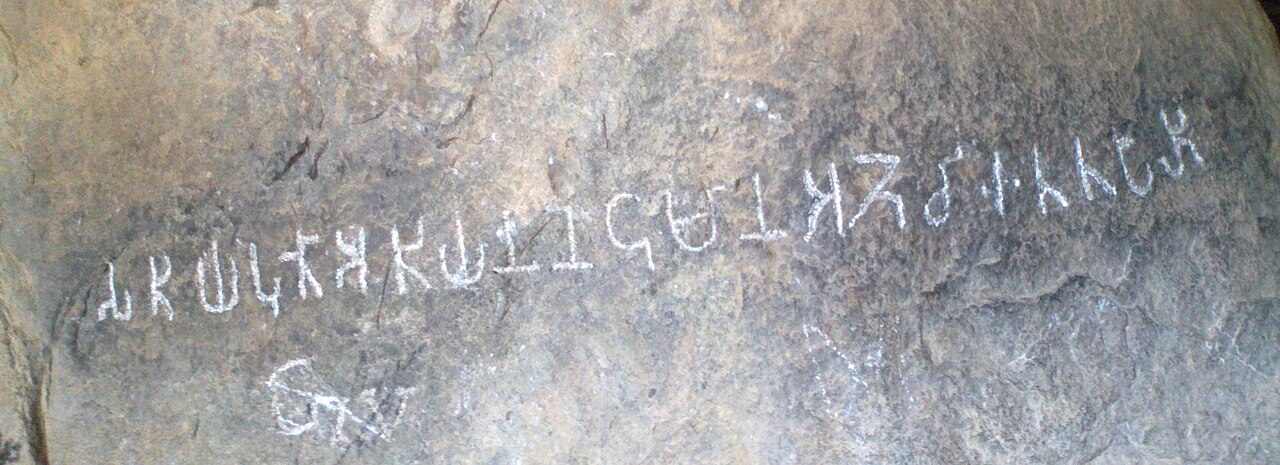
    Jambai Tamil-Brahmi inscription on the rock surface, with modern highlighting visible.

    Photo: Tnexplore (Wikimedia Commons). Licence: CC BY-SA 3.0 (https://creativecommons.org/licenses/by-sa/3.0). Source: https://commons.wikimedia.org/wiki/File:Jambai_Tamil_Brahmi.jpg

    This photograph shows writing cut into a cave wall at Jambai in Tamil Nadu. What do you see? What do you think? What do you wonder?

    • I see
    • I think
    • I wonder

    1/12

    Look at how these statements differ.

    Copy the rule. Note the level the study gives and its reason.

    • Mangulam's Nedunchezhiyan is the king praised in Maturaikkāñci.Possible

    2/12

    Two views

    Whether the Mangulam Nedunchezhiyan is the king of the poems

    One view

    Tamil Nadu's archaeology department links the Mangulam name with a Pandya king, and the name matches the poems' Neṭuñceḻiyaṉ.

    Another view

    This study: a shared name does not show they were the same person.

    What would settle it

    Mahadevan's exact readings and plates, analysis of the titles, and independent cross-dating.

    3/12

    Writing on stone or pottery

    A family named at Pugalur

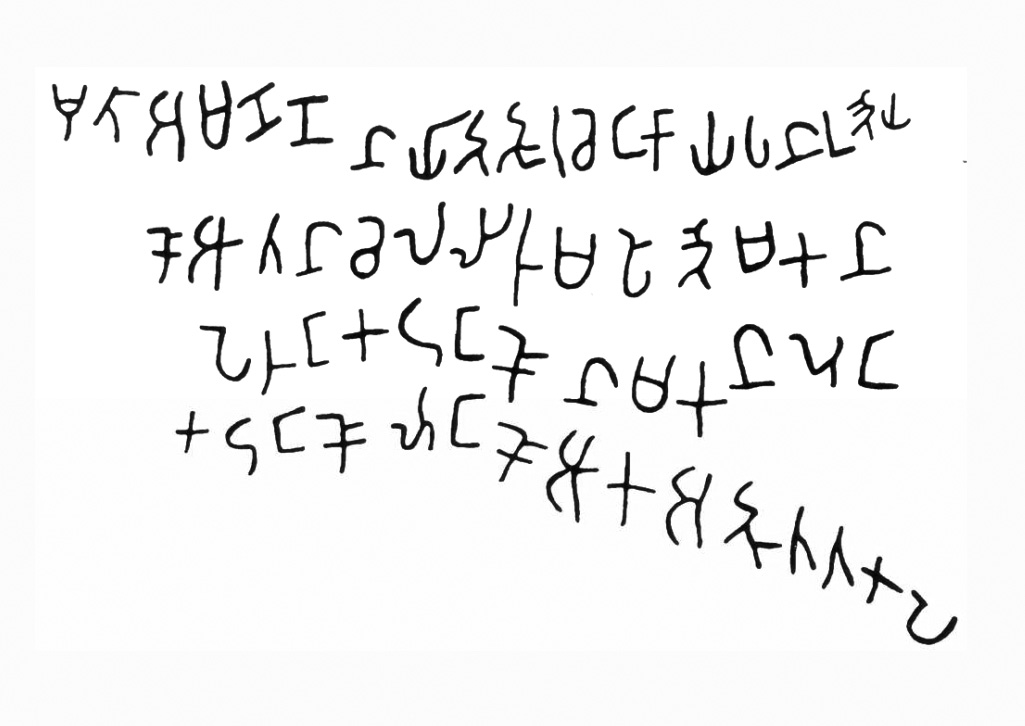
    Several lines of Tamil-Brahmi letter forms drawn in black on white.

    Photo: Rajesh of Raigad (Wikimedia Commons). Licence: CC BY-SA 4.0 (https://creativecommons.org/licenses/by-sa/4.0). Source: https://commons.wikimedia.org/wiki/File:Chera_Inscription_from_Pugalur,_near_Karur.jpg

    • Inscriptions 61 and 62 are cut on a rock shelter at Pugalur, close to Karur.
    • Inscription 61 names three generations, linked by the word makaṉ, "son".
    • They are Kō Ātaṉ Cel Irumpoṟai, his son Peruṅkaṭuṅkōṉ and his grandson Iḷaṅkaṭuṅkō.

    What it cannot tell us The inscriptions give no reign years, no capital and no borders.

    • Teacher notes The shelter is named as the home of a Jaina monk, Ceṅkāyapaṉ. Mahadevan's collection of inscriptions dates the letter shapes to about the second century CE; others say the third to fourth centuries CE.
    • Look Which names does the inscription give, and how are they linked?
    • Talk The stone names a family. What would you need before calling them the kings of a kingdom?
    • Ask Which other kind of evidence could tell us when these men lived?

    4/12

    Writing on stone or pottery

    A gift at Jambai and an emperor's edict

    Jambai Tamil-Brahmi inscription on the rock surface, with modern highlighting visible.

    Photo: Tnexplore (Wikimedia Commons). Licence: CC BY-SA 3.0 (https://creativecommons.org/licenses/by-sa/3.0). Source: https://commons.wikimedia.org/wiki/File:Jambai_Tamil_Brahmi.jpg

    • In a cave at Jambai, one line of writing records the gift of a paḷi, a cave shelter.
    • It names the giver as Atiyan Neṭumāṉ Añci and calls him satiyaputō.
    • Its letter shapes place it around the first century CE, though one official page says the first century BCE.

    What it cannot tell us A one-line gift gives no family tree, no territory and no date for any poem.

    • Teacher notes Aśoka's Rock Edict II lists southern names: Choda, Pandiya, Kelalaputo and Satiyaputo. The edict shows that Chola and Pandya were known southern names by the third century BCE. Naming a people in an edict is not evidence that the emperor ruled them.
    • Look Which word appears both in the edict and at Jambai?
    • Talk The edict and the Jambai line were cut centuries apart. Does a shared word make them about the same people? Why?
    • Ask What would you want to know about the person who cut the Jambai line?

    5/12

    From the ground

    Silver coins with a ruler's name

    A worn punch-marked silver piece, a schematic Roman denarius with a chisel cut, both faces of a square Chera copper coin, and an Eyyal jar timeline: minted, cut, buried after 98–99 CE, found 1945.
    • Small silver coins show a portrait head and a name or title in Tamil-Brahmi.
    • One series reads Makkotai above the portrait, and its other side is plain.
    • Scholars think the portraits look like Roman imperial coin portraits.

    What it cannot tell us A name on a coin does not, on its own, give the ruler's family or the poem that praised him.

    • Teacher notes Excavations at Karur report Roman coins and pieces of Mediterranean jars. The coins are linked to the Amaravathi riverbed at Karur, but the sources checked place none in a dated excavation layer. Scholars' dates for one of these coins run from the first century BCE to the late third or early fourth century CE.
    • Look From the card, what is on each side of the coin?
    • Talk The coins were not found in a dated layer. Why does that make them harder to date?
    • Ask What test could help to date the coins?

    6/12

    How sure can we be? 1/5

    Inscription 61 names three generations linked by the word makaṉ, 'son'.

    • Well supported
    • Likely
    • Possible
    • Not known

    7/12

    How sure can we be? 2/5

    Aśoka's Satiyaputo refers to the Atiyan or Atiyaman political line.

    • Well supported
    • Likely
    • Possible
    • Not known

    8/12

    How sure can we be? 3/5

    The coin names belong to kings praised in early Tamil poems.

    • Well supported
    • Likely
    • Possible
    • Not known

    9/12

    How sure can we be? 4/5

    The Pugalur rulers are the kings praised in the Pathitruppathu poems.

    • Well supported
    • Likely
    • Possible
    • Not known

    10/12

    How sure can we be? 5/5

    What was the exact, continuous list of early Pandya and Chola kings?

    • Well supported
    • Likely
    • Possible
    • Not known

    11/12

    Before you go

    How do we know the names of early kings? Write one sentence on the evidence and one on what makes it hard.

    12/12