Letters on pots: Cut-out cards
Cut-out cards
B2 Letters on pots
2 pages, A4 or US Letter3 pages, A4 or US Letter
Print at actual size, with scaling turned off.
Lesson B2 · Ages 9 to 11 · Cut-out cards
Cut along the lines. One set for each group.
B2-SC1 · Writing on stone or pottery
Writing on a broken pot
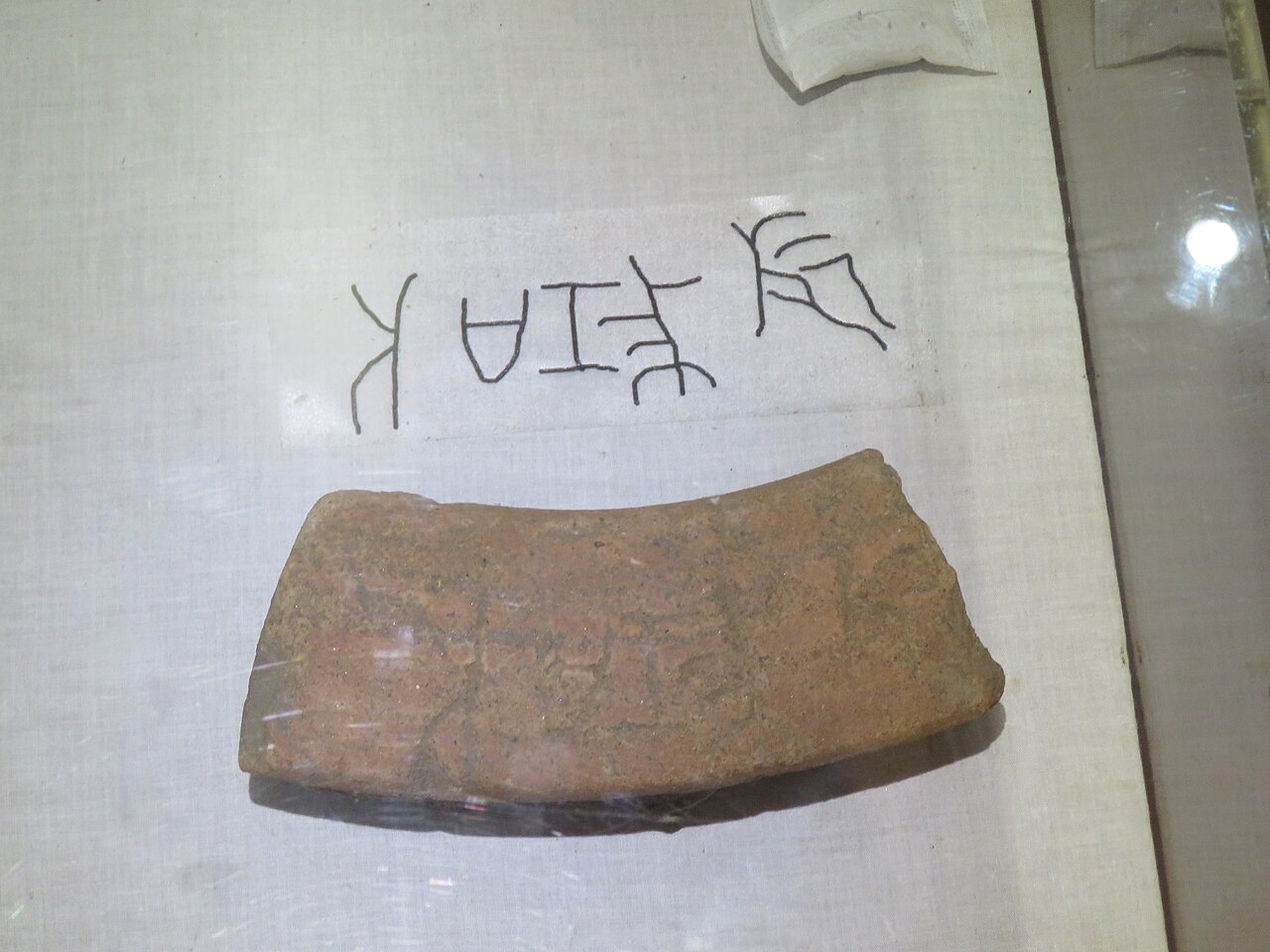
Photo: Vinayaraj (Wikimedia Commons). Licence: CC BY-SA 4.0 (https://creativecommons.org/licenses/by-sa/4.0). Source: https://commons.wikimedia.org/wiki/File:Tamil-Brahmi_Inscription,_Pattanam_excavation_museum,_Kottappuram,_Kodungallur.jpg
- This broken pot was on show in the museum at Pattanam.
- The museum shows its marks as Tamil-Brahmi writing.
- The big letters drawn above it are a modern tracing, not a reading.
- Tamil-Brahmi letters belong to a wider family of letters called Brahmi.
- Experts compared the shapes and sounds of the letters.
- Experts do not agree about when people first wrote Tamil in these letters.
What it cannot tell us Letter shapes show a family link. They do not give an exact date.
- Look What can you see on the broken pot? What is drawn above it?
- Talk Why does the museum draw the letters large above the pot?
- Ask What would you like to know about the person who wrote on it?
B2-SC2 · Writing on stone or pottery
Names scratched at Keezhadi
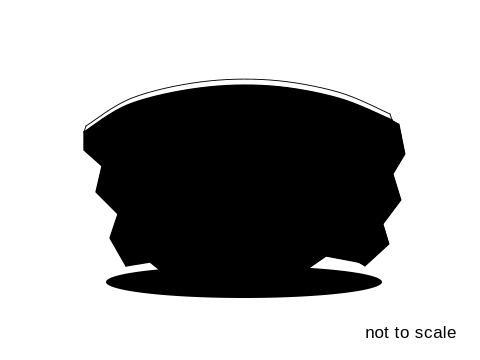
Drawing: Not to scale.
- Keezhadi (Keeladi) is a big old settlement in Tamil Nadu, with buildings of brick.
- Writing was scratched on lots of broken pots there.
- Some of the words are read as people's names.
- A report says the words were scratched after the pots were fired.
- Other marks on the pots are signs that nobody can read yet.
What it cannot tell us A name scratched after firing does not tell us who scratched it.
- Look What was scratched on the pots?
- Talk Why does it matter that the words were scratched after the pots were fired?
- Ask Whose names do you think these were?
Lesson B2 · Ages 9 to 11 · Cut-out cards
Cut along the lines. One set for each group.
B2-SC3 · From a text
What the pots cannot tell us

Drawing: Teaching sherd with one modern score and two possible groove profiles: a rounded soft-clay example and a chipped fired-surface example. These drawings are not a diagnostic key.
- One report says the names are probably the names of the pots' owners.
- But the marks alone cannot show who owned a pot.
- The pots give no count of people and no count of writers.
- Scientists tested a sample from Keezhadi to find its date.
- It has not been shown to come from the same layer as the written pots.
What it cannot tell us Lots of written pots show that writing was used. They do not show how many people could read.
- Look Whose names does one report think these are?
- Talk Why can't a name on a pot prove who owned it?
- Ask What would you need to find out how many people could read?
The four certainty cards
Lesson B2 · Ages 9 to 11 · Cut-out cards
Cut along the lines. One set for each group.
B2-SC1 · Writing on stone or pottery
Writing on a broken pot
Photo: Vinayaraj (Wikimedia Commons). Licence: CC BY-SA 4.0 (https://creativecommons.org/licenses/by-sa/4.0). Source: https://commons.wikimedia.org/wiki/File:Tamil-Brahmi_Inscription,_Pattanam_excavation_museum,_Kottappuram,_Kodungallur.jpg
- This broken pot was on show in the museum at Pattanam.
- The museum shows its marks as Tamil-Brahmi writing.
- The big letters drawn above it are a modern tracing, not a reading.
- Tamil-Brahmi letters belong to a wider family of letters called Brahmi.
- Experts compared the shapes and sounds of the letters.
- Experts do not agree about when people first wrote Tamil in these letters.
What it cannot tell us Letter shapes show a family link. They do not give an exact date.
- Look What can you see on the broken pot? What is drawn above it?
- Talk Why does the museum draw the letters large above the pot?
- Ask What would you like to know about the person who wrote on it?
Lesson B2 · Ages 9 to 11 · Cut-out cards
Cut along the lines. One set for each group.
B2-SC2 · Writing on stone or pottery
Names scratched at Keezhadi
Drawing: Not to scale.
- Keezhadi is a big old settlement in Tamil Nadu, with buildings of brick.
- Writing was scratched on lots of broken pots there.
- Some of the words are read as people's names.
- A report says the words were scratched after the pots were fired.
- Other marks on the pots are signs that nobody can read yet.
What it cannot tell us A name scratched after firing does not tell us who scratched it.
- Look What was scratched on the pots?
- Talk Why does it matter that the words were scratched after the pots were fired?
- Ask Whose names do you think these were?
Lesson B2 · Ages 9 to 11 · Cut-out cards
Cut along the lines. One set for each group.
B2-SC3 · From a text
What the pots cannot tell us
Drawing: Teaching sherd with one modern score and two possible groove profiles: a rounded soft-clay example and a chipped fired-surface example. These drawings are not a diagnostic key.
- One report says the names are probably the names of the pots' owners.
- But the marks alone cannot show who owned a pot.
- The pots give no count of people and no count of writers.
- Scientists tested a sample from Keezhadi to find its date.
- It has not been shown to come from the same layer as the written pots.
What it cannot tell us Lots of written pots show that writing was used. They do not show how many people could read.
- Look Whose names does one report think these are?
- Talk Why can't a name on a pot prove who owned it?
- Ask What would you need to find out how many people could read?