Skip to content
Layers of the South
Search

Lesson B2 · Unit B: How do we find out?

Letters on pots

Who wrote on these pots?

Project this lessonClass vote

Ages
Ages 9 to 11
Minutes
30 / 40 / 45
Ladder step
2 Sort, 3 Grade

Curriculum

No curriculum line is published for this lesson.

Draft written with AI assistance; not yet tried in a classroom

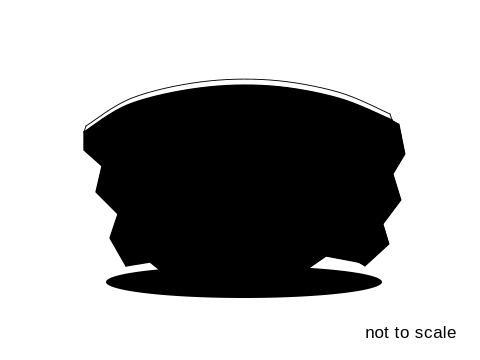
A broken piece from the rim of a bowl. Three Tamil-Brāhmī letters are scratched into its outside. They spell ātaṉ. A drawing, not a real sherd. Not to scale.
Writing on everyday pots: a name cut into the clay after firing. The drawing does not show who cut it or who owned the pot.

001At a glance

Pupils look at writing scratched on pots, sort what was found at Keezhadi from what was worked out, and grade four statements about writing.

Objectives

  • I can sort what was found on the pots from what people worked out about them.
  • I can explain why a name on a pot does not tell us who wrote it.
  • I can grade a statement about writing and give a reason.

Pupils should already know

  • Pupils have sorted sentences into found, worked out and nobody knows yet, and graded statements, in lesson B1.
  • Pupils know that the letters of a script stand for sounds.

Materials

Print
  • One sheet per pupil: support, core or stretch
  • The cut-out page for each pair: three source cards and the four certainty cards
Screen
  • The classroom screen for this lesson

Key words

Tamil-Brahmi തമിഴി (തമിഴ് ബ്രാഹ്മി)
An early way of writing Tamil, with letters taken from Brahmi.
Brahmi
A family of early Indian letters that Tamil-Brahmi belongs to.
settlement
A place where people lived together.
scratched
Cut into a surface with something sharp.
fire
To bake clay hard in great heat.
owner
The person a thing belongs to.
tracing
A copy made by drawing over the lines of something.

002Sequence

Step by step

Lesson length
  1. 455hook

    Teacher Show the photograph of the broken pot. Ask pupils what they think they see and what puzzles them. Record their puzzles on the board. Do not explain the big drawn letters yet.

    Pupils Look at the photo. Say what you think you see. Then say what puzzles you.

    Screen 1 of 12: Look first

  2. 578model

    Teacher Model sorting with the photograph, before pupils meet the claim statements. Say: "I can see marks on a broken pot. That is found. The museum shows the marks as Tamil-Brahmi writing. That is worked out by experts who know the letters. The big letters above are a modern tracing, so they are not part of the find." Ask pupils which sentence is found, which is worked out, and which is not part of the find.

    Pupils Listen. Then say which sentence about the photo is found and which is worked out.

    Screen 2 of 12: Writing on a broken pot

  3. 689guided

    Teacher Read the Keezhadi (Keeladi) card together. Point to the drawing: a name scratched into the outside of a pot after it was fired. It is a drawing, not a real sherd. Ask: does the mark tell us who made it? Then read the third card. Stop at "probably the names of the pots' owners" and ask: is that found, or worked out?

    Pupils Read the Keezhadi card with your partner. Underline what was found. Circle what was worked out.

    Screen 3 of 12: Names scratched at Keezhadi

  4. 689independent

    Teacher Pupils sort the sentences from the Keezhadi card and the last card into the boxes found, worked out and nobody knows yet. Writing scratched on many pots goes in found. The owners' names idea goes in worked out. Walk round and ask each pair to give a reason for one sentence.

    Pupils Sort the sentences from the Keezhadi card and the last card. Use the boxes found, worked out and nobody knows yet.

    Screen 5 of 12: Sort

  5. 689claim

    Teacher Read each statement in the claim task. Pupils shade a box for each one and write a reason. Then reveal the study's level and its reason. For the owners statement, point back to the third card: the report says "probably", yet the study gives it the "maybe" card, because the marks alone cannot show ownership. If a pupil chose a different level with a good reason, say so out loud: a reason that names real evidence or a real gap earns the credit.

    Pupils Shade a box for each statement. Write one reason.

    Screen 8 of 12: How sure can we be?

  6. 345exit

    Teacher Ask the enquiry question again: who wrote on these pots? Each pupil writes one answer with one reason from the cards.

    Pupils Who wrote on these pots? Write your answer and one reason from the cards.

    Screen 12 of 12: Before you go

003Source cards

The three source cards

19 bound lines · 8 graded · 6 claims · 5 other records

Graded lines carry their How-sure glyph and 6-char hash; claims carry no fill glyph.

B2-SC1 · Writing on stone or pottery

Writing on a broken pot
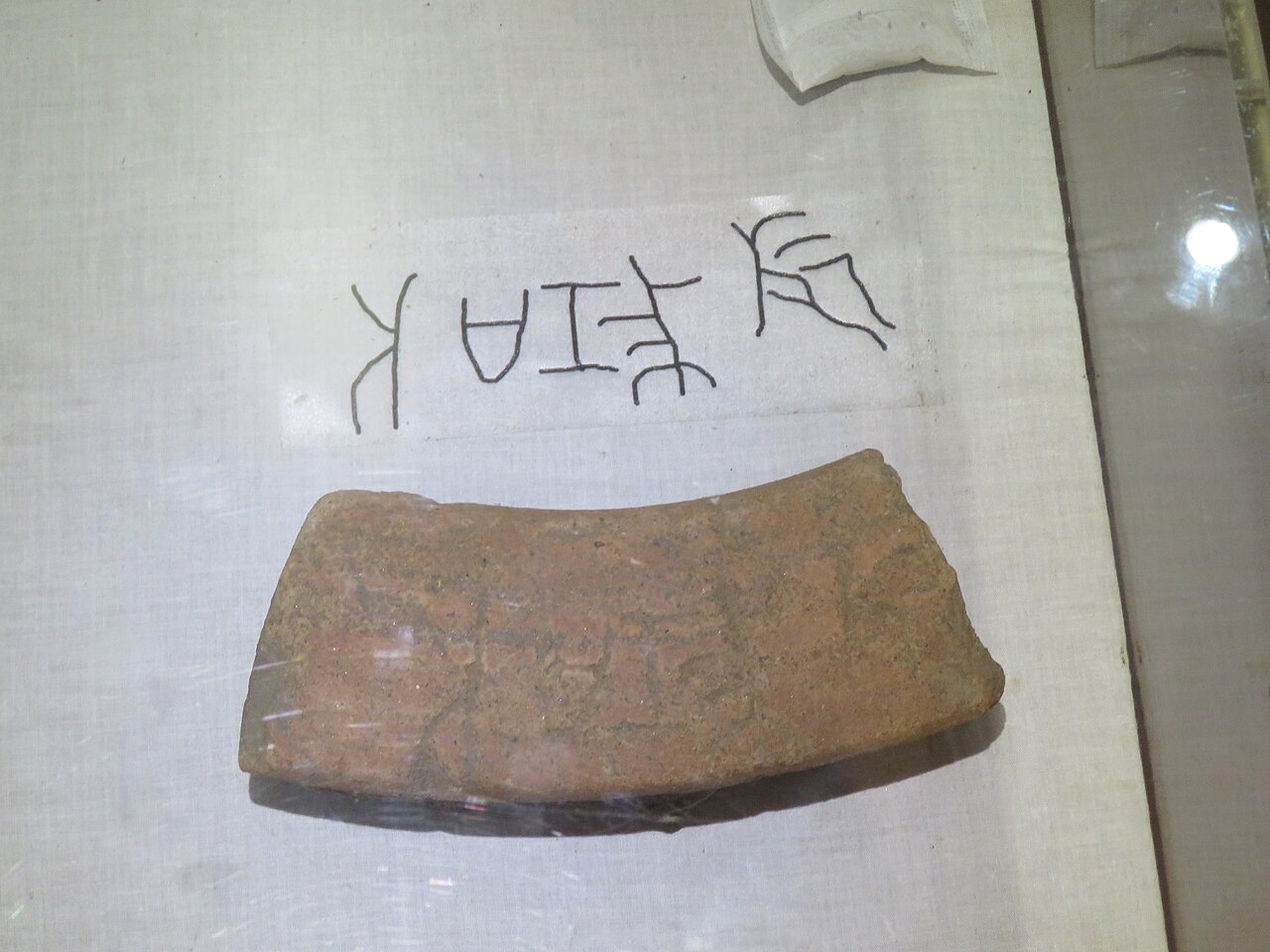
A curved pottery sherd beneath a large drawn transcription of its marks.

Photo: Vinayaraj (Wikimedia Commons). Licence: CC BY-SA 4.0 (https://creativecommons.org/licenses/by-sa/4.0). Source: https://commons.wikimedia.org/wiki/File:Tamil-Brahmi_Inscription,_Pattanam_excavation_museum,_Kottappuram,_Kodungallur.jpg

What it cannot tell us Letter shapes show a family link. They do not give an exact date. Stands on: R112-C001 · a claim the study makes (not graded)
Look
What can you see on the broken pot? What is drawn above it?
Talk
Why does the museum draw the letters large above the pot?
Ask
What would you like to know about the person who wrote on it?

B2-SC2 · Writing on stone or pottery

Names scratched at Keezhadi

A broken piece from the rim of a bowl. Three Tamil-Brāhmī letters are scratched into its outside. They spell ātaṉ. A drawing, not a real sherd. Not to scale.
What it cannot tell us A name scratched after firing does not tell us who scratched it. Stands on: R109-C006 · a claim the study makes (not graded)
Look
What was scratched on the pots?
Talk
Why does it matter that the words were scratched after the pots were fired?
Ask
Whose names do you think these were?

B2-SC3 · From a text

What the pots cannot tell us

Teaching sherd with one modern score and two possible groove profiles: a rounded soft-clay example and a chipped fired-surface example. These drawings are not a diagnostic key.
What it cannot tell us Lots of written pots show that writing was used. They do not show how many people could read. Stands on: R109-C007 · a claim the study makes (not graded)
Look
Whose names does one report think these are?
Talk
Why can't a name on a pot prove who owned it?
Ask
What would you need to find out how many people could read?

    004Differentiation

    One task at three levels

    The three sheets use the same sources and the same task. Only the help changes.

    Support

    1. Circle what the big drawn letters in the photo are: a modern tracing or the old writing.
    2. Tick one: the words were scratched before the pots were fired, or after.
    3. Draw a line from each sentence to its box: found, worked out, nobody knows yet.
    4. Shade a box for each statement: strong evidence, probably, maybe or nobody knows yet.
    5. Who wrote on these pots? Circle one: the pots tell us, or the pots do not tell us. Then finish: because ...

    Help on the sheet

    • The card sentences printed next to the three boxes
    • A word box: scratched, fired, name, owner, letters, Tamil-Brahmi
    • The four how-sure boxes with their words. Strong evidence: shade it in. Probably: slanting lines. Maybe: dots. Nobody knows yet: leave it empty.

    Core

    1. The big drawn letters are ..., because ...
    2. The words were scratched ... the pots were fired.
    3. Sort each sentence into a box: found, worked out, nobody knows yet.
    4. Shade a box for each statement. I chose it because ...
    5. Who wrote on these pots? My answer is ... because ...

    Stretch

    1. Explain what the photo shows and what the drawn letters are.
    2. Explain why a name scratched after firing does not tell us who wrote it.
    3. Sort each sentence and explain one of your choices.
    4. Grade each statement and explain your level.
    5. Who wrote on these pots? Use two cards in your answer.

    Extension

    Keezhadi has a carbon date that is often linked with its writing. What would someone need to show before that date could tell us how old the writing is?

    005Assessment

    How you will know

    The grading task

    Shade a box to show how sure we can be about each statement. Write one reason for each.

    1. Writing on pots was part of everyday life at Keezhadi.
    2. Tamil-Brahmi belongs to the Brahmi family of letters.
    3. The people named on the pots owned them.
    4. How many people at Keezhadi could read or write?

    Exit task

    Who wrote on these pots? Write your answer and one reason from the cards.

    Open the answer key

    The key gives what this website's summary says for each task, two examples written by us, and how to credit a reasoned disagreement.

    006Misunderstandings

    Misunderstandings to listen for (not yet observed in a classroom)

    • A name on a pot was written by that person.

      A name scratched after firing does not show who scratched it, who bought the pot, who is named or who owned it, and they need not be one person.

    • Lots of written pots means everyone could read.

      The sherds supply no population figure and no count of writers, so they cannot give a share of readers.

    • The big letters in the museum photo are the ancient writing.

      They are a modern display tracing. The tracing is not a facsimile or an independent reading of the inscription.

    007With or without a screen

    With or without a screen

    Paper only

    Print the cut-out page for each pair and a sheet for each pupil. Pass the photo card round or hold it up for the hook. Copy one scratched mark large on the board to point at during the Keezhadi card. Pupils sort and grade on paper and shade their certainty boxes in pencil.

    One screen and a projector

    Show the photo card, then the Keezhadi card with its drawing, then the third card, then the claim statements, one per screen. Go back to the third card while pupils write their exit answer.

    Classroom screen

    008Teacher notes

    Teacher notes

    • How old the writing at Keezhadi is, is a question on which scholars disagree. The Tamil Nadu archaeology department's 2019 report links a carbon sample dated to 580 BCE with a sixth-century BCE start for Tamil-Brahmi literacy. Archaeologists asked whether the dated sample and the inscribed sherds came from the same layers. Teach it as a disagreement, not as a mistake.
    • The 2018 report on the first ASI seasons dates its written pottery roughly to the second century BCE to the first century CE, by layers and letter shapes.
    • Counts differ between reports: about 70 Tamil-Brahmi sherds in the report on the first ASI seasons, and 56 in the 2019 state report. Do not add them together, and keep the graffiti marks apart from the letters.
    • The photograph shows a sherd on display at the Pattanam museum, not at Keezhadi. It is there to show what this kind of writing looks like. The drawn letters above it are a modern tracing.
    • The 2018 report calls the names probably owners' names, but the study grades the owners statement Possible, because the marks alone cannot show ownership. The cards show this website's grading of the evidence, not the report's own confidence.
    • If pupils ask when Tamil writing began: one view, from letter shapes, links it to Mauryan Brahmi, with a surviving corpus from around the second century BCE. Another argues from radiocarbon dates for the first half of the first millennium BCE. Present both as views.
    • The age of the writing at Keezhadi is disputed (see the first note), so this lesson sits on the whole timeline strip rather than in one window.

    009Sources used

    Sources used

    Every fact in this lesson comes from these studies. The codes name the statements the lesson cites.

    010Downloads

    Everything to print

    Each document prints on A4 or US Letter. The Malayalam sheets are drafts that no Malayalam editor has yet reviewed.

    The unit pack

    Lesson B2 · Ages 9 to 11 · Lesson plan

    Letters on pots

    Who wrote on these pots?

    Unit B: How do we find out? · Ladder step Sort, Grade · Draft written with AI assistance; not yet tried in a classroom

    Objectives

    • I can sort what was found on the pots from what people worked out about them.
    • I can explain why a name on a pot does not tell us who wrote it.
    • I can grade a statement about writing and give a reason.

    Pupils should already know

    • Pupils have sorted sentences into found, worked out and nobody knows yet, and graded statements, in lesson B1.
    • Pupils know that the letters of a script stand for sounds.

    Key words: Tamil-Brahmi (An early way of writing Tamil, with letters taken from Brahmi.); Brahmi (A family of early Indian letters that Tamil-Brahmi belongs to.); settlement (A place where people lived together.); scratched (Cut into a surface with something sharp.); fire (To bake clay hard in great heat.); owner (The person a thing belongs to.); tracing (A copy made by drawing over the lines of something.).

    Materials

    • Print One sheet per pupil: support, core or stretch; The cut-out page for each pair: three source cards and the four certainty cards
    • Screen The classroom screen for this lesson
    • Paper only Print the cut-out page for each pair and a sheet for each pupil. Pass the photo card round or hold it up for the hook. Copy one scratched mark large on the board to point at during the Keezhadi card. Pupils sort and grade on paper and shade their certainty boxes in pencil.

    Teacher notes

    • How old the writing at Keezhadi is, is a question on which scholars disagree. The Tamil Nadu archaeology department's 2019 report links a carbon sample dated to 580 BCE with a sixth-century BCE start for Tamil-Brahmi literacy. Archaeologists asked whether the dated sample and the inscribed sherds came from the same layers. Teach it as a disagreement, not as a mistake.
    • The 2018 report on the first ASI seasons dates its written pottery roughly to the second century BCE to the first century CE, by layers and letter shapes.
    Layers of the South/educators/lessons/letters-on-pots/a97585a61f00Draft written with AI assistance; not yet tried in a classroomMalayalam draft, not yet reviewed by a Malayalam editorText CC BY-SA 4.0; photos as creditedPage 1/2

    Lesson B2 · Ages 9 to 11 · Lesson plan

    Letters on pots

    • Counts differ between reports: about 70 Tamil-Brahmi sherds in the report on the first ASI seasons, and 56 in the 2019 state report. Do not add them together, and keep the graffiti marks apart from the letters.
    • The photograph shows a sherd on display at the Pattanam museum, not at Keezhadi. It is there to show what this kind of writing looks like. The drawn letters above it are a modern tracing.
    • The 2018 report calls the names probably owners' names, but the study grades the owners statement Possible, because the marks alone cannot show ownership. The cards show this website's grading of the evidence, not the report's own confidence.
    • If pupils ask when Tamil writing began: one view, from letter shapes, links it to Mauryan Brahmi, with a surviving corpus from around the second century BCE. Another argues from radiocarbon dates for the first half of the first millennium BCE. Present both as views.
    • The age of the writing at Keezhadi is disputed (see the first note), so this lesson sits on the whole timeline strip rather than in one window.

    Misunderstandings to listen for (not yet observed in a classroom)

    • A name on a pot was written by that person. A name scratched after firing does not show who scratched it, who bought the pot, who is named or who owned it, and they need not be one person.
    • Lots of written pots means everyone could read. The sherds supply no population figure and no count of writers, so they cannot give a share of readers.
    • The big letters in the museum photo are the ancient writing. They are a modern display tracing. The tracing is not a facsimile or an independent reading of the inscription.

    Sources used

    • Tamil-Brahmi comes from Brahmi; when it began is still disputed R112-HS1, R112-TV1, R112-C001
    • Keezhadi's inscribed pots show writing in everyday life R109-HS1, R109-C003, R109-C005, R109-C002, R109-C006, R109-HS2, R109-HS3, R109-HS4, R109-C007, R109-C009, R109-TV1, R109-C010, R109-C001
    • Black-and-red ware owes its colours to carbon, iron and firing R250-P005
    Layers of the South/educators/lessons/letters-on-pots/a97585a61f00Draft written with AI assistance; not yet tried in a classroomMalayalam draft, not yet reviewed by a Malayalam editorText CC BY-SA 4.0; photos as creditedPage 2/2