Each period has the same width, so spacing is not to scale.
- Words & worlds
- 200 BCE–300 CE
Early poems name Kuda as a place, Puzhi and Kutta as peoples
Early Tamil poems use Kuṭanāṭu as a place-name but Puzhi and Kutta mainly as people's names; the neat three-province map comes later.
- This page
- 3,605 words · revision 5
Draft study · Awaiting specialist review · Updated
001Dates and places

No mapped place in this study.
1000–500 BCE
Different beginnings
500–200 BCE
Marks & materials
200 BCE–300 CE
Connected worlds
300–600 CE
Change & continuity
After 600 CE
- Periplus commonly dated around the middle of the first century CE; the University of Washington introduction reports Casson's range of approximately CE 40-70.
- ninth to twelfth centuries
- Date from writing, coins or texts
- Period assigned by excavators or scholars
Each date belongs to what was dated (a sample, an object, a layer or a text), which is not always the event the study asks about.
Each period has the same width, so spacing is not to scale.
The full table of dates, with their ranges, is under How we know.
- 2 Well supported
- 1 Possible
- 1 Not known
002How sure
In brief
Kuda-nadu, Puzhi-nadu and Kutta-nadu are often drawn as three provinces of the early Chera kingdom in Kerala. This study checked how the three names appear in early Tamil poems and classical sources. Kuṭanāṭu appears directly as a place-name in Akanāṉūṟu 91 and 115 (in poem 115 alongside the name Erumai, whom secondary scholarship links with a northern upland chief; critical editions were not collated here), so even those two early uses give no mapped province. Puzhi appears mainly as Pūḻiyar, a people's name, in eight passages across five works, including royal titles; Patiṟṟuppattu 21 sets the Pūḻiyar among mountains, pasture and gems rather than on a sand coast. Kutta appears as Kuṭṭuvar, a group name, while the ordinary word kuṭṭam means a pool or deep water. The first-century Periplus (§56) and Pliny name a pepper district called Cottonara, often identified with Kuṭṭanāṭu, though its ancient borders are unstated. A twelve-region list and the medieval nāṭu of the ninth to twelfth centuries are later.
Key researchers cited in this study: K. N. Ganesh (Historical Geography of Kerala) · Vaidehi Herbert (Sangam Poetry Translations & Commentaries) · Full bibliography
How sure
- Well supported
Kuṭanāṭu was an early place-name, used in Akanāṉūṟu 91 and 115.
Both poems use the place-name form directly, though poem 115 assigns it to chieftain Erumai rather than a Chera, and neither gives boundaries.
- Well supported
Pūḻiyar was an early people's or political name used in Chera royal titles.
A concordance lists eight occurrences in five works, including the royal address Pūḻiyar kōvē.
- Possible
The Periplus's pepper district Cottonara (Pliny's Cottonara) corresponds to Kuṭṭanāṭu.
Often proposed by historians; the Greek and Latin give only the name, and the identification was not checked against Casson's commentary for this page.
- Not known
Where the borders of early Kuṭanāṭu and Pūḻi lay.
The poems give names, peoples and imagery, but no boundaries, settlements or administration.
Why it matters
It shows that a familiar three-zone map of early Chera Kerala rests on later traditions rather than on the early poems.
003Key findings
What the study concludes
- Kuṭanāṭu is directly attested in Akananuru 91 and 115.
- Pūḻiyar is widely attested and occurs in political titles, but its literary landscape is not reducible to a sand coast.
- Kuṭṭuvar is early; an exact early Kuṭṭanāṭu compound is less securely established in this consulted sources.
- Cottonara is an independent Periplus name whose identification with Kuttanad remains a hypothesis.
- Medieval nāṭu institutions and later twelve-region language geography must not be projected unchanged into the early historic period.
In the study’s own words. How sure each point is, is shown above.
The summary above is the short read. The full study is the complete text it was drawn from, with its tables and source notes.
What the full study covers
- Synthesis & Core Assessment
- Scope, chronology and evidential method
- Occurrence and commentary register
- Kuda-nadu: a real early toponym, but not a recoverable administrative polygon
- Puzhi and the Pūḻiyar: political ethnonym, mixed landscape, uncertain territorial limits
- Kutta, Cottonara and the later transformation of regional language
- Conclusions, disagreements, limits and source trail
004The study
Synthesis & Core Assessment
Question: What do the sources mean by Kuda-nadu, Puzhi-nadu and Kutta-nadu in different periods?
This study builds a register of dated occurrences and commentary. It avoids projecting fixed administrative boundaries onto early evidence, and it keeps textual regions, royal epithets, ecological descriptions, and later historical usages apart.
The principal finding is that an attractive three-zone model – Kuda-nadu as a western littoral, Puzhi-nadu as a northern sand coast, and Kutta-nadu as southern backwater lowlands – is too definite for the surviving early evidence. The three labels do not enter the accessible early Tamil evidence in the same grammatical form or with the same evidential strength. Kuṭanāṭu is directly attested as a place-name in Akanāṉūṟu 91 and the oblique Kuṭanāṭṭu in poem 115. By contrast, the especially abundant early evidence for Puzhi is the ethnonym Pūḻiyar, “Pūḻi people,” including the royal formula Pūḻiyar kōvē. For Kutta, an important early form is Kuṭṭuvar, a group or plurality of rulers/people; an accessible concordance also shows kuṭṭam repeatedly as an ordinary word for a body or depth of water, which cannot automatically be converted into the territorial name Kuṭṭanāṭu. ↗1
The distinction matters politically. Patiṟṟuppattu 21 addresses a Chera ruler as “king of the Pūḻiyar” in a passage that immediately evokes the mountain called Ceruppu, pastoral cattle, lofty forest terrain, and the finding of bright stones or gems. This is poor evidence for reducing Pūḻi to a homogeneous “sand coast.” Other Pūḻiyar occurrences are associated with the sea as well as grazing and groves, suggesting either a geographically varied population/zone or a political ethnonym whose literary reach cannot be translated into one ecological polygon. ↗2
Kuda offers firmer early toponymic evidence but not firmer boundaries. Akanāṉūṟu 91 places Kuṭanāṭu in a literary comparison involving Kuṭṭuvan and a prosperous landscape; Patiṟṟuppattu 55 instead has the form Kuṭavar kōvē, “king of the Kuṭavar,” which a modern translator/commentator renders “king of Kudanādu” and also glosses as “western land.” The underlying text therefore needs to be kept distinct from the geographic interpretation supplied by commentary. ↗3
Kutta is the weakest of the three if the question is restricted to an explicit early place-name of exactly the form Kuṭṭanāṭu. Maturaikkāñci 105 has pal Kuṭṭuvar vel kōvē, addressing the Pandya king as victor over “many Kuṭṭuvar”; that proves an ethnonym or political grouping, not by itself a mapped Chera province. The first-century Periplus (§56) names a pepper district Cottonara (Pliny gives the same name). Many historians identify it with Kuṭṭanāṭu; this study has not checked that identification against Casson's commentary, and the ancient district need not match modern Kuttanad's borders. ↗8
A major source of later reification is the grammatical/commentarial tradition that enumerates twelve peripheral Tamil regions and includes forms such as Kuṭṭam, Kuṭam and Pūḻi. That is important evidence for later language-geography, but it is not evidence that an identical twelve-unit territorial administration existed when the early poems were composed. Likewise, K. N. Ganesh's study of Kerala nāṭu emphasizes that the politically important, production-based nāṭus of the Chera Perumal age belong especially to the ninth–twelfth centuries CE. That mature medieval institution should not be read backwards into every early occurrence of nāṭu. ↗5
Finally, K. G. Sesha Aiyar's Cēra Kings of the Śangam Period should not be classed as a primary source. The Roja Muthiah Research Library catalogue identifies it as K. G. Sesha Aiyar's modern monograph, published by Luzac & Co. in London in 1937, 183 pages plus preliminaries. It is historiographically useful, but secondary scholarship. ↗6
Scope, chronology and evidential method
This study keeps four chronological layers apart.
Core-period evidence consists principally of early Tamil poems conventionally grouped as Sangam or early Tamil literature, especially Akanāṉūṟu, Patiṟṟuppattu, Naṟṟiṇai, Kuṟuntokai, Puṟanāṉūṟu and Maturaikkāñci, plus the Periplus Maris Erythraei. Exact composition dates for individual Tamil poems are not assigned here: their relationship to archaeology, historical events, later colophons, anthology formation and transmission remains methodologically complex. Ganesh explicitly notes the difficulty of correlating the large early Tamil literary corpus with archaeological and epigraphic evidence and advocates treating its spatial information with methods appropriate to human geography rather than as a ready-made administrative gazetteer. ↗7
The Periplus offers a differently situated first-century witness. The University of Washington's scholarly teaching edition describes the work as an anonymous Greek-language maritime-commercial account from around the mid-first century CE, digitizing W. H. Schoff's 1912 translation while noting readings from Lionel Casson's 1989 critical study. Its chapter 56 places Cottonara near the southwestern Indian markets as a district producing pepper. ↗8
Later reception includes medieval grammatical/commentarial attempts to divide the Tamil linguistic world into regional speech areas and medieval Kerala's better-documented nāṭu institutions. The surviving web witness to the traditional twelve-country verse lists Kuṭṭam, Kuṭam and Pūḻi among twelve regions; however, that witness is itself a later publication quoting the grammatical-commentarial tradition, so the precise medieval commentator, recension and manuscript genealogy were not identified in a primary edition. ↗9
Palghat gap western ghats 09 – Modern landscape at the Palakkad/Palghat Gap
Palakkad Gap
Photographed 2023-08-20
Modern historiography includes Sesha Aiyar (1937), Ganesh's two methodological/historical-geographic articles, and Roland Ferenczi's 2022 dissertation, History behind the praising words of the learned: An annotated translation of the Patiṟṟuppattu and the political geography of the early Cēra kingdom. Ferenczi's dissertation metadata and DOI are verified, with its full argument not yet read directly. ↗10
Methodologically, original Tamil forms have priority over English territorial glosses. Thus Pūḻiyar is first recorded as an ethnonym, not silently expanded into “Puzhinadu”; Kuṭavar is not automatically identical with a bounded Kuṭanāṭu province; Kuṭṭuvar is not converted into modern Kuttanad; and ordinary kuṭṭam is not treated as a toponym merely because modern Kuttanad is a wetland. This is especially important because the searchable corpus itself records kuṭṭam in multiple non-toponymic water contexts. ↗11
Occurrence and commentary register
The table lists the main occurrences examined here, not a claim to have completed a machine-verified concordance of every critical edition.
| Form | Witness and locator | Evidential category | Period | Result |
|---|---|---|---|---|
| குடநாடு – Kuṭanāṭu | Akanāṉūṟu 91/17 | Explicit place-name | Core | The poem says that even if the absent man obtained Kuṭanāṭu, he would not remain away; surrounding lines refer to Kuṭṭuvan and a prosperous landscape. ↗12 |
| குடநாட்டு – Kuṭanāṭṭu | Akanāṉūṟu 115/5 | Inflected place-name | Core | nuṇ pūṇ erumai kuṭanāṭṭu anna – “like the Kuṭanāṭu of Erumai,” where Erumai (“of fine ornaments”) is the chieftain elsewhere linked with the Vaṭukar (Akam 253) and Talaiyālaṅkāṉam (Akam 36), pointing toward an upland western territory rather than a Chera coastal province. ↗13 |
| குடவர் கோவே – Kuṭavar kōvē | Patiṟṟuppattu 55/9 | Ethnonym + royal address | Core | The original form is “king of the Kuṭavar”; modern commentary renders this as “king of Kudanādu” / “western land.” ↗14 |
| பூழியர் – Pūḻiyar | Naṟṟiṇai 192; Kuṟuntokai 163; Patiṟṟuppattu 21, 73, 84, 90; Akanāṉūṟu 6; Puṟanāṉūṟu 387 | Ethnonym/group | Core | A searchable concordance gives eight Pūḻiyar occurrences across five works. ↗15 |
| பூழியர் கோவே – Pūḻiyar kōvē | Patiṟṟuppattu 21/23 | Ethnonym + royal address | Core | Appears beside Ceruppu mountain, pasture/herders, upland forest and gems. ↗14 |
| பூழியர் கோவே – Pūḻiyar kōvē | Patiṟṟuppattu 84/6 | Ethnonym + royal address | Core | Addressed to a Poraiyan/Chera ruler in a military encomium. ↗16 |
| குட்டுவர் – Kuṭṭuvar | Maturaikkāñci 105 | Ethnonym/political plurality | Core | The Pandya addressee is praised as victor over “many Kuṭṭuvar”; this is not an explicit Kuṭṭanāṭu boundary statement. ↗17 |
| குட்டம் – kuṭṭam | multiple early poems | Common noun / water feature | Core | Concordance occurrences describe pools, deep water or sea-water contexts. They must be distinguished from a territorial proper name. ↗11 |
| Cottonara (Kottonarikē) | Periplus Maris Erythraei 56; Pliny NH 6.104 | Greek/Latin commercial district name | Core | Pepper-producing district near southwestern Indian markets; long-standing scholarly identification with Kuṭṭanāṭu (Schoff, Warmington, Casson), though ancient boundaries are unstated. ↗8 |
| குட்டம், குடம், பூழி – Kuṭṭam, Kuṭam, Pūḻi | traditional twelve-region verse transmitted in later grammatical commentary | Language-geographic regional taxonomy | Later reception | Shows later formal grouping of these names as regional/dialectal lands, not proof of an unchanged Sangam-period provincial system. ↗9 |
| nāṭu as production/political region | Kerala inscriptional-historical scholarship | Institutional region | Later reception | Ganesh locates especially developed political nāṭus under the Chera Perumals of the ninth–twelfth centuries. ↗18 |
The asymmetry is itself the important result. Kuṭanāṭu is directly attested as a compound place-name in the sampled early corpus; Pūḻi is most securely represented through Pūḻiyar; Kutta is especially visible through Kuṭṭuvar and through the separate common noun kuṭṭam. Treating all three as equivalent administrative province names removes information that the source grammar preserves. ↗1
Kuda-nadu: a real early toponym, but not a recoverable administrative polygon
The strongest evidence for Kuda is Akanāṉūṟu because it does not depend on expanding an ethnonym. In poem 91, the form is explicitly குடநாடு (Kuṭanāṭu). The surrounding literary description refers to Kuṭṭuvan as protector and uses buffalo, lotus and jackfruit imagery before declaring that even acquisition of Kuṭanāṭu would not make the absent lover abandon the heroine. Poem 115 supplies the oblique form குடநாட்டு (kuṭanāṭṭu) beside erumai (secondary scholarship identifies Erumai here as a northern upland chieftain rather than a Chera ruler; a critical edition and commentary for poem 115 were not collated for this study), warning against reading every occurrence of Kuṭanāṭu as one fixed Chera province. ↗19
What they do not provide is a boundary survey. Neither occurrence gives coordinates, neighbouring frontier markers, constituent settlements, a tax structure or an administrative hierarchy. The safe inference is therefore that Kuṭanāṭu was a region intelligible to the poem's audience and sufficiently valuable or distinctive to serve as a comparison; reconstructing it as a modern district-sized province requires additional evidence not contained in these lines. ↗12
Patiṟṟuppattu 55 adds a different kind of evidence. The original expression is குடவர் கோவே – Kuṭavar kōvē, literally a royal address to the Kuṭavar. The accessible translator interprets the phrase as “king of Kudanādu” and “king of the western land.” The same poem evokes an ocean shore, a large port, coastal tāḻai growth and warehouses holding ship-borne goods before the Kuṭavar title. This gives a meaningful western/coastal association in that poem, but the move from “Kuṭavar” to “Kudanadu” is still interpretive and should remain visibly attributed. ↗14
Accordingly, the “western littoral” label is partly compatible with the literary evidence but too narrow as a definition. A coastal political-economic setting is present in Patiṟṟuppattu 55, whereas the Akanāṉūṟu occurrences emphasize prosperity and possession rather than a coastline. There is no evidential warrant in the consulted passages for drawing a single ancient boundary corresponding to one or more modern Kerala districts. ↗20
Puzhi and the Pūḻiyar: political ethnonym, mixed landscape, uncertain territorial limits
The accessible concordance is especially valuable here because it exposes a pattern obscured by English prose histories. It lists eight Pūḻiyar occurrences: Naṟṟiṇai 192, Kuṟuntokai 163, Patiṟṟuppattu 21, 73, 84 and 90, Akanāṉūṟu 6, and Puṟanāṉūṟu 387. Several Patiṟṟuppattu occurrences concern Chera rulers, but the recurring grammatical form is the people-name Pūḻiyar, not a cartographically defined Pūḻināṭu. ↗15
Poem 21 is the strongest corrective to the shorthand “northern sand coast.” Immediately before Pūḻiyar kōvē, the poem describes cattle herders spreading their herds over broad pasture, a stony or mountainous forest tract, and the acquisition of shining stones or gems; the king is also linked with the lofty Ceruppu and Ayirai mountains. Whatever the ultimate location of the political group, the poem's Pūḻiyar-associated geography is emphatically not confined to sandy littoral terrain. ↗14
Other occurrences widen the ecological register. Kuṟuntokai 163 puts Pūḻiyar imagery in a verse addressing the sea, while Naṟṟiṇai 192 refers to Pūḻiyar in a setting of abundant wooded groves and grazing. Taken together with Patiṟṟuppattu 21, the evidence is more compatible with a group or political region spanning, controlling or poetically associated with different ecological settings than with a one-feature “sand coast.” This is an inference from the coexistence of the passages, not a recovered boundary map. ↗21
Patiṟṟuppattu 84 supplies another political usage: Pūḻiyar kōvē, polantērp Poṟaiya – the ruler is addressed as king of the Pūḻiyar and as Poraiyan of the gold chariot. Such a title can indicate domination, patronage, allegiance, claimed overlordship or a conventional praise formula; it does not by itself prove that “Puzhinadu” was a bureaucratic province personally administered within fixed frontiers by every ruler receiving the title. ↗16
There is also a lexical trap. Forms resembling pūḻi can occur as ordinary vocabulary connected with dust or terrain, while Pūḻiyar functions as a group name. Etymological resemblance must therefore not be used circularly: deriving a region as “sand country” and then treating every literary occurrence as confirmation of a sandy coastal zone would assume the proposition being tested.
The defensible outcome is consequently narrower than conventional maps: Pūḻiyar is securely an early literary ethnonym/political designation; Chera rulers could be praised as rulers or protectors of that group; the texts associate them with both maritime and upland/pastoral imagery; the exact extent of a corresponding Pūḻi region remains unresolved. ↗22
Kutta, Cottonara and the later transformation of regional language
The early Kutta evidence requires the greatest restraint. Maturaikkāñci 105 praises the Pandya ruler with the phrase பல் குட்டுவர் வெல் கோவே – pal Kuṭṭuvar vel kōvē, “O king who defeated many Kuṭṭuvar.” Modern commentary can explain these as rulers of Kuttanadu, but the source form itself is plural and personal/group-oriented. Moreover, the addressee is a Pandya conqueror, so this line cannot simply be recast as a constitutional description of a Chera province. ↗23
The distinction from kuṭṭam is equally important. A corpus concordance gives ordinary kuṭṭam in such constructions as “deep pool,” “great sea-water depth” and other aquatic contexts across Perumpāṇāṟṟuppaṭai, Maturaikkāñci, Kuṟiñcippāṭṭu, Naṟṟiṇai, Patiṟṟuppattu, Akanāṉūṟu and Puṟanāṉūṟu. Modern Kuttanad's wet landscape may make a hydrological etymology tempting, but semantic resemblance is not proof that all ancient kuṭṭam occurrences encode the later regional proper name. ↗11
The Periplus (§56) and Pliny’s Natural History (6.104) add independent first-century external testimony to a pepper-producing district near the southwestern markets called Cottonara (Kottonarikē). It is often identified with Kuṭṭanāṭu (Casson's 1989 commentary was not checked for this study). What remains genuinely open is extent: the classical notices supply only the name and pepper reputation, and ancient Kuṭṭanāṭu need not match the exact borders of modern Kuttanad’s backwater tract. ↗8
Bharathappuzha kuttippuram vijayanrajapuram – Present-day Bharathappuzha river landscape
Photographed 2021-02-21
The later grammatical tradition helps explain why subsequent historians could see a tidier regional system. A transmitted verse enumerating twelve Tamil peripheral lands includes Kuṭṭam, Kuṭam and Pūḻi in the same series. In that later setting they function as language-geographic regions associated with distinctive speech. This is strong evidence for the later conceptual life of the names, but it is chronologically unsafe to make the list into an unchanged political map of the early historic Chera realm. ↗9
There is a second chronological trap in the word nāṭu itself. Ganesh's 2009 study finds that in medieval Kerala nāṭus developed as agricultural/production regions encompassing paddy, gardens, cash-crop areas and forests and became political entities controlled by hereditary chiefs or households; under the Chera Perumals of the ninth to twelfth centuries, they were central to state structure. That is a substantially documented medieval institutional configuration. It is not legitimate to assume that every much earlier literary nāṭu already possessed the same territorial government. ↗18
A model that follows the names through time is more defensible than three timeless provinces. Later historiography relates the names to one another, but that is not proof that the regions were territorially identical across time. The key safeguard is to preserve every original form before supplying a normalized “-nadu” label.
Conclusions, disagreements, limits and source trail
Outcomes of each test
Dated occurrence and commentary register: completed for the consequential occurrences located in the accessible corpus witnesses, with original Tamil forms retained. It is not certified exhaustive because the critical printed editions and manuscript apparatus were not comprehensively collated.
Fixed administrative boundaries: not established. The consulted poems supply names, peoples, royal titles, political relationships and ecological imagery, but no evidence sufficient to draw three mutually exclusive, continuously bounded Chera administrative provinces. This negative result is substantive rather than merely cautionary. ↗24
Textual region versus royal epithet: Kuṭanāṭu is explicitly a region in Akanāṉūṟu; Kuṭavar kōvē and Pūḻiyar kōvē are royal addresses built from group names; Kuṭṭuvar in Maturaikkāñci is a plural group/political designation. These should not be normalized into identical territorial syntax. ↗25
Ecological description: Kuda can carry coastal/port associations in Patiṟṟuppattu 55, while Pūḻiyar material includes mountain, forest, grazing and maritime imagery. Kutta's resemblance to aquatic kuṭṭam is lexically noteworthy but insufficient as a territorial identification. ↗26
Later historical usage: the twelve-region grammatical tradition and the much better institutionalized medieval Kerala nāṭu belong to later chronological layers. They can illuminate reception and semantic development but cannot be silently backdated. ↗5
Strongest competing interpretations
One interpretation treats Kuda, Puzhi and Kutta as recognizable territorial components of a broad early Chera realm and attempts to match them to later or modern Kerala regions. It gains plausibility from recurring ethnonyms, royal titles, later grammatical geography, modern regional names and the possibility that Cottonara preserves a form related to Kutta. The problem is that these evidential layers are separated by genre, language and chronology. ↗27
The more conservative interpretation treats the early evidence as a mixture of named regions, politically meaningful population names and praise-titles, whose spatial extent may have shifted and whose later normalization as nāṭus does not prove early bureaucratic provinces. The evidence read here favors this second model. Ganesh's distinction between early literary spatial evidence and historically developed medieval nāṭus provides an independent methodological reason for caution. ↗28
The evidence capable of discriminating further is precise: a critical-edition collation of every Kuṭa-/Pūḻi-/Kuṭṭu- occurrence; medieval commentary witnesses showing when each ethnonym first becomes explicitly glossed as an -nāṭu; Casson's Greek apparatus for Κοττονάρα/Cottonara and its variants; and Ferenczi's detailed political-geographic argument and indexes. Until those are read, no exact boundary map should be drawn.
Sources not yet checked
The first priority is Roland Ferenczi's 2022 dissertation, DOI 10.15476/ELTE.2022.189, specifically its chapters/index entries for Pūḻi/Pūḻiyar, Kuṭa/Kuṭavar, Kuṭṭuvar/Kuṭṭanāṭu, Ceruppu, Ayirai and the political-geographic methodology. Metadata are verified; the full thesis was not read directly for this study. ↗29
Second, the relevant critical Tamil editions should be collated: Akanāṉūṟu 91 and 115; Patiṟṟuppattu 21, 55, 73, 84, 88 and 90; Naṟṟiṇai 192; Kuṟuntokai 163; Akanāṉūṟu 6; Puṟanāṉūṟu 387; and Maturaikkāñci around 98–105. The accessible translation page itself identifies multiple Tamil editions/commentaries, including the old commentary with U. V. Swaminatha Iyer's notes, demonstrating that a critical comparison is feasible but was not completed here. ↗30
Palghat gap western ghats 04 – Modern landscape at the Palakkad/Palghat Gap
Palakkad Gap
Photographed 2023-08-20
Third, Lionel Casson, The Periplus Maris Erythraei: Text with Introduction, Translation, and Commentary (Princeton University Press, 1989) should be read at section 56 for Cottonara's Greek spelling, manuscript variants and geographic commentary. The University of Washington edition expressly identifies Casson as the modern critical commentary to consult. ↗8
Fourth, the exact medieval grammatical/commentarial witness underlying the twelve-region verse needs resolution – commentator, work, recension, verse locator and edition – before it is used beyond later-reception analysis. The currently read web witness establishes that the list circulated in later scholarship but is not a sufficient critical edition. ↗9
Finally, Sesha Aiyar's book should be acquired at the pages specifically discussing Kuṭa, Pūḻi and Kuṭṭa. Its bibliographic identity is resolved – K. G. Sesha Aiyar, Cēra Kings of the Śangam Period, London: Luzac & Co., 1937, vii + 183 pages – but no detailed proposition from the book is treated as read evidence here. ↗31
Bibliography
Anonymous. Periplus Maris Erythraei, §56. W. H. Schoff, trans. and ed., The Periplus of the Erythraean Sea: Travel and Trade in the Indian Ocean by a Merchant of the First Century. New York: Longmans, Green, 1912. Digital text, University of Washington Silk Road Seattle, with notes referring to Lionel Casson. https://depts.washington.edu/silkroad/texts/periplus/periplus.html Full web text read for the relevant section. ↗8
Aiyar, K. G. Sesha. Cēra Kings of the Śangam Period. London: Luzac & Co., 1937. vii + 183 pp. Roja Muthiah Research Library catalogue record: https://rmrl.in/en/onlinecat/124129/ce%CC%84ra-kings-of-the-s%CC%81angam-period. Metadata verified; book pages not yet checked directly. ↗6
Ferenczi, Roland Imre. History behind the praising words of the learned: An annotated translation of the Patiṟṟuppattu and the political geography of the early Cēra kingdom. Doctoral dissertation, Eötvös Loránd University, 2022. DOI 10.15476/ELTE.2022.189; handle http://hdl.handle.net/10831/85761. Metadata verified; full dissertation not yet checked directly. ↗29
Ganesh, K. N. “Historical Geography of Natu in South India with Special Reference to Kerala.” Indian Historical Review 36, no. 1 (2009): 3–21. DOI 10.1177/037698360903600102. https://doi.org/10.1177/037698360903600102. Abstract, bibliography and publication metadata read; article body restricted. ↗18
Ganesh, K. N. “Lived Spaces in History: A Study in Human Geography in the Context of Sangam Texts.” Studies in History 25, no. 2 (2009): 151–195; online 2010. DOI 10.1177/025764301002500201. https://doi.org/10.1177/025764301002500201. Abstract and bibliographic metadata read. ↗7
Early Tamil textual witnesses. Akanāṉūṟu 91, 115; Patiṟṟuppattu 21, 55, 73, 84, 90; Naṟṟiṇai 192; Kuṟuntokai 163; Akanāṉūṟu 6; Puṟanāṉūṟu 387; Maturaikkāñci 98–105. Searchable Tamil text and concordance witnesses were read through Sangampedia, Solalvallan, Tamil literary web editions and the Vaidehi translation project. These are useful access witnesses, not substitutes for a collated critical edition. ↗32
Overall conclusion: the safest description is not “three administrative zones of the early Chera kingdom,” but “three regional-name traditions whose early evidence differs: explicit Kuṭanāṭu, recurrent Pūḻiyar and Kuṭṭuvar ethnonyms/titles, and later increasingly territorialized or systematized interpretations.” Nothing read justifies mapping all three as fixed ancient provinces onto present Kerala districts. ↗33
005Photographs
Photographs of the places and objects this study discusses. Each item carries its creator’s credit, licence and documented source. See all 412 photographs and source images ↗
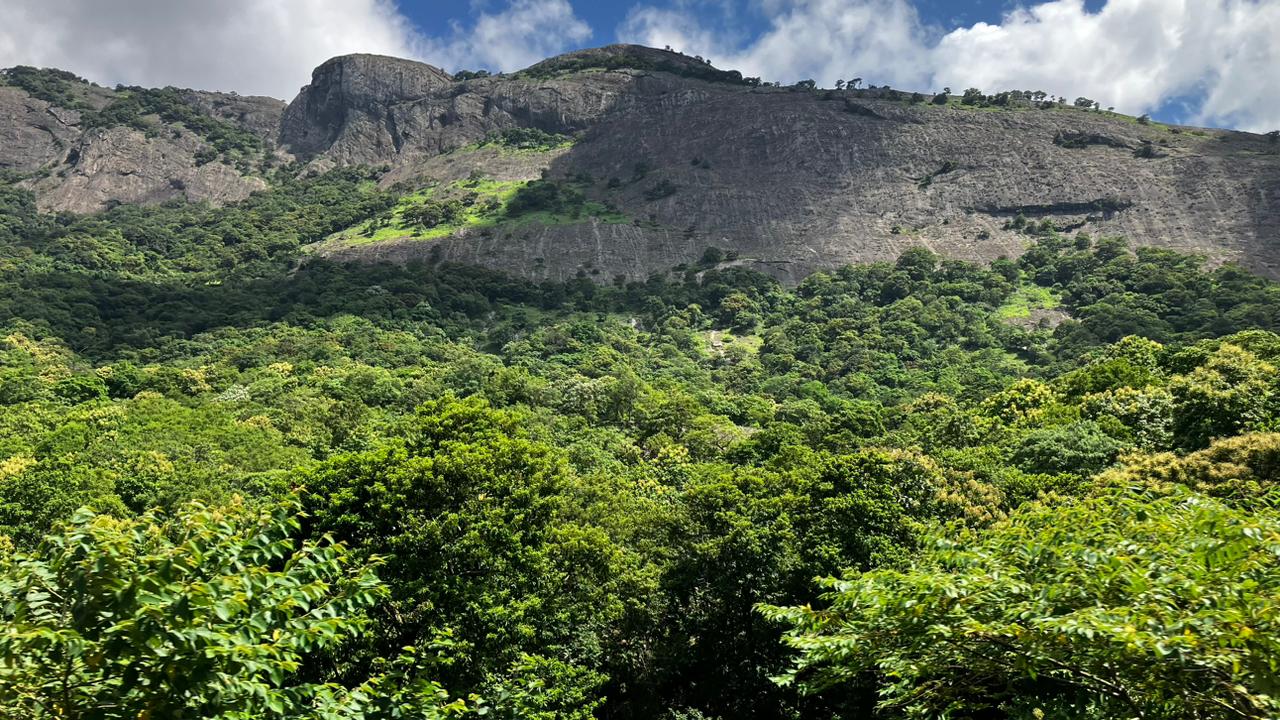
Palakkad Gap · Photographed 2023-08-20
Palghat gap western ghats 09 – Modern landscape at the Palakkad/Palghat Gap
Palghat gap western ghats 09. Modern landscape at the Palakkad/Palghat Gap. Does not independently establish a particular ancient route or settlement.

Photographed 2021-02-21 11:50:31
Bharathappuzha kuttippuram vijayanrajapuram – Present-day Bharathappuzha river landscape
Bharathappuzha kuttippuram vijayanrajapuram. Present-day Bharathappuzha river landscape; not a palaeochannel reconstruction.
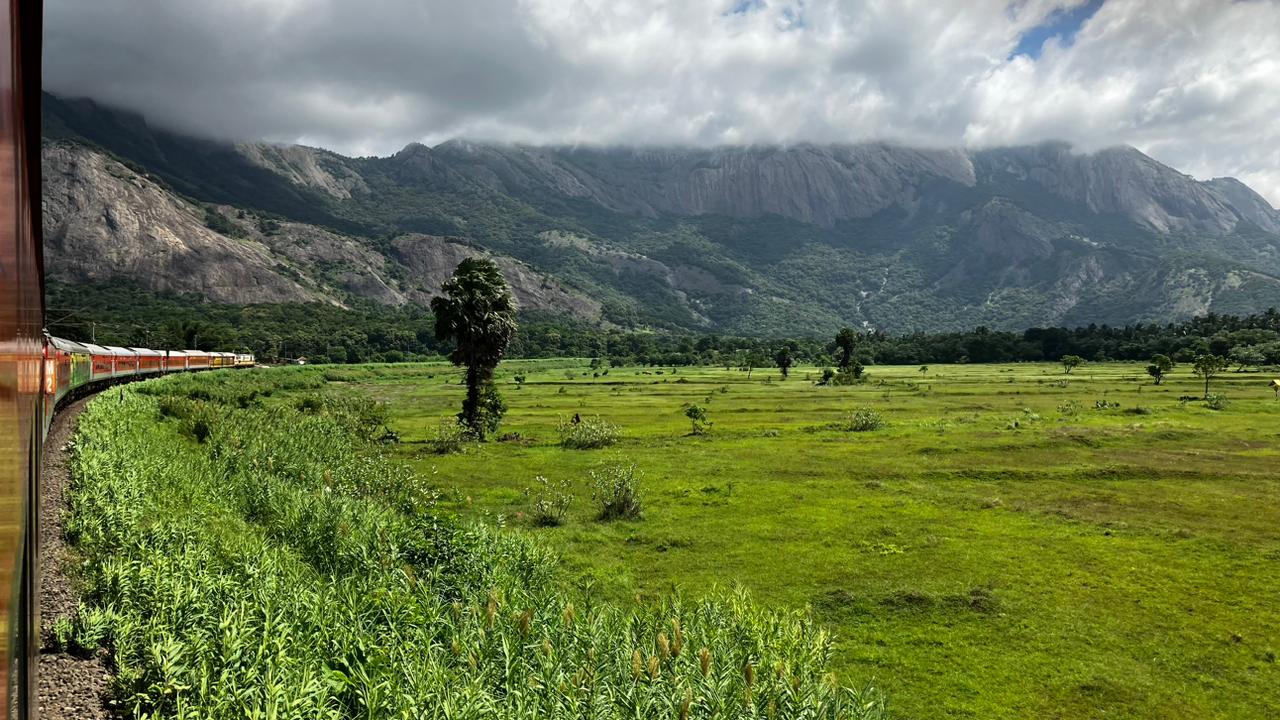
Palakkad Gap · Photographed 2023-08-20
Palghat gap western ghats 04 – Modern landscape at the Palakkad/Palghat Gap
Palghat gap western ghats 04. Modern landscape at the Palakkad/Palghat Gap. Does not independently establish a particular ancient route or settlement.
006Two views
Both views are shown at equal weight; this site does not choose between them.
Whether Kuda, Puzhi and Kutta were territorial divisions of the early Chera realm
- One view
- A territorial reading treats the three names as parts of an early Chera realm. It matches them to later Kerala regions, using royal titles, the later twelve-region list and Cottonara.
- Another view
- A cautious reading, which this study favours, sees a mix of named regions, people's names and praise titles. K. N. Ganesh's work on medieval nāṭus gives an independent reason for caution.
- What would settle it
- A critical-edition collation of every occurrence, dated commentary glosses, Casson's Greek apparatus for Cottonara and Ferenczi's 2022 dissertation.
007Where next
All related studies, connected material, books and sources11 · 11
Elsewhere on this site
Multi-Script Glossary Terms: Kuṭṭanāṭu (குட்டநாடு / കുട്ടനാട്) · Kuṭanāṭu (குடநாடு / കുടനാട്) · Pūḻināṭu (பூழிநாடு / പൂഴിനാട്) · Malaināṭu (மலைநாடு / മലനാട്)
Connected material
Photographs, drawings, books, videos and other studies linked to this study. A link helps you explore; it does not prove a historical claim.
- Bharathappuzha kuttippuram vijayanrajapuram – Present-day Bharathappuzha river landscapephotographBackground
- Palghat gap western ghats 09 – Modern landscape at the Palakkad/Palghat GapphotographBackground
- Palghat gap western ghats 04 – Modern landscape at the Palakkad/Palghat GapphotographBackground
008Sources
The study lists the sources it consulted; we have not rechecked them. A working link does not show that a source was read, and a valid identifier does not show that it supports a claim. We do not link to unofficial uploads or copies of publications. Where a study cited one, we show the published citation, or a publisher, DOI or Internet Archive link when we have one. Tracking codes are removed from links, and the sources themselves are not republished here.
Solalvallan, 'குடநாடு', searchable Tamil literary dictionary entry reproducing Akananuru 91 and 115 material.
Vaidehi Herbert, Ettuthokai – Pathitruppathu, Tamil text, English translation and lexical commentary, with several Tamil source editions identified.
Sangam literature concordance: Pūḻiyar occurrences
Sangampedia corpus concordance listing Pūḻiyar occurrences in Natrinai, Kuruntokai, Patirruppattu, Akananuru and Purananuru.
மதுரைக்காஞ்சி
Tamil Kalanjiyam web text of Maturaikkanci including line 105, pal Kuttuvar vel kove.
The Voyage around the Erythraean Sea
Anonymous, Periplus Maris Erythraei, Schoff translation (1912), digitalized by University of Washington Silk Road Seattle with references to Casson 1989.
K.N. Ganesh, Historical Geography of Natu in South India with Special Reference to Kerala, Indian Historical Review 36(1), 3-21.
K.N. Ganesh, Lived Spaces in History: A Study in Human Geography in the Context of Sangam Texts, Studies in History 25(2), 151-195.
History behind the praising words of the learned: An annotated translation of the Patiṟṟuppattu and the political geography of the early Cēra kingdom
Roland Imre Ferenczi, History behind the praising words of the learned. An annotated translation of the Patiṟṟuppattu and the political geography of the early Cēra kingdom, doctoral dissertation, 2022.
K. G. Sesha Aiyar, Cēra Kings of the Śangam Period, London: Luzac & Co., 1937.
Traditional twelve-region verse as transmitted in later Tamil grammatical commentary
Later Tamil historical web witness quoting the traditional twelve-country verse beginning தென்பாண்டி, குட்டம், குடம்... and discussion of medieval Tolkappiyam commentary.
Sangam literature concordance: kuṭṭam occurrences
Sangampedia concordance of குட்டம் and inflected forms across early Tamil texts.
Researchers and institutions whose work this study uses: K. N. Ganesh, Vaidehi Herbert
How we know The evidence, claims and dates behind this study
What this study draws on
- Searches of Tamil concordance and dictionary websites for each name form, with poem and line numbers.
- Patiṟṟuppattu poems 21 and 55 read in a Tamil and English translation website.
- Chapter 56 of the Periplus in Schoff's 1912 translation, for the pepper district Cottonara.
- Abstracts of two 2009 articles by K. N. Ganesh, on space in the Sangam texts and on nāṭu in Kerala.
Dates in this study
| What is dated | Date | How it was dated |
|---|---|---|
| Periplus commonly dated around the middle of the first century CE; the University of Washington introduction reports Casson's range of approximately CE 40-70. | 40–70 CE | Date from writing, coins or texts |
| ninth to twelfth centuries | 800–1199 CE | Period assigned by excavators or scholars |
See these dates on the timeline
The study’s claims
10 claims · 16 source passages · 53 paragraphs
Browse the study paragraph by paragraphAkananuru 91 associates Kuṭanāṭu with a literary context naming Kuṭṭuvan and a prosperous landscape, but supplies no administrative boundary description.
Supported with qualifications
No modern district identification follows from the passage.
A bounded corpus concordance locates eight Pūḻiyar occurrences across Natrinai, Kuruntokai, Patirruppattu, Akananuru and Purananuru.
Supported in this study
Occurrence count applies to the consulted concordance, not every possible textual witness.
Pūḻiyar occur in both maritime and grove/grazing literary contexts, making a single-feature ecological definition unsafe.
Supported with qualifications
Inference concerns the diversity of textual associations, not a reconstructed boundary.
The form kuṭṭam also functions as an ordinary aquatic noun in numerous early Tamil passages, so lexical resemblance to Kuttanad cannot by itself establish a territorial etymology.
Supported in this study
A later transmitted twelve-region tradition groups Kuṭṭam, Kuṭam and Pūḻi within a formal regional language-geographic list.
Supported with qualifications
Evidence is used only for later reception.
Kerala nāṭus are much more clearly documented as production and political regions under the Chera Perumals in the ninth to twelfth centuries, a later institutional configuration that should not be projected unchanged into early Tamil poetry.
Supported in this study
This establishes a chronological caution, not the absence of all earlier territorial organization.
K. G. Sesha Aiyar's Cēra Kings of the Śangam Period is a 1937 modern scholarly monograph and therefore should not be classified as an ancient primary source.
Supported in this study
The work remains historiographically important.
The consulted evidence does not support a single fixed three-province map in which Kuṭanāṭu, Pūḻināṭu and Kuṭṭanāṭu can be assigned unchanged administrative boundaries and directly mapped onto modern districts.
Supported in this study
This does not deny that the names referred to meaningful places, peoples or political spheres. Future critical-edition and epigraphic evidence could refine their geography.
Ferenczi's 2022 dissertation is directly relevant to the political geography of the Patiṟṟuppattu but its detailed conclusions were not checked directly for this study.
Supported in this study
Exact absolute composition dates for the individual early Tamil poems cited here are not securely established by the evidence read for this study.
Supported with qualifications
Relative classification as early Tamil/Sangam literature is retained without invented ruler-year precision.
Trace one claim through the study’s records
Explore the evidenceOther source lists
Numbered citation links from the study
The numbered links in the study text point here.
குடநாடு | அகராதி | tamil dictionary | சொலல்வல்லன்
Ettuthokai – Pathitruppathu | Sangam Poems Translated by Vaidehi
குடநாடு | அகராதி | tamil dictionary | சொலல்வல்லன்
மதுரைக்காஞ்சி - Patthu Pattu - பத்துப்பாட்டு - Sangam Literature's - சங்க இலக்கியங்கள் - Tamil Literature's - தமிழ் இலக்கியங்கள்
ஆரியர்க்கு முற்பட்ட தமிழ்ப்பண்பாடு/வழக்கில் உள்ள பழந்தமிழ்ப் பாக்கள் - விக்கிமூலம்
Cēra kings of the Śangam period
Lived Spaces in History - K.N. Ganesh, 2009
The Voyage around the Erythraean Sea
ஆரியர்க்கு முற்பட்ட தமிழ்ப்பண்பாடு/வழக்கில் உள்ள பழந்தமிழ்ப் பாக்கள் - விக்கிமூலம்
Cēra kings of the Śangam period
கு – முதல் சொற்கள் – சங்க இலக்கியம், கம்பராமாயாணம் கூட்டுத் தொடரடைவு | சங்கம்பீடியா
குடநாடு | அகராதி | tamil dictionary | சொலல்வல்லன்
குடநாடு | அகராதி | tamil dictionary | சொலல்வல்லன்
Ettuthokai – Pathitruppathu | Sangam Poems Translated by Vaidehi
பூ – முதல் சொற்கள்- சங்க இலக்கியம், சிலப்பதிகாரம் கூட்டுத் தொடரடைவு | சங்கம்பீடியா
பூழியர் | அகராதி | tamil dictionary | சொலல்வல்லன்
மதுரைக்காஞ்சி - Patthu Pattu - பத்துப்பாட்டு - Sangam Literature's - சங்க இலக்கியங்கள் - Tamil Literature's - தமிழ் இலக்கியங்கள்
Historical Geography of Natu in South India with Special Reference to Kerala - K.N. Ganesh, 2009
குடநாடு | அகராதி | tamil dictionary | சொலல்வல்லன்
Ettuthokai – Pathitruppathu | Sangam Poems Translated by Vaidehi
பூ – முதல் சொற்கள்- சங்க இலக்கியம், சிலப்பதிகாரம் கூட்டுத் தொடரடைவு | சங்கம்பீடியா
பூ – முதல் சொற்கள்- சங்க இலக்கியம், சிலப்பதிகாரம் கூட்டுத் தொடரடைவு | சங்கம்பீடியா
நலம் | அகராதி | tamil dictionary | சொலல்வல்லன்
குடநாடு | அகராதி | tamil dictionary | சொலல்வல்லன்
குடநாடு | அகராதி | tamil dictionary | சொலல்வல்லன்
Ettuthokai – Pathitruppathu | Sangam Poems Translated by Vaidehi
The Voyage around the Erythraean Sea
Lived Spaces in History - K.N. Ganesh, 2009
History behind the praising words of the learned. An annotated translation of the Patiṟṟuppattu and the political geography of the early Cēra kingdom
Ettuthokai – Pathitruppathu – Sangam Poems Translated by Vaidehi
Cēra kings of the Śangam period
குடநாடு | அகராதி | tamil dictionary | சொலல்வல்லன்
குடநாடு | அகராதி | tamil dictionary | சொலல்வல்லன்
About this study Status, corrections and how it was made
Status
Draft study, revision 5. No historian, archaeologist, or Tamil or Malayalam specialist has reviewed it yet.
How it was made
Compiled as an editorial synthesis from published scholarship around questions we framed. About this project & workflow
The summary, How sure lines and Two views notes on this page were prepared from this study and cross-checked against its passages. That is an editorial check, not a specialist review.
Technical details
Study code R168. The text fingerprint changes whenever the study text changes.
- The study text is shown as written. Links from its paragraphs to citations help you move around the study; they are not new claims or checked source passages.
See how this study’s records were extracted
Text fingerprint (SHA-256): R168 · fee8ccd3ba8ceb42dfce3eb3… · v5
Evidence tables and technical details are on the web page: https://layersofthesouth.org/read/ce09a25f99