Each period has the same width, so spacing is not to scale.
- Everyday lives
Betel leaf and lime appear in poems; early finds unverified
Areca use is ancient in Southeast Asia, Sanskrit medical verses pair areca with betel leaf, and early Tamil texts name areca nut, betel leaf and shell-lime together; no pre-600 South Indian archaeological or biomolecular specimen was verified.
- This page
- 4,449 words · revision 6
Draft study · Awaiting specialist review · Updated
001Dates and places

No mapped place in this study.
1000–500 BCE
Different beginnings
500–200 BCE
Marks & materials
200 BCE–300 CE
Connected worlds
300–600 CE
Change & continuity
After 600 CE
- 878 CE
- How it was dated is not stated
Each date belongs to what was dated (a sample, an object, a layer or a text), which is not always the event the study asks about.
Each period has the same width, so spacing is not to scale.
The full table of dates, with their ranges, is under How we know.
- 2 Well supported
- 1 Likely
- 1 Not known
002How sure
In brief
This study asks what is securely known about betel, areca nut and lime before 600 CE, with Kerala and Tamil Nadu in view. It treats each ingredient and evidence stream separately. At Nong Ratchawat in Thailand, dental tartar from one Bronze Age burial held an areca-related signal, and a 2026 study reports much earlier areca use in Sulawesi (abstract read). Sanskrit medical verses in Caraka pair areca with betel leaf; Suśruta also combines them, though whether cūrṇa means lime remains unresolved. In early Tamil literature, Maturaikkāñci 400–401 lists fresh areca nut (pacuṅkāy), long-vine betel leaf (nīṭu koṭi ilai) and shell-lime (kōṭu cuṭu nūṟu) sold side by side in Madurai's market, and Cilappatikāram 16.55 pairs tiraiyal (betel) with aṭaikkāy (areca nut), subject to standard textual dating and commentary caveats. By contrast, Kuṟuntokai 23 is about a diviner's song, and no pre-600 plant remain, areca cutter, lime container, or dental-calculus specimen from Kerala or Tamil Nadu was verified in a primary excavation publication.
Key researchers cited in this study: Vaidehi Herbert (Sangam Poetry Translations & Commentaries) · U. V. Swaminatha Iyer (Classical Tamil Manuscript Editions) · Full bibliography
How sure
- Well supported
People consumed areca nut thousands of years ago in Southeast Asia.
Dental-calculus chemistry at Nong Ratchawat shows it, with the authors' stated analytical qualifications.
- Well supported
Caraka's medical text pairs areca with betel leaf.
The consulted Sanskrit verse names both, though the verse's exact date is not fixed.
- Not known
Suśruta's verse includes lime as a separate ingredient.
The word cūrṇa may mean powdered areca or lime; the critical edition was not collated.
- Likely
Early Tamil texts list areca nut, betel leaf and shell-lime together, while pre-600 South Indian archaeological proof remains unverified.
Maturaikkāñci 400–401 and Cilappatikāram 16.55 name the ingredients together, subject to textual dating caveats; no dated local archaeological specimen was traced.
Why it matters
It separates a familiar custom into its parts and shows how little of it is yet documented for early Kerala and Tamil Nadu.
003Key findings
What the study concludes
- Direct biomolecular evidence demonstrates ancient areca consumption in Southeast Asia but not automatically a three-ingredient quid.
- Nong Ratchawat has a positive areca-related signal with meaningful analytical qualifications; its Piper marker was excluded.
- Caraka Sūtrasthāna 5.77 names pūga and tāmbūla leaf in an oral regimen but does not name lime in the consulted text.
- Suśruta Cikitsāsthāna 24.21 combines tāmbūla and pūga, while the meaning of cūrṇa requires critical philological review.
- No pre-600 Kerala/Tamil Nadu betel-specific cutter, lime vessel, or securely dated local botanical specimen was verified to primary-source standard in this bounded run.
In the study’s own words. How sure each point is, is shown above.
The summary above is the short read. The full study is the complete text it was drawn from, with its tables and source notes.
What the full study covers
004The study
Question, scope, and orientation
What is securely known about betel, areca and lime use before 600 CE?
The study centres on Kerala and Tamil Nadu, but it draws on evidence from connected regions because most early evidence lies elsewhere. This study treats “betel chewing” as a proposition to disaggregate rather than as a single timeless custom. Four evidentiary steps must be kept separate: presence or use of areca (Areca catechu or another securely identified Areca); presence or use of betel leaf (Piper betle or a securely identified ancient equivalent); presence or use of slaked lime; and evidence that those ingredients were combined in one masticatory preparation, still further distinct from evidence for hospitality, exchange, rank, court etiquette, or ritual. Modern botany accepts Areca catechu L. as a distinct taxon and Kew places its native range in the Philippines, but a modern range statement does not itself date prehistoric dispersal or identify an archaeological specimen. ↗1
The result separates three evidentiary tiers that older summaries blurred together. First, areca consumption is securely ancient in parts of Southeast Asia, and recent biomolecular work has strengthened that conclusion. Second, while the single inherited Sangam lead (Kuruntokai 23) is unrelated, other early Tamil texts provide likely pre-600 CE textual evidence for the three ingredients and betel–areca offering: Maturaikkāñci lines 400–401 list sellers of fresh nuts (pacuṅkāy, glossed in medieval commentary as areca), long-vine betel leaves (nīṭu koṭi ilai), and shell-lime (kōṭu cuṭu nūṟu) side by side in Madurai's market, and Cilappatikāram 16.55 depicts Kaṇṇaki giving Kōvalaṉ tender betel-leaf rolls with areca (am meṉ tiraiyaloṭu aṭaikkāy) after his meal – subject to commentarial and textual-dating caveats. Third, South Indian archaeological and biomolecular evidence remains unverified, and Kerala specifically remains unconfirmed in both local archaeology and the early Tamil witnesses read. The strongest directly read archaeological study, from Bronze Age Nong Ratchawat in Thailand, detected an arecoline-related molecular signal in dental calculus from one sampled burial, but its Piper betle-associated hydroxychavicol target was excluded from interpretation and the relevant molecular fragmentation did not exactly match the modern arecoline standard. The study therefore supports ancient areca consumption much more directly than it supports a complete betel-leaf–areca–lime quid. ↗2
Three textual strands frame the early textual picture. First, the proposed lead Kuruntokai 23 must be set aside: the consulted Tamil text and English translation concern a diviner woman and a repeated song of the hero’s mountain, not betel leaf, areca, lime, chewing, or hospitality. ↗3 Second, standard early Tamil poetry outside Kuruntokai 23 does name all three ingredients and post-meal betel presentation: Maturaikkāñci 400–401 describes sellers of fresh nuts (pacuṅkāy, glossed by Nacciṉārkkiṉiyar as areca), long-vine betel leaves (nīṭu koṭi ilai), and burnt-shell lime (kōṭu cuṭu nūṟu) side by side in Madurai's market, and Cilappatikāram 16.55 (am meṉ tiraiyaloṭu aṭaikkāy) describes offering betel-leaf rolls with areca after a meal. Third, in the Sanskrit medical tradition, Caraka Sūtrasthāna 5.77 places pūga and tāmbūla leaf in an oral-care list without naming lime, ↗4 while Suśruta Cikitsāsthāna 24.21 combines tāmbūla leaf with aromatics and sacūrṇapūgaiḥ, where whether cūrṇa means powdered areca or lime remains philologically unresolved without full critical-edition collation. ↗5
Chronologically, the study uses four lanes. Earlier background includes Pleistocene/Holocene and Bronze Age evidence from Island and Mainland Southeast Asia that proves antiquity of areca use but lies wholly or partly before 1000 BCE. Core-period evidence includes textual traditions and any archaeological observations that can defensibly fall between 1000 BCE and 600 CE, with composition, copying, deposition and publication dates kept distinct. Later reception/comparison includes inscriptions, travelers’ descriptions and museum objects after 600 CE, useful for understanding later practices but not back-projected as proof. The resulting chronology is therefore mixed, with the evidentiary center of gravity outside Kerala and Tamil Nadu and with the local pre-600 archaeological record still unresolved.
Archaeobotanical and biomolecular evidence
The most important methodological lesson is that an ancient “betel” claim must identify what was actually measured. Plant macroremains need secure context, diagnostic identification and preferably direct dating; dental coloration is not species-specific; chemical biomarkers require standards, retention-time and fragmentation checks; and a compound associated with one ingredient cannot automatically establish the other ingredients. This is not merely theoretical. Fairbairn and Swadling’s re-dating of plant remains from Dongan, Papua New Guinea, used direct AMS dating and preservation assessment and reported that the work confirmed earlier doubts about the antiquity assigned to betelnut at the site; their abstract specifically identifies a proposed sago fragment as modern contamination. The case shows why a context date cannot simply be transferred to a plant specimen. ↗6
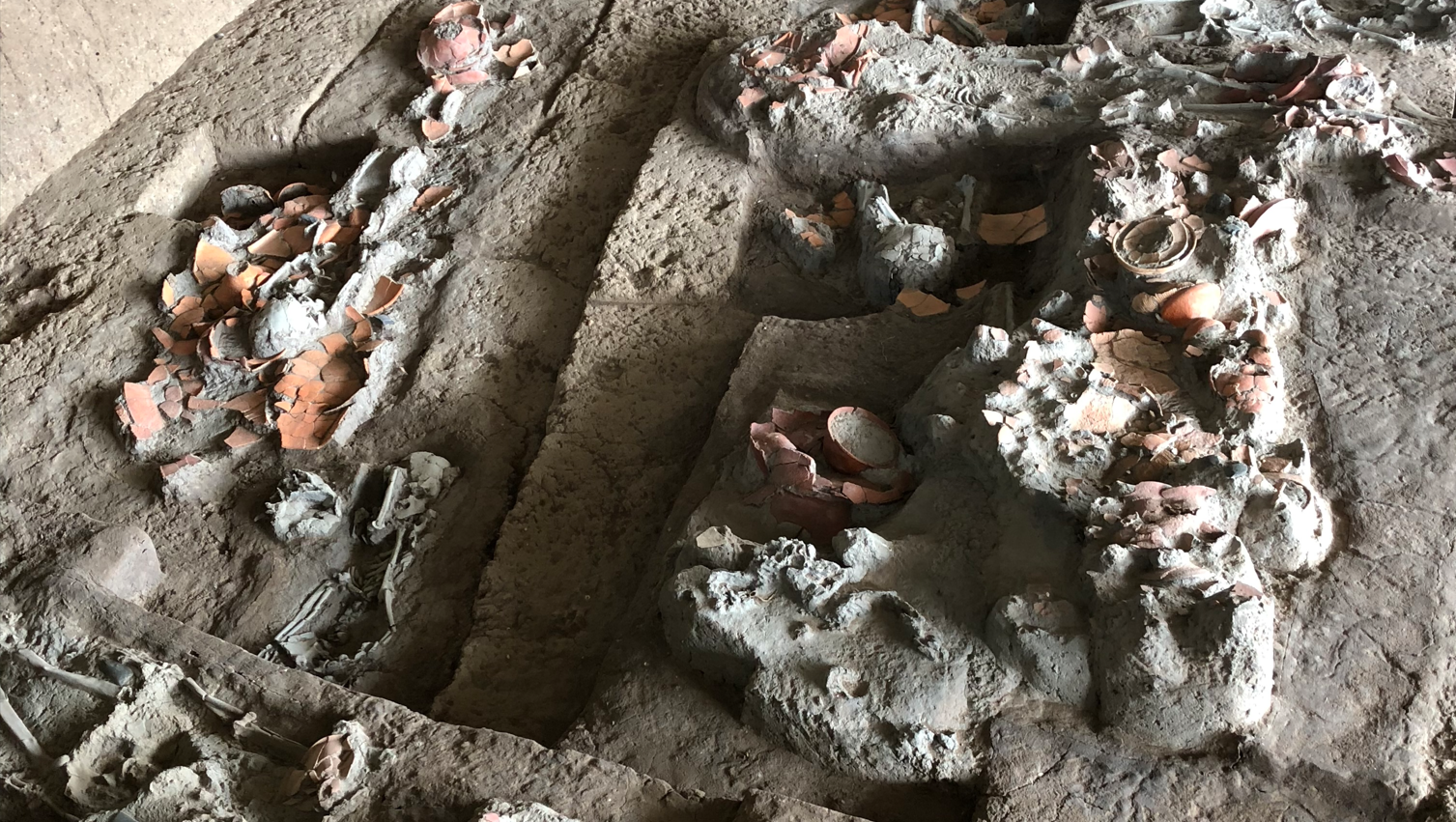
At Nong Ratchawat, Thailand, Moonkham and colleagues analyzed 36 archaeological dental-calculus samples from six individuals. Three samples from Burial 11 produced an arecoline-related signal; the other sampled burials were negative. The burial is reported through two calibrated-age expressions in the publication – “4,080–3,850 cal BP” and “4,410–3,070 cal BP” – which are preserved here as the authors reported them rather than silently collapsed into a midpoint or converted into a single BCE date. The authors’ table identifies Burial 11 as probably female, about 25 years old, and the study interprets the signal as evidence of areca/betel-nut use around four millennia ago. Yet the analytical qualifications matter: the archaeological signal had the expected molecular weight/formula but its MSn fragmentation differed from the modern arecoline standard, and a candidate arecaidine signal did not match the standard retention time. ↗2
The study also tested a modern experimentally prepared betel quid, but that does not establish that the ancient individual used all the same ingredients. Hydroxychavicol, the compound the authors associated with Piper betle, could not be characterized adequately in the archaeological workflow and was excluded. Neither black-stained teeth nor macroscopic betel fragments were present, and only six of the site’s 156 burials were sampled. The burial contained some rare grave goods, but the authors explicitly state that there was no clear evidence that the person held elevated social status or that the consumption was ritually significant. Accordingly, Burial 11 supports the proposition “an areca-related psychoactive plant product was consumed” more strongly than “a three-part betel quid was chewed,” and it supplies no secure evidence for hospitality etiquette. ↗2
A very recent Science Advances study by Adam Brumm and colleagues pushes direct evidence for habitual areca use much deeper into the past in Sulawesi. The publication reports preagricultural individuals with dental and biomolecular evidence interpreted as habitual use of whole areca nut, including an individual broadly dated to 25,000–16,000 years ago. The publisher's full text and supplementary material were not consulted here, so this study records the result at abstract level, not as fully checked raw data. Its conceptual importance remains clear: habitual areca use can exist without evidence for Piper betle or lime, so “ancient areca use” and “ancient betel quid” must not be treated as synonyms. ↗7
For South India, a widely repeated synthesis claim places betel/areca use in the region by roughly 3,500 BP, but the accessible version of Thomas Zumbroich’s synthesis itself emphasizes how difficult early archaeobotanical claims are and challenges some reported early dates. In this present study, searches for the underlying Kerala or Tamil Nadu excavation publication, specimen record, direct date, or laboratory determination did not yield a primary source that could be read and tied to a specific pre-600 CE areca or Piper betle remain. Zumbroich's synthesis is treated here as a bibliographic guide to the secondary literature, not as a substitute for primary excavation reports.
That negative finding is significant but must not be inflated. It means “no securely dated pre-600 Kerala/Tamil Nadu specimen was verified to a primary publication in this study,” not “no such specimen exists.” What is needed is precise: the excavation report or specialist archaeobotanical appendix that gives the site, context, specimen identification method, direct or associated date, laboratory code if radiocarbon dated, and repository/catalogue identity. Until such a chain is recovered, a generic statement such as “areca reached South India by 1500 BCE” remains a synthesis-level proposition rather than a locally demonstrated fact here. Modern cultivation in Kerala or Tamil Nadu likewise cannot be used as evidence of ancient nativity or cultivation. “Crops at six sites: millets and pulses persist as rice spreads” likewise found no secure areca identification in the publications it read for six excavated sites in Kerala and Tamil Nadu.
Textual passage verification
The first proposed lead, Kuruntokai 23, fails direct passage verification. Vaidehi Herbert’s online presentation supplies the Tamil poem and an English translation and names the editions used, including U. V. Swaminatha Iyer and P. V. Somasundaranar. The poem addresses a kattuvicci, a diviner/fortune-telling woman, and asks her to sing again the song about the beloved’s mountain. It contains no term for betel leaf, areca, lime, a quid, chewing, or hospitality. Therefore this reference cannot support the topic unless a different poem number or edition was intended. It should be treated as misattributed or unresolved, not rescued by importing a betel passage from elsewhere in Sangam literature. ↗3
The second lead, the Caraka Saṃhitā, is real but narrower than a “betel-chewing custom” citation suggests. In the electronic Sanskrit text read, Sūtrasthāna 5.76 introduces substances to be held in the mouth by a person seeking clarity, taste and fragrance; 5.77 then lists aromatic materials including pūga and “the auspicious leaf of tāmbūla,” alongside clove and other aromatics. The relevant sequence includes ...pūgānāṃ... patraṃ tāmbūlasya śubhaṃ.... On conventional lexical identification, pūga is areca and tāmbūla is betel leaf. But the verse as read does not name slaked lime, and its list grammar does not by itself prove that every item was combined into one wrapped quid. It is therefore good evidence for the textual association of areca and betel leaf in an oral regimen, but not sufficient evidence for the complete triad or for a hospitality ritual. ↗4
'Paan' or Betel or Piper betle leaf – Modern betel-leaf identification
Photographed 2024-04-17
Dating that Caraka passage requires a second layer of caution. The age of a textual tradition is not the date of every verse in a modern electronic edition. Composition, redaction, manuscript copying and modern edition are separate events. This study did not inspect a full critical apparatus assigning Sūtrasthāna 5.77 to a securely dated textual stratum. The verse can therefore be used as pre-modern textual evidence with potentially core-period relevance, but an exact “first century CE” or similarly precise date for this line would exceed the evidence assembled here. The plant identifications likewise remain philological identifications, not archaeobotanical determinations.
Suśruta Cikitsāsthāna 24.21 is stronger for combination but more complicated for lime. The consulted Sanskrit reads karpūrajātīkaṅkolalavaṅgakaṭukāhvayaiḥ | sacūrṇapūgaiḥ sahitaṃ patraṃ tāmbūlajaṃ śubham ||. It plainly places a tāmbūla leaf together with aromatics and pūga. The compound sacūrṇapūgaiḥ, however, is exactly where overconfident translations can change the historical conclusion. A modern explanatory reading can understand it in relation to powdered areca, while older translation traditions may separate cūrṇa as a powder/lime element. The consulted web witness did not include enough critical apparatus and commentarial history to adjudicate that choice. The secure statement is therefore that the verse combines tāmbūla and pūga; the independent presence of slaked lime remains philologically unresolved in this study. ↗9
The manuscript history reinforces that caution. The Suśruta Project reports that many printed editions depend on late manuscripts and highlights Kathmandu manuscript KL 699, reliably dated to 878 CE, as an early witness preserving an earlier stage of the text; the project is producing a diplomatic transcription and evolving critical edition. The date 878 CE is the date of that manuscript witness, not the date of composition and not proof that Cikitsāsthāna 24.21 was first written then. It does, however, make it methodologically unsafe to treat a convenient modern verse display as a transparent window onto a fixed first-millennium-BCE text. A reliable claim about lime in Suśruta should collate the critical edition, KL 699 reading, significant variants and at least the principal translation/commentarial traditions. ↗10 “Ayurvedic texts: author, text and manuscript have different dates” examines the authors, text layers and manuscripts of the Caraka and Suśruta works.
Later literary and historical compilations show that betel became deeply embedded in post-600 social practice, but those sources belong in a later reception. Penzer’s historical appendix, for example, summarizes medical and traveler traditions in which betel preparations are taken after meals and later accounts describe offering betel in visits and courts. Such material is useful for demonstrating what “betel etiquette” can look like in securely later settings; it cannot be projected backwards into the Sangam period simply because the later custom was widespread. ↗11
Early Tamil texts
Stopping at the mistaken Kuruntokai 23 citation would give a false picture of early Tamil literature. Standard early Tamil poetry – conventionally dated within the early centuries CE to fifth century CE, inside this site's core period – contains explicit textual witnesses both to the three quid ingredients sold together in an urban market and to domestic after-meal betel presentation, alongside frequent landscape references to areca palms (kamuku) across the Pattuppāṭṭu. Thomas J. Zumbroich's 2008 synthesis (eJournal of Indian Medicine 1: 87–140) is a standard secondary overview of South and Southeast Asian betel history whose full journal text was not consulted directly for this study.
First, in Maturaikkāñci lines 400–401, the poet's description of Madurai's market places sellers of fresh nuts, vine leaves, and shell-lime in consecutive lines:
…இன்னீர்ப் பசுங்காய் / நீடுகொடி யிலையினர் கோடுசுடு நூற்றினர்
(… iṉṉīrp pacuṅkāy / nīṭu koṭi ilaiyiṉar kōṭu cuṭu nūṟṟiṉar)
Here pacuṅkāy denotes fresh green nuts, nīṭu koṭi ilaiyiṉar sellers of leaves from the long vine (betel), and kōṭu cuṭu nūṟṟiṉar sellers of lime (nūṟu) produced by burning shells (kōṭu). Two explicit caveats apply: first, identifying pacuṅkāy specifically as tender areca nut (pākku) rests on the medieval commentary of Nacciṉārkkiṉiyar (preserved in U. V. Swaminatha Iyer's Pattuppāṭṭu edition and reflected in J. V. Chelliah's 1946 translation), rather than an explicit occurrence of the word pākku inside lines 400–401; second, Maturaikkāñci's conventional placement in the early centuries CE remains a scholarly consensus rather than a direct archaeological or radiocarbon date for the market scene.
Second, Cilappatikāram 16.55 (Kolaikkaḷak kātai) depicts Kaṇṇaki serving Kōvalaṉ after his meal in Madurai:
உண்டினி திருந்த உயர்பே ராளற்கு / அம்மென் திரையலோ டடைக்காய் ஈத்த
(am meṉ tiraiyaloṭu aṭaikkāy ītta)
She offers him tender folded betel leaves (tiraiyal) together with areca nut (aṭaikkāy). Most scholars date the Cilappatikāram around the fifth century CE, though its composition and redaction chronology remain actively debated; the episode also concerns Tamil Nadu (Madurai) rather than Kerala.
Taken together, Maturaikkāñci 400–401 and Cilappatikāram 16.55 show that it would be wrong to state that betel, areca, and shell-lime or after-meal betel presentation appear only after 600 CE in South Indian texts. Rather, early Tamil literary evidence is likely for the availability and domestic offering of these ingredients in early-historic Tamil Nadu, while archaeological/biomolecular confirmation across South India and specific evidence from Kerala remain unverified in the primary excavation literature read here.
Objects, lime containers, cutters, and social etiquette
Terracotta and bronze lime containers and areca-nut shears have been proposed as early betel equipment. Those identifications require object-level proof, not typological resemblance. A container can only be called a betel-lime container securely when function is supported by a relevant inscription/catalogue history, residue or contents, a sealed archaeological association, diagnostic use-wear, or a sufficiently constrained comparative assemblage. Likewise, a small metal cutter is not an “areca cutter” merely because later areca cutters share a scissor-like or lever form. Raw material, manufacture, repair, recycling and final use are separate questions.
The Metropolitan Museum of Art provides a useful later comparative object: a Javanese (?) iron and silver (?) “Betel Nut Cutter,” accession 1999.47.24, dated to the nineteenth–early twentieth century. Its museum identification is clear enough for studying the mature object class, but it is roughly thirteen centuries or more later than the 600 CE cutoff and therefore cannot document pre-600 South Indian equipment. The museum page also does not, by itself, license the inference that archaeologically recovered shears of similar outline performed the same task. ↗12
In this study, no pre-600 CE Kerala or Tamil Nadu object was verified through an excavation report or museum catalogue with a secure context and a defensible functional attribution as an areca cutter. Likewise, no local pre-600 “lime box” was verified with residue, contents, inscription or an assemblage that specifically ties it to masticatory lime. This is a targeted search result, not an argument from silence. What is needed is object catalogue numbers, find contexts, measured descriptions, material analyses, use-wear/residue studies, and the excavation publication in which the association was first made. Until those are recovered, claims about early betel equipment should be held back, not illustrated with later objects as though they were ancient precedents.
The same evidentiary discipline applies to lime itself. Calcium-rich residues have many possible technical and domestic sources. A finding of lime in a vessel would not necessarily prove chewing unless context or chemistry connected the residue to an oral quid; conversely, areca biomarkers in teeth would not prove lime without an independent lime indicator. The Nong Ratchawat experiment used a modern quid recipe as a comparative analytical control, but that recipe cannot be transferred to Burial 11 as archaeological observation. ↗2
Outside the Cilappatikāram 16.55 domestic after-meal scene (tiraiyaloṭu aṭaikkāy), formal court or host–guest hospitality etiquette remains harder to verify archaeologically. Neither Nong Ratchawat’s Burial 11 nor the verified Caraka passage demonstrates host–guest etiquette: the Thai study expressly avoids assigning clear elevated status or ritual meaning to the burial, Caraka’s passage is an oral-regimen list, and Kuruntokai 23 is unrelated. Later South Asian epigraphic compilations contain promising references to areca or tāmbūla – including entries assigned to the eighth century and later – but the underlying inscription editions were not read for this study and they postdate the 600 CE cutoff in any event. They are therefore leads for tracing the later institutionalization of betel gifts and dues, not proof of earlier Sangam custom. ↗13
A further frequently repeated archaeological example is Duyong Cave in the Philippines, where secondary literature describes red-stained teeth and a shell associated with lime in a burial often quoted at about 4630 ± 250 BP. The primary excavation publication was not recovered and consulted here, so that example is deliberately not treated as secure evidence. Its original report was not checked. This restraint matters because the Dongan re-dating case demonstrates that famous early plant-use claims can change once specimens are directly dated and taphonomic problems are addressed. ↗6
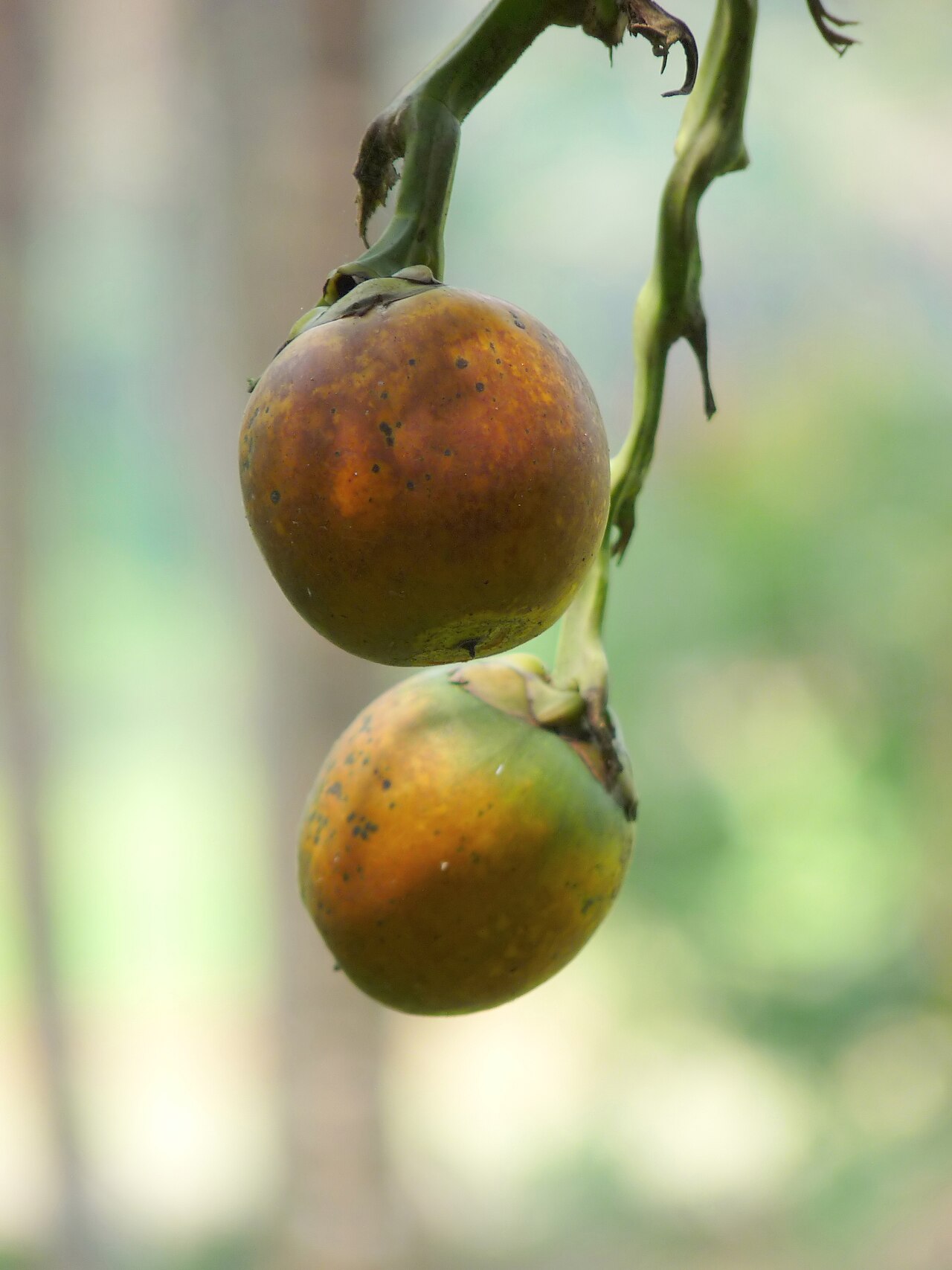
Areca catechu nuts at Kadavoor – Modern areca fruit identification
Photographed 9 October 2009
Synthesis, disagreements, conclusions, and limits
The evidence supports a layered conclusion rather than a single origin date. First, areca use is genuinely ancient in Southeast Asia, where direct biomolecular and dental evidence makes whole-nut use far older than ethnographic analogy alone. Second, proof of areca use is not proof of Piper betle, and proof of those two ingredients is not automatically proof of slaked lime. Third, early Tamil literature (Maturaikkāñci 400–401 and Cilappatikāram 16.55) likely attests betel leaf, nuts glossed as areca, and burnt-shell lime sold side by side in Madurai and after-meal betel-areca offering, while Sanskrit medical texts associate pūga and tāmbūla with philological caveats on cūrṇa in Suśruta. Fourth, primary archaeological and biomolecular evidence from Kerala and Tamil Nadu – and any early evidence specific to Kerala – remains unverified here. ↗14
The strongest disagreement concerns what counts as the “betel quid.” One usage treats any ancient areca consumption as “betel chewing,” largely because English often calls areca seed “betel nut.” That terminology obscures the evidentiary distinction. The stricter and preferable formulation reserves “betel quid” for a preparation in which Piper betle leaf is actually evidenced, and reserves a “betel–areca–lime quid” for cases where all three components are demonstrated or textually specified. The Nong Ratchawat study itself illustrates why this matters: arecoline-related molecules were detected, while the Piper-associated target was excluded from archaeological interpretation. ↗2
The second disagreement is philological rather than archaeological. Caraka is straightforward for pūga plus tāmbūla leaf but not for lime. Suśruta is more suggestive because cūrṇa appears in the same compound as pūga, yet the semantic/syntactic question is consequential enough that a dictionary gloss alone should not decide it. What would discriminate between readings is a critical-edition collation of the verse, the 878 CE Kathmandu witness and other early manuscripts, followed by examination of premodern commentaries and the translation history. The Suśruta Project supplies the kind of textual infrastructure needed, but that verse-level collation was not completed here. ↗10
The third disagreement concerns early South Indian chronology. Synthesis literature has repeated an arrival or use date around 3,500 BP, sometimes tied to larger models of plant dispersal and Dravidian vocabulary. Yet this study did not recover the specimen-level archaeological chain needed to audit that date in Kerala or Tamil Nadu. The claim should therefore stay qualified until the named site, specimen, context and dating method are recovered. Linguistic reconstruction can independently indicate that vocabulary was old; it cannot establish the depositional date of a botanical remain, nor can a botanical remain by itself establish a hospitality custom.
Supported conclusions
-
Areca consumption before 600 CE is secure in connected Asian regions, and some evidence is far earlier than 1000 BCE. Nong Ratchawat gives strong but analytically qualified Bronze Age biomolecular evidence; recent Sulawesi work reports much earlier habitual whole-nut use, though only the abstract of the 2026 paper could be read. ↗15
-
A complete areca–betel-leaf–lime triad is not established by the strongest directly read archaeological case. At Nong Ratchawat the areca-related signal was positive, while the Piper betle marker was not usable and ancient lime was not independently demonstrated. ↗2
-
Kuruntokai 23 should be removed as supporting evidence for betel. The checked passage is about a diviner’s song. ↗3
-
Caraka Sūtrasthāna 5.77 supports textual association of conventionally identified areca and betel leaf in oral care, not a demonstrated three-ingredient quid or hospitality scene. ↗4
-
Suśruta Cikitsāsthāna 24.21 supports combination of tāmbūla and pūga, while lime remains unresolved at the level of this inspection because sacūrṇapūgaiḥ requires critical philological adjudication. ↗5
-
No pre-600 Kerala/Tamil Nadu areca cutter, betel-specific lime container, or securely dated local botanical specimen was verified to a primary publication in this targeted search. This describes the current state of research, not a claim that such evidence does not exist.
-
Early Tamil literary texts (Maturaikkāñci 400–401, with Nacciṉārkkiṉiyar's pacuṅkāy = areca gloss, and Cilappatikāram 16.55, subject to dating debates) make the sale of nut, betel leaf, and shell-lime and after-meal betel offering likely in early-historic Tamil Nadu, while later courtly hospitality customs remain post-600 reception. ↗16
In short, areca use is ancient in Southeast Asia, and early Tamil poems (Maturaikkāñci 400–401 and Cilappatikāram 16.55) likely name betel leaf, areca nut, and shell-lime in an early Tamil city and domestic scene; however, archaeological and biomolecular confirmation from South India and any pre-600 CE evidence specific to Kerala remain unverified in the primary excavation literature read.
Method, further research, and bibliography
This study used targeted web searches, direct reading of web texts where available, exact passage checking for the proposed literary leads, and backward and forward source tracing. It did not bypass paywalls or claim access to inaccessible supplements. The 2026 Science Advances paper was available only at abstract level; Zumbroich’s synthesis was not checked in the original journal issue; the Suśruta verse was checked in an online Sanskrit witness but not fully collated against the evolving critical edition; and no primary South Indian excavation report was recovered for the repeated ca. 3,500 BP claim. These access limits are stated rather than converted into false certainty. ↗17
The highest-priority sources still to be found are: the full Brumm et al. 2026 Science Advances article and supplements, especially sample IDs, molecular methods, dates and raw/derived biomolecular results; the original excavation or specialist publication behind any claimed pre-600 Areca catechu or Piper betle specimen from Kerala, Tamil Nadu or Sri Lanka, including laboratory codes and direct dates; the original Duyong Cave excavation report and dating documentation; verse-level collation of Suśruta Cikitsāsthāna 24.21 in the critical-edition project and Kathmandu KL 699, with commentary on cūrṇa; the original epigraphic editions behind later South Indian adake/adakeya/tāmbūla references; and any museum or excavation catalogue that claims a pre-600 South Indian areca cutter or betel-lime container, with accession/findspot, context and functional basis.
Bibliography and access notes
Moonkham, Piyawit, Shannon Tushingham, Mario Zimmermann, Korey J. Brownstein, Charmsirin Devanwaropakorn, Suphamas Duangsakul, and David R. Gang. 2025. “Earliest direct evidence of bronze age betel nut use: biomolecular analysis of dental calculus from Nong Ratchawat, Thailand.” Frontiers in Environmental Archaeology 4. DOI 10.3389/fearc.2025.1622935. Full HTML read. URL: https://www.frontiersin.org/journals/environmental-archaeology/articles/10.3389/fearc.2025.1622935/full ↗2
Brumm, Adam, et al. 2026. “Betel nut sucking is the earliest recorded evidence for the habitual use of a neuroactive plant drug.” Science Advances. DOI 10.1126/sciadv.aei1901. Abstract-level access only; full paper and supplement not read. URL: https://doi.org/10.1126/sciadv.aei1901 ↗19
Fairbairn, Andrew, and Pamela Swadling. 2005. “Re-dating mid-holocene betelnut (Areca catechu L.) and other plant use at Dongan, Papua New Guinea.” Radiocarbon 47(3): 377–382. DOI 10.1017/S0033822200035153. Repository abstract read. URL: https://openresearch-repository.anu.edu.au/items/0a2bb453-3d8e-4416-b5c2-461abe91445f ↗6
Zumbroich, Thomas J. 2008. “The origin and diffusion of betel chewing: a synthesis of evidence from South Asia, Southeast Asia and beyond.” eJournal of Indian Medicine 1: 87–140. Secondary synthesis; full journal article was not consulted directly for this study before quotation-level use.
Herbert, Vaidehi. “Ettuthokai – Kurunthokai 1–200.” Online Tamil text and English translation; page identifies U. V. Swaminatha Iyer and P. V. Somasundaranar editions used. Kuruntokai 23 read. URL: https://sangamtranslationsbyvaidehi.com/ettuthokai-kurunthokai-1-200/ ↗3
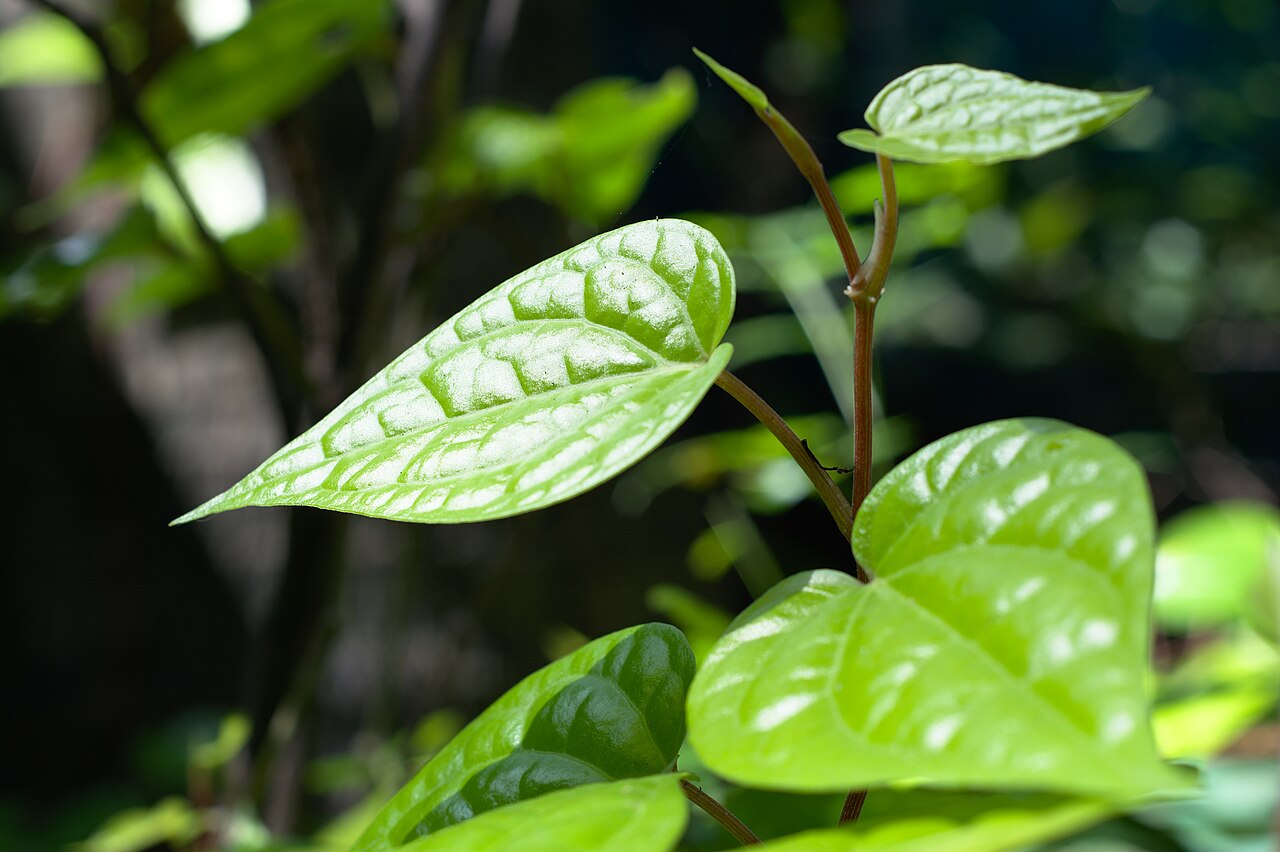
Piper betle plant leaves – Modern betel-leaf identification
Photographed 2015-12-11
Maturaikkāñci (Māṅkuṭi Marutaṉār), lines 400–401, in U. V. Swaminatha Iyer's Pattuppāṭṭu edition with Nacciṉārkkiṉiyar's commentary (and J. V. Chelliah, Pattupattu: Ten Tamil Idylls, 1946). Read for the Madurai market listing of pacuṅkāy, nīṭu koṭi ilai, and kōṭu cuṭu nūṟu.
Cilappatikāram (Iḷaṅkōvaṭikaḷ, attributed), Canto 16 (Kolaikkaḷak kātai), line 55, Project Madurai electronic text: https://www.projectmadurai.org/pm_etexts/utf8/pmuni0111_01.html. Read for am meṉ tiraiyaloṭu aṭaikkāy ītta.
Carakasaṃhitā, Sūtrasthāna 5.76–77. Electronic Sanskrit witness at Vedic Sāmhitā/SARIT interface; relevant verse read. URL: https://vedicsamiti.in/wp-content/uploads/2021/10/Caraka-Samhita-SARIT.html ↗4
Suśrutasaṃhitā, Cikitsāsthāna 24.21. Sanskrit web witness at siva.sh; verse read. URL: https://www.siva.sh/sushruta-samhita/chikitsa-sthana/24/21 ↗9
The Suśruta Project 1.0 (2020–2024). Project documentation on manuscript history, Kathmandu KL 699 (dated 878 CE), diplomatic transcription and critical-edition work. URL: https://sushrutaproject1.github.io/ ↗10
The Metropolitan Museum of Art. “Betel Nut Cutter,” accession 1999.47.24, Javanese (?), nineteenth–early twentieth century. Later comparative object only. URL: https://www.metmuseum.org/art/collection/search/317962 ↗12
Royal Botanic Gardens, Kew, Plants of the World Online. “Areca catechu L.” Accepted-name and modern native-range reference. URL: https://powo.science.kew.org/taxon/urn:lsid:ipni.org:names:664107-1/general-information ↗1
Penzer, N. M., historical appendix “Betel-Chewing in India prior to A.D. 1800,” digitized at Wisdomlib. Later comparative synthesis; underlying early sources should be checked individually before load-bearing use. URL: https://www.wisdomlib.org/hinduism/book/kathasaritsagara-the-ocean-of-story/d/doc143213.html ↗11
“References to Tambula in Indian Inscriptions,” digitized secondary compilation at Wisdomlib. Used only as a lead to later South Indian epigraphy; underlying inscription editions were not read. URL: https://www.wisdomlib.org/history/book/studies-in-indian-cultural-history/d/doc1905030.html ↗21
005Photographs
Photographs of the places and objects this study discusses. Each item carries its creator’s credit, licence and documented source. See all 412 photographs and source images ↗
Sensitivity notice: This photograph shows archaeological human remains. It is hidden by default and excluded from share previews.
Show excavation photograph (contains archaeological human remains)
Nong Ratchawat
Excavated Bronze Age burials and associated pottery at Nong Ratchawat, Thailand
Excavated Bronze Age burials and associated pottery at Nong Ratchawat, Thailand. Photograph by Piyawit Moonkham, published in Moonkham et al. (2025).
The photograph shows archaeological human remains.

Photographed 2024-04-17
'Paan' or Betel or Piper betle leaf – Modern betel-leaf identification
'Paan' or Betel or Piper betle leaf. Modern betel-leaf identification; does not date betel-chewing practice.
Photographed 9 October 2009
Areca catechu nuts at Kadavoor – Modern areca fruit identification
Areca catechu nuts at Kadavoor. Modern areca fruit identification; no ancient use inferred from photograph alone.
Photographed 2015-12-11 11:57:50
Piper betle plant leaves – Modern betel-leaf identification
Piper betle plant leaves. Modern betel-leaf identification; does not date betel-chewing practice.

Nong Ratchawat
Nong Ratchawat Figure 4: chromatograms and mass spectra of the Burial 11 dental-calculus sample
006Two views
Both views are shown at equal weight; this site does not choose between them.
Whether cūrṇa in Suśruta's betel verse means lime
- One view
- Older translation traditions may separate cūrṇa as a powder or lime ingredient alongside areca and betel leaf.
- Another view
- A modern explanatory reading understands it as powdered areca, so lime would not be a separate ingredient.
- What would settle it
- Collation of the critical edition, the 878 CE Kathmandu manuscript KL 699 and other early manuscripts, with the premodern commentaries.
Whether areca reached South India by about 3,500 years ago
- One view
- Synthesis literature repeats an arrival or use date of about 3,500 BP for South India, sometimes linked to plant-dispersal and vocabulary models.
- Another view
- This study could not trace that date to any excavation report, specimen or direct date in Kerala or Tamil Nadu.
- What would settle it
- The named site, specimen, context and dating method behind the 3,500 BP claim.
007Where next
All related studies, connected material, books and sources10 · 12
Elsewhere on this site
Multi-Script Glossary Terms: veṟṟilai & pākku (Betel & Areca) (வெற்றிலை பாக்கு / വെറ്റിലയും അടയ്ക്കയും)
Connected material
Photographs, drawings, books, videos and other studies linked to this study. A link helps you explore; it does not prove a historical claim.
- Nong Ratchawat Figure 4: chromatograms and mass spectra of the Burial 11 dental-calculus sampleanalytical chartShows the subject
- Excavated Bronze Age burials and associated pottery at Nong Ratchawat, Thailandexcavation photographShows the subject
- 'Paan' or Betel or Piper betle leaf – Modern betel-leaf identificationphotographBackground
- Piper betle plant leaves – Modern betel-leaf identificationphotographBackground
- Areca catechu nuts at Kadavoor – Modern areca fruit identificationphotographBackground
008Sources
The study lists the sources it consulted; we have not rechecked them. A working link does not show that a source was read, and a valid identifier does not show that it supports a claim. We do not link to unofficial uploads or copies of publications. Where a study cited one, we show the published citation, or a publisher, DOI or Internet Archive link when we have one. Tracking codes are removed from links, and the sources themselves are not republished here.
Piyawit Moonkham et al., Earliest direct evidence of bronze age betel nut use: biomolecular analysis of dental calculus from Nong Ratchawat, Thailand, Frontiers in Environmental Archaeology 4 (2025), DOI 10.3389/fearc.2025.1622935.
Adam Brumm et al., Betel nut sucking is the earliest recorded evidence for the habitual use of a neuroactive plant drug, Science Advances (2026), DOI 10.1126/sciadv.aei1901.
Andrew Fairbairn and Pamela Swadling, Re-dating mid-holocene betelnut (Areca catechu L.) and other plant use at Dongan, Papua New Guinea, Radiocarbon 47(3):377-382.
Thomas J. Zumbroich, The origin and diffusion of betel chewing: a synthesis of evidence from South Asia, Southeast Asia and beyond, eJournal of Indian Medicine 1 (2008):87-140.
Print or offline sourceSource recordVaidehi Herbert, Ettuthokai – Kurunthokai 1-200, Tamil text and English translation; page names U. V. Swaminatha Iyer and P. V. Somasundaranar editions.
Carakasaṃhitā electronic Sanskrit text
Carakasaṃhitā, Sūtrasthāna 5.76-77, SARIT-derived electronic Sanskrit text presented through Vedic Sāmhitā.
Suśrutasaṃhitā, Cikitsāsthāna 24.21, Sanskrit web witness at siva.sh.
The Suśruta Project 1.0 (2020-2024), manuscript and critical-edition documentation.
Metropolitan Museum of Art, Betel Nut Cutter, accession 1999.47.24, Javanese (?), nineteenth-early twentieth century.
Royal Botanic Gardens, Kew, Plants of the World Online, Areca catechu L.
N. M. Penzer, Betel-Chewing in India prior to A.D. 1800, historical appendix digitized at Wisdomlib.
References to Tambula in Indian Inscriptions, digitized secondary compilation at Wisdomlib.
Researchers and institutions whose work this study uses: Vaidehi Herbert, U. V. Swaminatha Iyer
How we know The evidence, claims and dates behind this study
What this study draws on
- The 2025 dental-calculus study from Nong Ratchawat, Thailand, read in full.
- Sanskrit verses of Caraka (Sūtrasthāna 5.77) and Suśruta (Cikitsāsthāna 24.21) from online editions.
- Early Tamil passages in Maturaikkāñci 400–401, Cilappatikāram 16.55, and Kuṟuntokai 23 checked via Project Madurai.
- Searches for South Indian excavation reports and museum records of cutters, lime containers and plant remains.
Dates in this study
| What is dated | Date | How it was dated |
|---|---|---|
| 878 CE | 878 CE | How it was dated is not stated |
See these dates on the timeline
The study’s claims
13 claims · 12 source passages · 52 paragraphs
Browse the study paragraph by paragraphAncient areca consumption is securely evidenced in connected Southeast Asian regions before 600 CE, but areca use alone does not demonstrate a betel-leaf-and-lime quid.
Supported in this study
Geographically connected-region evidence must not be converted into direct evidence for Kerala or Tamil Nadu.
The Nong Ratchawat arecoline-related result is analytically qualified because archaeological MSn fragmentation differed from the modern arecoline standard and a candidate arecaidine signal failed the standard retention-time check.
Supported in this study
The authors nevertheless interpret the overall result as evidence of areca/betel-nut use.
Nong Ratchawat does not directly establish Piper betle in Burial 11 because hydroxychavicol could not be adequately characterized for archaeological interpretation and was excluded.
Supported in this study
The modern lime-containing quid used as an experimental control at Nong Ratchawat cannot be treated as evidence that the ancient Burial 11 individual used lime.
Supported in this study
Ancient lime would require independent evidence.
Nong Ratchawat Burial 11 does not provide secure evidence for elevated social status, ritual significance, or hospitality etiquette.
Supported in this study
Direct dating and taphonomic assessment at Dongan demonstrate why early plant-use claims require specimen-level chronological control rather than simple transfer of context dates.
Supported in this study
The abstract specifically calls a sago fragment modern contamination; this study does not misstate that as a direct claim that every disputed betelnut specimen was modern.
Kuruntokai 23 is not evidence for betel, areca, lime, chewing or hospitality in the consulted Tamil/English presentation; however, other early Tamil poems – Maturaikkāñci 400–401 and Cilappatikāram 16.55 – do name fresh nuts glossed as areca, long-vine betel leaf, burnt-shell lime, and after-meal betel-and-areca offering.
Supported in this study
The consulted Caraka Sūtrasthāna 5.77 passage does not name slaked lime.
Supported in this study
No securely dated pre-600 CE Kerala or Tamil Nadu Areca catechu or Piper betle specimen was verified to a primary archaeological publication in this present study.
Supported with qualifications
This is a negative result limited to the sources read and is not a claim that no such evidence exists. The repeated ca. 3,500 BP South India statement was not read for this study.
No pre-600 CE Kerala or Tamil Nadu areca cutter was verified with secure archaeological context and object-level functional evidence in this study.
Supported with qualifications
Later cutter morphology cannot establish ancient function by resemblance alone.
The Met accession 1999.47.24 is a securely catalogued later comparative betel-nut cutter but is not evidence for pre-600 South Indian equipment.
Supported in this study
Maturaikkāñci 400–401 and Cilappatikāram 16.55 provide likely early Tamil literary evidence for betel leaf, nuts glossed as areca, shell-lime, and domestic after-meal betel offering in Tamil Nadu, whereas pre-600 CE Kerala-specific evidence and archaeological or biomolecular confirmation in South India remain unverified.
Supported with qualifications
Identifying pacuṅkāy as areca nut in Maturaikkāñci 400 rests on Nacciṉārkkiṉiyar's medieval commentary, and dating of both Maturaikkāñci and Cilappatikāram remains debated. Later courtly hospitality evidence is abundant enough to merit separate later-reception study, and no pre-600 CE Kerala witness was verified.
The modern accepted taxon Areca catechu L. and its modern native-range assignment must be kept distinct from archaeological identification, cultivation history and prehistoric dispersal.
Supported in this study
Trace one claim through the study’s records
Explore the evidenceOther source lists
Numbered citation links from the study
The numbered links in the study text point here.
Areca catechu L. | Plants of the World Online | Kew Science
Frontiers | Earliest direct evidence of bronze age betel nut use: biomolecular analysis of dental calculus from Nong Ratchawat, Thailand
Ettuthokai – Kurunthokai 1-200 – Sangam Poems Translated by Vaidehi
Caraka Sūtrasthāna 5 – Mātrāśitīya | Vedic Samhita
Verse 21 · The Rules Of Hygiene And General Conduct · Chikitsa Sthana · Sushruta Samhita · siva.sh
Re-dating mid-holocene betelnut (Areca Catechu L.) and other plant use at Dongan, Papua New Guinea
visualize.jove.com
Thomas J. Zumbroich, 'The origin and diffusion of betel chewing', eJournal of Indian Medicine 1 (2008): 87–140
Thomas J. Zumbroich, 'The origin and diffusion of betel chewing: a synthesis of evidence from South Asia, Southeast Asia and beyond', eJournal of Indian Medicine 1 (2008): 87–140.
Print or offline sourceVerse 21 · The Rules Of Hygiene And General Conduct · Chikitsa Sthana · Sushruta Samhita · siva.sh
The Suśruta Project 1.0 (2020-2024) | New home for the Suśruta Project 1.0 website
Betel-Chewing in India prior to a.d. 1800 [Part 1]
Betel Nut Cutter - Javanese (?) - The Metropolitan Museum of Art
Frontiers | Earliest direct evidence of bronze age betel nut use: biomolecular analysis of dental calculus from Nong Ratchawat, Thailand
Frontiers | Earliest direct evidence of bronze age betel nut use: biomolecular analysis of dental calculus from Nong Ratchawat, Thailand
Frontiers | Earliest direct evidence of bronze age betel nut use: biomolecular analysis of dental calculus from Nong Ratchawat, Thailand
Betel-Chewing in India prior to a.d. 1800 [Part 1]
visualize.jove.com
Frontiers | Earliest direct evidence of bronze age betel nut use: biomolecular analysis of dental calculus from Nong Ratchawat, Thailand
visualize.jove.com
Thomas J. Zumbroich, 'The origin and diffusion of betel chewing', eJournal of Indian Medicine 1 (2008): 87–140
Thomas J. Zumbroich, 'The origin and diffusion of betel chewing: a synthesis of evidence from South Asia, Southeast Asia and beyond', eJournal of Indian Medicine 1 (2008): 87–140.
Print or offline sourceReferences to Tambula in Indian Inscriptions [Part 13]
About this study Status, corrections and how it was made
Status
Draft study, revision 6. No historian, archaeologist, or Tamil or Malayalam specialist has reviewed it yet.
The study itself says more research is needed before its question can be settled.
How it was made
Compiled as an editorial synthesis from published scholarship around questions we framed. About this project & workflow
The summary, How sure lines and Two views notes on this page were prepared from this study and cross-checked against its passages. That is an editorial check, not a specialist review.
Technical details
Study code R184. The text fingerprint changes whenever the study text changes.
- The study text is shown as written. Links from its paragraphs to citations help you move around the study; they are not new claims or checked source passages.
See how this study’s records were extracted
Text fingerprint (SHA-256): R184 · 404f6d8eb74a940dfff420c3… · v6
Evidence tables and technical details are on the web page: https://layersofthesouth.org/read/29196fba75