- Site
- Kakkodi
- Use role
- context
- Object date
- Object date not recorded
- Photo date
- 2025-11-12 12:09:57
- Creator
- SijiR (Wikimedia Commons)
- Licence
- CC BY-SA 4.0
- Repository
- Pazhassi Raja Archaeological Museum, Kozhikode (per the Wikimedia Commons description and category)
- Changes
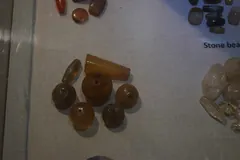
- Non-generative rectangular crop of the 2256 × 4000 Commons original (oldid 1173449235; original SHA-1 b41b32a0ebd89ecff041b8520f859e1d4f243d6a), pixels (775, 800, 1615, 1462), output 840 × 662 px without resampling, re-encoded as JPEG. The museum labels, the interpretive panel and the case surroundings fall outside the crop. No retouching, recolouring, exposure change, sharpening, reconstruction or AI processing. This derivative is shared under CC BY-SA 4.0.
- WebP rendition
- Resized WebP rendition from the recorded derivative above; no additional crop or colour alteration.
- About this photo
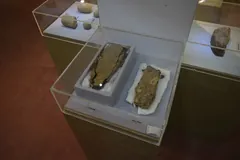
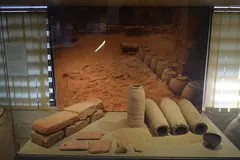
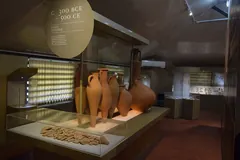
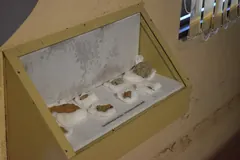
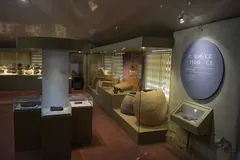
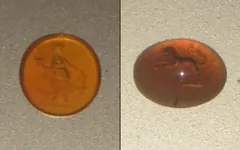
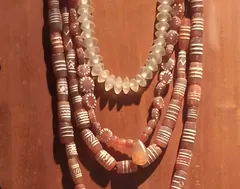
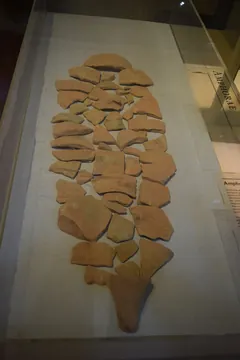
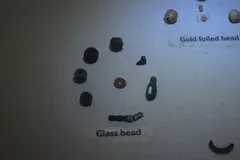
- Museum display photographed on 12 November 2025. The materials, the findspot and the date "7th Century BCE" are statements on the museum's labels, which the crop omits; none of our studies covers Kakkodi. Secondary literature lists Kakkodi among Kerala State Archaeology Department salvage excavations (Rajesh 2019, Heritage: Journal of Multidisciplinary Studies in Archaeology 7: 352–372) and reports etched carnelian bead types from the site (Soorya et al. 2023–24, Heritage 11.1: 231–232, citing Ambily 2021). Neither publication identifies these displayed beads; their attribution to Kakkodi rests on the museum labels. The carnelian label's accession range carries handwritten corrections and the crystal label's printed range appears misprinted; neither is transcribed here. The stringing order and the pendant's placement are the museum's arrangement, not archaeological evidence.
- Checked
- 2026-10-27
- SHA-256
- 7c24ac08c37a4a87cb55ab3c3be84bec20c7c4bbed10888349ca058f222ea21b