005Catalogue page 5 of 12
Catalogue page 5.
Every title is a complete research study. Return to the study catalogue to inspect all 199 studies side by side.

Keezhadi's excavations found brick buildings, ring wells, drains and furnaces, with published radiocarbon dates supporting activity there in the sixth century BCE.
How we knowKeezhadi's inscribed pots show writing in everyday lifeShort names scratched on Keezhadi pottery show writing in daily settlement life, but the sherds cannot tell how many people could read or write.
Land & waterKerala 300–600 CE: sea links changed rather than collapsedPattanam pottery, Roman coin hoards and a sixth-century Greek text show Kerala's sea links changed after 300 CE rather than ending.
Land & waterKerala mudbanks calm monsoon seas; their ancient use is unprovenKerala's chakara mudbanks can calm rough monsoon surf, but their use by ancient ports remains unproven.
Belief & memoryKerala's Buddha statues are usually placed after 600 CEOfficial records date three Kerala Buddha images to the eighth or ninth century; none is known from an excavated layer, and several dates are disputed.
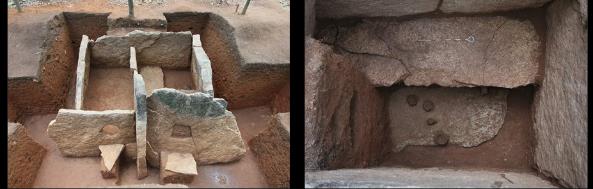 Belief & memoryKerala's Iron Age graves are many; only a handful are dated
Kerala's Iron Age survives as more than a thousand burial sites, yet only about a dozen laboratory dates from a handful of graves anchor it.
Across the waterKerala's Roman coin hoards show inland movement, not motiveFour Kerala hoards show Roman gold and silver reaching the region, some far inland, but poor find records leave counts, burial dates and owners uncertain.
Belief & memoryKerala's early Jain sites are not dated before 600 CEKallil's rock-shelter date is unresolved, Alathur's Jain sculpture is ninth to tenth century, and Wayanad's Jain temples are medieval.
Across the waterKerala's punch-marked silver shows exchange, not Mauryan ruleAbout a thousand northern-style punch-marked silver coins from three Kerala hoards show long-distance exchange, not Mauryan rule or one shared currency.
Belief & memoryKerala's serpent groves are not shown to date to the Iron AgeEarly Tamil poetry knows protected groves and Iron Age Kerala had ritual burials, but nothing found before 600 CE joins grove and serpent cult.
Land & waterKerala's spice coast grew from habitats, cultivation and tradeKerala's spices reflect varied mountain habitats, human cultivation and port trade; even black pepper's original homeland is still disputed.
Made by handKodumanal made stone beads and smelted iron on siteExcavations at Kodumanal document on-site bead-making and iron smelting alongside AMS dates reaching the fifth century BCE; crucible-steel manufacture and named overseas shipments remain…
Land & waterKodungallur digs found medieval layers, Pattanam much older onesThe 1968–69 test at Cheraman Parambu in Kodungallur reached the water table below medieval occupation without finding an Early Historic settlement layer. That is meaningful evidence for…
Across the waterKodungallur's arrival stories were written down centuries laterThe earliest writings we found that give the arrival dates of 52, 70 and 629 CE were made many centuries afterwards.
Belief & memoryKonthagai's urn graves beside Keezhadi await direct dates and DNAKonthagai, beside Keezhadi, holds over 150 urn burials and other graves; the reports we used give no laboratory date from them, and DNA work continues.
Made by handKorkai shows chank-shell working; Keezhadi has finished banglesKorkai has sawn conch waste and uncut shells pointing to local bangle making; Keezhadi shows finished shell bangles in the notices consulted, with the full 2019 report not yet checked.
Belief & memoryKorravai resembles Kerala's Bhadrakali; no dated line joins themEarly Tamil texts show Korravai as a war goddess; Kerala's Bhadrakali traditions are documented much later, and no dated chain links them.
Across the waterKottayam's Roman gold hoard came from North Malabar, near KannurA huge Roman gold find made in 1847 or 1850 came from Kottayam near Kannur; its size, full contents and burial date remain uncertain.