002Catalogue page 2 of 12
Catalogue page 2.
Every title is a complete research study. Return to the study catalogue to inspect all 199 studies side by side.
Arikamedu was a South Indian settlement before Mediterranean imports arrived; its bead-making and imported goods point to a craft port, not a Roman colony.

Arittapatti’s early cave inscriptions name two donors (status not stated), not the Pandyan king Nedunchezhiyan or officer named at Mangulam, and are centuries older than Arittapatti’s Jain…
Land & waterAryankavu pass offered a crossing, but no ancient road is shownThe low Shencottah gap made crossing possible and people used the Thenmala area in prehistory, but no ancient trade road or checkpoint is shown.

Iron Age burials show people used the land around Kerala's Ashtamudi lake, but no settlement, harbour or direct Sri Lanka link has been found.
Everyday livesAyurvedic texts: author, text and manuscript have different datesThe Caraka and Suśruta medical works carry three kinds of date, and none of the sources used here comes from early Kerala.
Everyday livesBetel leaf and lime appear in poems; early finds unverifiedAreca use is ancient in Southeast Asia, Sanskrit medical verses pair areca with betel leaf, and early Tamil texts name areca nut, betel leaf and shell-lime together; no pre-600 South Indian…
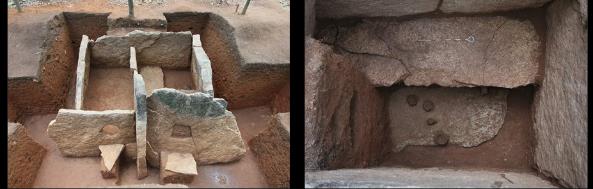 Land & waterBharathappuzha basin: many burials, little dated settlement
Iron Age burials are well recorded across Kerala's Bharathappuzha basin, but dated settlement, ironworking and trade routes remain unproven.
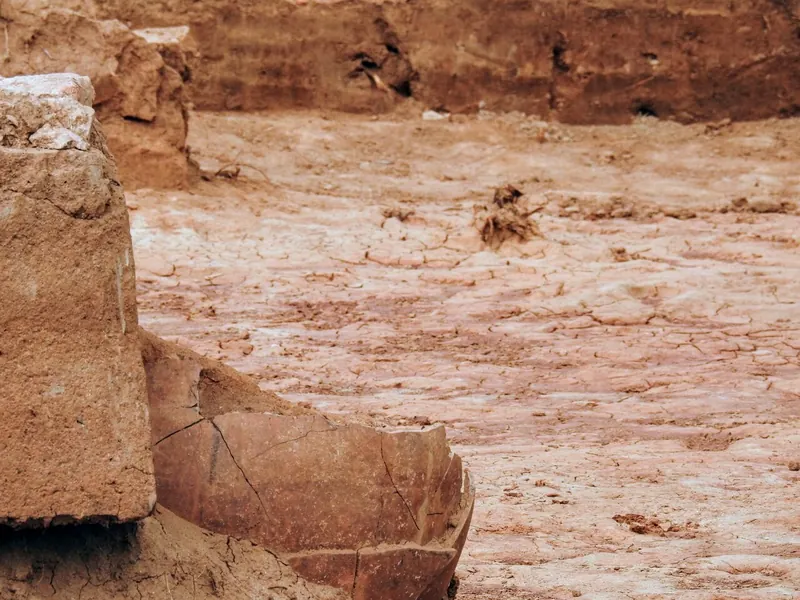
Black-and-red ware gets its colours from firing conditions, iron chemistry and, on tested black surfaces, carbon. Different analytical methods reveal different parts of that process.…
Made by handBoluvampatti: many beads, but bead making there is not shownExcavators at Boluvampatti found about 250 stone beads, but the published report shows none of the waste or tools a bead workshop leaves.
Belief & memoryChengam hero stones: no simple sequence of weapons or scriptsThe Chengam and Thandarampattu hero stones repeat one carving pose, are already written in Vattezhuthu (Vaṭṭeḻuttu / Vatteluttu), and have disputed dates.
Words & worldsChera poems show bards and dancers travelling for royal giftsChera praise poems show bards and women performers travelling toward generous rulers; the checked passages do not show them as news carriers or royal arbiters.
Across the waterChera silver portrait coins carry Tamil-Brahmi names and titlesTwo small silver coin series from Karur pair a portrait head with a Tamil-Brahmi name; their dates and links to poem kings are disputed.

At Cheramanangad, the ASI opened five monument types in 1990–91: two held no burial; the richest metal finds came from one stone circle.
Across the waterCinnamon and cassia: what a fragrant name can and cannot identifyAncient names like cinnamon and cassia do not map neatly onto modern species, and flask residues identify no route to Kerala.
Made by handColonial records alone document Nilambur gold washingNilambur's rivers carry natural gold, and colonial records document gold collecting there from 1800 and in detail from 1831, but no pre-600 CE extraction site is known.
Across the waterCosmas names five pepper marts of Malê and a church thereA sixth-century Greek writer lists five pepper-exporting marts of Malê and a church there, but never clearly says he went there.
Everyday livesCrops at six sites: millets and pulses persist as rice spreadsPlant remains from six sites show lasting use of millets and pulses, growing use of rice, and no secure banana or areca.
Across the waterDeccan cities and Konkan ports fed linked trade toward MuzirisThe Periplus describes connected inland and coastal trading systems, not two exclusive routes. Barygaza, Konkan ports and the southern coast appear from a maritime trader’s perspective. Its…