004Catalogue page 4 of 12
Catalogue page 4.
Every title is a complete research study. Return to the study catalogue to inspect all 199 studies side by side.

Eyyal's laterite burial cave has a pillared main chamber and a smaller side chamber, and the nearby Roman coin hoard cannot date it.
Words & worldsFive Tamil landscapes are a poetic code, not a map of economiesEarly Tamil poetry links five landscapes with seasons, work and feelings; dated crop remains show mixed farming that does not fit five separate economies.

Ummichipoyil is a rock-cut cave group, Naduvil a stone circle with a chamber, Perambra an umbrella stone and Kinalur an urn cemetery; none of the four has a laboratory date.

Genome studies show South Indians descend from ancient populations that mixed into the first millennium BCE, but local ancient DNA remains scarce.
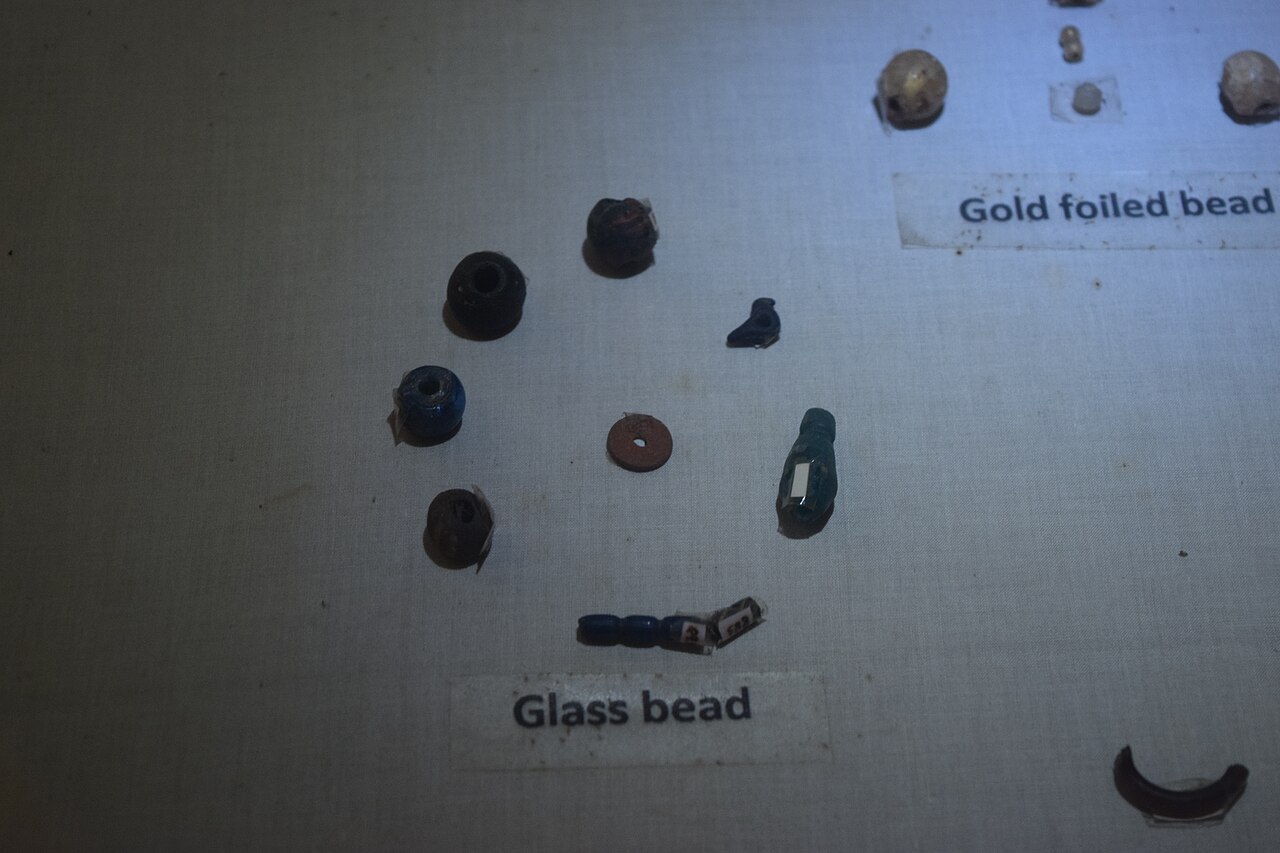 Made by handGlass beads: where glass was made, shaped and found can differ
Pattanam's glass beads, an Arikamedu museum string and Roman recycling studies show why a bead's making and findspot need separate evidence.
Everyday livesGrowing old in Sangam poetry: two Purananuru voicesTwo early Tamil poems speak of old age: one sets remembered diving beside a trembling body, the other credits household and community for ease.
Words & worldsHear the Sangam poem before using its evidenceRead a Sangam poem whole, and keep its speaker, attribution, translation and dates apart, before using any line as historical evidence.

Lab tests show some South Indian high-tin bronze bowls were hot-worked and quenched, but tin levels of about 21 to 25 percent and methods varied.
Across the waterHoq cave names western Indian sailors; Sumhuram has a Tamil nameInscriptions in Hoq Cave on Socotra name sailors from western Indian ports, while the clearest Tamil trace in Arabia is a name at Sumhuram.
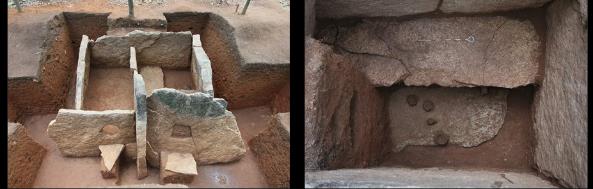 Everyday livesHuman remains give site-level findings, not a regional history
Bones, teeth and ancient DNA from four southern sites reveal burial customs and some health facts, but not region-wide patterns.
Land & waterIn Tamil love poems, who speaks matters as much as the landscapeEarly Tamil love poems tie feelings to five landscapes, but reading them well means asking who speaks, to whom, and in what situation.
Across the waterIndia-trade cargo crossed Egypt by camel, warehouse and Nile boatIndia-trade cargo crossed Egypt through desert transport, storage and Nile shipping. Different documents reveal different parts of that system. The Nicanor receipts mainly record freight…

Dated cores from Wayanad, the Nilgiris, the Palni Hills and inland Tamil Nadu show changing rainfall and vegetation, but rarely show what people did.
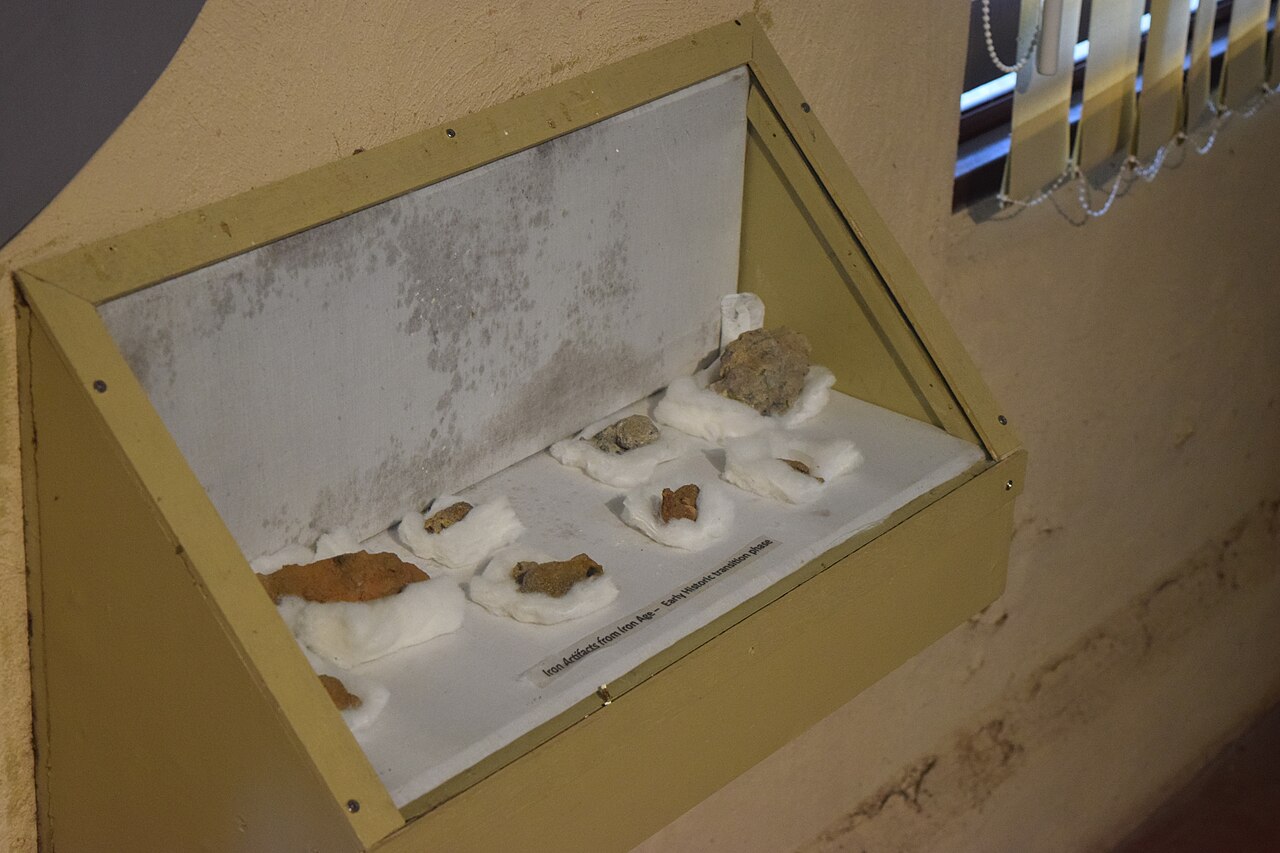 Made by handIron or steel: four questions to ask of early South Indian finds
A short guide to telling iron from steel, using Mel-siruvalur crucibles, an analysed burial sword and an ancient trade list.
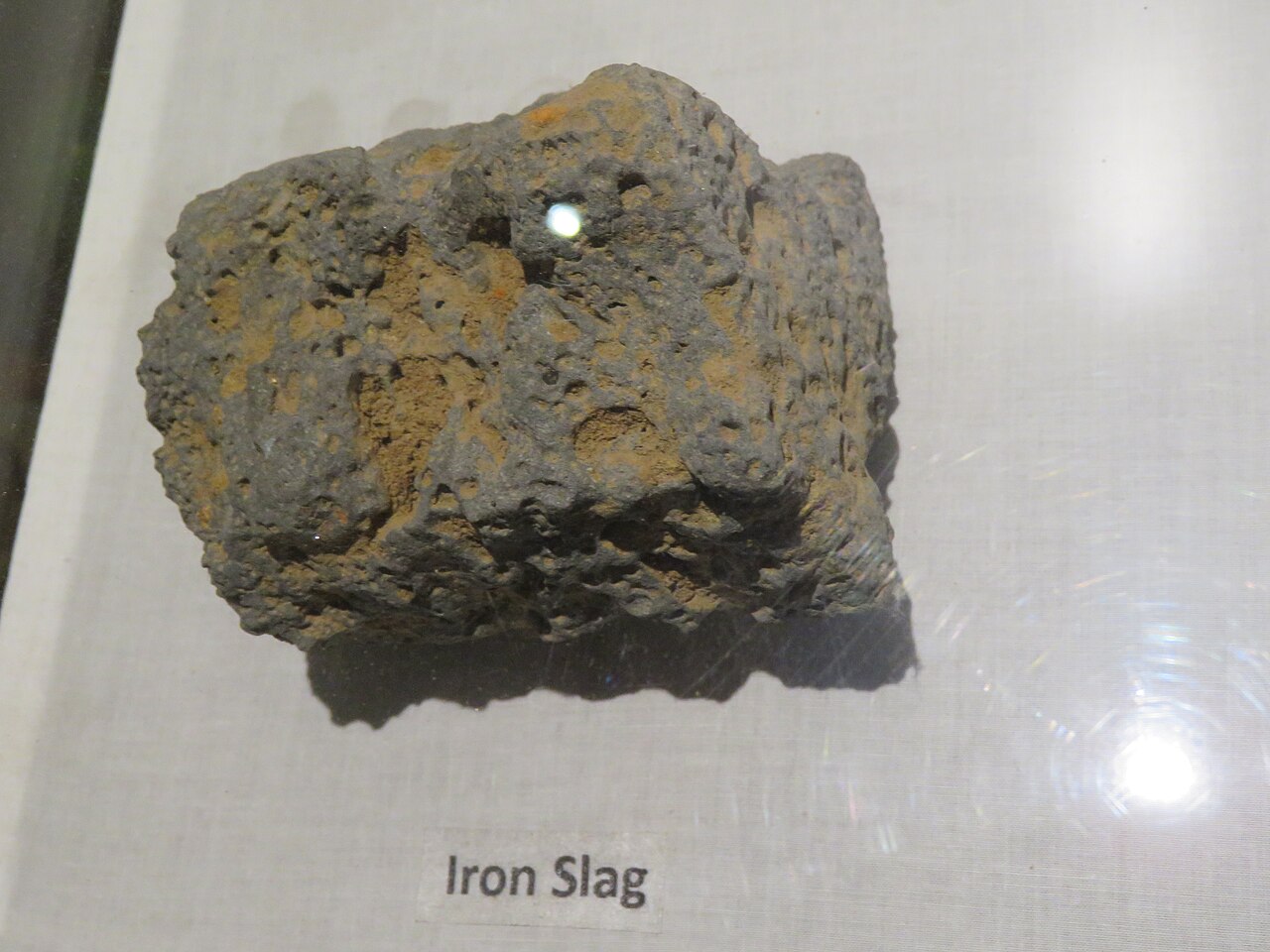 Everyday livesIron weapons predate 600 CE, but Kalaripayattu came much later
Archaeology documents iron weapons in South India before 600 CE, including evidence of skilled steel working. That does not establish the much later martial tradition of Kalaripayattu.…
Land & waterKallanai: an old Kaveri weir whose building date is unknownKallanai on the Kaveri is old and often repaired, but no source dates its first building or shows that Karikala Chola built it.
Land & waterKarur excavations show trade; most coin finds lack contextExcavated layers at Karur hold amphorae, Rouletted Ware and Tamil-Brahmi sherds together; its Roman coins and riverbed rings mostly lack secure findspots.

V. D. Krishnaswami's 1949 survey and Y. D. Sharma's measured plan of 1956 show Kattakampal's four-chambered laterite cave without a central pillar or roof opening.