Places on the atlas that name this study.
- Everyday lives
- Sivagalai
Everyday food: the evidence shows ingredients and work, not menus
Plant finds, a Greek sailing guide, two Tamil poems and an Egyptian letter show food as work and relationships; none gives a household menu.
- This page
- 3,092 words · revision 5
Draft study · Awaiting specialist review · Updated
001Dates and places
Places on the atlas that name this study.
- Sivagalai Urn Burial & Habitation Complex
Excavated site zone · Thoothukudi District
Dates in this study are stated in words only.
- 2 Well supported
- 1 Likely
- 1 Not known
002How sure
In brief
A Mahatma Gandhi University account of finds from Pattanam, in Kerala, reports rice, pulses, black pepper, cardamom and animal bones; a 2020 Pattanam peat study (reported in the companion pepper study; not read directly here) lists black pepper as probable and cardamom as tentative. These finds show which food materials were present, not what any household cooked. The Periplus, a first-century Greek sailing guide, separates wheat carried for sailors from goods sold at the Malabar ports. Its section 14 lists rice, wheat, clarified butter and sesame oil shipped from north-western India to the African coast. Two Tamil poems tie cooking to pleasure and the welcome of guests to family honour. A later Egyptian letter shows supplies depending on travellers who could carry them. Mediterranean shipwrecks warn that one plate or pot cannot reveal a crew's size or meals. Chillies came from the Americas, so they do not belong in an ancient Malabar dish. The sources used give no dated household menu, recipe, price or division of kitchen work.
Key researchers cited in this study: Wilfred H. Schoff (Periplus Translation & Commentary) · Vaidehi Herbert (Sangam Poetry Translations & Commentaries) · Full bibliography
How sure
- Likely
Rice and pulses are among the plant remains reported from Pattanam, with black pepper listed as probable and cardamom as tentative.
Reported in the Mahatma Gandhi University collection account and KCHR interim summaries; a full archaeobotanical report with context data is not published, and a 2020 peat study (reported in the companion pepper study) lists black pepper as probable and cardamom as tentative.
- Well supported
Ships on these routes carried staple food for crews and for trade.
The Periplus says so directly in sections 14 and 56.
- Well supported
Chillies came from the Americas and do not belong in a first-century Malabar meal.
Kew gives chillies an American origin; a chilli-like Pattanam specimen is described as problematic.
- Not known
What an ordinary household ate, and who did each kitchen task.
No source used gives a dated household assemblage, recipe, quantitative diet or division of labour.
Why it matters
It shows that ancient food history is about people's work and relationships, not only about traded spices.
003Key findings
What the study concludes
- Local plant remains help identify a food environment; they do not supply a dated household menu or a complete recipe.
- Poetry and documents reveal attention, provisioning and dependence on other people, but each source represents a particular situation.
- A useful reconstruction follows the work before and after eating instead of reducing a meal to a list of exotic ingredients.
In the study’s own words. How sure each point is, is shown above.
The summary above is the short read. The full study is the complete text it was drawn from, with its tables and source notes.
What the full study covers
- Main findings
- Start before the food reaches the bowl
- A pantry is not a menu
- A port feeds people as well as moving cargo
- Food aboard ship
- Preparation is a chain of choices
- A Tamil poem gives us something an ingredient list cannot
- Food passed through personal networks
- The work does not stop when the visitor is satisfied
- What this study lets us say
- What remains uncertain
- The next questions
- References and access notes
- Further reading and listening
004The study
Main findings
- Local plant remains help identify a food environment; they do not supply a dated household menu or a complete recipe.
- Poetry and documents reveal attention, provisioning and dependence on other people, but each source represents a particular situation.
- A useful reconstruction follows the work before and after eating instead of reducing a meal to a list of exotic ingredients.
Start before the food reaches the bowl
What would it take to make an ordinary meal available, and how much can we recover about the people doing the work? This study begins before food reaches a bowl and follows the tasks that a finished dish can conceal. The answer draws on different kinds of evidence rather than pretending that one excavated dinner survives intact. Plant finds concern materials. A Tamil love poem concerns a relationship. Letters concern particular requests. Their different settings allow questions about household work without reconstructing a complete recipe from unrelated traces.
Seeds, pot surfaces and bones answer different questions about food. Each drawing is a teaching example, not an excavated find; together they do not make one ancient meal.
The plants panel cites the rice, pulses and pepper reported from Pattanam in this study.
Layers of the South editorial illustration
A pantry is not a menu
KCHR’s interim excavation reports (including Cherian et al., Pattanam Archaeological Research: Fifth Season Field Report, 2011) and Mahatma Gandhi University’s account of the Pattanam collection report rice and pulses alongside black pepper, cardamom, coconut, and animal bones and teeth. Together they give a useful inventory of reported materials, though a full archaeobotanical report with context-by-context data, species identifications for a meal’s meat, or a single household assemblage dated to a specific early-first-century context is not published. 1 Finding an ingredient raises several separate questions. Was it grown nearby, imported, stored, processed, eaten, burned, discarded or used for another purpose? Which people could obtain it, and how often? A peppercorn can be evidence of a traded commodity without showing the seasoning of every local dinner. Our conclusion is deliberately narrower than a reconstructed cuisine: several promising ingredients warrant study, but their combination on one plate is an additional claim. The project account from PAMA makes another boundary visible: it reports archaeobotanical material and then describes morphological and molecular investigations it envisages undertaking. Those proposed analyses cannot be cited as if their anticipated conclusions were already established. 2 “Crops at six sites: millets and pulses persist as rice spreads” sets out the excavated crop evidence from Pattanam, Kodumanal and other sites in Kerala and Tamil Nadu.
Flotation lets charred seeds float off as the light fraction while stone, bone and sherds sink as the heavy fraction. Flotation at Kodumanal found pulses, millets and rice; Pattanam has reported rice and pulses. A cooking pot, animal bone and a poem such as Kuruntokai 167 are different sources; none supplies a recipe.
Pattanam’s reported rice and pulses, and the poem Kuruntokai 167, come from this study of everyday food.
Layers of the South editorial illustration
Some familiar ingredients do not belong in an ancient meal at all. Capsicum peppers (chillies) have an American history, and Kew’s account connects their movement to other regions with post-contact exchange. A first-century Malabar meal should not acquire modern chillies merely because a present-day recipe uses them; the pungency of black or long pepper is a different botanical subject. 7 “Five Tamil landscapes are a poetic code, not a map of economies” notes that the authors of a Pattanam plant study call a chilli-like specimen problematic and allow that it may have entered the deposit by accident.
A port feeds people as well as moving cargo
In section 56, the Periplus lists wheat brought for sailors in its account of the south-western Indian trade, distinguishing that provision from an ordinary commodity marketed there. Its wording gives a concrete reason not to collapse shipboard supply into the diet of the entire settlement. 3 A vessel can carry something its crew expects to eat while local households buy different staples. A visitor may have money but no place to cook. A household can feed a lodger by drawing on supplies acquired for its own members. These are possible arrangements rather than surviving contracts. They explain why the question “What food reached the port?” is only the beginning of “Who ate what?” How foreign merchants and inland carriers arranged short stays at ports such as Pattanam remains an open archaeological and documentary question. The publisher’s overview of Cappers’s Berenike study describes more than sixty cultivated species in the Roman deposits and a research program encompassing subsistence and exchange. The full monograph was not read directly for this study. Its overview supports the breadth of the food question at that desert port, not a species-by-species comparison or a recipe borrowed for Pattanam. 4
The Periplus also lists provisions among the goods carried on these routes. Section 14 mentions Indian ships supplying African-coast ports with such goods as rice, wheat, clarified butter, sesame oil and cloth, and its description of Ariaca (§41) also attends to crops. 8 The ships in section 14 came from Ariaca and Barygaza in north-western India. The passage shows that staple foods travelled on these sea routes; it is not evidence for a Malabar kitchen. “Adulis: an African port active in the same ocean trade as Kerala” discusses the same trade from the African side.
Cobb considers food remains alongside other traces of Indian participation at Red Sea sites. Several kinds of material can support an argument about people abroad, while any one ingredient alone may remain ambiguous. 9 Plant origin, trade presence, cultivation and household use are four different questions. “Kerala's spice coast grew from habitats, cultivation and trade” covers where pepper and other spices first grew, “No secure clove or nutmeg find is known yet from early Pattanam” the dated finds of clove and nutmeg, and “Texts link pepper to inland Cottonara, not a whole route” how pepper reached the ships from inland Kerala.
Food aboard ship
Section 56’s wheat for sailors does not specify a daily ration, describe cooking arrangements, or show that everyone aboard ate the same food. 3 Mediterranean shipwrecks help test how such questions can be asked, but they are method comparisons, not evidence from a first-century Malabar vessel. The Institute of Nautical Archaeology’s account of the Kyrenia wreck describes grain-mill stones placed along the ship’s axis as ballast. Their presence does not automatically establish grain grinding on deck: a find’s role aboard is not always its obvious one. 11
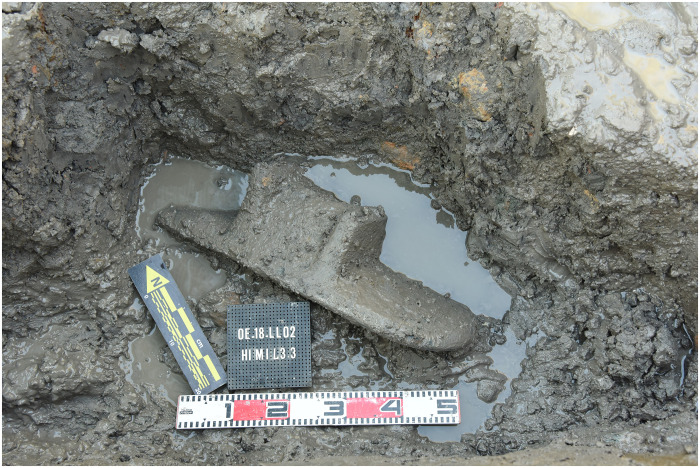
The large footed grinding slab
Oc Eo
Comparative evidence from Vietnam; these are not finds from Kerala or Tamil Nadu.
Donnelly and Leidwanger revisit the Dramont F wreck, dated around 400 CE. Its small galley assemblage includes eight objects, among them one plate and one pot. They reject a simple one-vessel-per-person equation: a single plate does not establish a crew of one, and the pot may have heated pitch rather than food. 12 The same caution prevents a false arithmetic. Dividing the number of bowls by an assumed table setting gives a crew, and using that crew to estimate rations makes both numbers rest on one untested assumption.
Preparation is a chain of choices
A meal depends on a chain of tasks, not only on ingredients. This is a general sequence, not an excavated schedule. Someone must decide whether grain that has arrived is ready to cook or needs further preparation. A vessel must be free, and water and fuel must be within reach. The sequence changes if grain is bought partly processed, if a pot is already in use, or if the person tending the fire has another task. Dropping the only sound cooking vessel may matter more than spilling a little water, and a late delivery can shift a meal rather than simply reduce it. A guest increases not only the amount eaten but the work of serving and clearing. None of this supplies a historical price or a number of working hours; those require evidence this study does not possess.
A Tamil poem gives us something an ingredient list cannot
Kuruntokai 167, as presented in Vairam Sarathy’s translation and glosses, shows a young wife handling curd, dealing with her garment, and working amid the smoke of seasoning. A sour preparation receives her husband’s praise; her pleasure becomes the emotional center of the scene reported by the foster-mother. The modern commentary connects the food to familiar named dishes. This study does not adopt that identification as proof that a present-day recipe existed unchanged. 5 Our reading is that the poem makes practical action and emotional attention inseparable. Praise matters because someone has done something that another person can notice. The small domestic scene is therefore valuable without becoming a statistical claim that all women cooked, all husbands responded this way, or every household used the same ingredients. It also changes the tone of reconstruction. Ancient food need not appear only as scarcity, fuel consumption or trade. A meal can be a source of pleasure in doing something well. The poem gives one literary instance; the wider range of feelings and arrangements must remain open rather than being standardized around it.
Purananuru 306 offers a second literary witness. In it, a woman’s wishes for her household link receiving guests with familial and martial honor. 10 The surviving verse contains a textual gap, and this reading supplies nothing for the damaged passage. It is an idealized poetic scene, not a guest register or a survey of ordinary lodging in first-century Kerala. “Malaipadukadam: mountain travel, sound and welcome in Tamil verse” treats hospitality to travellers in the guide-poem (āṟṟuppaṭai) Malaipaṭukaṭām; the Tirukkural chapter on hospitality (viruntōmpal) offers a further comparison not examined here. “Evening lamps in early Tamil poems, and how fuel is identified” discusses the household welcome in Purananuru 326, “'Every place is home': Purananuru 192 read as a whole poem” reads Purananuru 192, and “Peruñcōṟu, royal food-giving in Tamil poems, had several meanings” examines the several meanings of the “great rice” (peruñcōṟu) in Tamil poems.
Food passed through personal networks
A later Egyptian comparison is unusually concrete. O.Krok. 265, dated by its editors to the first half of Hadrian’s reign, combines discussion of sieved wheat with food, prices and the prospect of someone traveling who can carry things. The letter makes provisioning a matter of people and opportunities, not merely available commodities. It belongs to a Roman Eastern Desert network, not to a Malabar port. 6 The interpretive point is the connection between a need and another person’s movement. A thing can exist and still fail to arrive where it is wanted. A request can be reasonable yet depend on a traveler’s destination, available space or willingness. We cannot use this letter to specify Malabar delivery charges. We can use it to avoid imagining that every household obtains supplies through an impersonal, frictionless market.
The work does not stop when the visitor is satisfied
The chain of tasks continues beyond serving. Food may need storage, fire management, the cleaning of vessels and water replacement. What remains may serve another meal, while the cooking place may also be needed for another task. These are analytical questions; their exact local solutions are not established by the sources examined. One way to see this is to follow objects backward and forward: where was a bowl before use, who might need it next, and what remains to be stored or cleaned? These questions make the dependencies visible without supplying an excavated household schedule. An equivalent test applies to the reader’s mental image. A provisioning household is not just a kitchen interior. It is a changing arrangement of people who purchase, prepare, remember, carry, lend, taste, praise and clear away. Which tasks were combined in one pair of hands remains a historical question, not something an attractive reconstruction should quietly decide.
What this study lets us say
The strongest conclusion is not a recovered menu. Pattanam’s reported materials establish a starting point for food research; a maritime text distinguishes crew provisions; a poem makes cooking emotionally significant; and an Egyptian letter exposes the dependence of supply on carriers. These are different findings, not fragments of one missing cookbook. A public reconstruction should identify a proposed meal as a modern experimental interpretation, distinguish support for ingredients from support for preparation, and name its uncertain choices and substitutions. Exact prices, universal serving customs and unchanged modern recipes require further evidence. The result can explain how food became available without claiming a recovered household menu.
What remains uncertain
- The consulted Pattanam summaries do not supply a phase-specific household recipe, quantitative diet or secure division of domestic labor.
- The Kuruntokai discussion uses one modern translation and its glosses; lexical questions and textual dating need specialist comparison.
- The Egyptian letter is a comparative source, not a direct record of a Malabar household.
The next questions
- Acquire published context-specific botanical and faunal analyses before building a detailed local menu.
- Compare scholarly translations and commentaries for Kuruntokai 167, especially the sour preparation and garment passage.
- Investigate cooking-vessel residues, hearth contexts, fuel and food-service arrangements without assuming their identification from form alone.
- Compare cooking and storage pottery from Red Sea ports (Berenike, Myos Hormos) and the Godavaya wreck (“The Godavaya wreck shows early seafaring off Sri Lanka”) for evidence of crew provisioning.
- Examine rice, wheat and coconut remains from port contexts alongside Periplus §56.
References and access notes
1 School of Social Sciences, Mahatma Gandhi University (Undated institutional collection page). Early Historic Age Collection. Early Historic Age Collection; sections on botanical, faunal and other finds. Collection description read. A collection overview is useful for orientation but does not replace trench-by-trench stratigraphic records. Undated excavation counts are not used as current totals. Open source: sss.mgu.ac.in
2 PAMA Institute for the Advancement of Transdisciplinary Archaeological Sciences (undated, multi-year project page). Pattanam: excavations and archaeobiological research projects. Archaeobiological finds of Pattanam and Berenike; distinction between reported finds and proposed analyses. Relevant project sections and captions read; no source photographs republished. Reports finds and describes proposed analyses together. Future-tense research intentions are not treated as completed results. The year on an excavation photograph is not the ancient date of the feature. Open source: www.pama.org.in
Ripening black pepper berries on spikes (Piper nigrum, modern botanical context)
Photographed 2011-02-20
3 Anonymous; translated by Wilfred H. Schoff (1912 translation). The Periplus of the Erythraean Sea. Section 56; wheat for sailors, within the Muziris/Nelcynda trade account. Relevant numbered sections read. University of Washington transcription of the 1912 translation, with some later editorial glosses. Ancient composition is usually placed around the middle of the first century CE, not the translation date. Schoff’s translation is public domain in the United States; no complete modern translation is reproduced. Open source: depts.washington.edu
4 René T. J. Cappers (2006). Roman Foodprints at Berenike: Archaeobotanical Evidence of Subsistence and Trade in the Eastern Desert of Egypt. Publisher overview; cultivated-species breadth and research scope. UCLA publication overview and repository metadata consulted; full monograph not yet checked directly. Used only for the overview’s description of scope and the reported breadth of cultivated plants; not for uninspected species tables. Open-access record: escholarship.org Open source: www.ioa.ucla.edu
5 Palaniappan Vairam Sarathy, translator and commentator (2011). Kuruntokai 167: Tamil text, translation and notes. Kuruntokai 167; Tamil text, translation and word glosses, rather than the modern recipe-identification claim. Poem, translation, word glosses and edition leads read. A translator’s presentation, not an independently collated critical edition. The blog’s identification with modern named dishes is not adopted. No complete translation is reproduced. Open source: karkanirka.org
6 Adam Bülow-Jacobsen, Jean-Luc Fournet and Bérangère Redon (2019). Ostraca de Krokodilô II: La correspondance privée et les réseaux personnels de Philoklès, Apollôs et Ischyras. O.Krok. 265, pp. 168–170; editorial date and French translation. Selected publisher-PDF entries and French translations read; no independent Greek decipherment. Only the selected entries were examined, not all 189 texts. Both are dated to the first half of Hadrian’s reign, later than the early first century CE. Publisher PDF: www.ifao.egnet.net. Translations and editorial text consulted directly from the publisher PDF. No photographs or full translations reproduced. Open source: www.ifao.egnet.net
7 Royal Botanic Gardens, Kew (undated). Capsicum annuum: Kew Species Profile. American origin and later spread via European colonial networks. Geography-and-distribution section read. Supports distinguishing chilli from ancient black pepper, not reconstructing a complete Kerala menu. Open source: powo.science.kew.org
8 Anonymous; translated by Wilfred H. Schoff (1912 translation). The Periplus of the Erythraean Sea. §§14, 41. Relevant numbered sections read. University of Washington transcription of the 1912 translation, with some later editorial glosses. Ancient composition is usually placed around the middle of the first century CE, not the translation date. Schoff’s translation is public domain in the United States; no complete modern translation is reproduced. Open source: depts.washington.edu
9 Matthew Adam Cobb (2023). Indian merchants abroad: Integrating the Indian ocean world during the early first millennium CE. Journal of Global History 18(3), 365–383; especially identity/methodology, western Tamilakam and conclusions. Full HTML available; selected methodological and regional sections read. An open-access study (CC BY 4.0). It synthesizes many finds; its underlying excavation reports were not checked individually. Open source: www.cambridge.org
Oryza sativa - Kerala 3 – Modern rice plant or grain
Photographed 2014-09-15
10 Poets as attributed in the anthology; translation and notes by Vaidehi Herbert (Ancient poems; modern online translation). Purananuru 232, 256 and 306: remembrance, loss and welcome. Purananuru 306; retain the indicated textual gap. Selected poems, speaker labels and notes read. Same anthology page as two other sources in this list, not independent corroboration. Literary scenes are not burial censuses. No text is supplied for a damaged passage; no prescription of self-harm or widow’s death is inferred. Open source: sangamtranslationsbyvaidehi.com
11 Institute of Nautical Archaeology (Undated project page; checked 2026). Kyrenia Shipwreck Excavation. Project description: recovered object classes and millstones used as ballast. Current webpage text and project metadata read; linked photograph collection still to be reviewed. The page gives an older 295 BCE wreck date; the revised modelling is in a later source in this list. A grain mill carried as ballast is not automatically a working shipboard kitchen. Open source: nauticalarch.org
12 Andrew Donnelly and Justin Leidwanger (2024 issue; online 13 January 2025). Food at sea on the Late Antique Mediterranean. Dramont F section: eight-object assemblage, crew inference and pot function. HTML article read, concentrating on the Dramont F section and its alternatives for vessel function. No independent re- examination of ceramics. Around-400-CE wreck evidence is later than the early first century CE. A single serving plate does not certify one crew member, and a pot need not have cooked food. Open source: www.cambridge.org
P. J. Cherian et al. (2011). Pattanam Archaeological Research: Fifth Season Field Report. Thiruvananthapuram: Kerala Council for Historical Research. Interim field report noting waterlogged rice, pepper, cardamom, coconut shell, and other botanical finds alongside Oxford archaeobotanical sampling; full context-by-context archaeobotanical report not yet published. Open source: kchr.ac.in (https://kchr.ac.in/images/img/ptm2011_field%20Report.pdf)
Further reading and listening
Onward resources, not additional evidence for this article. The recorded access limits still apply. K. P. Shajan; P. J. Cherian; R. Tomber; V. Selvakumar (2008). The external connections of Early Historic Pattanam, India: the ceramic evidence. Complete report text retrieved through the journal’s indexed HTML; figure captions read, no original object re-examination. The Cambridge migration lists an online date in 2026; the research report is from March 2008. Its then-current counts and claims of first discovery are not presented as current excavation totals. Open source: www.antiquity.ac.uk
005Photographs
Photographs of the places and objects this study discusses. Each item carries its creator’s credit, licence and documented source. See all 412 photographs and source images ↗
Oc Eo
The large footed grinding slab
A footed sandstone grinding slab, 76 cm long, excavated at Oc Eo in 2018. Starch grains of ginger, cinnamon and nutmeg were identified on its surface.
Comparative evidence from Vietnam; these are not finds from Kerala or Tamil Nadu.

Photographed 2011-02-20 06:17:02
Ripening black pepper berries on spikes (Piper nigrum, modern botanical context)
Whole black pepper berries (drupes) on spikes (Piper nigrum; source file titled 'Piper nigrum -seeds'). Modern botanical photograph for identification and growing context, not archaeological evidence of ancient use.
Photographed 2014-09-15
Oryza sativa - Kerala 3 – Modern rice plant or grain
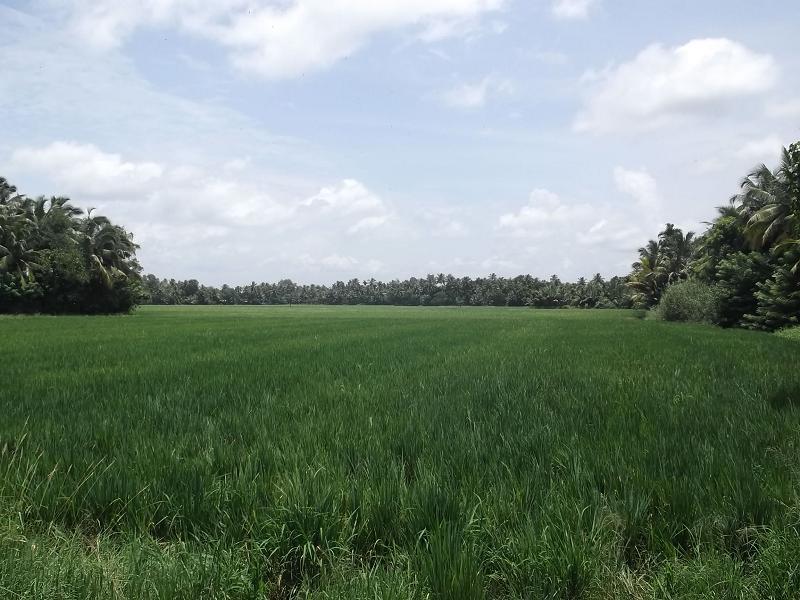
Oryza sativa - Kerala 3. Modern rice plant or grain; ancient cultivation must be established by dated archaeobotanical evidence.

Photographed 2012-11-13 13:23:23
Black Pepper (Piper nigrum) fruits – Modern botanical photograph of black pepper, for identification and growing context
Black Pepper (Piper nigrum) fruits. Modern botanical photograph of black pepper, for identification and growing context; not archaeological evidence of its ancient use.

Photographed 2020-11-01 18:00:54
Foxtail millet panicle (Setaria italica subsp. italica, modern botanical specimen)
Setaria italica subsp. italica (foxtail millet) panicle, shown as a modern botanical reference specimen.
Photographed 2016-05-07 11:14
Sesame flower in bloom (Sesamum indicum, modern botanical context)
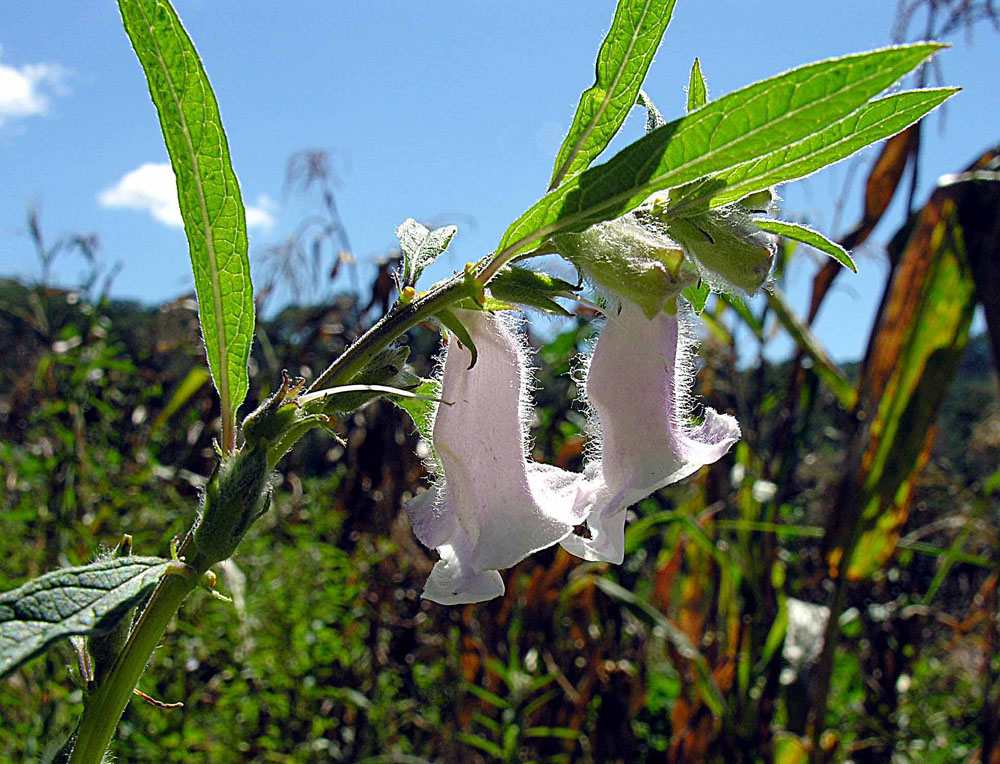
Sesamum indicum (sesame) flower in bloom, shown as modern botanical context.

Photographed 10 September 2025 (according to Exif data)
Sesamum indicum Subsp.malabaricum-1-mettur dam-salem-India – Modern sesame identification
Sesamum indicum Subsp.malabaricum-1-mettur dam-salem-India. Modern sesame identification; not evidence of ancient distribution.

Photographed 15 September 2026 (according to Exif data)
Farmer ploughing with cattle in Nandyal District, Andhra Pradesh
Farmer ploughing with cattle in Nandyal District, Andhra Pradesh. Modern animal-labour reference; cattle breed, plough technology and ancient social relations require separate evidence.
Show 6 more photographs and source images ↓

Photographed 2020-11-01 18:05:45
Foxtail millet grains (Setaria italica subsp. italica, modern botanical specimen)
Setaria italica subsp. italica (foxtail millet) grains, shown as a modern botanical reference specimen.
Modern references relevant to this study
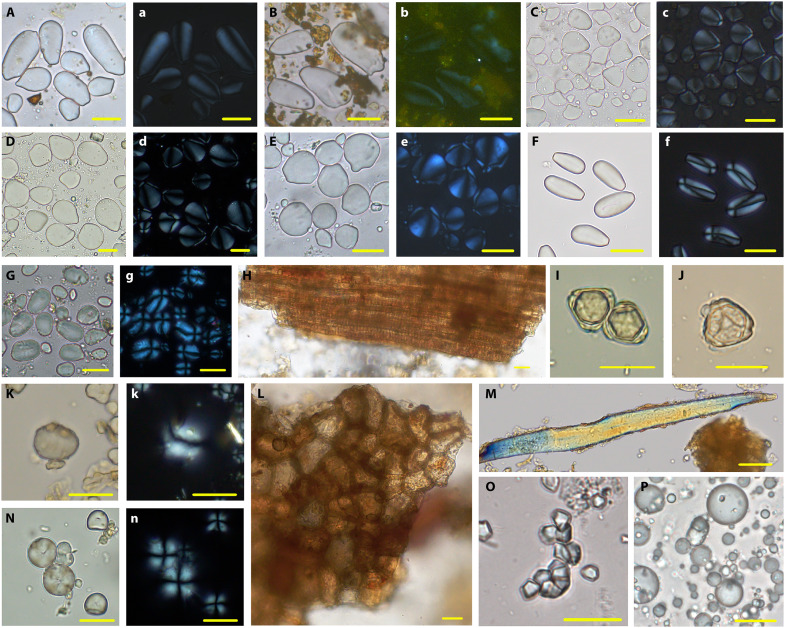
Modern reference samples used for comparison in the Oc Eo study: starch grains and other remains of turmeric, ginger, clove, cinnamon, nutmeg and rice.
Comparative evidence from Vietnam; these are not finds from Kerala or Tamil Nadu.
Photographed 2014-09-15
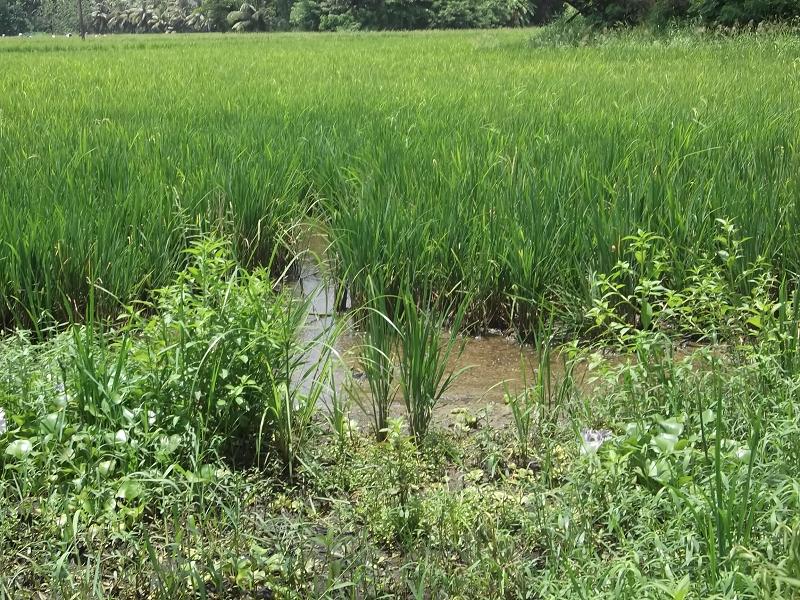
Oryza sativa - Kerala 2 – Modern rice plant or grain
Oryza sativa - Kerala 2. Modern rice plant or grain; ancient cultivation must be established by dated archaeobotanical evidence.
Photographed 16 December 2013
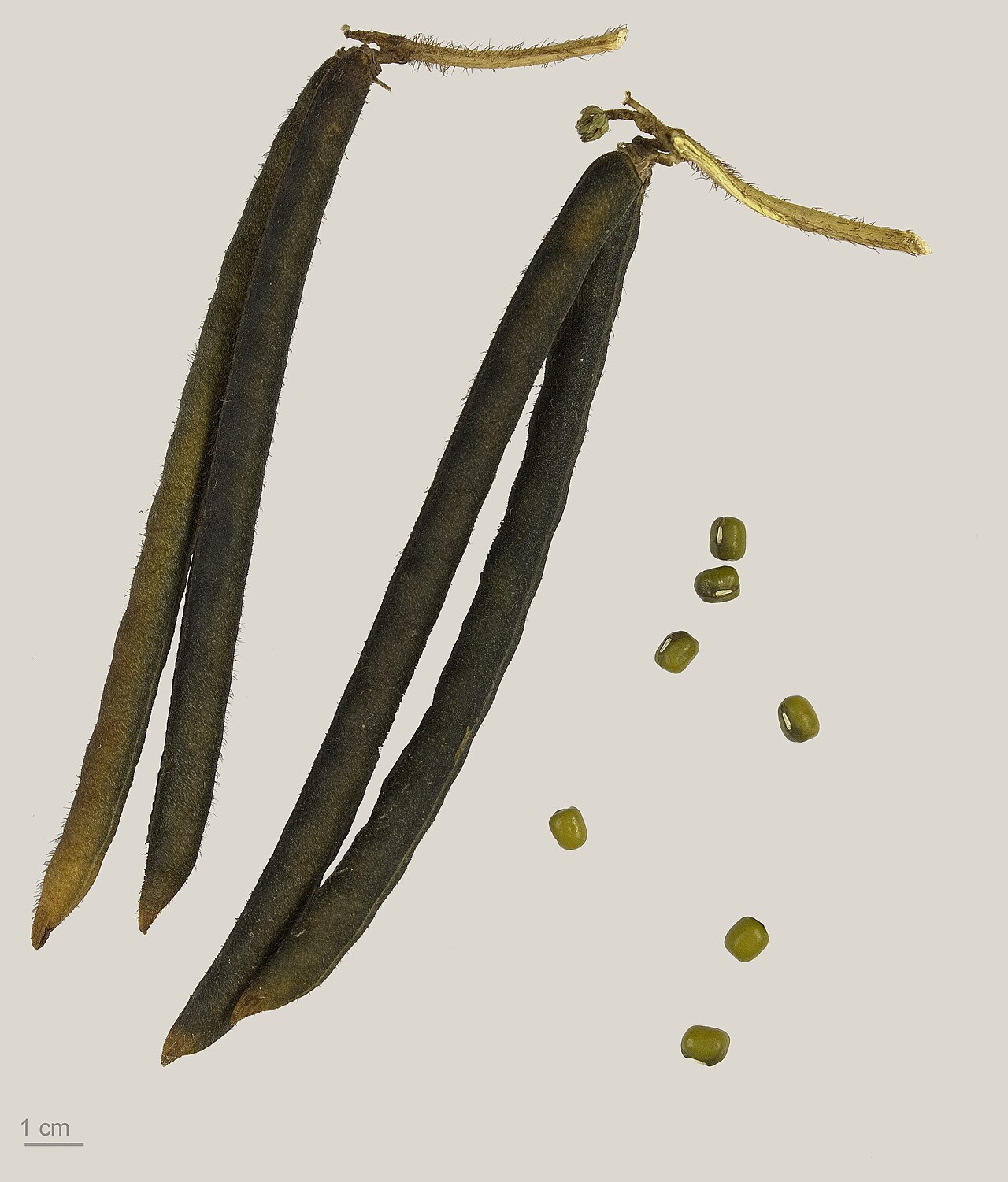
Vigna radiata MHNT.BOT.2009.17.4 – Modern mung bean identification
Vigna radiata MHNT.BOT.2009.17.4. Modern mung bean identification; not archaeological seeds.
Oc Eo
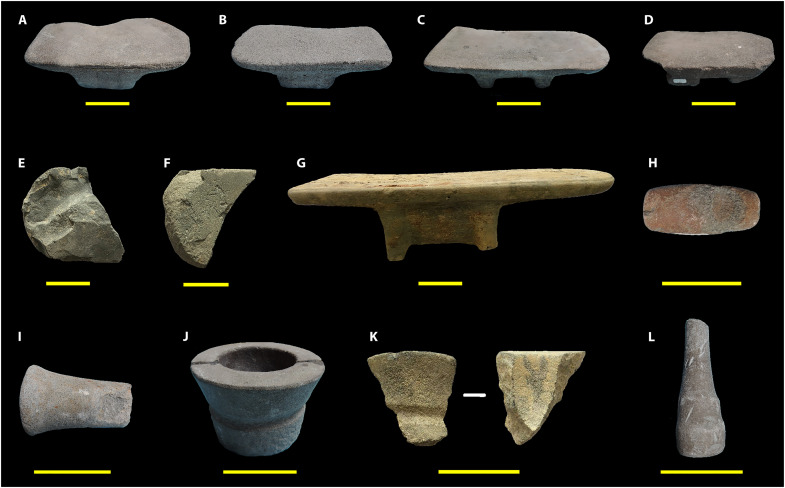
Ancient food-preparation tools from Oc Eo
Food-preparation tools from Oc Eo reported in the published study: footed grinding slabs, mullers or pestles, and mortars. Scale bar 10 cm.
Comparative evidence from Vietnam; these are not finds from Kerala or Tamil Nadu.

Oc Eo
Ancient plant remains recovered from Oc Eo
Starch grains and other plant remains from Oc Eo under the microscope, including turmeric, ginger, galangal, clove, cinnamon, nutmeg and rice.
Comparative evidence from Vietnam; these are not finds from Kerala or Tamil Nadu.
006Where next

All related studies, connected material, books and sources32 · 12
Elsewhere on this site
Read this study with a guided path: Follow a voyage
Excavation Atlas Sites: Sivagalai Urn Burial & Habitation Complex
Junior Detective Quests: Dinner 2,000 Years Ago: Hearths, Urns and Poems · The Salt Road: Coast, Carts and Inland Grain · The Translator's Workshop: Why Two Renderings Differ
Multi-Script Glossary Terms: umaṇar (உமணர் / ഉമണർ) · nel (arici) (நெல் / அரிசி / നെല്ല് / അരി) · miḷaku (kaṟi) (மிளகு / கறி / മുളക് / കുരുമുളക്) · uppu (uppaḷam) (உப்பு / உப்பளம் / ഉപ്പ് / ഉപ്പളം) · peruñcōṟu (பெருஞ்சோறு / പെരുംചോറ്) · kaḷ (mattu / tēṟal) (கள் / தேறல் / കള്ള്)
Connected material
Photographs, drawings, books, videos and other studies linked to this study. A link helps you explore; it does not prove a historical claim.
- Ancient food-preparation tools from Oc EophotographBackground
- The large footed grinding slabphotographBackground
- Ancient plant remains recovered from Oc Eoscientific photomicrographBackground
- Modern references relevant to this studyphotographBackground
- Black Pepper (Piper nigrum) fruits – Modern botanical photograph of black pepper, for identification and growing contextphotographBackground
- Ripening black pepper berries on spikes (Piper nigrum, modern botanical context)photographBackground
- Oryza sativa - Kerala 2 – Modern rice plant or grainphotographBackground
- Oryza sativa - Kerala 3 – Modern rice plant or grainphotographBackground
- Foxtail millet panicle (Setaria italica subsp. italica, modern botanical specimen)photographBackground
- Foxtail millet grains (Setaria italica subsp. italica, modern botanical specimen)photographBackground
- Vigna radiata MHNT.BOT.2009.17.4 – Modern mung bean identificationphotographBackground
- Sesame flower in bloom (Sesamum indicum, modern botanical context)photographBackground
- Sesamum indicum Subsp.malabaricum-1-mettur dam-salem-India – Modern sesame identificationphotographBackground
- Farmer ploughing with cattle in Nandyal District, Andhra PradeshphotographBackground
- A meal survives in pieces: seeds, pots and bonesdiagramThe plants panel cites the rice, pulses and pepper reported from Pattanam in this study.
- Follow the evidence before the recipediagramPattanam’s reported rice and pulses, and the poem Kuruntokai 167, come from this study of everyday food.
- Plants survive as different kinds of evidencediagramThe living pepper and rice drawings support this study’s point that origin, trade and household use are separate questions.
Books, videos and websites
Outside reading on this topic. These are not part of the study and we have not checked every claim in them. See all books and videos
- Indo-Roman Trade: From Pots to Pepper Book · Roberta Tomber · 2008 · Concise ceramic guide connecting Red Sea ports (Myos Hormos, Berenike), Southern Arabia (Khor Rori, Qana), and Indian ports (Pattanam, Arikamedu, Alagankulam) through petrography of amphorae, torpedo jars, and Indian coarse wares.
- The Ancient Port of Arikamedu: New Excavations and Researches 1989–1992 (Vols. 1 & 2) Book · Vimala Begley, Peter Francis Jr., Iravatham Mahadevan, K. V. Raman, Steven Sidebotham, Kathleen Warner Slane & Elizabeth Lyding Will · 1996 & 2004 · Two-volume specialist reassessment of Arikamedu (Poduke), replacing Mortimer Wheeler's 1945 'Roman trading station' model with an indigenous South Indian port and Indo-Pacific glass/stone bead manufacturing hub.
- Christina Warinner: Exploring Ancient Diets Video · Christina Warinner · Leakey Foundation lecture at the California Academy of Sciences · 32:12 · A longer account of how archaeology and biomolecular evidence can investigate changes in human food and diet. Offers greater depth after the short dental-calculus introduction. Recorded in 2013, although uploaded in 2021. Broad global and prehistoric scope; not a reconstruction of a meal at a named regional site.
- Jun Sunseri: What is zooarchaeology? Video · Jun Sunseri · Archaeological Research Facility, University of California, Berkeley · 30:20 · An introduction to the study of animal remains in archaeology. Helps visitors understand what bones can reveal and the specialist work behind an assemblage interpretation. Research examples include regions outside South India. Do not substitute this introduction for published local evidence about fishing, husbandry, hunting or animal labour.
- Oliver Craig: analysing ancient food residues Video · Oliver Craig · BioArCh, University of York · 3:06 · A brief introduction to identifying ancient fats, oils and waxes preserved in archaeological ceramics. Makes the scientific work behind claims about what people cooked or stored visible. Uses comparative prehistoric pottery research, including East Asian material. It does not identify food residues in a Kerala or Tamil Nadu pot.
- The Metropolitan Museum of Art – Open Access Collection (CC0) Website · Provides high-resolution CC0 public-domain photographs and curatorial records of 1st-century CE Roman pillar-moulded glass bowls, terracotta amphorae, and South Asian sculptures used as comparative specimens in our Media Register.
- The British Museum – Online Collection (South India, Nilgiris & Indo-Roman Finds) Website · Digital catalogue holding 19th-century excavated assemblages from the Nilgiri hills and Coimbatore/Perur megaliths, etched carnelian beads, Arikamedu comparative sherds, and Roman gold/silver coins found in South India.
007Sources
The study lists the sources it consulted; we have not rechecked them. A working link does not show that a source was read, and a valid identifier does not show that it supports a claim. We do not link to unofficial uploads or copies of publications. Where a study cited one, we show the published citation, or a publisher, DOI or Internet Archive link when we have one. Tracking codes are removed from links, and the sources themselves are not republished here.
School of Social Sciences, Mahatma Gandhi University (Undated institutional collection page). Early Historic Age Collection. Early Historic Age Collection; sections on botanical, faunal and other finds. Collection description read. A collection overview is useful for orientation but does not replace trench-by-trench stratigraphic records. Undated excavation counts are not used as current totals.
PAMA Institute for the Advancement of Transdisciplinary Archaeological Sciences (undated, multi-year project page). Pattanam: excavations and archaeobiological research projects. Archaeobiological finds of Pattanam and Berenike; distinction between reported finds and proposed analyses. Relevant project sections and captions read; no source photographs republished. Reports finds and describes proposed analyses together. Future-tense research intentions are not treated as completed results. The year on an excavation photograph is not the ancient date of the feature.
Anonymous; translated by Wilfred H. Schoff (1912 translation). The Periplus of the Erythraean Sea. Section 56; wheat for sailors, within the Muziris/Nelcynda trade account. Relevant numbered sections read. University of Washington transcription of the 1912 translation, with some later editorial glosses. Ancient composition is usually placed around the middle of the first century CE, not the translation date. Schoff’s translation is public domain in the United States; no complete modern translation is reproduced.
René T. J. Cappers (2006). Roman Foodprints at Berenike: Archaeobotanical Evidence of Subsistence and Trade in the Eastern Desert of Egypt. Publisher overview; cultivated-species breadth and research scope. UCLA publication overview and repository metadata read; full monograph not yet checked directly. The large open-access PDF was not checked directly for this study. Used only for the overview’s description of scope and the reported breadth of cultivated plants; not for uninspected species tables. Open-access record: escholarship.org
Palaniappan Vairam Sarathy, translator and commentator (2011). Kuruntokai 167: Tamil text, translation and notes. Kuruntokai 167; Tamil text, translation and word glosses, rather than the modern recipe-identification claim. Poem, translation, word glosses and edition leads read. A translator’s presentation, not an independently collated critical edition. The blog’s identification with modern named dishes is not adopted. No complete translation is reproduced.
Adam Bülow-Jacobsen, Jean-Luc Fournet and Bérangère Redon (2019). Ostraca de Krokodilô II: La correspondance privée et les réseaux personnels de Philoklès, Apollôs et Ischyras. O.Krok. 265, pp. 168–170; editorial date and French translation. Selected publisher-PDF entries and French translations read; no independent Greek decipherment. Only the selected entries were examined, not all 189 texts. Both are dated to the first half of Hadrian’s reign, later than the early first century CE. Publisher PDF: www.ifao.egnet.net. The translations and editorial text were readable; page images were not checked. No photographs or full translations reproduced.
Royal Botanic Gardens, Kew (undated). Capsicum annuum: Kew Species Profile. American origin and later spread via European colonial networks. Geography-and-distribution section insp
Royal Botanic Gardens, Kew (undated). Capsicum annuum: Kew Species Profile. American origin and later spread via European colonial networks. Geography-and-distribution section read. Supports distinguishing chilli from ancient black pepper, not reconstructing a complete Kerala menu.
Anonymous; translated by Wilfred H. Schoff (1912 translation). The Periplus of the Erythraean Sea. §§14, 41. Relevant numbered sections read. University of Washington transcription of the 1912 translation, with some later editorial glosses. Ancient composition is usually placed around the middle of the first century CE, not the translation date. Schoff’s translation is public domain in the United States; no complete modern translation is reproduced.
Matthew Adam Cobb (2023). Indian merchants abroad: Integrating the Indian ocean world during the early first millennium CE. Journal of Global History 18(3), 365–383; especially identity/methodology, western Tamilakam and conclusions. Full HTML available; selected methodological and regional sections read. An open-access study (CC BY 4.0). It synthesizes many finds; its cited underlying excavation reports were not all independently read.
Poets as attributed in the anthology; translation and notes by Vaidehi Herbert (Ancient poems; modern online translation). Purananuru 232, 256 and 306: remembrance, loss and welcome. Purananuru 306; retain the indicated textual gap. Selected poems, speaker labels and notes read. Same anthology page as two other sources in this list, not independent corroboration. Literary scenes are not burial censuses. No text is supplied for a damaged passage; no prescription of self-harm or widow’s death is inferred.
Institute of Nautical Archaeology (Undated project page; checked 2026). Kyrenia Shipwreck Excavation. Project description: recovered object classes and millstones used as ballast. Current webpage text and project metadata read; linked photograph collection not independently analyzed. The page gives an older 295 BCE wreck date; the revised modelling is in a later source in this list. A grain mill carried as ballast is not automatically a working shipboard kitchen.
Andrew Donnelly and Justin Leidwanger (2024 issue; online 13 January 2025). Food at sea on the Late Antique Mediterranean. Dramont F section: eight-object assemblage, crew inference and pot function. HTML article read, concentrating on the Dramont F section and its alternatives for vessel function. No independent re- examination of ceramics. Around-400-CE wreck evidence is later than the early first century CE. A single serving plate does not certify one crew member, and a pot need not have cooked food.
Researchers and institutions whose work this study uses: Wilfred H. Schoff, Vaidehi Herbert
How we know The evidence, claims and dates behind this study
What this study draws on
- Published accounts of plant and animal remains from Pattanam (Mahatma Gandhi University; the PAMA project page).
- Ancient texts: the Periplus (sections 14, 41 and 56), Kuruntokai 167, Purananuru 306 and the Egyptian letter O.Krok. 265.
- Method checks from Mediterranean shipwrecks (Kyrenia, Dramont F) and the Berenike plant study in Egypt.
- Kew botanical records, used to rule out ingredients such as chillies that arrived after contact with the Americas.
Dates in this study
This study has no dates recorded in a form we can chart, so there is no date chart. Any dates it gives are in the full study.
The study’s claims
0 claims · 0 source passages · 31 paragraphs
Browse the study paragraph by paragraphThis study has no separately listed claims. Its paragraphs can be browsed one by one.
About this study Status, corrections and how it was made
Status
Draft study, revision 5. No historian, archaeologist, or Tamil or Malayalam specialist has reviewed it yet.
How it was made
Compiled as an editorial synthesis from published scholarship around questions we framed. About this project & workflow
The summary, How sure lines and Two views notes on this page were prepared from this study and cross-checked against its passages. That is an editorial check, not a specialist review.
Technical details
Study code R017. The text fingerprint changes whenever the study text changes.
- The study text is shown as written. Links from its paragraphs to citations help you move around the study; they are not new claims or checked source passages.
See how this study’s records were extracted
Text fingerprint (SHA-256): R017 · 288248248f11874c2aac9916… · v5
Evidence tables and technical details are on the web page: https://layersofthesouth.org/read/25793b12e7